
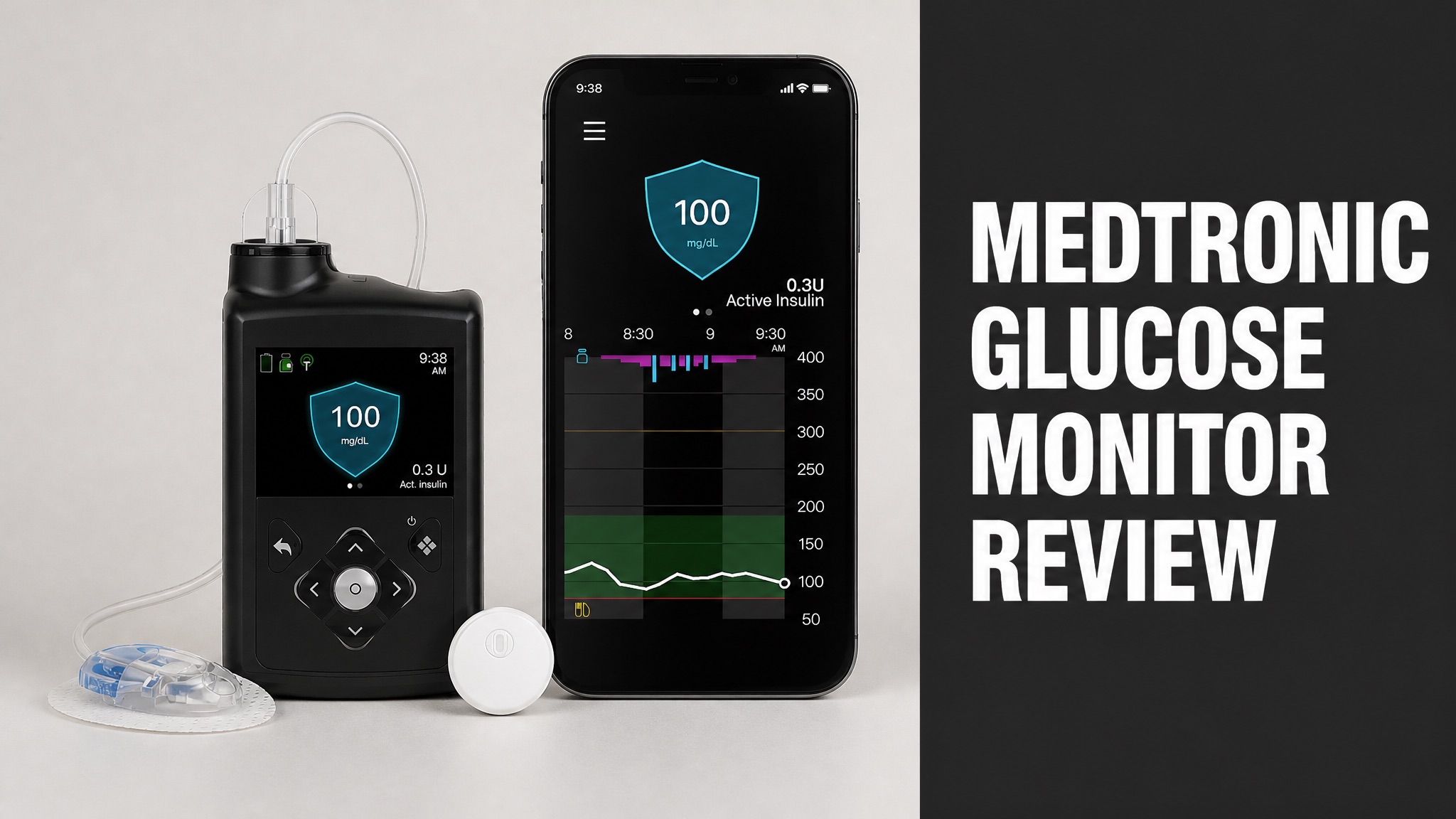
The Medtronic glucose monitor is a line of wearable CGM sensors that feed readings to MiniMed insulin pumps. Guardian 4, Simplera and the new Instinct sensor make up the lineup. Medtronic began broad US shipping of the Instinct pairing on December 2, 2025, so the range is changing fast.
Three sensors differ in size, wear time and warm-up. Instinct lasts 15 days, while Guardian 4 lasts seven. The MiniMed 780G pump uses the readings to adjust insulin every five minutes. Reviewers report strong time in range and calm nights. They also report bulky hardware, late deliveries and missing pump features such as remote control. Results vary.
The big picture is clear. Automation lowers daily effort, and newer sensors fix older complaints. The sections below cover specs, accuracy, safety, FDA status, cost and where to buy. Read on to learn whether the Medtronic glucose monitor fits your pump, your budget and your daily routine.
What Is the Medtronic Glucose Monitor?
The Medtronic glucose monitor is a family of wearable CGM sensors that send live glucose readings to a MiniMed pump. Three sensors exist in the US today: Guardian 4, Simplera and Instinct, which Abbott makes. Each sensor reads glucose through a thin filament under the skin. Medtronic Diabetes is also rebranding its diabetes business under the MiniMed name.
Think of it this way: the sensor reports and the pump acts. Sounds simple, right? Yes, that simple. Who is it built for? People with diabetes ages 7 and older who use a MiniMed 780G system. The Simplera CGM pairs with the InPen for adults on injections.
Which Medtronic CGM Sensors Are Available?
Medtronic sells three sensors in the United States: Guardian 4, Simplera Sync and Instinct. Guardian 4 is the oldest and uses a separate transmitter. Simplera Sync is the first fully disposable Medtronic sensor. Instinct launched on September 23, 2025, and Abbott manufactures it exclusively for MiniMed systems. Wear is easy. Each suits different needs.
Medtronic says Guardian 4 will stay available for the foreseeable future. Availability matters most in countries where the newer sensors have not launched yet. Diabetech reports that some users prefer Simplera, while others favor Instinct.
Sensor Lineup:
- Guardian 4 with a separate transmitter and reusable serter
- Simplera Sync as an all-in-one disposable sensor
- Instinct as an all-in-one sensor made by Abbott
Which Devices Work With a Medtronic CGM?
The MiniMed 780G system works with all three sensors and adjusts insulin every five minutes from the readings. The MiniMed Flex and MiniMed Go systems list Simplera Sync and Instinct. The InPen smart pen system pairs with the Simplera CGM for adults on multiple daily injections. Compatibility differs by sensor, so check each pairing. The setup is simple.
To be clear, compatibility differs by sensor. Beyond Type 1 reports no announced InPen integration for Instinct. Check the sensor and device pairing before ordering.
How Does the Medtronic Glucose Monitor Work?
A Medtronic sensor measures glucose under the skin and sends a reading to the pump every five minutes. The MiniMed 780G then calculates insulin needs from those readings. Its SmartGuard algorithm delivers background insulin and automatic correction doses. Users rarely need to dose between meals, which cuts daily decisions. Each suits different needs.
Here’s what that actually means. The pump and sensor talk all day. Beyond Type 1 describes it as a hands-off loop, where devices handle work that people once did by hand.
How Is the Sensor Applied?
Application differs by sensor, and Guardian 4 is the most involved of the three. Guardian 4 needs two hands, a reusable serter and a separate transmitter. Simplera Sync and Instinct use one-handed insertion. Simplera requires no fingerstick calibration after a two-hour warm-up, diaTribe reports, while Guardian 4 still needs one. The setup is simple.
Guardian 4 still needs one calibration to start. A changeover takes hours. Why so long? The transmitter charges for one hour and the warm-up runs two. Instinct warms up in one hour.
Sensor Specs:
| Feature | Instinct | Simplera Sync | Guardian 4 |
|---|---|---|---|
| Wear time | 15 days | Up to 6 days | Up to 7 days |
| Warm-up | One hour | Two hours | Two hours |
| Size (inches) | 0.11 by 0.83 | 0.19 by 1.13 | 2.0 by 2.6 |
| Insertion | One-handed | One-handed | Two-handed |
What Are the Benefits of the Medtronic Glucose Monitor?
The main benefit is tighter glucose control with far less daily effort. Reviewers describe more time in range, fewer alarms and fewer fingersticks. Pumps and sensors that talk to each other take over many routine decisions. Users call the result mental bandwidth, since they think about glucose much less during a normal day. Each suits different needs.
Main Benefits:
- More time in range
- Calmer overnight control
- Fewer fingersticks
- Less daily decision making
Let me explain: fewer manual choices means less daily stress. Does that matter in practice? For long-term users, yes. One reviewer says the load of constant dosing choices simply lifted.
Does the Medtronic CGM Improve Time in Range?
Yes. Paired with the MiniMed 780G, the sensor supports time in range from 70% to over 90% in published reviews. Dr. Steve Edelman reports 80% to low 90% in range with 0 to 2% below range. A blogger at pumpsandpricks.com averages 75% over three months, with some days at 100% in range. Match the system to personal priorities such as tubing and carb counting.
These are individual results. Is that a guarantee? No. Dr. Jeremy Pettus notes that no head-to-head studies compare the 780G with rival systems. His view rests on clinical trial data and what his patients tell him.
Does It Help With Overnight Control?
Yes. Reviewers say the system handles overnight glucose without waking the user. Dr. Edelman ate a heavy pasta dinner at 8 pm and stayed just under 180 mg/dL (10 mmol/L) all night. The pump corrected every five minutes, so no alarm sounded and no manual correction dose was needed before morning. Sensor delivery delays add real stress for some users.
The pumpsandpricks.com reviewer agrees. Late snacks no longer cause stress. In fact, waking up in range is now the norm for this reviewer.
What Do Medtronic Glucose Monitor Reviews Say?
Reviews praise glucose control and automation, while complaints focus on sensor size, wear time and pump limits. Published reviews come from patients, doctors and Medtronic partners. Mattie’s MiniMed review carries a paid partner disclosure, so independent reviews carry more weight. Treat every sponsored post with care. The sensor is worn on the upper arm.
Bottom line: independent reviewers like the results and dislike the older Guardian 4 hardware. Newer sensors target those complaints.
What Do Users Like About It?
Users like the automation, the overnight control and the freedom from constant checking. The pumpsandpricks.com reviewer calls it the best control with the least effort in 16 years of type 1 diabetes. Mattie, a 24-year type 1 user, says Instinct delivered 15 days of steady readings. She used to check glucose every 20 minutes. Both are in use today.
Common Praise:
- Strong time in range
- Calm overnight control
- Few fingersticks after setup
- Easy training and setup
- Robust pump clip
What Are the Common Complaints?
Complaints center on the Guardian 4 sensor, the bulky pump and the lack of remote control. Guardian 4 is big and needs overtape. The pumpsandpricks.com reviewer says it also fails early at times. Replacement sensors can arrive late, which leaves some users without spares. Reviewers also dislike filling the reservoir by hand. Each suits different needs.
Is the sensor the only issue? Not quite. Other gripes cover the manual reservoir fill and weak Android app support. The pump cannot bolus from the app. Extended boluses are unavailable in SmartGuard mode. Exercise needs planning, since pre-loading carbs makes the system add insulin.
Medtronic vs Dexcom and Omnipod: How Do They Compare?
Medtronic wins on algorithm strength, while Dexcom and Omnipod win on sensor comfort and tubeless design. Dr. Jeremy Pettus says the 780G fits people who put control first. The Omnipod removes tubing. The iLet removes carb counting. No single pump is best for everyone, and each system has real tradeoffs. The pump also shows trends on its own screen.
Is Dexcom or Medtronic better? The answer depends on the priority. One commenter at TCOYD says a pump without a Dexcom-type CGM is a dealbreaker. The Instinct sensor now narrows that sensor gap.
Comparison Snapshot:
| System | Main Strength | Main Tradeoff |
|---|---|---|
| MiniMed 780G | Aggressive algorithm | Bulkier pump with tubing |
| Omnipod | No tubing | Different algorithm |
| Tandem Control-IQ | Dexcom CGM | Reservoir is harder to fill |
| iLet | No carb counting | Less manual control |
What Are the Downsides and Risks?
The main downsides are sensor hassle, supply delays and gaps in the pump feature set. Guardian 4 lasts seven days and needs a transmitter. The pump cannot be controlled remotely. Reviewers also note that the algorithm ignores the menstrual cycle, which changes insulin sensitivity. Exercise needs extra planning too. The sensor is worn on the upper arm.
Key Downsides:
- Short Guardian 4 sensor life
- Bulky pump with tubing
- No remote control
- Late sensor deliveries
Look, no system is perfect. Is that a dealbreaker? Not for most reviewers. Mattie says so herself. Her wish list includes AI insights that flag trends before the user notices them.
Is the Medtronic Glucose Monitor Accurate?
Yes. Reviewers rate Guardian 4 as accurate once it is calibrated and settled. Dr. Edelman calls it accurate despite a weaker form factor than the Dexcom G7. The pumpsandpricks.com reviewer trusts it and skips fingersticks. The sources reviewed here do not publish formal accuracy figures for any Medtronic sensor. The sensor is worn on the upper arm.
The good news? Individual results vary less than feared. Still, results differ. Medical decisions belong with a healthcare team, as Diabetech notes in its own disclaimer.
Who Should Avoid It?
People who want a tubeless pump or remote bolusing are better served by other systems. The Instinct and Guardian 4 sensors cover ages 7 and older. Simplera paired with the InPen covers ages 18 and older. Children under 7 fall outside the labeled range. Android users also report app problems in some reviews. The pump also shows trends on its own screen.
Android users face app problems in some reviews. Heavy exercisers face extra planning. Talk to a provider before switching.
Is the Medtronic Glucose Monitor FDA Approved?
Yes. The FDA has cleared the Medtronic sensors for use with the MiniMed 780G system. The agency approved the Simplera CGM with the InPen in 2024. Simplera Sync followed in 2025. The FDA cleared the Instinct integration earlier in 2025. Broad US shipping began on December 2, 2025. Match the system to personal priorities such as tubing and carb counting.
The company calls the 780G its most advanced automated insulin delivery system. Is that a big deal? To put it simply, these are regulated medical devices.
Which Sensors Have US Clearance?
All three sensors hold US clearance for use with MiniMed systems, though their approval dates differ. The Simplera CGM cleared in 2024 for the InPen. Simplera Sync followed for the 780G. Instinct cleared in 2025. Guardian 4 gained 780G approval earlier, and Diatribe calls Simplera the smallest Medtronic CGM so far. Labeled age ranges differ by sensor.
Limited launches came first. Simplera Sync began a limited US launch in fall 2025. Broad shipping of Instinct followed in December.
How Much Does the Medtronic Glucose Monitor Cost?
Pricing is not published in the sources reviewed, and cost depends on insurance and supplier. Retailers such as diabetes.shop and diabetic supply stores list the sensors. Prices vary by plan, region and supply source. Check coverage with the insurer before ordering, since the out-of-pocket amount can differ widely between plans. The setup is simple.
People also ask about monthly CGM costs and Medicare coverage. Confirm both with Medicare and the supplier. No firm figures appear in the research pages used here.
Is the Medtronic CGM Worth the Price?
Yes, for the right user. Reviewers who prioritize glucose control call the system life changing. The 15-day Instinct sensor cuts insertions to about two per month, against four or five for Guardian 4. Fewer changes save time and supplies. Tubeless fans should compare other pumps before they commit to Medtronic. The pump also shows trends on its own screen.
The worth depends on needs. And it gets better: trials lower the risk. Tubeless fans are better off comparing other pumps. Free trial periods let users return a pump they dislike.
Where Can You Buy the Medtronic Glucose Monitor?
Buyers can order through Medtronic MiniMed, a prescriber and authorized diabetes supply stores. A prescription starts the process. A Medtronic trainer then sets up the pump and sensor. The Penny app and online ordering handle replacement sensors, though shipments sometimes run late. Ordering early avoids running out of spares. Both are in use today.
Steps to Get Started:
- Get a prescription from a healthcare provider.
- Check insurance coverage for the system.
- Order through Medtronic MiniMed or a supplier.
- Complete pump and sensor training.
Here’s the thing: order sensors early. One reviewer ran short after a delayed shipment. Medtronic fixed it, but spares avoid the stress.
Can You Try It Before Buying?
Yes. Most pump makers offer a free trial period, and the pump can be returned if it does not fit. Dr. Edelman and Dr. Pettus both urge patients to use trials. Dr. Edelman tried the 780G for several weeks before writing his review. Trials let users judge sensor comfort, pump size and daily routine first. The return option lowers the cost of a wrong choice.
Ask the provider about every pump option. Do your research, ask questions and switch if the system falls short, as the TCOYD doctors advise.
Should You Get the Medtronic Glucose Monitor?
Yes, if you use or plan to use the MiniMed 780G. The sensors deliver strong control, and Instinct fixes the biggest hardware complaints. Guardian 4 is clunky, but Instinct is small and lasts 15 days. Dr. Pettus says the 780G makes Medtronic a viable option again for many patients who skipped it before. Sensor delivery delays add real stress for some users.
So what does that mean for you? Match the sensor to the pump, check insurance and ask a provider. Use a free trial if one is offered. The right system is the one you will actually wear.
Which Medtronic Sensor Is Best?
Instinct is the strongest pick for most MiniMed 780G users, with 15 days of wear and a one-hour warm-up. The sensor is also the smallest, at 0.11 inches (2.8 mm) high. Medtronic calls it the most discreet one. Simplera Sync is a fully disposable option with up to six days of wear. Guardian 4 remains available but is the clunkiest of the three sensors.
The right sensor depends on availability and preference. Medtronic reports that some early users prefer Simplera’s six-day cycle. Others favor the longer Instinct wear.