
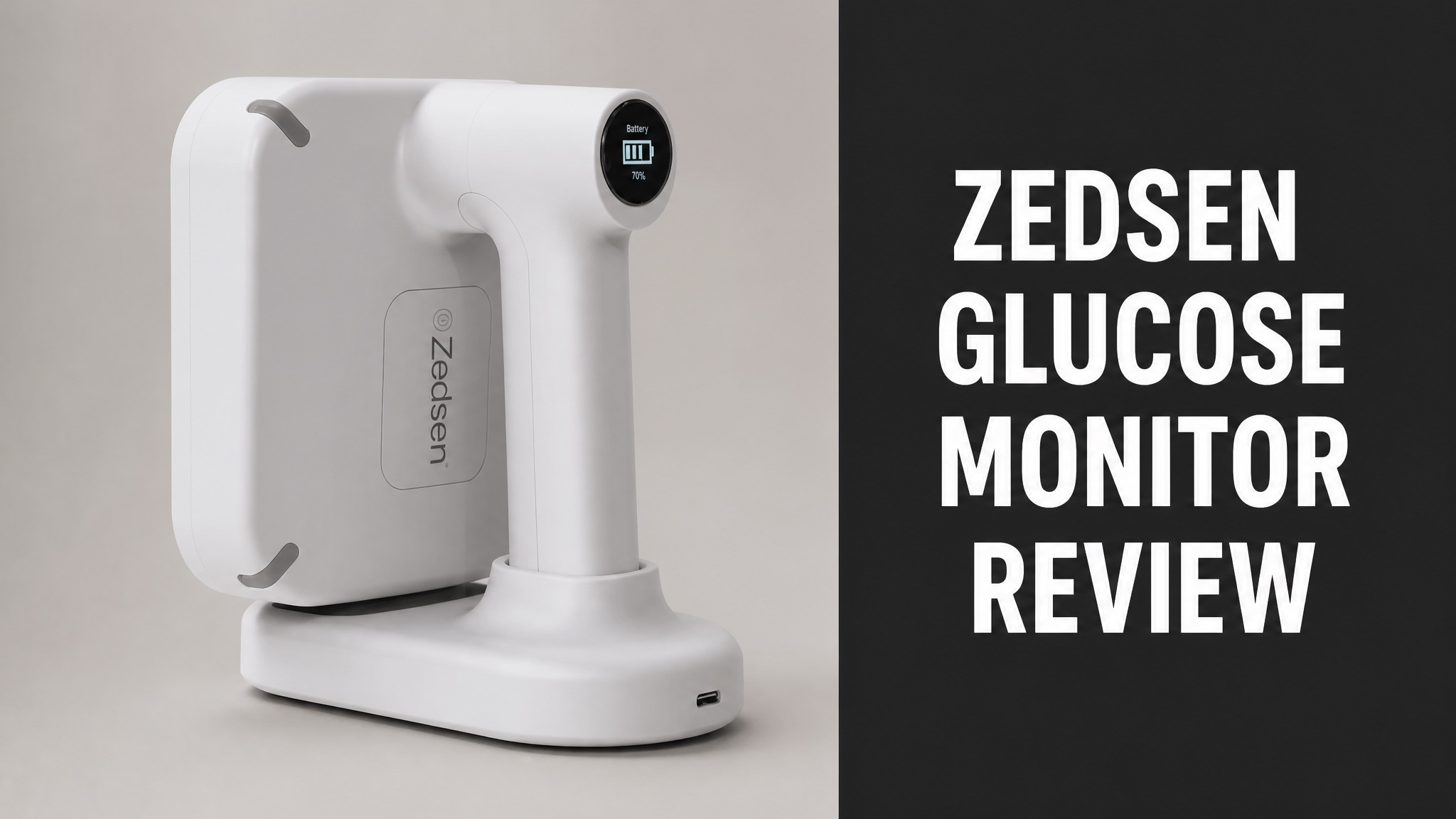
The Zedsen glucose monitor is a planned needle-free sensor from Zedsen, a London medtech company. It was described in a 2021 funding announcement. Today, no consumer version appears for sale in the sources reviewed. The company website now focuses on a different medical field.
The company raised $12M (£8.7M) in April 2021 at a $110M valuation. It holds 46 patents. Its sensors read tissue through electric fields. Clinical work now targets breast cancer, not glucose. No price, accuracy data or customer reviews exist for a glucose device. Dexcom remains the proven option today.
This review covers the technology, the claims, the evidence and the legitimacy of the company. It also compares Zedsen with Dexcom. Read on to learn what is real, what is planned and who needs to wait for proof. Readers also get a clear verdict on whether the Zedsen glucose monitor is worth any attention.
What Is the Zedsen Glucose Monitor?
The Zedsen glucose monitor is a concept for a needle-free skin sensor from Zedsen, a London medtech company that builds non-invasive sensors. A 2021 funding announcement described a sensor that sits on the skin and gathers data from the bloodstream. That description is the only glucose detail found.
The company raised $12M (£8.7M) in a Series B round in April 2021. That valuation was $110M. Why does the money matter? The funds were set aside for product development, research and marketing.
Zedsen Key Facts:
| Fact | Detail |
|---|---|
| Headquarters | London, UK |
| Series B (April 2021) | $12M (£8.7M) |
| Valuation | $110M |
| Patents | 46 |
| CEO since July 2023 | Michael Lynch |
Is the Zedsen Glucose Monitor Available to Buy?
No. The Zedsen glucose monitor has no consumer listing in any of the sources reviewed. The Zedsen website now centers on breast density and cancer risk assessment. No glucose sensor, price or checkout page appears there. Searches for the product name lead to news stories instead. Shoppers find press coverage and Dexcom pages, not a store.
Here’s the thing: a store page claiming to sell one deserves suspicion. The manufacturer itself shows no such device. Always check zedsen.com before paying anyone for a Zedsen product.
How Does Zedsen Sensing Technology Work?
Zedsen sensors measure the electrical properties of tissue using electric fields from a flat array of electrodes. Opposite charges create a field between electrodes. That field reveals the capacitance of an object placed near it. Bespoke algorithms then convert the signal into quantified results for the user. The whole process runs in real time.
The 2021 glucose concept followed a similar idea. A skin sensor would continuously collect biophysical data. In fact, it would skip needles and skin-puncturing patches entirely.
So what is the catch? The published technical detail covers cancer scanning, not blood sugar. Zedsen holds 46 patents, but patents don’t prove a working glucose readout.
What Is Time-Domain Bio-Impedance Sensing?
Time-domain bio-impedance sensing, or TD-BIS, is Zedsen’s patented method for reading tissue through a flat sensor with parallel electrodes. The flat design avoids compression and discomfort. Cancer-related cellular changes alter the conductivity and capacitance of tissue, according to the company, and the sensor detects that shift.
The Z-Scanner uses an array of fifteen parallel electrodes. Algorithms then process the data. Does the method read glucose? No source confirms that. All published uses involve breast tissue.
Key TD-BIS Traits:
- Flat sensor array with parallel electrodes
- No compression of the body
- No radiation exposure
- Real-time data processing
- Operable by any health staff
What Does Zedsen Claim About Glucose Monitoring?
Zedsen claims its skin sensor could spot trends toward prediabetes without needles and tailor diet to each person. The firm also named fertility tracking as a use. These claims come from the 2021 funding announcement. No later glucose claim appears on the current company website, which is built around cancer screening.
Chief technology officer Dr Caroline Hargrove called low-cost, non-invasive blood monitoring the holy grail. The statement describes a goal. Bottom line: a goal isn’t a cleared medical product.
Claimed Uses:
- Spotting trends toward prediabetes
- Tracking fertility
- Tailoring diet to individual response
- Monitoring metabolic health for athletes
Does the Zedsen Glucose Monitor Actually Work?
No. The Zedsen glucose monitor has no published accuracy data in the sources reviewed. The studies that exist test breast cancer detection. A 2025 first-in-human study at the San Antonio Breast Cancer Symposium classified benign and cancerous breast lesions. Glucose never appears in that work, and the abstract focuses on lesion classification.
The DiCET trial ran from January to December 2024 at Charing Cross Hospital in London. It enrolled 90 participants. The goal was to separate benign from cancerous lesions. To be clear, that trial says nothing about blood sugar.
What Do Zedsen Reviews Say?
Zedsen reviews consist of business and medical press coverage, not consumer feedback. MobiHealthNews covered the 2021 funding round. The Telegraph reported the valuation. Medical Device Network covered the clinical trial. MedTech Outlook named Zedsen among its Top 10 Non Invasive Devices Solutions Companies in Europe for 2023.
That recognition honors the company, not a glucose device. Why the distinction? Awards and funding rounds say nothing about sensor accuracy.
Press Coverage Found:
- MobiHealthNews on the Series B funding
- The Telegraph on the $110M valuation
- Medical Device Network on the UK cancer trial
- MedTech Outlook on the 2023 Europe ranking
Are There Any Customer Reviews?
No. Customer reviews of a Zedsen glucose monitor do not exist in the sources reviewed. No product ships, so no buyer has reported results. Review searches for the product name return Dexcom pages on Trustpilot instead. Those pages describe a different company, Dexcom, with its own products.
Look at it this way: any glowing testimonial for a Zedsen glucose monitor is unverified. No real user could have written it.
Is Zedsen Legit?
Yes. Zedsen is a real company with named investors, patents and clinical research with the NHS. The legitimacy applies to the company and its cancer scanner. It doesn’t apply to a glucose product, because none is for sale. Keep those two facts separate. A real company can still announce a product that never ships.
Legitimacy Checks:
| Check | Finding |
|---|---|
| Funding | $12M Series B in 2021 |
| Patents | 46 patents |
| Clinical study | DiCET with Imperial College Healthcare NHS Trust |
| Recognition | MedTech Outlook Europe list, 2023 |
Is Zedsen Backed by Real Investors?
Yes. The 2021 round drew named investors with long careers in finance, telecoms and charity leadership. The list was public. Real names make fraud unlikely, though investor backing doesn’t prove a product works. Money and measured accuracy are different things. Check the data before the pitch.
Named Investors:
- Joseph R Grano, former chairperson and CEO of UBS Financial Services Inc
- Nasser Kazeminy, founder of NJK Holding
- Tony Rice, former CEO of Cable and Wireless
- Bonnie Mcalveen Hunter, chairperson of the Red Cross
- Jim Harpel, investor at Palm Beach Capital
How Does Zedsen Compare to Dexcom?
Dexcom sells continuous glucose monitoring systems today, while Zedsen sells no glucose device at all. Dexcom lists the G7 15 Day CGM sensor on its website. Zedsen offers a breast scanner in clinical development. The two companies serve different needs right now. Dexcom treats glucose tracking as its core business, and Zedsen treats it as an idea.
Zedsen vs Dexcom:
| Factor | Zedsen | Dexcom |
|---|---|---|
| Glucose product for sale | None found | Dexcom G7 15 Day CGM |
| Current focus | Breast cancer risk | Continuous glucose monitoring |
| Customer reviews | None found | Listed on Trustpilot |
Which Is Better for Managing Diabetes?
Dexcom is the only option of the two with a glucose product available today. Zedsen cannot be compared on accuracy, price or comfort. Nothing exists to measure. Pick a tested system if daily glucose data matters now. Real readings, not concepts, drive daily decisions about food and medication.
Sources such as NIDDK and the Cleveland Clinic explain how continuous glucose monitoring works. A clinician guides device choice. And that advice beats any marketing page.
How Much Does the Zedsen Glucose Monitor Cost?
The Zedsen glucose monitor has no published price, because no consumer version is on sale. The company website lists no glucose product, subscription or sensor refill. Any price quoted elsewhere lacks a source. Treat it as unreliable. The company hasn’t announced pricing, a launch window or a sales channel for any glucose product.
The Series B money went toward development, not retail. What does that tell shoppers? A consumer launch hasn’t been announced.
Is the Zedsen Glucose Monitor Worth Waiting For?
Maybe not. The wait has no end date, and the company focus has moved to breast cancer screening. The current website highlights breast density and cancer risk. Glucose isn’t mentioned. And that shift matters for anyone hoping for a launch. The roadmap now points at oncology clinics and primary care, not wrist or arm sensors.
Watch the company website and trial results for news. In plain English: wait for evidence, not promises.
Is the Zedsen Glucose Monitor Worth It?
No. The Zedsen glucose monitor is not worth planning around today because no product, price or accuracy data exists. The company is real and its research is serious. But the glucose idea remains a 2021 announcement. Short answer: skip it for now. Revisit only if the company publishes glucose accuracy data and a clear launch plan.
The good news? Zedsen’s TD-BIS technology has produced peer-reviewed engineering work and conference posters through 2026. That progress may support future products. So far, none targets glucose.
Who Should Avoid Relying on Zedsen?
Anyone managing diabetes must not replace a prescribed glucose monitor with an unverified device. Missed highs and lows carry real risk. A concept sensor offers no protection. Keep using the tested system a clinician recommends. Any change in device needs medical sign-off first.
That includes people tempted by third-party sellers. A seller listing a Zedsen glucose monitor is selling something the manufacturer doesn’t list. Walk away from those offers.