
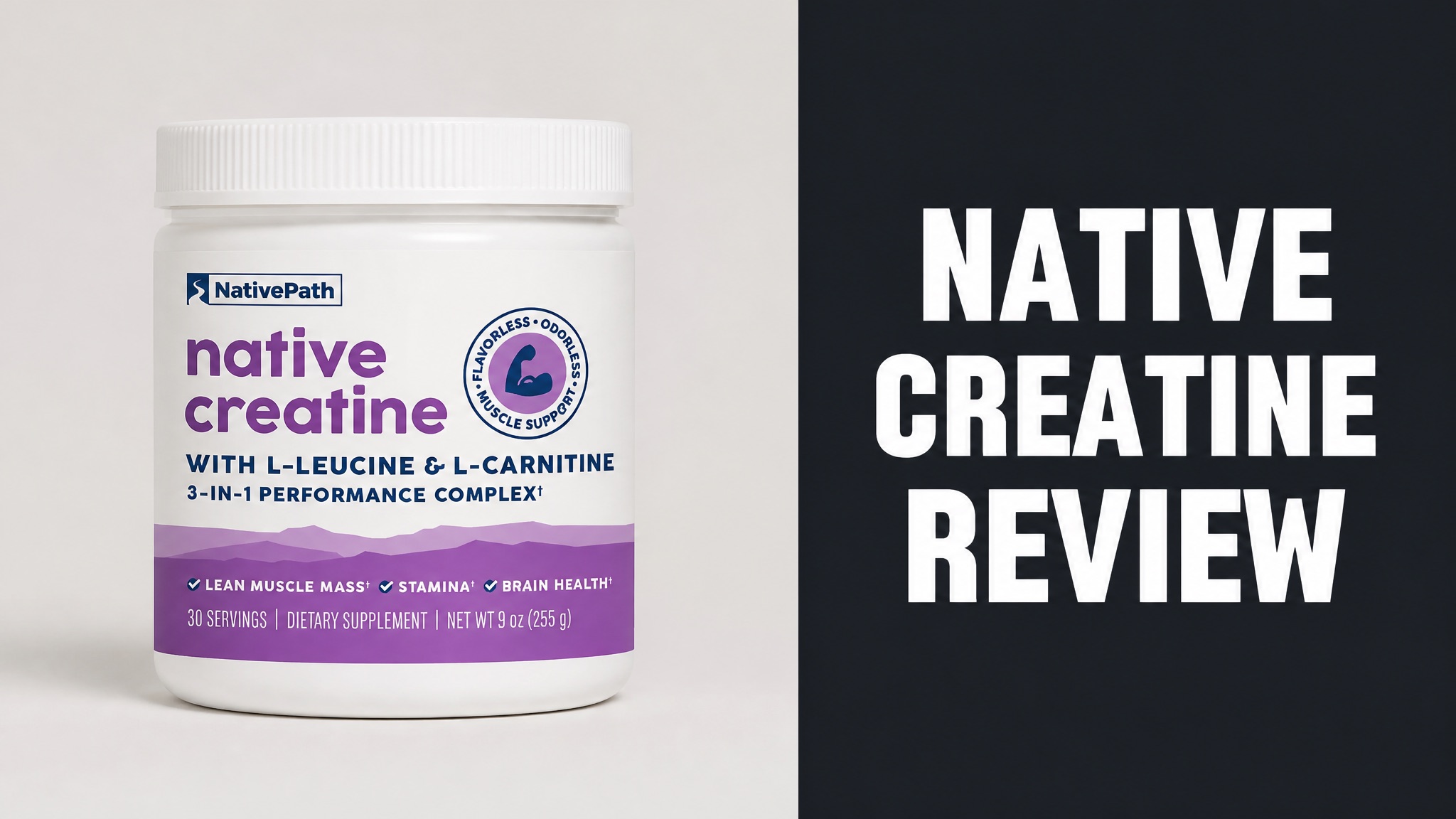
Native Creatine is a flavorless 3-in-1 powder from the supplement brand NativePath. Each scoop packs creatine monohydrate, L-leucine, and L-carnitine. The brand aims it at adults who want steady muscle strength, daily energy, and healthy aging. It carries a 365-day money-back guarantee and ships free.
This native creatine review covers what the formula contains and how it works. Reviewers praise the easy mixing and the strength gains. Others flag the price and the lack of third-party proof. Safety, side effects, and dosing rules get clear answers too. Pricing and refund terms are covered as well. User feedback rounds it out. Details stay practical.
The big picture is simple. Creatine is among the best-studied supplements, and this blend adds two helpers. Read on to see the cost, the real user feedback, and whether the jar earns a place in your routine. A clear verdict closes the piece. Each answer stays short and direct. Let’s dig in.
What Is Native Creatine?
Native Creatine is a 3-in-1 powder supplement from NativePath that supports muscle strength, daily energy, and healthy aging in adults. Each 8.5 gram (0.3 ounce) scoop pairs creatine monohydrate with two helper amino acids. The powder is unflavored, sugar-free, gluten-free, dairy-free, soy-free, and non-GMO. Most buyers find the taste unnoticeable.
Creatine is a compound the body makes on its own. Muscles store it to fuel short bursts of effort. Does diet cover the gap? Rarely, because creatine comes mainly from red meat and fish, so supplements fill the rest.
Quick Facts:
| Detail | Native Creatine |
|---|---|
| Brand | NativePath |
| Form | Flavorless, odorless powder |
| Serving size | 1 scoop (8.5 g) |
| Servings per jar | 30 |
| Guarantee | 365 days |
Who Makes Native Creatine?
NativePath makes Native Creatine and markets it mainly to adults over 50 who want to keep their strength and independence. The brand is a wellness company that also sells collagen, protein, and other daily supplements. Its creatine line leans toward healthy aging rather than hardcore bodybuilding goals. That focus shapes the product and its message.
Here’s the thing: gym-focused brands pitch lifting numbers. NativePath pitches mobility, stamina, and everyday muscle upkeep. That gap matters, so buyers need to match the marketing to their own goals before ordering.
How Does Native Creatine Work?
Native Creatine works by raising phosphocreatine stores in muscle cells, which helps the body regenerate ATP, its main energy fuel. Every muscle contraction burns ATP. During heavy effort the supply runs out within seconds, and fatigue sets in. Extra creatine slows that drop and keeps power output higher for longer. Stimulants are not part of the process.
To be clear, the effect shows up in short, intense efforts. Lifting, sprinting, and stair climbing all draw on this system. Does it help a slow walk? Barely, since low-intensity work runs on other fuel sources.
The two added amino acids play supporting roles. Leucine nudges muscle protein synthesis. Carnitine moves fatty acids into the cell’s energy plants. Together they round out the formula without adding stimulants or caffeine.
What Are the Ingredients in Native Creatine?
Native Creatine contains three active ingredients per scoop. Those are 5 grams of creatine monohydrate, 2 grams of L-leucine, and 1.5 grams of L-carnitine. Creatine monohydrate is the most researched form on the market. The 5 gram dose matches the daily intake used in most studies. The label lists no stimulants. Each scoop totals 8.5 grams of powder.
In fact, the 5 gram creatine dose is the same one used in most clinical trials. Leucine and carnitine sit below it in the formula. The label lists no stimulants, sweeteners, or fillers, which keeps the powder simple.
Ingredients per Scoop:
| Ingredient | Amount | Role |
|---|---|---|
| Creatine monohydrate | 5 g | ATP regeneration |
| L-leucine | 2 g | Muscle protein synthesis |
| L-carnitine | 1.5 g | Fat transport for energy |
What Are the Benefits of Native Creatine?
Native Creatine delivers its main benefits through creatine, which supports muscle strength, exercise performance, and recovery in healthy adults. More than 1,000 studies back creatine itself. Leucine and carnitine add smaller, less proven support for muscle upkeep and energy use. Results build over weeks of steady daily use. Give it a month to judge.
Think of it this way: the powder gives muscles a bigger energy buffer. A bigger buffer means extra reps and a faster bounce-back between sessions. The gains build over weeks, not hours, so consistency matters most.
Main Benefits:
- Higher strength and power output
- Support for lean muscle mass
- Faster recovery between workouts
- More stable daily energy
- Possible support for focus and memory
Does Native Creatine Build Muscle?
Yes. Native Creatine supports muscle gain when paired with resistance training and enough dietary protein in the daily diet. The creatine component has strong research behind it. The powder alone does not build muscle without training, so exercise stays the main driver. Lifters see the clearest gains over several weeks. Lifters see clear gains within weeks.
Here’s why: creatine pulls water into muscle cells, which gives a fuller look. It also lets people train harder. Does the scale jump? Slightly, since early weight gain is mostly water stored inside muscle, not fat.
Does Native Creatine Support Brain Function?
Yes, partly. Native Creatine supplies creatine to the brain, where it helps fuel cells during stress, poor sleep, and mental fatigue. Early studies link creatine to better memory and processing speed. Research on focus and mental clarity is still developing, and results vary a lot between individual users and age groups. Evidence favors older adults.
The bottom line: brain benefits look promising, not proven. Older adults and vegetarians show the clearest signals. Anyone buying purely for cognition gets that benefit as a bonus rather than the main reason.
What Do Native Creatine Reviews Say?
Native Creatine reviews skew positive. The brand’s sales page cites a 4.8 out of 5 rating from more than 56,500 customers. Independent listings sit lower. A Trustpilot score near 3.9 out of 5 shows mixed opinions once marketing copy is stripped away. Buyers see a clear gap between official and outside scores. Buyers weigh both sets of numbers closely.
The split makes sense. Official ratings come from buyers on the brand’s own site. Do independent platforms tell a different story? Somewhat, because they draw more critical buyers who flag price and shipping issues.
What Do Users Like About Native Creatine?
Users praise the flavorless powder, the one-scoop serving, and steady gains in strength and energy over the first few weeks. Many older reviewers report better stamina and mobility within a few weeks. The powder blends into water, coffee, or smoothies without changing the taste. Most also say the routine is easy to keep. Most say the habit is easy.
Common Praise:
- Neutral taste that does not alter coffee
- Simple one-scoop daily routine
- No loading phase needed
- Gentle on the stomach for most users
- Noticeable energy within weeks
What Are the Common Complaints About Native Creatine?
Complaints center on price, slow dissolving, and the lack of independent lab proof on the official sales page. A few users find the powder gritty unless stirred well. One review notes the page offers no GMP certificate or verifiable manufacturing documentation. Shipping and refund questions appear in outside reviews too. Shipping gripes show up too.
The good news? Each issue has a fix. Stir longer or use warm liquid for the grit. Buy a multi-jar pack to cut the cost. The missing certification, however, is something only the brand can solve.
Is Native Creatine Safe and Legit?
Yes. Native Creatine is a legitimate product built on creatine monohydrate. Research rates that ingredient as safe for healthy adults at standard doses. The brand is a real company with a working site, a clear label, and a published refund policy. Reviewers report few serious problems when users follow the serving size. Serious problems are rare in reviews.
That said, safe does not mean certified. The sales page does not show a GMP certificate or third-party test results. Does that make it a scam? No, but cautious buyers ask the brand for lab reports first.
What Are the Side Effects of Native Creatine?
Side effects are usually mild and include temporary water retention, slight weight gain, and occasional stomach upset in some users. Early weight gain is water stored inside muscle cells, not fat. Drinking enough fluid through the day keeps symptoms low. Serious reactions are rare in healthy adults who follow the label. Serious reactions are rare overall.
Here’s the kicker: most reported stomach issues come from large doses taken at once. The single 5 gram serving avoids that. Healthy kidneys show no damage in the research, but anyone with kidney trouble needs medical advice first.
Who Should Avoid Native Creatine?
People with kidney disease need a doctor’s approval before taking Native Creatine, along with several other groups of buyers. Creatine passes through the kidneys, so impaired function raises real concern. A clinician can check bloodwork before any supplement starts. The same advice applies to anyone on regular prescription drugs. Bloodwork comes first.
Check With a Doctor First If You:
- Have kidney disease or impaired kidney function
- Are pregnant or breastfeeding
- Take prescription medications
- Manage a chronic medical condition
How Do You Take Native Creatine?
Native Creatine is taken once daily. Mix one level scoop into 8 to 12 ounces (240 to 355 milliliters) of any cold or warm liquid. Water, juice, coffee, tea, or a smoothie all work well. Timing is flexible, so morning or post-workout both fit. The powder has no taste, so the drink stays the same. Stir well for a smooth drink. Warm liquids dissolve it fastest.
In plain English: the routine takes under a minute. Consistency beats timing. Does a missed day ruin progress? Not at all, because muscle stores stay elevated for days, so resume the next morning.
Steps:
- Scoop one level serving from the jar.
- Mix it into 8 to 12 ounces of your chosen drink.
- Stir until the powder fully dissolves.
- Drink it daily at a consistent time.
Does Native Creatine Need a Loading Phase?
No. Native Creatine needs no loading phase or cycling. The 5 gram daily serving builds muscle stores steadily over about four weeks. Loading uses 20 grams a day for a week to fill stores faster. That approach is optional. Most users skip it and simply stay consistent with the single daily scoop instead. Loading is a speed choice, not a rule or requirement.
The reason is simple: slower loading reaches the same saturation point. It also avoids the stomach upset that big doses can cause. Patience pays off here, and the one-scoop habit stays easy to keep.
How Much Does Native Creatine Cost?
Native Creatine costs $48 (USD) for one 30-serving jar. Bundle pricing drops to $23 per jar on the six-jar pack. Shipping is free on every package. The regular single-jar price is listed at $53, so the single-jar discount is modest. Bigger bundles carry the real savings, up to 56 percent off the regular price. The savings grow with every added jar.
What’s more, the bundles are where the value sits. The six-jar option covers 180 days at roughly 77 cents per day. Does the larger pack make sense? Only after a first jar proves the powder suits you.
Pricing Options:
| Package | Per Jar | Total |
|---|---|---|
| 1 jar (30 days) | $48 | $48 |
| 3 jars (90 days) | $33 | $99 |
| 6 jars (180 days) | $23 | $138 |
Is Native Creatine Worth the Price?
Yes, at bundle pricing. Native Creatine is worth the money at $23 to $33 per jar. The single-jar price runs high for a plain creatine powder. Basic creatine monohydrate sells for far less elsewhere. The premium buys the added leucine and carnitine, plus the long refund window the brand offers on every order. Buyers pay extra for convenience and extras.
Here is the part most people miss: the 365-day guarantee lowers the risk. A full year to request a refund beats most supplement policies. Buyers can test the powder, track results, and return it if nothing changes.
Where Can You Buy Native Creatine?
Native Creatine is sold mainly through the official NativePath website, with some listings on retailers such as Walmart and Target. Buying direct unlocks the bundle deals and the full refund policy. Third-party sellers do not always honor that guarantee, so check the seller name and the return terms before paying. Official pages list every term clearly.
Pay attention to this: confirm the seller before checkout. Counterfeit and resold supplements exist on marketplaces. The official site keeps pricing, serving details, and the refund terms in one place.
Is Native Creatine Worth It?
Yes. Native Creatine is worth trying for adults who want a simple, flavorless creatine. It adds extra amino acids and a long refund window. The creatine dose is correct and well supported by research. The main drawbacks are the price and the missing third-party proof. Most buyers with realistic goals will find a clear payoff. Test it for a full month.
So, who gets the most out of it? Adults over 50 and anyone lifting regularly see the clearest payoff. Pure budget shoppers do better with plain creatine monohydrate. Short answer: buy the three-jar pack, test it, and keep the receipt.
Who Is Native Creatine Best For?
Native Creatine fits older adults, regular lifters, and vegetarians who want a daily creatine habit without flavors or loading. Plant-based eaters often have lower creatine stores, so they tend to respond strongly. Active older adults gain muscle upkeep and stamina. The no-fuss formula suits people who dislike complicated supplement routines. Keep it easy.
And it gets better: the easy one-scoop routine suits busy schedules. Skip it if kidney issues apply or if a cheaper plain creatine meets the need. Match the product to the goal and the budget.