
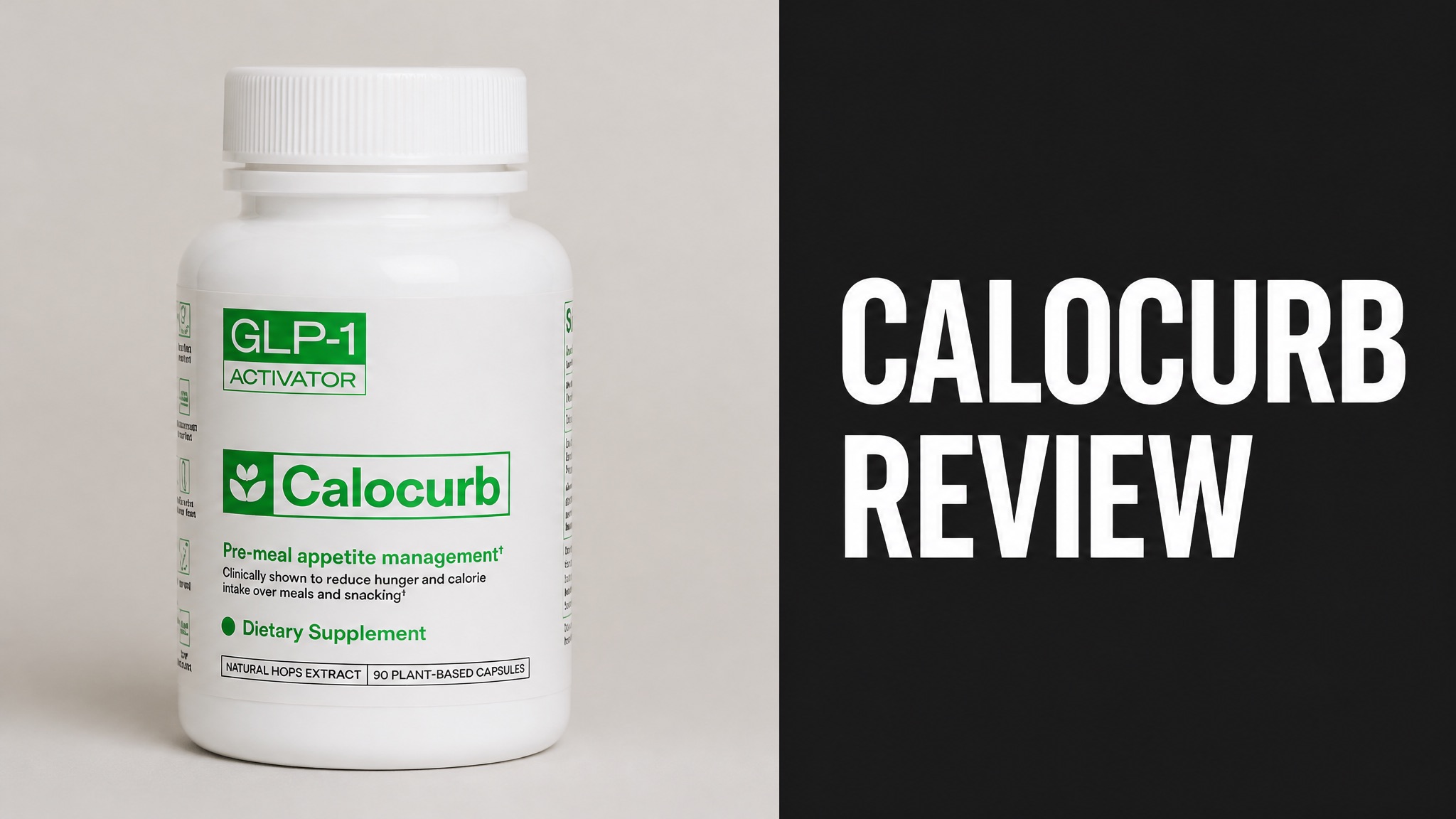
Calocurb is a non-prescription appetite capsule built around Amarasate, a hops extract from New Zealand. Over 10,000 people use it worldwide. It sells in several countries. The brand pitches it as a natural GLP-1 activator. That pitch has drawn plenty of attention from buyers and critics alike.
The capsule releases a bitter extract in the upper gut. Gut cells then release satiety hormones that signal fullness. Studies report less hunger, fewer cravings and lower calorie intake. Real users also describe loose stools, tricky timing and a steep monthly price. Independent reviewers call the evidence strong for a supplement, yet modest overall.
Below, the evidence, ingredients, side effects and cost all get a straight look. By the end, you’ll know whether Calocurb fits your goals and your budget. Each section answers one question buyers ask before they order. Expect honest numbers, real reviews and clear limits. Let’s dig in.
What Is Calocurb?
Calocurb is a prescription-free dietary supplement designed to manage appetite through the body’s own gut hormones. The capsule contains Amarasate, a patented hops extract from New Zealand. Users take it about one hour before meals to feel full sooner and ease cravings. The brand backs it with four published studies in healthy adults. Studies are small.
Here’s the thing: the brand backs it with four published human studies. Its makers cite 15 years of research and over $30 million invested. To be clear, the product is a supplement and not a drug.
What Is in Calocurb?
The formula holds just three ingredients, and Amarasate is the only active one at 250 milligrams per two-capsule serving. Rosemary leaf extract acts as a preservative. Vegetable oil carries the extract. The delayed-release vegetarian capsule shell is made from hypromellose, which protects the contents until the intestine. Nothing else is added to it.
Calocurb Ingredients:
- Amarasate (New Zealand hops flower extract), 250 mg
- Rosemary leaf extract
- Vegetable oil
- Delayed-release capsule (hypromellose)
The label lists no sugar, gluten, soy, dairy, fillers, colors or preservatives. In fact, a dietitian reviewer found the capsule oil yellow and the smell unappetizing. Does that matter? Not much, since the capsule is swallowed whole.
How Does Calocurb Work?
Calocurb works by delivering Amarasate to the upper intestine, where bitter taste receptors trigger the release of satiety hormones. The delayed-release capsule bypasses the mouth and stomach. Gut cells then send fullness signals to the brain, mainly through GLP-1, CCK and PYY. Gut cells then send fullness signals to the brain after the capsule dissolves.
The brand reports these hormones rise to six times their base level. Why does that matter? Higher fullness signals mean the brain gets the ‘stop eating’ message earlier. Bitter plants often signal poison, so the gut evolved to respond.
How Do You Take Calocurb?
Calocurb is taken on an empty stomach one hour before a meal and builds up gradually to four capsules daily. Effects start within about an hour. Fullness lasts four to six hours. The brand suggests at least three months of use for the best results. Dosing can be tailored daily between one and four capsules. Dosing can be tailored daily. Start slowly.
Dosing Schedule:
- Day 1 to 2: take one capsule one hour before a meal.
- Day 3 to 4: take one capsule twice daily, one hour before meals.
- Day 5 onward: take two capsules twice daily, one hour before meals.
Short answer: timing is the hard part. The dietitian and her husband both struggled to take it an hour before eating on an empty stomach.
What Are the Benefits of Calocurb?
Calocurb offers appetite control without a prescription through a plant extract that avoids stimulants and synthetic additives. The brand claims reduced hunger, fewer cravings and lower calorie intake. It also markets the capsule as a helper for people moving off GLP-1 medication. The formula is vegan, gluten-free and free of sugar. Users take it pre-meal.
Claimed Results:
| Effect | Claimed Result |
|---|---|
| Hunger | Down 30% |
| Cravings | Down 40% |
| Calorie intake | Down 18% on average |
But claims and proof are different things. The next two sections check what the trials actually show.
Does Calocurb Reduce Hunger?
Yes. Calocurb lowered hunger in a 2019 trial of 30 healthy men who completed a 24-hour water-only fast. A randomized, double-blind crossover design tested placebo against low and high Amarasate doses. Both doses cut hunger by a statistically significant margin, and the high dose also raised fullness. Participants were all healthy men of normal weight.
A 2024 trial with 30 women, 27 of whom finished, found less hunger and fewer cravings. Those women ate about 14% fewer calories at the next meal. A third trial of 19 men showed 17 to 18% lower calorie intake.
The catch? Every participant was a healthy adult of normal weight. As the dietitian noted, results may differ for people with obesity.
Does Calocurb Help You Lose Weight?
Yes, but modestly. Calocurb produced an average loss of 8.3 pounds (3.8 kilograms) over six months, versus 0.88 pounds (0.4 kilograms) on placebo. The brand reports those figures alongside a healthy diet and exercise. The published numbers sit in a footnote, not a headline. That gap underpins the brand’s claim of nine times more loss than willpower alone.
So what does the ‘9x more weight loss than willpower alone’ claim mean? The claim compares 8.3 pounds against a placebo group that lost almost nothing. Reviewers call 8.3 pounds a fraction of medication results.
What Do Calocurb Reviews Say?
Calocurb reviews split between fans of reduced food noise and critics of digestive trouble, awkward timing and high cost. Brand-hosted testimonials lean positive. Independent writers are more mixed. Reading both sides gives a fairer picture. Real-world use rarely matches the marketing. Several independent sites also weigh in. Always compare several sources.
Review Snapshot:
| Source | Verdict |
|---|---|
| Brand testimonials | Less food noise, easy to use |
| Dietitian Direction | Neutral, not on par with prescriptions |
| The Spinoff (2018) | Negative, digestive side effects |
| Sema vs Tirz | Best-evidenced supplement, with limits |
What Do Positive Reviews Say?
Positive reviewers describe quieter hunger, less ‘food noise’ and an easier time fasting or weaning off semaglutide. One user takes a single capsule before lunch and dinner. Another says one capsule lasts three to four hours. A perimenopausal commenter reported less sugar craving after three days. Their stories echo the brand’s claims about steady fullness.
Now, the brand hosts its own testimonials. Treat them as a starting point, not proof. Why? The brand picks which quotes appear.
What Are the Common Complaints?
Common complaints center on loose stools, difficult dosing, the smell of the capsule and the $89.99 price tag. A 2018 Spinoff writer reported diarrhoea after his fourth dose. The brand itself admitted a laxative effect for some customers. Dietitian commenters echoed the timing and cost issues. Reviewers raised these issues repeatedly across different sites.
Here’s the kicker: a bottle holds 90 capsules. At four capsules a day, that lasts under 23 days. The ‘one-month supply’ label doesn’t add up.
Is Calocurb Like Ozempic?
No. Calocurb is not a GLP-1 drug, because it prompts the body to release its own GLP-1 hormone. Prescription drugs like Ozempic and Wegovy use a lab-made form of the hormone that lasts far longer. The bottle says ‘GLP-1 Activator.’ That label can mislead buyers. Calocurb is a supplement, not a medicine, and the two work differently. Results differ.
In plain English: Calocurb nudges your gut. Ozempic replaces a hormone signal. Prescription drugs also carry far more long-term data on safety and weight outcomes. Does that make Calocurb useless? No, but it sets realistic expectations.
How Does Calocurb Compare to Qsymia and Contrave?
Calocurb costs about the same as FDA-approved options like Qsymia and Contrave, which have far deeper evidence behind them. The dietitian reviewer listed Qsymia at $98 a month and Contrave at $99 through manufacturer programs. Berberine runs about $12 to $50 a bottle, so it undercuts all three. Calocurb sits in the middle of that price range. Compare first.
Monthly Cost Comparison:
| Product | Monthly Cost |
|---|---|
| Calocurb (subscription) | $76.95 |
| Calocurb (one-time) | $89.99 |
| Qsymia (manufacturer program) | $98 |
| Contrave (manufacturer program) | $99 |
| Berberine | $12-$50 per bottle |
What Are the Side Effects of Calocurb?
Calocurb mostly causes short-term digestive symptoms such as diarrhea and loose stool, while long-term effects remain unknown. The brand says only 5% of users feel mild discomfort in the first 24 to 72 hours. Raising the dose gradually helps the body adjust. Long-term safety data does not exist yet. Some users report only one bout. Watch your own response.
The bad news? No long-term safety studies exist. Is that surprising? Not for a new supplement. As the dietitian put it, natural doesn’t mean safe. Supplements face lighter regulation than prescription drugs.
How Long Do Calocurb Side Effects Last?
Calocurb side effects typically fade within 24 to 72 hours as the gut adapts to higher natural GLP-1 levels. The brand advises avoiding a fully empty stomach at first. The brand also suggests a slow dose increase over several days. Reviewers describe the adjustment period as short but unpleasant for some people. Others notice nothing at all. Results vary.
Real users vary. One commenter had a single bout of loose stools. The Spinoff writer’s trouble lasted a couple of hours after one dose.
Is Calocurb Legit?
Yes. Calocurb is a real product with four published human studies. One ran in the 2022 American Journal of Clinical Nutrition. Other papers appeared in Nutrients (2019) and Obesity Pillars (2024 and 2026). The studies used the doses matching the capsule’s actual Amarasate content. Independent reviewers still call the evidence strong for a supplement.
What’s more, reviewers rate it the best-evidenced supplement in its category. Still, the studies were small. Trial details such as sample sizes and dosing aren’t all published on the brand site.
Is Calocurb FDA Approved?
No. Calocurb is a dietary supplement, so the FDA has not evaluated or approved its claims. The rule applies to every supplement. The category needs no pre-market approval, which makes published trials the main source of trust here. Prescription drugs go through formal approval, and supplements do not. Buyers should read trial data before trusting any label.
This is important: prescription weight loss drugs go through rigorous testing. Supplements don’t, so buyers carry more of the risk. Is that a red flag? Not by itself, since the whole category works this way.
How Much Does Calocurb Cost?
Calocurb costs $89.99 for a one-time bottle and $76.95 per month on subscription, with 45 servings per container. Subscriptions allow flexible frequency and easy cancellation. Shipping within the United States is free and arrives in three to six business days. Each bottle holds 90 capsules in total. Bundles of up to four bottles are available. Plan ahead.
Calocurb Pricing:
- One-time bottle: $89.99
- Subscribe and save: $76.95 per month
- Servings per bottle: 45 (90 capsules)
- U.S. shipping: free, 3 to 6 business days
Is Calocurb Worth the Price?
Calocurb is expensive for a supplement, and the real monthly cost rises if you take four capsules daily. A bottle covers under 23 days at the maximum dose. Reviewers called $89.99 steep next to cheaper options like berberine. The brand cites 15 years of research and over $30 million invested in its science. Ongoing use costs more than the sticker price.
Is it worth it, then? Maybe, if prescription drugs aren’t available to you. Insurers increasingly deny coverage for Wegovy and Zepbound, which makes alternatives appealing.
Where Can You Buy Calocurb?
You can buy Calocurb from the official website, Amazon and practitioner channels, with international shipping available. A practitioner-only version called Calocurb CLINICAL is sold separately. Pharmacies and clinics also carry starter and maintenance packs. Retail partners stock the capsules in several countries. Check availability in your region first.
Buying direct gets you the subscription option and the guarantee. Third-party sellers may not match those terms. So, check the seller before you order. Why bother? Third-party terms vary.
Does Calocurb Offer a Refund?
Yes. Calocurb offers a 30-day money-back guarantee on first-time orders purchased from the brand. The brand also promises order reminders and the freedom to delay or cancel subscriptions. Questions go to the support team by email. The guarantee is stated on the official product page for new customers. Reviewers see that as a fair safety net. Good to know.
Keep in mind that the brand recommends at least three months of use. A 30-day window is shorter than the trial period. Is 30 days enough? For a three-month product, barely.
Is Calocurb Worth It?
Calocurb is a reasonable appetite option for people without prescription access, but results are modest and cost is high. The evidence is better than most supplements. Even so, 8.3 pounds (3.8 kilograms) in six months is far below drug outcomes. Buyers should expect gradual results. Weigh these points against your budget and goals. Think carefully.
Calocurb Verdict:
| Pros | Cons |
|---|---|
| Four published human studies | $89.99 per month |
| No prescription needed | Modest 8.3 lb average loss |
| Plausible gut hormone mechanism | Loose stools for some users |
| 30-day money-back guarantee | No long-term safety data |
Should You Try Calocurb?
Yes, if you want a non-prescription option and accept modest results. Calocurb suits adults who can plan doses an hour before meals and pair it with diet and exercise. The dietitian called it better than most over-the-counter products, though nowhere near prescription level. Skip it if you expect drug-level loss. Pair it with healthy meals. Be patient.
Skip it if you expect drug-level results. Pick it if the money-back guarantee lowers the risk for you. The decision rests on your budget and your expectations. Is it a miracle? No. Is it a fair option? Yes.