
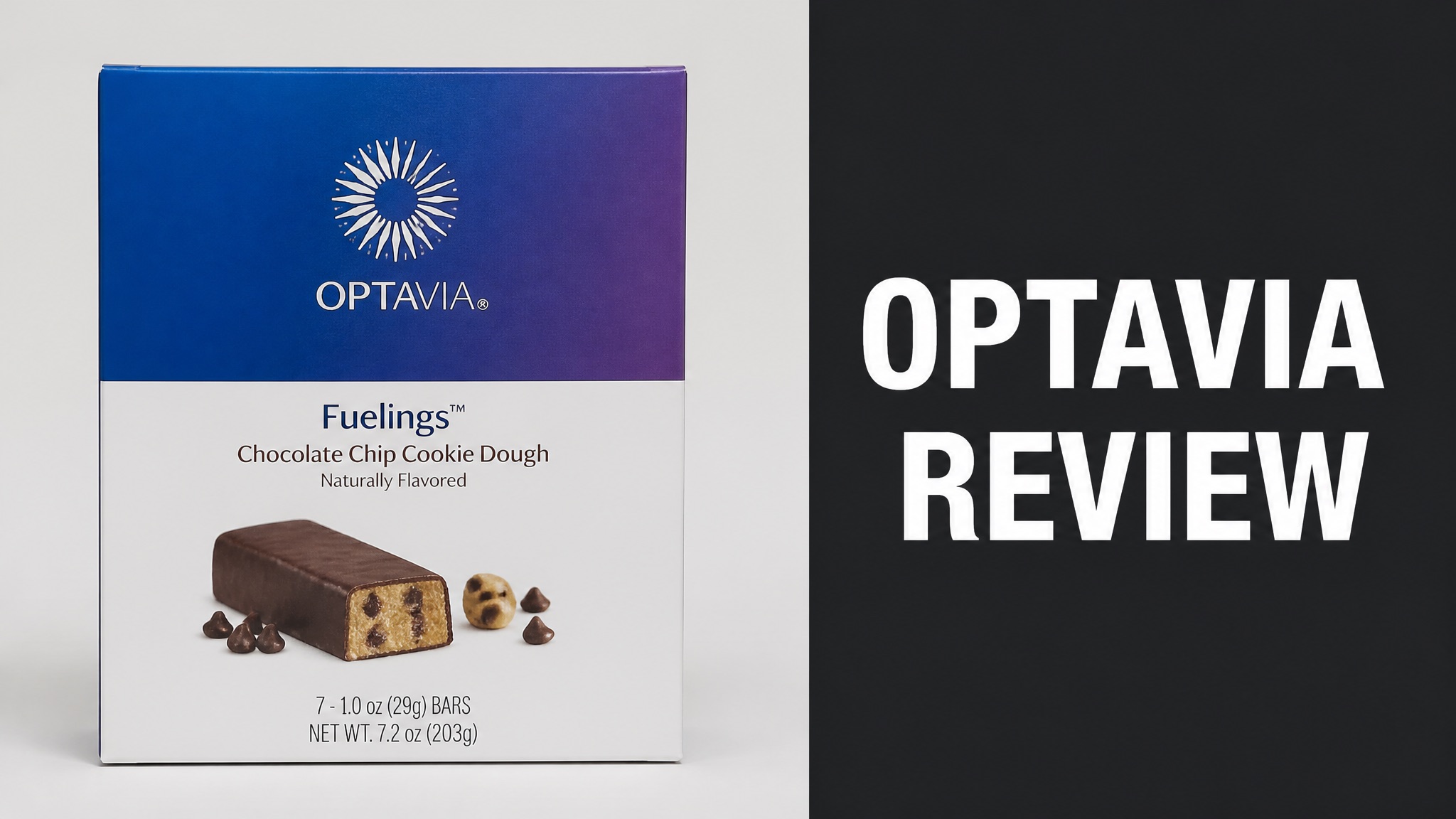
Optavia is a low-calorie weight loss program from Medifast built on packaged Fuelings, home-cooked meals and coaching. Independent coaches sell it directly to clients. The brand launched in 2017 and costs about $400 to $500 per month. Many dieters now ask whether the plan actually delivers on its promises.
The 5&1 Plan limits intake to 800 to 1,000 calories per day. Early weight loss is real, backed by a 16-week study funded by Medifast. Side effects include fatigue and muscle loss. Coaches earn commissions on every order. Costs run high, and no research tracks long-term results yet. Safety depends heavily on your health and any medical conditions you have.
Dietitians rate the plan poorly for sustainability, though it suits some healthy adults who want a short-term structure. This review covers how the plans work, what users say, who should avoid it and whether the price is justified. Read on before you commit to a single box of Fuelings.
What Is Optavia?
Optavia is a low-calorie, reduced-carb weight loss program built on packaged meal replacements, home-cooked meals and coaching. Medifast owns the brand, which replaced the older Take Shape for Life name in 2017. Independent coaches sell the plan, and clients order every product through a coach’s link. The program targets people who want structure over choice.
The program mixes branded Fuelings with one to three homemade ‘Lean and Green’ meals each day. Here’s the thing: every plan follows the same structure of six small eating moments, spaced two to three hours apart.
Quick Facts:
- Owner: Medifast, which rebranded the program in 2017
- Core food: over 60 packaged Fuelings
- Home cooking: one to three Lean and Green meals daily
- Support: a coach, an app and community forums
What Are Optavia Fuelings?
Optavia Fuelings are branded shakes, bars, soups, cookies, pastas and puddings that are low in carbs and high in protein. Each product also contains added probiotics. The line includes more than 60 items, from vanilla shakes to mac and cheese. Whey protein, soy protein isolate and sugar substitutes keep the carbs low. Most only need water or a microwave.
Whey protein, soy protein isolate and sugar substitutes keep carbs low. In fact, Fuelings average just over 105 calories per serving. That’s tiny, so the plan needs six of them to fill a day.
How Does Optavia Work?
Optavia works by capping daily calories through portion-controlled Fuelings plus one lean protein and vegetable meal. Most dieters start on the Optimal Weight 5&1 Plan. The plan delivers roughly 800 to 1,000 calories per day. The company claims 12 pounds (5.4 kg) lost in 12 weeks. Coaches guide each step of the process.
You eat every two to three hours and add 30 minutes of moderate exercise on most days. Does that sound simple? It is. The plan removes most food decisions, which is the main reason people finish week one.
Optavia Plans:
| Plan | Daily Structure | Calories |
|---|---|---|
| Optimal Weight 5&1 | 5 Fuelings, 1 Lean and Green meal | 800-1,000 |
| Optimal Weight 4&2&1 | 4 Fuelings, 2 meals, 1 snack | 1,100-1,300 |
| Optimal Health 3&3 | 3 Fuelings, 3 Lean and Green meals | Maintenance |
What Is a Lean and Green Meal?
A Lean and Green meal is a homemade dish built around lean protein, non-starchy vegetables and healthy fats. A serving holds 5 to 7 ounces (145 to 200 grams) of cooked protein. Add three servings of vegetables and up to two servings of fats. Think grilled chicken, salmon or tofu with broccoli and olive oil. Home cooking stays simple by design.
Fried foods, refined grains, butter, full-fat dairy and alcohol stay off the menu. The program also offers a dining-out guide. To put it simply, you cook one clean plate and let the packaged food handle the rest.
How Does the Maintenance Phase Work?
The maintenance phase starts with a six-week transition that raises calories slowly to no more than 1,550 per day. Fruit, low-fat dairy, whole grains and legumes return to the plate during this stretch. Starchy vegetables like sweet potatoes and corn come back as well. Coaching continues throughout the transition. The shift is gradual by design.
After six weeks, the plan moves to the Optimal Health 3&3 Plan. Coaching continues. So, the product spend continues too, which matters when you add up the real cost later.
Does Optavia Work for Weight Loss?
Yes. Optavia produces short-term weight loss because the 5&1 Plan cuts calories far below normal intake. A 16-week study of 65 adults with excess weight or obesity found an average loss of 5.7% of body weight. In that study, 28.1% of participants lost more than 10% of their weight. Medifast funded that research, which limits its weight.
In that study, 28.1% of participants lost more than 10%. Medifast funded the research, though. The control group also ate 1,500 calories or more, which is a gentler approach. Why does that matter? It makes the comparison less fair.
Coaching mattered too. Participants who completed 75% of coaching sessions lost twice as much weight as others. No study has tracked long-term results yet. Bottom line: the early drop is real, and the lasting result is unproven.
Study Results:
- Study length: 16 weeks
- Participants: 65 adults with excess weight or obesity
- Average loss: 5.7% of body weight
- Lost over 10%: 28.1% of participants
- Funding source: Medifast
Is Optavia Keto?
No. Optavia is not a ketogenic diet because its meals do not draw most calories from fat. A true keto plan requires roughly 90% of daily calories from fat. Fuelings and Lean and Green meals stay low in carbs but high in protein. The two approaches share a low-carb label and little else. Macros separate the two plans clearly. Optavia leans on protein while keto leans on fat.
The confusion is understandable. Both approaches cut bread, sugar and starch. But the macros differ. Optavia leans on protein, and keto leans on fat.
What Do Optavia Reviews Say?
Optavia reviews split sharply between quick early results and complaints about cost, hunger and heavy processing. Dietitians rate the plan low. Healthline gave it 2.25 out of 5, and Good Housekeeping’s experts raised sustainability concerns. Real users sound mixed too. Some love the structure, while others quit within weeks. Expect both praise and warnings below.
Real users sound mixed too. Some love the structure. Others quit within weeks. Let me break that down in the two sections below.
Review Scorecard:
| Category | Healthline Score |
|---|---|
| Overall | 2.25 out of 5 |
| Weight loss | 2 out of 5 |
| Sustainability | 3 out of 5 |
| Nutrition quality | 1.5 out of 5 |
What Do Optavia Users Praise?
Users praise the speed of early weight loss, the minimal meal prep and the daily accountability from a coach. Fuelings arrive ready to eat or need only water. Just one meal per day requires real cooking. Many reviewers also credit the daily check-ins for keeping them on track through the first month. That structure keeps early motivation high.
Some reviewers also report better blood pressure. The plan keeps sodium under 2,300 mg per day. And here’s the best part: the program ships logs and sample menus, so nobody has to plan from scratch.
What Do Optavia Users Complain About?
Users complain about the monthly price, constant hunger, repetitive packaged food and pressure to buy through a coach. Many describe fatigue during the plan. Others report rebound weight gain after finishing it. Dietitians echo these points, and several describe the Fuelings as heavily processed with soy, whey and thickeners. Cost tops nearly every complaint list.
Dietitians echo these points. Erin Holley, RD, of The Ohio State University Wexner Medical Center, says the plan isn’t realistic long term. That’s the trouble. A diet you can’t live on will not hold your results.
What Are the Side Effects of Optavia?
The side effects of Optavia come mostly from extreme calorie restriction. Intake can drop to 710 to 950 calories per day. Reported effects include fatigue, headaches, dizziness, hair thinning, muscle loss and gallstones. Fuelings average just over 105 calories, so portions stay very small. Fatigue shows up first for most users.
Safe loss runs one to two pounds (0.5 to 0.9 kg) per week. Intake should not fall below 1,200 calories for women or 1,500 for men without medical supervision. Muscle cramps, numbness or a racing heartbeat need urgent care.
Reported Side Effects:
- Fatigue and headaches
- Dizziness and lightheadedness
- Temporary hair thinning
- Muscle loss
- Gallstones or gallbladder disease
Who Should Avoid Optavia?
People with heart, thyroid, liver or kidney disease, diabetes, cancer or eating disorders should see a doctor before starting Optavia. The company also warns against the 5&1 Plan for breastfeeding mothers and people with gout. Those groups need medical guidance first. A medical check protects against avoidable harm.
Type 1 diabetes, sedentary older adults and people who exercise over 45 minutes daily are on the same warning list. Teens have a separate plan. To be clear, a medical check comes first.
How Much Does Optavia Cost?
Optavia costs roughly $400 to $515 per month ($4,800 to $6,180 per year) for Fuelings alone. Individual servings run $2.96 to $3.46, while kits come to $3.38 to $3.60 per serving. Groceries for Lean and Green meals add to the total. Premier members receive automatic monthly shipments of their chosen kit. Costs climb quickly over several months.
Premier membership ships products automatically each month. That convenience has a catch. A class action lawsuit alleged the company enrolled customers in auto-shipment without consent. Check your order settings carefully.
Sample Prices:
| Product | Servings | Price |
|---|---|---|
| Essential Fuelings box | 7 | $22.25 |
| Select Fuelings box | 7 | $24.25 |
| Essential Optimal Kit | 119 | $378.25 |
| Essential Optimal Kit (4&2&1) | 140 | $423.00 |
Is Optavia Worth the Price?
No. Optavia costs more than a basic grocery budget and offers no proof of lasting results. The price covers heavily processed products and coaching from people who are not required to hold nutrition credentials. Whole-food portion control gives similar short-term results for a fraction of the money. Budget plans beat it on value.
Think of it this way: you pay premium rates for convenience. Does convenience justify $500 a month? For most dieters, whole-food portion control gives similar short-term results at a fraction of the cost.
Is Optavia Legit?
Yes. Optavia is a real operating company owned by Medifast, and the products ship as described. The legitimacy questions center on its multilevel marketing model, coaching quality and auto-ship practices. Weight loss does happen on the plan, so the product itself is genuine. The business model draws the criticism. The model, not the food, is the debate.
Weight loss does happen on the plan. In plain English, the product is real and the structure works short term. The business model is where critics focus their concerns.
Legitimacy Checklist:
- Parent company: Medifast, a public company founded in 1981
- Sales model: direct sales through independent coaches
- Coach requirement: purchase of a business kit
- Legal history: a class action over auto-shipment enrollment
Who Are Optavia Coaches?
Optavia coaches are independent salespeople, often former clients, who earn commissions on every product their clients order. They are not certified nutrition professionals. Becoming a coach requires buying an Optavia business kit. New clients meet their coach daily for the first four days, then set a schedule together. Coaches earn bonuses for recruiting new clients.
New clients meet their coach daily for the first four days. After that, the pair sets a schedule. Every order runs through the coach’s link. So, the person guiding your diet also profits from your spending.
Is Optavia Worth It?
No. Optavia delivers fast short-term weight loss but fails on cost, nutrition quality and long-term sustainability. The 800 to 1,000 calorie plan is hard to maintain. Rebound weight gain is a documented risk once the diet ends. Dietitians from Healthline to Good Housekeeping rate the plan poorly for lasting health. Short plans can work, but long ones rarely do.
The good news? You can borrow the useful ideas. Portion control, regular meals, high protein and daily accountability all work without a $500 monthly bill. Pay attention to this: ask your doctor before any very low calorie plan.
Pros and Cons Summary:
| Pros | Cons |
|---|---|
| Fast short-term weight loss | Costs $400-$515 per month |
| Minimal cooking and planning | Highly processed foods |
| Built-in coaching support | Coaches lack nutrition credentials |
| Simple, structured rules | Rebound weight gain risk |
Who Is Optavia Best For?
Optavia suits healthy adults who want a rigid, short-term structure and have the budget to support it. Busy people who hate meal planning get the most value from the packaged format. A doctor should approve the plan before the first Fueling. Anyone with a medical condition needs that approval even more. Budget matters as much as health here.
It fits poorly for anyone with medical conditions, tight budgets or a history of disordered eating. Look, the plan is a short-term tool. Treat it that way, and set an exit strategy before you start.