
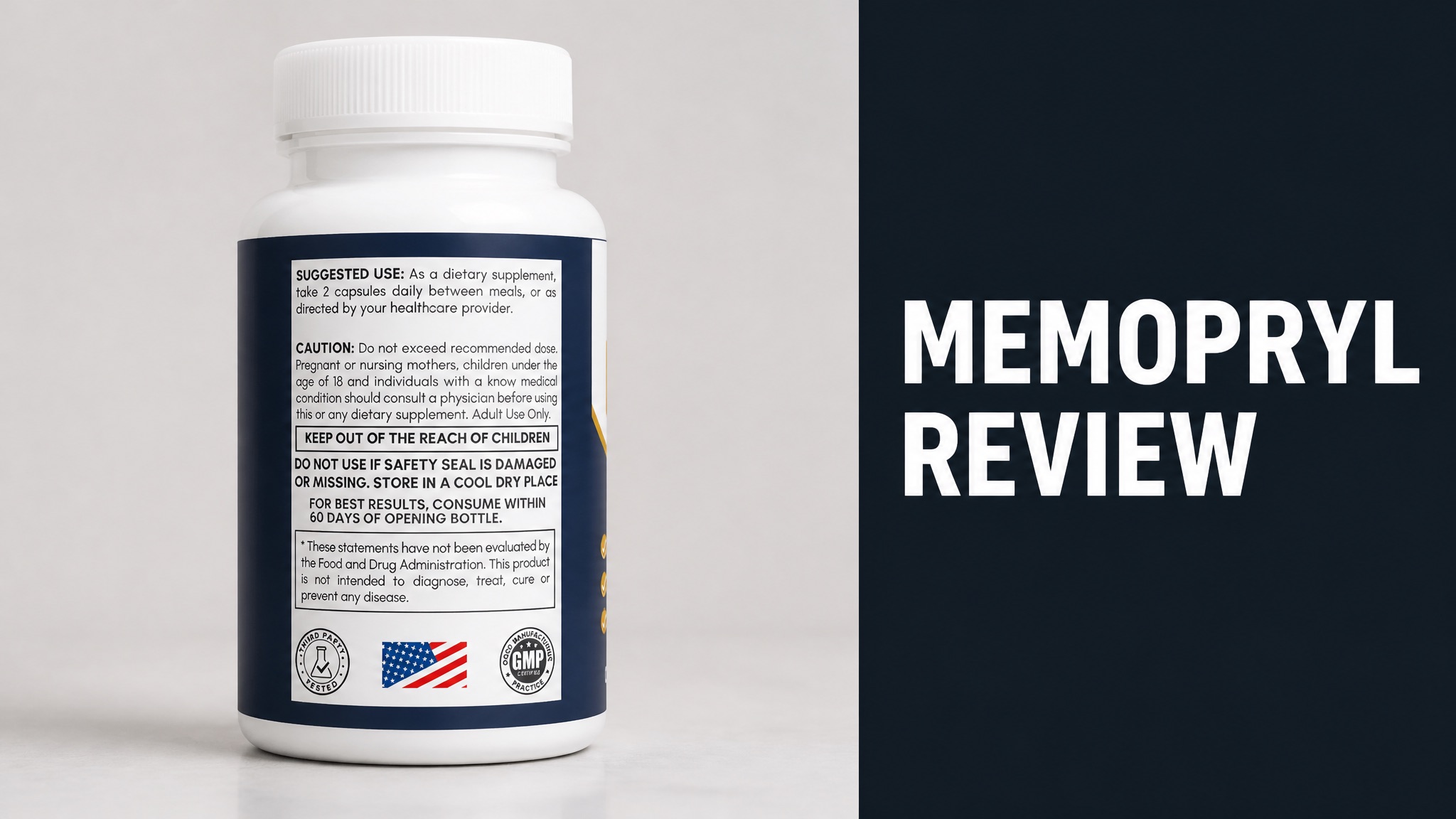
Memopryl is a daily capsule sold as memory, focus and brain support for adults over 40. The formula packs eight ingredients, including Ginkgo Biloba and Alpha-GPC. Buyers meet it through slick ads, and many of those ads are fake.
The product itself is real and ships from a Colorado return address. Its marketing is the problem. Deepfake celebrity ads, copycat websites and bold dementia claims surround it. Pricing runs from $49 to $79 per bottle, and a 60-day refund window applies.
Below, you get the ingredients, the real evidence, the side effects and the complaints. You also get the price, the refund rules and a plain verdict. Read it before you hand over a card number.
What Is Memopryl?
Memopryl is a daily nootropic capsule marketed for memory, focus and mental clarity in adults aged 40 and older. Each bottle holds 30 capsules, which equals a one-month supply. The brand positions it as a cumulative supplement, not a quick stimulant, and the formula contains no caffeine.
The target buyer is easy to spot. You forget names, lose your train of thought or reread paragraphs. In fact, that frustration drives most searches for the product. The marketing leans on it hard.
Who Makes Memopryl?
The brand lists a return address at 19655 E 35th Drive, Suite 100, Aurora, Colorado 80011. Orders run through ClickBank, a large payment and affiliate platform. The brand says production happens in an FDA-registered, GMP-compliant US facility. Those are standard claims, and no independent audit backs them here.
Here’s the catch. Many unrelated sites copy the name, such as memopryl-com.com and memopryil.com. Only the brand’s own site can confirm which store is the real one.
How Does Memopryl Work?
Memopryl targets memory through the acetylcholine system, brain cell membranes and blood flow, using a stack of eight plant and amino acid ingredients. Acetylcholine is the neurotransmitter tied most closely to learning and recall. Two ingredients, Alpha-GPC and Huperzine-A, attack that system from different angles.
Does a stack guarantee results? No. The brand cites 30 studies, but those cover single ingredients at their own doses. The brand does not publish per-capsule milligram amounts, so the link between studies and this formula stays unproven.
What Does Each Memopryl Ingredient Do?
Ginkgo Biloba is studied for blood flow and oxidative stress. Phosphatidylserine is a phospholipid found in brain cell membranes. Alpha-GPC is a bioavailable choline source. Huperzine-A comes from Chinese club moss and slows the breakdown of acetylcholine. Bacopa Monnieri is a slow-build herb that needs weeks of use.
N-Acetyl L-Carnitine supports energy production inside brain cells. L-Glutamine feeds the glutamate pathway. St. John’s Wort is known for mood support. Bottom line: each ingredient has some research, but none is proven to restore memory.
What Are the Ingredients in Memopryl?
Memopryl contains eight active ingredients: Ginkgo Biloba, Phosphatidylserine, Alpha-GPC, Huperzine-A, Bacopa Monnieri, N-Acetyl L-Carnitine, L-Glutamine and St. John’s Wort. The brand sells it as caffeine-free. Public pages do not show the dose of each ingredient, which is the biggest transparency gap.
Memopryl Ingredient Summary:
| Ingredient | Studied Role |
|---|---|
| Ginkgo Biloba | Blood flow, oxidative stress |
| Phosphatidylserine | Brain cell membranes |
| Alpha-GPC | Acetylcholine support |
| Huperzine-A | Acetylcholine retention |
| Bacopa Monnieri | Memory retention over weeks |
| N-Acetyl L-Carnitine | Brain cell energy |
| L-Glutamine | Neurotransmitter building block |
| St. John’s Wort | Mood support |
Is St. John’s Wort in Memopryl Safe?
Not for everyone. St. John’s Wort interacts with many common prescription drugs, including antidepressants, birth control pills and blood thinners such as warfarin. The interaction can weaken a drug or raise its side effects. Anyone on prescription medication needs a doctor’s clearance before ordering.
Honestly, that is the single most important safety point in the formula. Ads rarely mention it. Check it first, not after the bottle arrives.
What Are the Benefits of Memopryl?
Memopryl is claimed to support memory, sharper focus and mental clarity through daily use over two to three months. The brand says some users notice a difference within two to three weeks. Those timelines come from the seller, not from an independent trial.
Claimed Benefits:
- Better memory recall
- Sharper focus
- Greater mental clarity
- Support against everyday brain fog
Does Memopryl Actually Improve Memory?
Unproven. No published clinical trial tests the Memopryl formula itself. Individual ingredients show mixed results, and ginkgo trials in particular have produced inconsistent outcomes. A UCLA Health review of memory supplements reached a cautious view of the whole category.
Some buyers feel a mild lift anyway. Why? Sleep, expectation and routine all change at the same time. That makes credit hard to assign to the capsule.
Does Memopryl Cure Alzheimer’s or Dementia?
No. No dietary supplement cures, reverses or prevents Alzheimer’s disease or dementia. The FDA warns that marketers target older adults with miracle claims, and that such products may interact with essential medications. Any ad promising a reversal is a red flag.
What Do Memopryl Reviews Say?
Memopryl reviews split sharply between promotional articles that praise the formula and customer reports that describe billing and refund problems. Positive pieces usually come from affiliate or press release sites. Independent platforms show a far harsher picture.
What Are the Positive Experiences?
Supporters report calmer focus and easier recall after several weeks of use. Some praise the caffeine-free formula and the daily single-capsule routine. Others like the 60-day refund window. However, most of these accounts appear on sites that earn a commission on each sale.
What Are the Common Complaints?
Trustpilot lists Memopryl at about 1.5 out of 5 stars. Customers describe surprise charges between $12 and nearly $500, plus duplicate shipments. Many say they could not reach support or obtain a refund.
Reported Complaints:
- Unexpected recurring credit card charges
- Unordered or duplicate shipments
- Unreachable customer support
- Refund windows that expire before delivery
Is Memopryl Legit?
Partly. The product exists, ships from a real address and sells through ClickBank, but its advertising ecosystem is full of deception. A real product with a dishonest funnel is a different thing from an outright empty box. Both can cost you money.
Legitimacy Signals:
- Verifiable return address in Aurora, Colorado
- Phone and email support listed
- ClickBank handles payments and refunds
- No per-ingredient dosage published
- Many lookalike sites using the same name
- Poor independent customer ratings
Are the Memopryl Celebrity Endorsements Real?
No. Ads for Memopryl and similar products use AI deepfakes of public figures such as Bill Gates. Alzheimer’s Research UK has confirmed that the claimed investment story is false. The so-called honey recipe and Harvard doctor secrets follow the same scam template.
What Are the Side Effects of Memopryl?
Memopryl has no published side effect data of its own, so risks come from its eight ingredients. Ginkgo and St. John’s Wort carry the most documented concerns. Huperzine-A is potent and acts on acetylcholine, so it deserves respect.
Possible Medication Conflicts:
- SSRIs and other antidepressants
- Birth control pills
- Blood thinners such as warfarin
- Certain blood pressure drugs
- Immunosuppressants
Who Should Avoid Memopryl?
Pregnant or nursing women and anyone under 18 should skip it. People taking any of the drugs above need medical approval first. So does anyone with a diagnosed memory condition. Sudden or worsening memory loss calls for a doctor, not a supplement.
How Much Does Memopryl Cost?
Memopryl costs $79 per bottle for a small order, $69 per bottle for three and $49 per bottle for six. Larger bundles ship free. The two-bottle starter adds $9.99 shipping, per one review of the brand’s pricing.
Memopryl Pricing:
| Package | Price Per Bottle | Total |
|---|---|---|
| 2 bottles (60 days) | $79 | $158 + $9.99 shipping |
| 3 bottles (90 days) | $69 | $207 |
| 6 bottles (180 days) | $49 | $294 |
How Does the Memopryl Refund Policy Work?
The brand offers a 60-day money-back guarantee counted from the ship date. Empty bottles are accepted. You pay return shipping, and the parcel must arrive within the window. Refunds then take 5 to 10 business days.
The trap is timing. Buy six bottles and judge the result at month three, and the window has closed. Many complaints trace back to this and to hidden recurring charges.
Where to Buy Memopryl?
Buy Memopryl only from the brand’s official website, because lookalike domains and third-party listings carry extra risk. Search results show many clone stores. Amazon and Walmart listings also appear, but the brand says it does not sell there.
Steps for a Safer Purchase:
- Reach the official site through the brand’s own contact details, not an ad.
- Confirm the one-time price on the order page before paying.
- Uncheck any subscription or add-on boxes.
- Screenshot the order confirmation and refund terms.
- Check your card statement within a week.
Is Memopryl Sold on Amazon or Walmart?
Third-party sellers list Memopryl on both sites. The brand states it is not an authorized retailer there. Authenticity, storage and refund rules are therefore unclear. A listing on a big marketplace does not prove the product is genuine.
Is Memopryl Worth It?
Probably not. Memopryl is a real but unproven supplement wrapped in misleading advertising, and its price of $49 to $79 per bottle is steep for undisclosed doses. The ingredients are common and sold elsewhere for less. So what does that mean for you? Weigh the risks before any purchase.
Pros and Cons:
- Pro: caffeine-free daily capsule
- Pro: 60-day refund window
- Con: no dosage transparency
- Con: no clinical trial of the formula
- Con: deepfake ads and clone sites
- Con: St. John’s Wort drug interactions
What Are Better Alternatives to Memopryl?
Sleep, exercise, hearing checks and a doctor visit beat any capsule for memory complaints. Single ingredient supplements with listed doses, such as Prevagen’s apoaequorin, give clearer labels. Still, the same caution applies. A pharmacist can check any product against your medications.