
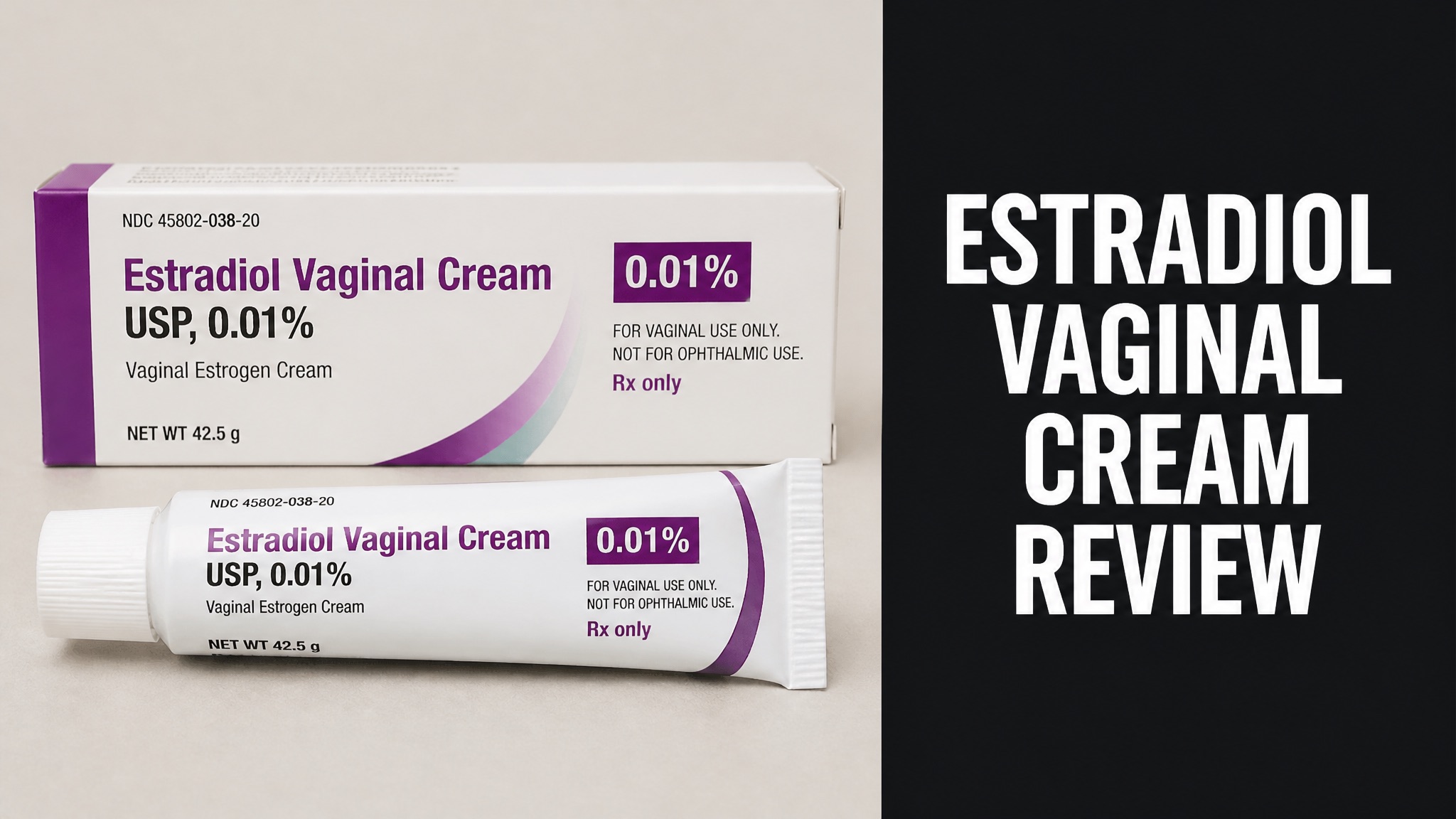
Estradiol vaginal cream is a prescription estrogen cream placed inside the vagina. Doctors use it for dryness, burning and painful sex after menopause. Estrace is the best-known brand. Generic versions contain the same 0.01% estradiol, and they cost far less at most US pharmacies.
The cream rebuilds thin vaginal tissue with a small local dose of estrogen. Very little reaches the bloodstream. Most women apply it at bedtime with a measured applicator. Relief starts in a few weeks, and full results take about 3 months. Side effects are usually mild, such as discharge, spotting or irritation.
So does it actually work? For most women with genitourinary syndrome of menopause, yes. This review covers how it works, how to apply it, side effects and cost. It also compares the cream with rings and inserts. Here’s what real users and menopause experts report.
What Is Estradiol Vaginal Cream?
Estradiol vaginal cream is a prescription local estrogen treatment for vaginal dryness, itching and painful sex from low estrogen. The FDA label approves the 0.01% cream for moderate to severe vulvar and vaginal atrophy due to menopause. A clinician reviews bleeding history and cancer risk first.
The cream works at the tissue level. It isn’t a full-body hormone plan. In fact, Apex Longevity describes it as treatment for local estrogen deficiency only. Clinicians adjust dose, frequency and duration based on comfort and follow-up exams.
Who usually starts it? Women whose intimacy has become painful or whose daily irritation won’t fade. Urinary symptoms during perimenopause or menopause are another common trigger. Many notice gradual gains in moisture and comfort over several weeks.
What Is in Estradiol Vaginal Cream?
Estradiol vaginal cream contains 0.1 mg of estradiol per gram of cream, which equals a 0.01% strength. Estradiol is the most powerful natural estrogen in the body. Dr. Barb DePree of MiddlesexMD notes that it’s bioidentical. That means it’s chemically identical to the estradiol the ovaries make.
The rest of the tube is cream base. The Prasco Laboratories label lists water, propylene glycol, stearyl alcohol and ceresin. It also lists hypromellose, sodium lauryl sulfate, methylparaben and edetate disodium as inactive ingredients.
Here’s the good news? The label lists none of the common allergens. That includes lactose, gluten, gelatin, peanut and soy. Still, Registered Nurse Melinda Hany notes that a local allergy to a non-estrogen ingredient is possible.
Key Ingredients:
- Estradiol 0.1 mg per gram (active)
- Water and propylene glycol
- Stearyl alcohol and ceresin
- Methylparaben (preservative)
- Edetate disodium and tert-butylhydroquinone
Is Estrace the Same as Generic Estradiol Cream?
Yes. Estrace cream shares the same active ingredient and dosage form as generic estradiol vaginal cream in the FDA Orange Book. Both contain estradiol 0.01% and both come with a reusable applicator. GoodRx notes that the generic is the lower-cost option for most patients paying cash.
Inactive ingredients can differ between manufacturers and strengths. So a woman who reacts to one brand may tolerate another. Pharmacists advise asking before switching between Estrace and a generic version.
How Does Estradiol Vaginal Cream Work?
Estradiol vaginal cream puts estrogen directly into vaginal tissue so the lining becomes thicker, softer and more moist. After menopause, low estrogen leaves the tissue thin, dry and sore. Flourish Midlife explains that restoring local estrogen lowers dryness and pain where it’s needed.
Think of it this way: the cream acts like lotion for skin that has lost its moisture. Winona reports that vaginal estrogen stimulates cell regeneration and increases blood flow. Healthy pH levels also return over the first weeks.
Does much estrogen reach the rest of the body? Not really. Studies cited by Winona confirm that vaginal estrogen doesn’t significantly raise blood estrogen levels. Blood levels stay close to postmenopausal baseline, according to BaselineRx.
What Is Genitourinary Syndrome of Menopause?
Genitourinary syndrome of menopause is the name for vaginal, vulvar and urinary changes caused by lower estrogen after menopause. It includes what doctors used to call vaginal atrophy. The Menopause Society estimates it affects roughly 27% to 84% of postmenopausal women and is likely undertreated.
Common GSM Symptoms:
- Vaginal dryness, burning or itching
- Pain or discomfort during sex
- Urinary urgency or frequency
- Recurrent urinary tract infections
Here’s the part most people miss: GSM gets worse over time. Hot flashes often fade, but these symptoms progress without treatment. Urologist Dr. Kelly Casperson notes that GSM often becomes noticeable 5 to 10 years after menopause begins.
Mild symptoms often respond to over-the-counter moisturizers and lubricants. For moderate to severe cases, The Menopause Society recommends low-dose vaginal estrogen. Dr. Casperson even calls it preventive care, much like daily skincare.
Does Estradiol Cream Treat Hot Flashes?
No. Estradiol vaginal cream does not treat whole-body symptoms like hot flashes, night sweats or brain fog. The dose stays mostly in local tissue. GoodRx confirms that it only targets vaginal and urinary symptoms, so women with hot flashes need a separate systemic estrogen.
The good news? Both can be combined. BaselineRx notes that the vaginal cream can be used alongside a systemic patch, gel or skin cream. Many women use a patch for hot flashes and the vaginal cream for dryness.
How Do You Apply Estradiol Vaginal Cream?
Estradiol vaginal cream is applied inside the vagina with a reusable plastic applicator marked from 1 g to 4 g. The user fills it to the prescribed line, inserts it like a tampon and presses the plunger. QuickMD advises washing hands first and lying on the back with knees bent.
Application Steps:
- Wash and dry your hands.
- Screw the applicator onto the open tube.
- Squeeze cream in until it reaches the prescribed dose line.
- Lie back with knees bent and insert the applicator gently.
- Press the plunger to release the cream.
- Wash the plunger and barrel with mild soap and warm water.
Hot or boiling water warps the plastic. So clean the applicator with warm water only. QuickMD also recommends gloves for anyone who recently handled hot peppers or menthol pain rubs.
What about external irritation? A pea-sized amount on the vulva helps. That’s the skin around the vaginal opening, the inner and outer lips and the area around the urethra.
Can You Apply It With Your Finger?
Yes. A fingertip is an accepted way to apply estradiol vaginal cream if the applicator feels uncomfortable. Dr. Stephanie Faubion, Director of the Mayo Clinic Center for Women’s Health, often recommends this method. The key is measuring the dose with the applicator first, then moving it to the finger.
Next, the user inserts the finger and spreads the cream along the vaginal walls. Slow movements help when tissue is dry or tender. And the applicator still gets cleaned the same way afterward.
When Is the Best Time to Apply It?
Bedtime is the best time to apply estradiol vaginal cream because lying down keeps the cream from leaking out. Mayo Clinic notes the cream is usually inserted at night. QuickMD reports that most of the medicine absorbs within 1 to 2 hours. The leftover is just cream base.
Daytime use works too. But gravity isn’t your friend here. Lying down for about 15 minutes after application reduces leakage, and a panty liner protects underwear.
How Long Does Estradiol Cream Take to Work?
Estradiol vaginal cream takes up to 3 months to work fully, though some relief often starts within 2 weeks. The NHS advises speaking to a doctor if nothing improves after 3 months. GoodRx gives the same 2 to 3 month window for the cream’s full effect.
Typical Results Timeline:
| Time | What Changes |
|---|---|
| Weeks 1-2 | Dryness eases as vaginal pH normalizes |
| Week 4 | Burning, itching and soreness drop |
| Weeks 8-10 | Sex becomes noticeably less painful |
| Week 12 | Full tissue benefits in place |
Week 4 is the turning point. QuickMD reports that tissue repair becomes obvious by then. At that stage most doctors move patients to a maintenance schedule.
Will symptoms come back after stopping? Usually, yes. Clinicians describe the cream as ongoing care. Random stops and restarts also slow progress, according to Apex Longevity.
What Is the Typical Dosing Schedule?
The label regimen starts with 2 to 4 grams daily for 1 to 2 weeks. The dose then tapers to 1 gram one to three times a week. BaselineRx follows the same maintenance plan after a 1 gram daily start. Flourish Midlife advises using the lowest amount that controls symptoms.
Winona reports that many women settle at twice-weekly maintenance doses. The prescriber sets both amount and frequency. Changing either without guidance isn’t recommended.
What Are the Side Effects of Estradiol Vaginal Cream?
Estradiol vaginal cream most often causes mild side effects like vaginal discharge, spotting, breast tenderness and local burning. Flourish Midlife lists vaginal yeast infections as another common reaction. Most effects settle within the first weeks as the tissue adjusts to estrogen again.
Common Side Effects:
- Vaginal discharge or cream leakage
- Spotting or light bleeding
- Mild breast tenderness or pain
- Burning, itching or irritation
- Vaginal yeast infection
- Headache, bloating or nausea
Spotting surprises many users. Why does it happen? Melinda Hany explains that tissue without estrogen for a while can bleed lightly as it rehydrates. Any new bleeding still needs a doctor’s check.
Discharge is usually clear or white and odorless. Sometimes it’s just the cream base leaving the body. A color change or strong smell is a reason to call a provider.
Is Estradiol Vaginal Cream Safe?
Yes. Low-dose vaginal estrogen is effective and generally safe for GSM, with minimal absorption into the bloodstream. The Menopause Society’s 2022 position statement prefers it over systemic therapy when only genitourinary symptoms exist. It may be used at any age and for extended periods if needed.
Product labels are more cautious, though. The FDA boxed warning covers endometrial cancer, stroke, blood clots and probable dementia. Dr. Kelly Casperson notes that ACOG has tried for years to remove these warnings for low-dose vaginal products.
What about breast cancer survivors? Winona cites research showing no significant rise in recurrence or mortality. Even so, The Menopause Society says survivors should use it only together with their oncologist.
Who Should Avoid Estradiol Vaginal Cream?
Women with unexplained vaginal bleeding should not start estradiol vaginal cream until a doctor checks the cause. Flourish Midlife flags past breast cancer, blood clots, stroke or liver problems. These need a provider talk first. The cream is not for anyone who might be pregnant.
Certain warning signs need urgent care. The label lists a new breast lump, sudden severe headache and vision or speech changes. Severe chest or leg pain and swelling of the lips, tongue or face are also red flags.
How Does Cream Compare to Rings and Inserts?
Estradiol vaginal cream offers more flexible dosing than rings or inserts and can treat external vulvar skin directly. Rings release estrogen slowly and get changed every 3 months. Inserts and tablets are tidy but need regular use. All three forms contain estradiol and treat GSM.
Cream vs Ring vs Insert:
| Form | How Often | Main Plus | Main Minus |
|---|---|---|---|
| Cream | Daily, then 1-3 times weekly | Adjustable dose, external use | Messy, leaks |
| Ring | Every 3 months | Low effort | Placement, dose tapers |
| Insert or tablet | Daily, then twice weekly | Minimal mess | No vulvar coverage |
Winona says the cream suits women with more pronounced symptoms who want broad coverage. Its soothing feel is another plus. But the mess is the trade-off.
Do You Need Progesterone With Vaginal Estrogen?
No. Low-dose vaginal estrogen does not require progesterone because so little estrogen reaches the uterine lining. The Menopause Society confirms that a progestogen isn’t required. Dr. Barb DePree notes the uterine lining isn’t at risk of hyperplasia with local estrogen therapy alone.
One caveat exists. The Menopause Society points out that randomized trials beyond 1 year are lacking. Systemic estrogen in pills or patches is different and still needs progesterone if the uterus is intact.
What Do Reviews Say About Estradiol Vaginal Cream?
User reviews of estradiol vaginal cream are mixed but lean positive overall. Many praise relief from dryness, painful sex and urinary symptoms. WebMD shows an average of 3.5 out of 5 stars across 557 reviews. About 66% of those reviewers report a positive effect.
Drugs.com is harsher. It lists 5.1 out of 10 across 514 topical estradiol reviews. Why the gap? Many low ratings cite messiness and early irritation rather than a lack of results.
Pros:
- Strong relief from dryness and painful sex
- Fewer urinary symptoms and UTIs
- Works on external vulvar skin
- Low systemic absorption
Cons:
- Leakage and messy application
- Applicator discomfort
- Early burning or spotting
How Much Does Estradiol Vaginal Cream Cost?
A 42 g tube of generic estradiol 0.01% cream costs around $28 (USD) with cash discounts at US pharmacies. Dr. Kelly Casperson says no one should pay more than $100 for vaginal estrogen. She notes that paying cash is often cheaper than using insurance for this prescription.
Cost Plus Drugs is another low-price route. Online clinics like Interlude also prescribe and ship the cream after a medical form. Some telehealth plans are HSA and FSA eligible.
Is Estradiol Vaginal Cream Worth It?
Yes. Estradiol vaginal cream is worth it for women with moderate to severe GSM. It delivers lasting relief from dryness and painful sex. It’s cheap as a generic, backed by The Menopause Society and safe for long-term use in most women. The main downsides are mess and a slow start.
Bottom line: patience pays off. Results build over 12 weeks, so consistent bedtime use matters most. Women who hate the mess can switch to an insert or ring with the same estradiol.