What Is an Anemia Diet Plan?
An anemia diet plan is a structured eating approach that prioritizes iron-rich foods, vitamin C for absorption, and nutrients that support red blood cell production — designed to correct iron-deficiency anemia through consistent, daily dietary choices rather than extreme restriction. The focus is steady iron intake, not a short-term fix.
Anemia occurs when the body lacks enough healthy red blood cells to carry oxygen efficiently. Iron-deficiency anemia is the most common form — it develops when iron intake, absorption, or storage is insufficient to meet the body’s needs. Diet is one of the most direct and accessible tools for correcting it.
This type of plan works best as a long-term framework rather than a one-week intervention. Consistency matters more than intensity. Repeated daily exposure to absorption-optimized iron sources builds iron stores steadily over weeks and months.
What Causes Iron-Deficiency Anemia?
Iron-deficiency anemia develops when iron intake is chronically below the body’s needs — caused by insufficient dietary iron, poor absorption, increased iron demand (pregnancy), or ongoing blood loss through menstruation, gastrointestinal bleeding, or surgery. Diet addresses intake and absorption directly.
Women of childbearing age, pregnant women, infants, children, and frequent blood donors are at highest risk. These groups have elevated iron requirements or accelerated iron loss relative to a standard adult male baseline. Their dietary iron needs are significantly higher.
Even when iron-rich foods are consumed regularly, poor absorption can prevent correction. Pairing iron sources with vitamin C and avoiding known absorption inhibitors at the same meal is as important as the iron content of the food itself.
Why Does Pairing Foods Matter for Iron Absorption?
Food pairing matters for iron absorption because vitamin C directly enhances non-heme iron absorption by converting it to a more bioavailable form — while tea, coffee, calcium-rich foods, and large amounts of bran consumed at the same meal actively block iron uptake. The timing of what you eat together is as important as what you eat.
Iron Absorption: Enhancers vs. Inhibitors:
| Enhances Iron Absorption | Inhibits Iron Absorption |
|---|---|
| Vitamin C (citrus, bell peppers, strawberries) | Tea and coffee |
| Meat, poultry, fish (heme iron — also boosts non-heme) | Calcium-rich foods (dairy) eaten at the same time |
| Fermented or soaked grains | Large amounts of bran or unsoaked whole grains |
| Acidic environments (lemon juice, vinegar) | Phytates from unprocessed legumes |
Spacing these inhibitors away from iron-rich meals — having coffee between meals rather than with them, eating dairy at a different time than iron-rich foods — maximizes the benefit of every iron-containing food consumed throughout the day.
What Foods Are Highest in Iron?
The highest-iron foods fall into two categories: heme iron from animal sources and non-heme iron from plant sources. Heme iron sources — red meat, organ meats, poultry, and fish — are absorbed at 15-35%, making them significantly more bioavailable than non-heme iron from plants, which absorbs at 2-20%.
Both categories are valuable in an anemia diet plan. Heme iron delivers highly absorbable iron efficiently. Non-heme iron from beans, lentils, spinach, and fortified grains adds volume and variety. Combining both — and pairing non-heme sources with vitamin C — builds the most effective iron intake profile.
What Are the Best Animal Sources of Iron?
The best animal iron sources are beef liver (the most iron-dense food available), lean red meat, dark turkey and chicken meat, oysters, clams, and canned sardines — all delivering heme iron that absorbs directly and efficiently without requiring vitamin C pairing.
Top Animal Iron Sources:
| Food | Iron per 100g | Notes |
|---|---|---|
| Beef liver | ~6.5mg | Highest heme iron source |
| Oysters (cooked) | ~5-7mg | Also high in zinc and B12 |
| Lean ground beef | ~2.5mg | Choose lean cuts (90%+ lean) |
| Dark turkey meat | ~2mg | Higher iron than white meat |
| Canned sardines | ~2.9mg | Convenient, affordable |
Organ meats like liver are the most iron-dense foods that exist. Even small portions deliver significant iron. For those who do not enjoy liver, lean red meat 2-3 times per week combined with other iron sources throughout the day achieves the same goal gradually.
What Are the Best Plant Sources of Iron?
The best plant iron sources are lentils, chickpeas, kidney beans, tofu, spinach, pumpkin seeds, quinoa, and iron-fortified cereals and bread — all high in non-heme iron that absorbs significantly better when eaten alongside vitamin C-rich foods.
Top Plant Iron Sources:
- Lentils — ~3.3mg per 100g cooked
- Tofu (firm) — ~2.7mg per 100g
- Spinach (cooked) — ~3.6mg per 100g
- Pumpkin seeds — ~8.8mg per 100g (raw)
- Fortified breakfast cereal — varies, up to 18mg per serving
- Quinoa (cooked) — ~1.5mg per 100g
- Dark chocolate (70%+) — ~11.9mg per 100g
Fortified cereals deserve special attention. A single serving of iron-fortified cereal can deliver 18mg of iron — close to the full daily recommended intake for adult women (18mg) in one bowl. Pairing it with orange juice or strawberries at breakfast converts that iron into an absorbable form efficiently.
What Does a 7-Day Anemia Diet Plan Look Like?
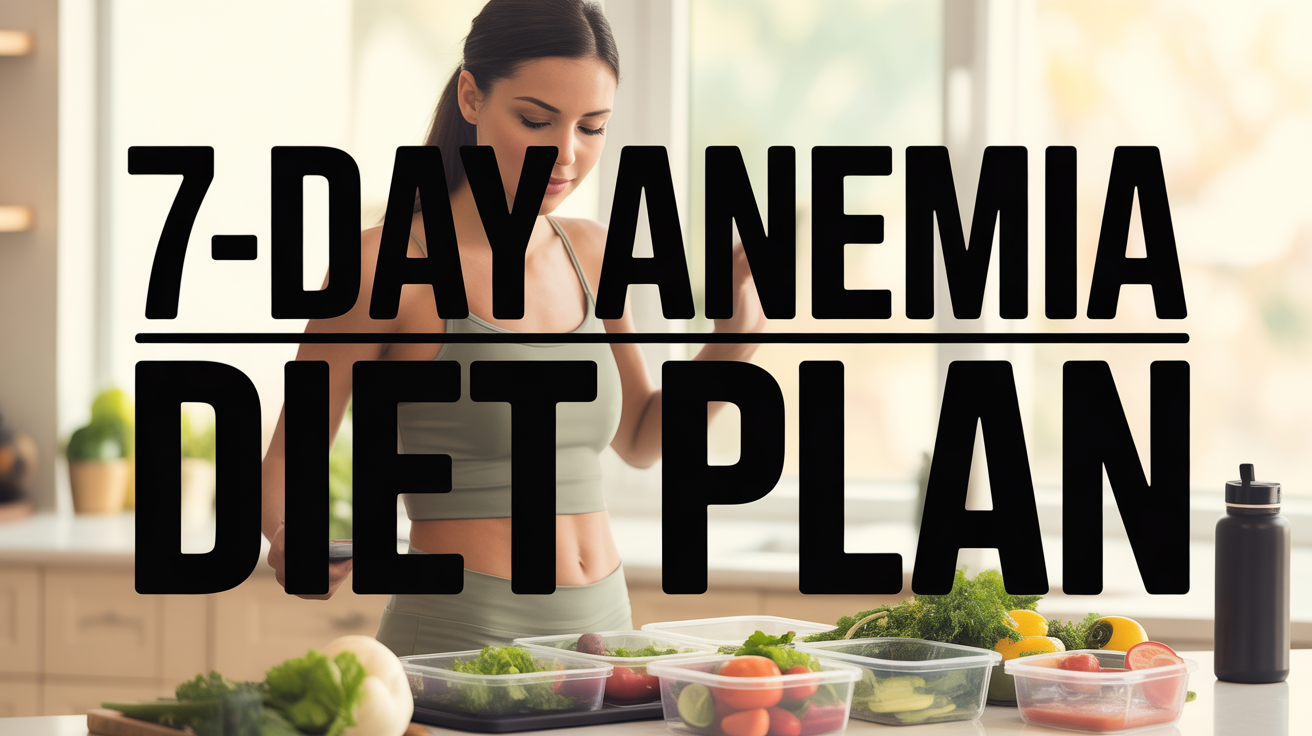
A 7-day anemia diet plan distributes iron intake across three main meals and planned snacks daily, combining heme and non-heme iron sources with vitamin C at each meal while spacing tea, coffee, and calcium foods away from iron-rich eating windows.
The weekly structure emphasizes consistency and variety rather than extreme single-day iron loading. Spreading iron across the day prevents the absorption ceiling that large single doses hit, while ensuring the gut receives steady stimulation for iron uptake throughout recovery.
What Should You Eat for Breakfast on an Anemia Diet?
The best anemia breakfasts pair iron-fortified cereal or oats with vitamin C-rich fruit — orange juice, strawberries, or kiwi — creating an absorption-optimized start to the day that can deliver 10-20mg of iron in the first meal alone.
Anemia-Friendly Breakfast Options:
- Iron-fortified cereal + orange juice + sliced strawberries
- Smoothie bowl with fortified grains, banana, and kiwi
- Oatmeal with raisins, pumpkin seeds, and fresh berries
- Whole grain toast with peanut butter + small glass of OJ
- Scrambled eggs with spinach + orange slices on the side
Hold the coffee until at least an hour after breakfast. Coffee and tea contain tannins that bind to iron and dramatically reduce absorption. Having coffee mid-morning instead of with breakfast is one of the highest-impact single habit changes for improving iron status on a consistent diet.
What Are Good Lunch and Dinner Options for Anemia?
Good anemia lunches and dinners combine a lean protein iron source with leafy greens or legumes and a vitamin C component — examples include lentil and spinach stew with a squeeze of lemon, grilled beef with roasted bell peppers, or baked fish with quinoa and sautéed greens.
Sample 7-Day Anemia Meal Plan:
| Day | Lunch | Dinner |
|---|---|---|
| Day 1 | Lentil soup with tomato and lemon | Lean beef stir-fry with bell peppers and spinach |
| Day 2 | Chicken and chickpea salad with orange segments | Baked salmon with quinoa and roasted broccoli |
| Day 3 | Spinach and tofu wrap with lemon dressing | Turkey meatballs with tomato sauce and whole grain pasta |
| Day 4 | Bean and vegetable soup with crusty bread | Grilled chicken with sweet potato and steamed kale |
| Day 5 | Iron-fortified grain bowl with roasted vegetables | Beef liver with caramelized onions and green beans |
| Day 6 | Lentil and spinach stew | Grilled turkey with roasted vegetables |
| Day 7 | Bean and vegetable soup | Baked fish with quinoa and sautéed greens |
Dark chocolate makes an effective iron-rich snack at 70%+ cocoa — delivering ~11.9mg per 100g alongside antioxidants. A small portion (20-30g) daily adds meaningful iron without excess sugar, especially when eaten between meals rather than with dairy.
What Foods Should You Avoid on an Anemia Diet?
The foods to limit on an anemia diet are not universally ‘bad’ foods — they are absorption inhibitors that should be spaced away from iron-rich meals rather than eliminated entirely: tea, coffee, dairy, calcium supplements, and large amounts of bran or unsoaked whole grains.
Tea and coffee are the most significant inhibitors in practice because most people drink them with or immediately after meals. Tannins and polyphenols in both beverages bind to non-heme iron and reduce absorption by up to 60-70% in some studies. Shifting coffee and tea to mid-morning or mid-afternoon — away from iron-rich meals — preserves most of the iron value those meals provide.
Calcium competes with iron for the same intestinal transport proteins. Consuming high-calcium foods — dairy, calcium-fortified drinks, calcium supplements — at the same time as iron-rich foods significantly reduces iron uptake. Spacing calcium intake to between-meal windows resolves this conflict entirely.
How Long Does an Anemia Diet Take to Work?
An anemia diet takes 3-6 months of consistent high-iron eating to meaningfully replenish depleted iron stores, even when dietary intake is optimal — because the intestine has a daily absorption ceiling of roughly 1-2mg of non-heme iron per day under normal conditions. The timeline is physiological, not motivational.
Hemoglobin levels typically begin to improve within 2-4 weeks of consistent iron-rich eating or supplementation. Iron stores (measured by ferritin) take significantly longer to normalize. This is why continuing the dietary plan beyond initial symptom improvement matters — restoring stores prevents rapid relapse.
Ready to get a proven weight loss plan that integrates iron-optimized nutrition? Managing anemia through food is a long game. The 7-day structure provides the framework. Consistency over months delivers the results.
Does an Anemia Diet Replace Iron Supplements?
No. For moderate to severe iron-deficiency anemia, dietary changes alone are usually insufficient to correct the deficiency fast enough — iron supplements prescribed by a doctor deliver far higher absorbable iron doses than food can provide and are typically required alongside the diet plan.
Diet and supplements work best together. Supplements correct the acute deficiency faster. The diet maintains iron levels after the supplement course ends, preventing recurrence. Relying on diet alone for severe anemia extends the recovery unnecessarily and leaves the patient iron-deficient for longer.
Pregnant women, those with gastrointestinal absorption conditions (celiac, Crohn’s), and anyone with ongoing blood loss require medical supervision for anemia management. A registered dietitian can build an individualized plan that accounts for these factors and works alongside any prescribed supplementation.
What Symptoms Improve on an Anemia Diet?
The symptoms most directly improved by a consistent anemia diet are fatigue, weakness, pale skin, shortness of breath during light activity, headaches, and dizziness — all of which reflect the oxygen-carrying deficit that low iron creates, and all of which improve as iron stores rebuild over weeks and months.
Fatigue is typically the first symptom to improve as hemoglobin rises. Energy levels are the most direct proxy for iron status — most people with iron-deficiency anemia feel noticeably more energetic within 2-4 weeks of consistent iron-rich eating combined with supplementation, even before full laboratory normalization.
Concentration and cognitive clarity also improve as iron levels rise. Iron is essential for dopamine and serotonin synthesis. Low iron impairs neurotransmitter production, contributing to brain fog, low mood, and poor focus — symptoms that go far beyond just physical fatigue.
Want Your Free Anemia Diet Plan from Millennial Hawk?
You now have the full picture: which foods deliver the most absorbable iron, how to pair them for maximum uptake, which drinks to space away from meals, and what a practical 7-day structure looks like. Now get the complete meal plan with a grocery list, meal prep tips, and daily absorption-optimization rules built in.
Our team at Millennial Hawk put it together as a free resource. Sign up and get it sent straight to your inbox — so you can start your first iron-optimized week fully prepared.