
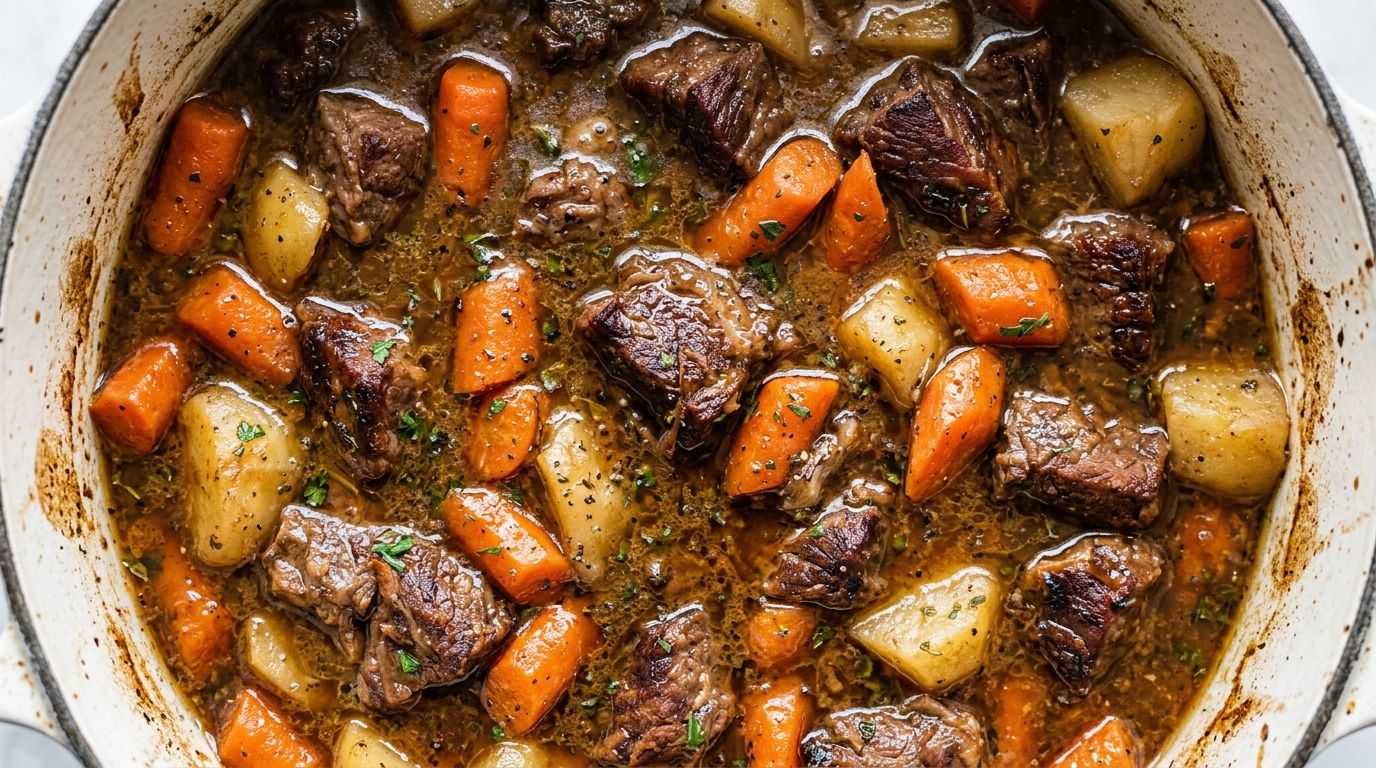
My stovetop beef stew is the recipe I reach for when I want something hearty and rich without much fuss. It cooks in one pot on the stove and fills the kitchen with a deep, savory smell. The tender beef, soft carrots, and thick broth make this one of my most-requested family dinners.
Prep Time: 20 minutes
Cook Time: 2 hours
Total Time: 2 hours 20 minutes
Servings: 6
Method: Stovetop
Why This Stovetop Beef Stew Works
The secret is browning the beef in batches before anything else goes in the pot. That caramelized crust on each piece builds the deep, meaty base that the whole stew depends on. Skipping this step gives you a pale, thin broth instead of a rich, glossy one.
Flour-coated beef does two things. It helps the meat brown faster and then dissolves into the broth as it simmers, thickening the stew naturally. I get a velvety, spoon-coating texture every time without any cornstarch slurry at the end.
Low and slow is the rule for stovetop beef stew. Two hours of gentle simmering gives the connective tissue in the stew meat time to break down fully. The beef turns fork-tender and the carrots and potatoes absorb the broth without falling apart.
Ingredients
- 2 lbs (900g) beef stew meat, cut into 1.5-inch cubes
- 3 tablespoons all-purpose flour
- 1 teaspoon salt
- 1/2 teaspoon black pepper
- 2 tablespoons olive oil
- 1 large onion, roughly chopped
- 3 cloves garlic, minced
- 2 tablespoons tomato paste
- 1 tablespoon Worcestershire sauce
- 4 cups (950ml) beef broth
- 1/4 cup (60ml) red wine or additional beef broth
- 3 medium carrots, cut into 1-inch pieces
- 3 medium Yukon Gold potatoes, cut into 1.5-inch chunks
- 2 bay leaves
- 1 teaspoon dried thyme
What You Need for Stovetop Beef Stew
Beef stew meat — chuck roast cut into cubes is the best choice. It has enough fat and connective tissue to stay moist and turn tender after a long simmer. Pre-cut stew meat from the butcher works, but the pieces are sometimes uneven — trim larger ones so they cook at the same rate.
All-purpose flour — tossed with the raw beef before browning. It forms the browned crust and later thickens the broth. Cornstarch or arrowroot powder work as gluten-free swaps, but add them at the end instead of at the start.
Tomato paste — this is the flavor builder most home cooks skip. Two tablespoons cooked directly in the pot for 60 seconds deepens the color and adds a savory, almost jammy richness to the stew.
Worcestershire sauce — adds a fermented, umami layer that makes the beef taste more complex. Soy sauce works in its place if you are out of Worcestershire.
Beef broth — use a good-quality broth here. Low-sodium gives you more control over the salt level. I use 4 cups and add a splash of red wine for extra depth.
Yukon Gold potatoes — hold their shape better than Russets during a long cook. They stay firm and creamy rather than turning mushy in the broth.
How to Make Stovetop Beef Stew
- Place beef cubes in a large bowl. Sprinkle with flour, salt, and black pepper. Toss until each piece is evenly coated.
- Heat olive oil in a large Dutch oven or heavy-bottomed pot over medium-high heat.
- Add beef in a single layer — do not crowd the pot. Work in 2 to 3 batches. Cook 3 to 4 minutes per side until deeply browned. Transfer to a plate and set aside.
- Reduce heat to medium. Add chopped onion to the same pot. Cook for 4 to 5 minutes, stirring often, until softened and lightly golden.
- Add minced garlic and tomato paste. Stir and cook for 60 seconds until the paste darkens slightly and smells rich.
- Pour in red wine (or 1/4 cup broth). Scrape up any browned bits stuck to the bottom of the pot.
- Add Worcestershire sauce and beef broth. Stir to combine.
- Return the browned beef and any resting juices to the pot. Add bay leaves and dried thyme.
- Bring to a boil, then reduce heat to low. Cover and simmer for 90 minutes.
- Add carrots and potatoes. Stir gently. Cover and simmer for another 30 minutes until vegetables are fork-tender and broth is thick.
- Remove bay leaves. Taste and adjust salt and pepper. Serve hot.
Stovetop Beef Stew Variations
Red Wine Beef Stew
Swap the 1/4 cup red wine for a full cup and reduce the beef broth to 3 cups. Use a dry red like Cabernet Sauvignon or Merlot. The stew takes on a deeper color and a slightly tangy, wine-forward flavor that pairs well with crusty bread.
Mushroom Beef Stew
Add 8 oz (225g) of sliced cremini mushrooms at the same time as the onion. They shrink significantly as they cook and give the broth an earthy, woodsy depth. Button mushrooms work, but cremini have more flavor.
Keto Beef Stew
Skip the flour coating and the potatoes. Use 1 tablespoon of tomato paste instead of 2, and replace carrots with diced celery root and radishes. Thicken the finished stew with 1 tablespoon of xanthan gum dissolved in 2 tablespoons of cold water, stirred in at the end.
Slow Cooker Beef Stew
Brown the beef and cook the onion and garlic on the stovetop first — do not skip this. Transfer everything to a slow cooker. Add broth, vegetables, and seasonings. Cook on low for 8 hours or on high for 4 hours. Stir before serving.
Instant Pot Beef Stew
Use the Saute function to brown the beef and cook the aromatics. Add all remaining ingredients. Seal the lid and cook on Manual High Pressure for 35 minutes. Do a quick release. Add vegetables and cook on Saute for 10 more minutes until tender.
Tips for the Best Stovetop Beef Stew
- I always brown the beef in batches with space between each piece. Crowding drops the pan temperature and steams the meat instead of browning it.
- Let the stew simmer uncovered for the last 20 minutes if the broth is too thin. It concentrates fast on a low, steady heat.
- Cut potatoes and carrots into larger chunks, not small dice. Smaller pieces turn to mush after 30 minutes in hot liquid.
- Taste for salt after the potatoes go in — not before. Potatoes absorb a lot of seasoning from the broth and the whole pot can end up undersalted.
- A Dutch oven is my first choice for this stovetop beef stew. The heavy base distributes heat evenly and holds a steady low simmer without scorching the bottom.
- I add the carrots and potatoes at the 90-minute mark, not at the beginning. Adding them too early turns them into soft, flavorless mush before the beef is fully tender.
Make Ahead & Storage
This stovetop beef stew keeps in the refrigerator for up to 4 days in an airtight container. I think it tastes better on day two — the broth thickens overnight and the flavors settle into each other.
To freeze, cool the stew completely and transfer to freezer-safe containers or zip-lock bags laid flat. Freeze for up to 3 months. Thaw overnight in the refrigerator before reheating. Reheat on the stovetop over medium-low heat, adding a splash of broth if the stew has thickened too much. Stir gently to avoid breaking up the tender beef pieces.
Common Questions
How do I thicken stovetop beef stew?
The flour coating on the beef thickens the broth naturally during the 2-hour simmer. If the stew is still too thin at the end, mix 1 tablespoon of cornstarch with 2 tablespoons of cold water and stir it in. Simmer uncovered for 5 more minutes to activate the starch.
What cut of beef is best for beef stew?
Chuck roast is the best cut for stovetop beef stew. It has enough fat and collagen to stay moist and turn genuinely tender after a long low-heat cook. Lean cuts like sirloin or round steak turn tough and dry in a stew — save those for grilling.
Can I make stovetop beef stew without wine?
Yes. Use an equal amount of extra beef broth in place of the red wine. Add 1 teaspoon of balsamic vinegar or a splash of soy sauce to replace the tangy, complex notes the wine would have contributed.
Why is my beef stew tough?
Tough beef stew means the meat did not cook long enough, or the heat was too high. Collagen breaks down between 180F and 200F (82C and 93C) over at least 90 minutes of gentle simmering. Rushing it on high heat tightens the muscle fibers instead of softening them.
Can I add other vegetables to this stovetop beef stew?
Yes. Parsnips, celery, and turnips all work well in beef stew. Add them at the same time as the carrots and potatoes. Frozen peas are a good addition at the very end — stir them in off the heat and they warm through in 2 minutes without turning mushy.
This stovetop beef stew is the kind of recipe that gets better every time you make it. Save it for your next cold-weather dinner and share it with anyone who loves a pot of hearty beef stew.
Easy Stovetop Beef Stew Recipe for the Family
Tender beef, carrots, and potatoes slow-simmered in a rich, thick broth — all in one pot on the stove.
Ingredients
- 2 lbs (900g) beef stew meat, cut into 1.5-inch cubes
- 3 tablespoons all-purpose flour
- 1 teaspoon salt
- 1/2 teaspoon black pepper
- 2 tablespoons olive oil
- 1 large onion, roughly chopped
- 3 cloves garlic, minced
- 2 tablespoons tomato paste
- 1 tablespoon Worcestershire sauce
- 4 cups (950ml) beef broth
- 1/4 cup (60ml) red wine or additional beef broth
- 3 medium carrots, cut into 1-inch pieces
- 3 medium Yukon Gold potatoes, cut into 1.5-inch chunks
- 2 bay leaves
- 1 teaspoon dried thyme
Instructions
- Place beef cubes in a large bowl. Sprinkle with flour, salt, and black pepper. Toss until each piece is evenly coated.
- Heat olive oil in a large Dutch oven or heavy-bottomed pot over medium-high heat.
- Add beef in a single layer — do not crowd the pot. Work in 2 to 3 batches. Cook 3 to 4 minutes per side until deeply browned. Transfer to a plate and set aside.
- Reduce heat to medium. Add chopped onion to the same pot. Cook for 4 to 5 minutes, stirring often, until softened and lightly golden.
- Add minced garlic and tomato paste. Stir and cook for 60 seconds until the paste darkens slightly and smells rich.
- Pour in red wine (or 1/4 cup broth). Scrape up any browned bits stuck to the bottom of the pot.
- Add Worcestershire sauce and beef broth. Stir to combine.
- Return the browned beef and any resting juices to the pot. Add bay leaves and dried thyme.
- Bring to a boil, then reduce heat to low. Cover and simmer for 90 minutes.
- Add carrots and potatoes. Stir gently. Cover and simmer for another 30 minutes until vegetables are fork-tender and broth is thick.
- Remove bay leaves. Taste and adjust salt and pepper. Serve hot.