
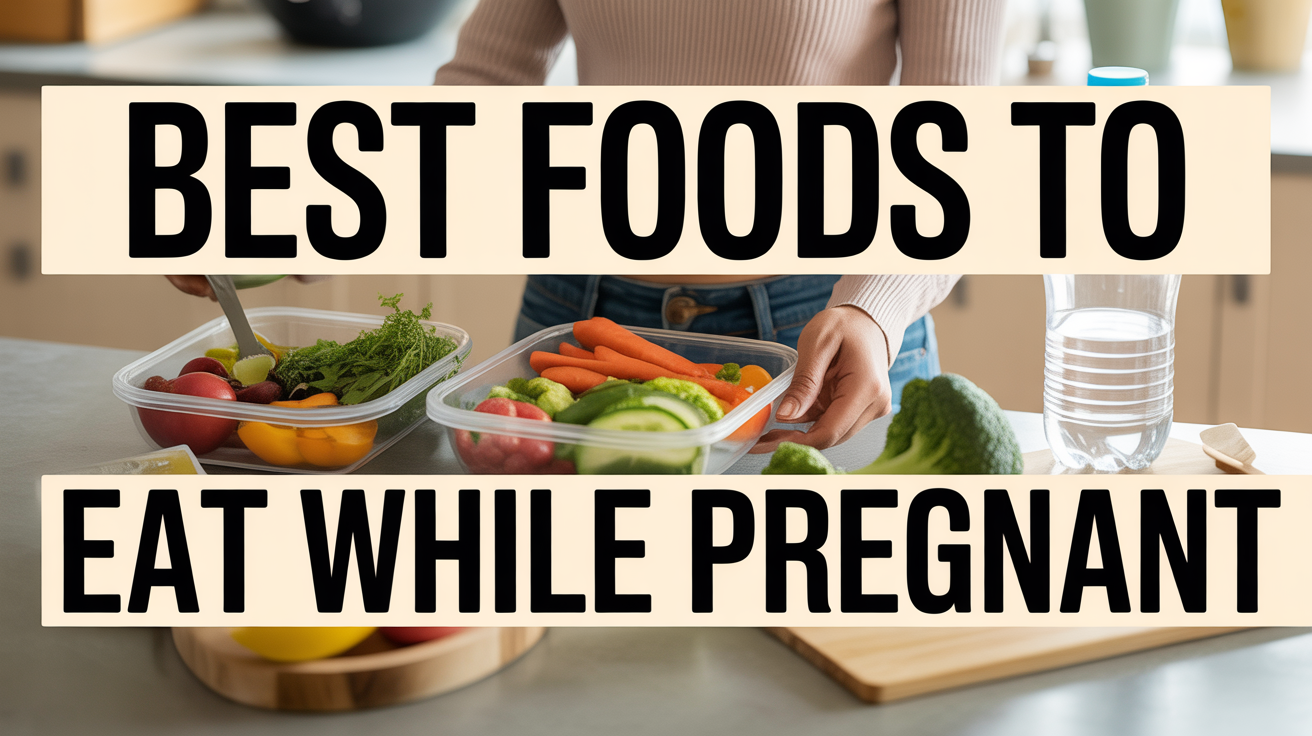
Pregnancy nutrition centers on eating fruits, vegetables, whole grains, lean proteins, and low-fat dairy every single day. What a pregnant woman eats crosses the placenta and directly fuels fetal organ development, immune function, and birth weight. The choices made at each meal matter more during pregnancy than at any other point in adult life.
Folate requirements increase during pregnancy due to rapidly dividing fetal cells. Iron needs jump from 18mg to 27mg daily. Omega-3 fatty acids support healthy brain, nerve, and eye development. Eggs deliver choline for spinal cord formation. Leafy greens supply calcium, iron, and vitamin D. And the foods a pregnant woman avoids matter just as much as the foods she eats.
This guide covers the best foods to eat while pregnant, the key nutrients the body needs most, which protein sources and fish are safest, what dairy and whole grains support fetal growth, and which foods to cut entirely. Everything here is built on FDA guidance, registered dietician recommendations, and peer-reviewed nutritional research.
What Are the Best Foods to Eat While Pregnant?
Pregnancy nutrition centers on eating fruits, vegetables, whole grains, lean proteins, and low-fat dairy every day. Here’s the thing: dietician Jillian Reece RD LDN CSOWM at Tufts Medical Center puts it simply: ‘The best diet will be one with plenty of fruits and vegetables, lean proteins, healthy fats, and whole grains.’ That’s not a complicated formula. It’s just real food, consistently.
The ‘eat for two’ saying is a myth worth putting to rest. Pregnancy doesn’t require double the food. The focus is on twice the nutritional quality. Choose nutrient-dense whole foods over ultra-processed options that add calories without meaningful vitamins or minerals.
Half the plate should be fruits and vegetables at every meal. One third should be wholegrain starchy foods. Protein and dairy fill the rest. Balance across all five food groups matters more than any single superfood or supplement.
Top 5 Food Groups for Pregnancy:
- Fruits and vegetables — at least 5 portions daily for vitamins, minerals, and fiber
- Whole grains — bread, brown rice, oats, and pasta for energy and B vitamins
- Lean proteins — meat, fish, eggs, beans, and tofu for tissue building
- Dairy or fortified alternatives — milk, yogurt, and cheese for calcium and vitamin D
- Healthy fats — avocado, nuts, seeds, and oily fish for omega-3 fatty acids
What Nutrients Does a Pregnant Body Need Most?
A pregnant body requires increased amounts of folate, iron, calcium, vitamin D, and omega-3 fatty acids — nutrients that directly drive healthy fetal development. Folate requirements increase due to rapidly dividing fetal cells. The FDA-mandated fortification program raised national blood folate levels and reduced neural tube defect rates.
Iron needs rise from 18mg to 27mg daily during pregnancy. Blood volume increases significantly, and the baby’s own blood supply is developing at the same time. Both demands draw heavily on maternal iron stores. Deficiency risk is real without consistent attention to iron-rich foods.
Calcium and vitamin D work together to build strong fetal bones and teeth. Vitamin D requirements jump from 5mcg to 15mcg daily during pregnancy. Dairy, fortified soy milk, leafy greens, and fish with edible bones — like sardines and pilchards — supply both nutrients efficiently.
And here is the best part: omega-3 fatty acids support healthy brain, nerve, and eye development all at once. Salmon, sardines, mackerel, walnuts, chia seeds, flaxseed, and soybeans are the primary sources. Eating fish 2-3 times per week delivers the omega-3 levels the developing brain actually needs.
Key Nutrient Requirements (Pregnant vs Non-Pregnant):
| Nutrient | Non-Pregnant | Pregnant |
|---|---|---|
| Iron | 18mg/day | 27mg/day |
| Folate | 400mcg/day | 600mcg/day |
| Calcium | 1,000mg/day | 1,000mg/day |
| Vitamin D | 5mcg/day | 15mcg/day |
| Vitamin B12 | 2.4mcg/day | 2.6mcg/day |
How Many Calories Should You Eat During Pregnancy?
Calorie needs during pregnancy change by trimester and depend on the mother’s pre-pregnancy weight and activity level. Most women with a healthy starting weight don’t need extra calories in the first trimester at all. Requirements increase in the second and third trimesters as the baby grows faster.
Short answer: don’t count calories. Focus on food quality instead. Choosing fresh, whole foods from the five food groups — and cutting back on high-fat, high-sugar ultra-processed items — supports healthy pregnancy weight gain without adding empty calories.
How Does Nutrition Affect Fetal Development?
Maternal nutrition directly drives fetal organ development, immune function, and birth weight from conception through delivery. Nutrients from food cross the placenta and fuel every stage of fetal growth. Healthy eating isn’t optional during pregnancy. The developing body depends on it completely.
Protein helps build all body tissues in the baby. Including protein-containing foods at each meal — meat, chicken, fish, eggs, dairy, nuts, and legumes — supports muscle development. It also boosts iron and calcium intake at the same time. Two goals covered in one decision.
And timing matters more than most people realize. Folic acid before and during early pregnancy prevents neural tube defects during the first 28 days when the neural tube closes. Iron and omega-3 intake matters most in the second and third trimesters as fetal blood structures and brain tissue grow rapidly.
Which Foods Support Baby Brain Development?
Eggs are one of the strongest foods for baby brain development, delivering choline that supports formation of a strong spinal cord and long-term memory function. Think of it this way: one egg provides a significant portion of daily choline needs. Omelets with vegetables and cheese make a brain-supporting pregnancy meal that takes under 10 minutes.
Salmon delivers DHA, the omega-3 fatty acid most directly linked to neural development. Vitamin D in salmon enhances brain and retina development in the fetus. Wild salmon is recommended over farm-raised for higher omega-3 content and lower contamination risk.
Red bell peppers contain three times the vitamin C of an orange. Does that matter for brain development? Absolutely. Vitamin C helps the body absorb more iron from food, and iron delivers oxygen to the developing brain. Red bell peppers also provide antioxidants that support the immune system and brain development in the growing baby.
Top Brain-Boosting Pregnancy Foods:
- Eggs — choline for spinal cord formation and memory development
- Wild salmon — DHA omega-3 for neural and retina development
- Walnuts — plant-based omega-3 fatty acids
- Red bell peppers — vitamin C for enhanced iron absorption
- Leafy greens — folate for neural tube protection in early pregnancy
What Role Does Protein Play in Pregnancy?
Protein builds all body tissues in the developing baby, from muscle fibers to organ walls, making it one of the most critical nutrients across all three trimesters. Lean proteins — chicken, turkey, seafood, and tofu — directly support muscle health in the growing baby. Tofu has the added benefit of containing calcium, making it a dual-purpose pregnancy food.
Lean beef, pork, and chicken are rich in protein, iron, and vitamin B. The iron component prevents anemia and fatigue in the mother while protecting against premature birth and low birth weight. Choose lean cuts and remove the skin from poultry to keep saturated fat in check.
In fact, beans and legumes might be the most efficient pregnancy food going. One cup of cooked legumes provides iron, folate, and calcium — and counts as both a protein serving and a vegetable serving. These are among the most affordable and nutritionally efficient foods on the shelf.
What Fruits and Vegetables Are Best During Pregnancy?
Pregnant women should eat at least 5 portions of a variety of fruit and vegetables every day — fresh, frozen, canned, dried, or juiced all count. Fruits and vegetables provide vitamins, minerals, and fiber that prevent constipation, which is a common pregnancy problem. A wide variety of colors ensures a broad nutrient spectrum.
Sweet potatoes are a rich source of beta-carotene (vitamin A) and potassium. They provide fiber and complex carbohydrates for sustained energy. Sweet potatoes bake, mash, or roast easily and pair well with lean proteins for a complete, nutrient-rich pregnancy meal.
Avocado is rich in healthy monounsaturated fats and is a great source of fiber. Avocado contains more potassium than a banana. Its fats support nutrient absorption and provide the building blocks for healthy fetal brain cell membranes.
Are Leafy Greens Important During Pregnancy?
Leafy greens are among the most nutrient-dense foods available during pregnancy, delivering potassium, vitamin K, calcium, iron, and folate in a single serving. Spinach, kale, and broccoli top the list. Our editors at Millennial Hawk consistently rank these greens among the top superfoods recommended for expectant mothers.
Broccoli provides folate, fiber, vitamin C, and calcium in meaningful amounts. Vitamin C in broccoli enhances iron absorption from plant-based sources. That’s a key benefit for vegetarian and vegan pregnant women who rely on plants for their iron intake. Broccoli also contributes small amounts of omega-3 fatty acids.
Which Berries Are Safe and Beneficial?
Berries provide water, healthy carbohydrates, vitamin C, fiber, and antioxidants — all while remaining low enough in calories that pregnant women can eat them generously without concern. They’re perfect pregnancy snacks and excellent additions to oatmeal or yogurt. Their antioxidant content supports maternal immune function throughout pregnancy.
Adding berries to plain Greek yogurt creates a snack that delivers calcium, protein, probiotics, vitamin C, and antioxidants in one bowl. This combination supports maternal gut health and immune function while covering fetal calcium needs. Both ingredients are easy to find in any supermarket.
What Protein Sources Are Safest During Pregnancy?
Safe protein sources during pregnancy include thoroughly cooked meat, poultry, seafood, eggs, beans, peas, soy products, nuts, and seeds — variety across all categories delivers the best amino acid and micronutrient coverage. Always cook meats until steaming, with no pink remaining and juices running completely clear.
All poultry, burgers, sausages, and whole cuts of meat — lamb, beef, and pork — must reach an internal temperature of at least 74°C (165°F). No pink meat. Clear juices. The cooking temperature rule eliminates bacterial contamination risk that poses the greatest danger to the developing fetus.
Is Salmon Safe to Eat While Pregnant?
Yes. Salmon is one of the safest and most beneficial fish to eat during pregnancy, delivering omega-3 fatty acids, vitamin D, and high-quality protein with low mercury risk. Expectant mothers should consume 8-12 oz (227-340g) per week. Wild salmon is recommended over farm-raised for higher omega-3 content and lower contamination risk.
Not all fish is safe. Do not eat bigeye tuna, king mackerel, marlin, orange roughy, shark, swordfish, or tilefish during pregnancy. The FDA and EPA jointly provide this guidance because mercury found in high concentrations in these species is linked directly to birth defects and developmental damage.
Fish Safety Guide for Pregnancy:
| Fish Type | Safe? | Weekly Limit |
|---|---|---|
| Wild salmon | Yes | 8-12 oz (227-340g) |
| Sardines | Yes | 8-12 oz (227-340g) |
| Light canned tuna | Yes | 8-12 oz (227-340g) |
| White albacore tuna | Limit | 6 oz (170g) max |
| King mackerel | No | Avoid entirely |
| Swordfish | No | Avoid entirely |
| Shark | No | Avoid entirely |
Are Eggs Good to Eat During Pregnancy?
Yes. Eggs are an excellent pregnancy food, delivering protein, vitamin D, and choline — a nutrient that supports brain development and strong spinal cord formation in the baby. Omelets with vegetables and cheese make a simple, nutrient-dense pregnancy dinner. Hard-boiled eggs are a portable snack option for busy expectant mothers.
Raw or undercooked eggs are on the foods-to-avoid list during pregnancy due to Salmonella risk. Cook all eggs until both the white and yolk are fully set. Pasteurized eggs are a safe alternative in recipes where full cooking is not possible, such as some sauces or dressings.
What Dairy and Calcium-Rich Foods Should You Eat?
Dairy foods — milk, cheese, and yogurt — are the most efficient sources of calcium during pregnancy, supporting strong fetal bone and teeth formation across all three trimesters. For food safety, all dairy must be pasteurized. Choose fat-free or low-fat (1%) varieties to limit saturated fat without sacrificing calcium content.
Non-dairy calcium sources fully cover the needs of lactose-intolerant pregnant women. Curly kale, okra, fortified soy drinks, sardines and pilchards with bones, and bread made with fortified flour all deliver meaningful calcium. These alternatives require no supplements when consumed consistently.
Calcium Sources for Pregnancy:
- Plain yogurt — 30% of daily calcium requirement per cup
- Pasteurized milk — one cup counts as a full dairy serving
- Hard cheese (cheddar, mozzarella) — 40g covers roughly 25% of daily calcium needs
- Fortified soy or almond milk — equal to dairy milk for calcium
- Sardines or pilchards with bones — a low-cost, high-calcium fish option
- Curly kale and okra — best leafy green sources of calcium
Does Greek Yogurt Help During Pregnancy?
Yes. One cup of plain yogurt delivers 30% of the daily calcium requirement during pregnancy while adding protein and live probiotics that support maternal gut health. Greek yogurt contains more protein than regular yogurt. The good bacteria in yogurt benefit both maternal digestion and the developing baby’s microbiome.
Choose plain Greek yogurt over sweetened varieties to avoid added sugars. Sweeten naturally with berries and cinnamon instead. A small tub — about 170g (3/4 cup) — counts as one dairy serving. Pregnant women need 2.5 dairy servings per day to meet calcium requirements.
What Whole Grains Are Best for Pregnant Women?
Whole grains provide sustained energy, B vitamins, magnesium, and fiber that support both maternal health and fetal development throughout pregnancy. Farro, quinoa, barley, and brown rice are among the top choices. Choose wholegrain or wholemeal versions of bread, rice, and pasta over refined white versions for higher nutrient density.
Starchy foods form over a third of a healthy pregnancy diet. They help pregnant women feel full without excess calories. Bread, potatoes, rice, pasta, oats, noodles, maize, millet, yams, and cornmeal all qualify. Leaving skins on potatoes adds extra fiber and nutrients with zero extra effort.
Want to speed things up on the nutrition front? Get a proven pregnancy weight plan built around these exact whole-food principles.
Is Oatmeal a Good Pregnancy Food?
Yes. Oatmeal is an excellent pregnancy food that keeps expectant mothers feeling full longer due to its complex carbohydrates, while also helping lower cholesterol levels. Adding oatmeal to the diet even a couple of times per week delivers meaningful benefits. Sweeten with berries or a small amount of maple syrup to avoid added sugar products.
Oats provide soluble fiber that relieves constipation — one of the most common discomforts during pregnancy. They also supply magnesium, B vitamins, and iron. A bowl of unsweetened oatmeal made with milk covers a grain serving and a dairy serving simultaneously. That’s one of the most efficient pregnancy breakfasts possible.
What Foods Should You Avoid During Pregnancy?
Pregnant women must avoid raw or undercooked meats, unpasteurized dairy, high-mercury fish, raw sprouts, deli meats unless heated to 74°C (165°F), and all alcohol throughout pregnancy. These foods carry bacterial, viral, or toxic contamination risks the developing immune system can’t handle. The consequences include miscarriage, birth defects, and premature delivery.
Alcohol is not safe at any level during pregnancy and must be avoided entirely. Caffeine passes through the placenta to the baby, which can’t metabolize it efficiently. Limit caffeine intake and cut back on drinks with added sugars. Water, milk, and 100% fruit juice are the safest beverage choices.
Foods to Avoid During Pregnancy:
- Raw or undercooked meat, poultry, and eggs
- Unpasteurized juice, milk, and cheese
- High-mercury fish: shark, swordfish, king mackerel, marlin, tilefish, bigeye tuna
- Deli meats and smoked seafood unless heated to 74°C (165°F)
- Raw sprouts: alfalfa, clover, radish, and mung bean
- Prepared meat or seafood salads (ham salad, chicken salad, tuna salad)
- All alcoholic beverages
Which Fish Are Unsafe During Pregnancy?
Bigeye tuna, king mackerel, marlin, orange roughy, shark, swordfish, and tilefish must not be eaten during pregnancy because their high mercury content is linked directly to birth defects and developmental damage in the fetus. Limit white albacore tuna to only 6 oz (170g) per week. Check local fishing advisories for wild-caught fish from regional waters.
Salmon, sardines, Atlantic mackerel, and light canned tuna are lower in mercury and safe to consume 8-12 oz (227-340g) per week. These fish deliver omega-3 fatty acids, protein, and vitamin D. The FDA and EPA jointly recommend these species as safe pregnancy choices.
Are Soft Cheeses Safe While Pregnant?
No. Some soft cheeses are unsafe during pregnancy because they carry a listeria risk that can cause miscarriage, stillbirth, or serious illness in newborns. Avoid brie, camembert, and blue-veined cheeses unless clearly labeled as made from pasteurized milk. Always check the label before consuming any dairy product during pregnancy.
Hard cheeses like cheddar and mozzarella are the safe choice. They’re high in protein and calcium and pair perfectly with eggs and lean meat sandwiches on whole wheat bread. Hard cheeses carry much lower listeria risk than soft, mold-ripened varieties due to their low moisture content.
Ready for Your Free Pregnancy Nutrition Plan?
You have the science. Now you need the plan. Our team at Millennial Hawk built a free, trimester-by-trimester pregnancy nutrition guide that takes everything on this page and turns it into a clear daily eating structure. Key nutrients by trimester. Safe food swaps. A grocery list built around real, affordable whole foods. No supplements to sell. No paywalls. Just the plan.
Three trimesters, three different sets of nutritional demands. Navigating what to eat, what to avoid, and how much to get of every key nutrient is genuinely overwhelming. A structured plan removes the guesswork. Get organized before the next grocery run. Sign up and the guide lands straight in your inbox.
What Does the Millennial Hawk Pregnancy Guide Include?
The Millennial Hawk pregnancy guide includes trimester-specific food lists, nutrient targets for folate, iron, calcium, and omega-3s, safe snack ideas, foods to avoid with explanations, and a simple grocery list. Everything is built around affordable whole foods found in any supermarket. No specialty health store required.
The plan is free and delivered straight to the reader’s inbox. No paywalls, no supplements to buy, no gimmicks. Just clear, evidence-based eating guidance for every trimester, written by the editorial team at Millennial Hawk. Sign up and get organized before the next grocery run.