
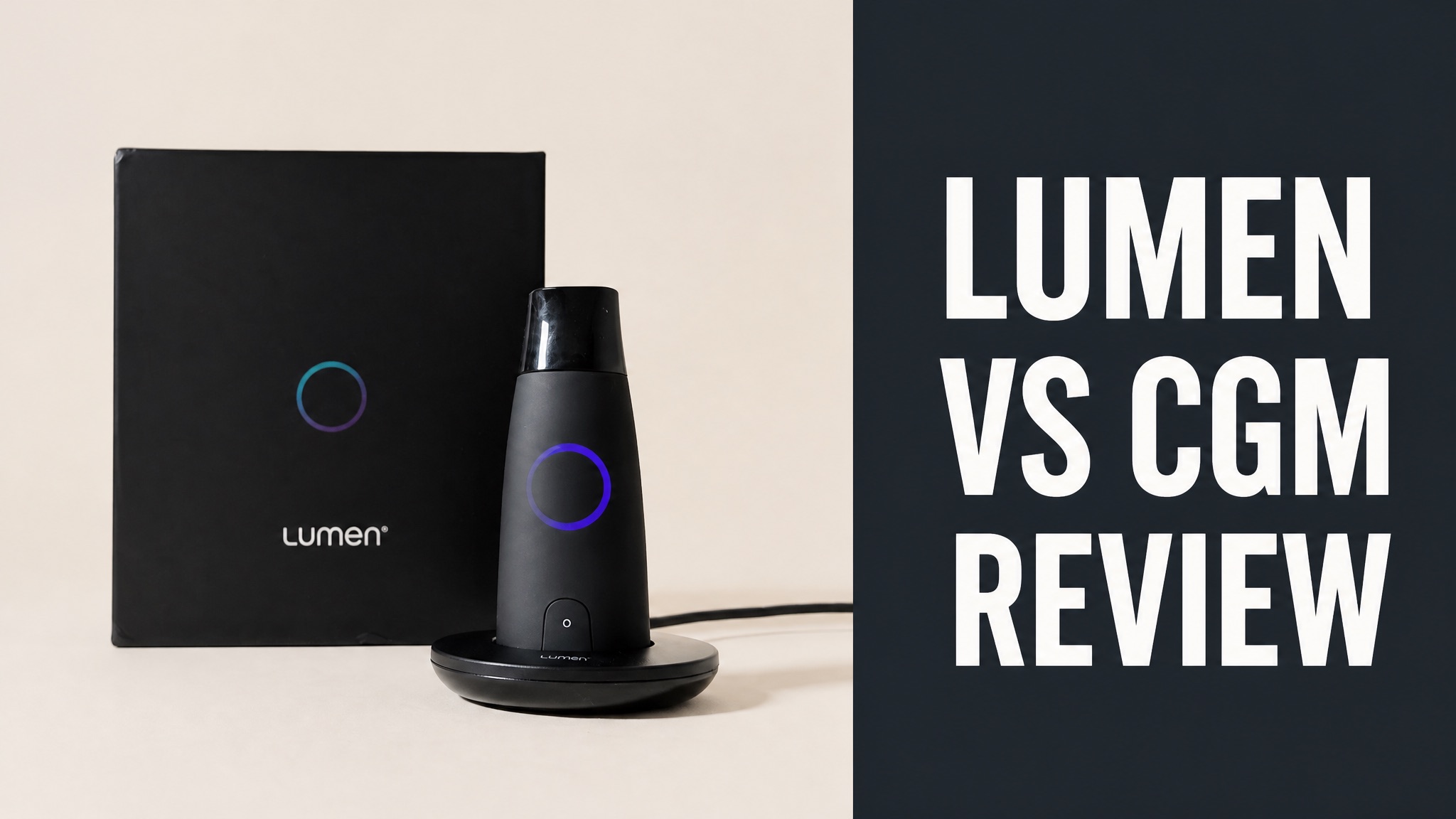
Lumen and a continuous glucose monitor (CGM) both track metabolism, but they measure different things. Lumen is a handheld breath device that reads carbon dioxide. A CGM is a skin sensor that reads glucose. Both feed an app that turns raw numbers into daily food guidance. Neither replaces a doctor.
The two devices differ in method, output and cost. Lumen reports whether the body burns carbs or fat. A CGM reports how blood sugar moves after meals. Studies back Lumen’s accuracy against lab carts. Premium access adds a recurring fee. Reviewers praise the insight but flag the learning curve. A CGM suits glucose questions best. Bottom line: the winner depends on the user.
The right pick depends on the goal. Weight loss and fuel tracking favor Lumen. Diabetes management and food spike tracking favor a CGM. The sections below compare accuracy, price, reviews and use cases. Readers finish with a clear answer on which device fits their needs. Pick one, then test it.
What Is the Difference Between Lumen and a CGM?
Lumen and a CGM track two different parts of metabolism, so neither device replaces the other. Lumen measures carbon dioxide in exhaled breath to show fuel use. A CGM measures glucose in the fluid under the skin to show blood sugar trends across the day and night. Many buyers assume the devices overlap, but they don’t. Each serves its own goal well.
Here’s the thing: the two tools answer different questions. Lumen asks what fuel the body burns right now. A CGM asks how food moves glucose. Which question matters more? Weight and energy goals lean on fuel data, while diabetes care leans on glucose data.
Quick Comparison:
| Feature | Lumen | CGM |
|---|---|---|
| What it measures | Exhaled CO2 (fat or carb burn) | Glucose in interstitial fluid |
| Worn on the body | No, handheld | Yes, skin sensor |
| Output | Score from 1 to 5 | Continuous glucose curve |
| Starting cost | $299 (USD) with 12 months of premium | From $179 (USD) per month with Nutrisense |
The table shows why direct price and feature comparisons mislead. Each device sits in its own category. Readers pick based on the metric they want to improve.
What Does a CGM Measure?
A CGM measures glucose levels in interstitial fluid throughout the day through a small wearable sensor. The sensor streams readings to a phone. Users see how meals, exercise and stress move blood sugar without finger pricks. Many people with diabetes rely on this feed daily. Alerts flag highs and lows as they happen, and data syncs quickly to the phone.
Lumen’s own guide lists dietary insights and insulin dose support as core CGM benefits. In fact, health enthusiasts now wear CGMs too. They want to spot spikes and patterns that hint at insulin resistance or prediabetes.
What Does Lumen Measure?
Lumen measures the concentration of carbon dioxide in a user’s breath to show whether the body burns carbs or fat. The method resembles a clinical metabolic cart. The device returns a level from 1 to 5. Levels 1 and 2 signal fat burn, while 4 and 5 signal carb burn. Think of it this way: the score maps the fuel mix in one simple number for the day.
The goal is metabolic flexibility. A flexible metabolism switches between carbs and fat with ease. Research links poor flexibility to metabolic syndrome and type 2 diabetes. Lumen also reports a weekly Flex Score to track progress over time.
How Does Lumen Work Compared to a CGM?
Lumen works through a breath maneuver, while a CGM works through a sensor inserted under the skin. Lumen needs about a minute per reading and no needles. A CGM takes readings automatically every few minutes. The sensor stays on the arm for days, then gets swapped for a new one. The two methods suit different habits. Each method fits a clear routine.
To be clear, the user effort differs sharply. A CGM runs in the background. Lumen asks for a deliberate breath each time. Is that a dealbreaker? Not for most users, but Innerbody testers called the early learning curve physically demanding and the measurement slow.
How Do Users Take a Lumen Reading?
A Lumen reading follows a fixed breathing pattern that the app guides in real time. Users inhale through the device, hold the breath for 10 seconds, then exhale. The app times each step. A wrong pattern produces an unreliable score, so the first week takes practice. Practice makes the maneuver routine within a week. The app gives a retake prompt if needed.
Steps:
- Wait at least 30 minutes after waking or exercising before measuring.
- Breathe out fully, then place the mouthpiece to the lips.
- Inhale until the app signals the stop.
- Hold the breath for 10 seconds.
- Exhale through the device and read the score from 1 to 5.
Timing matters here. Lumen advises the 30-minute wait because waking and working out release cortisol. That hormone shifts glucose and ketone levels, which skews the reading.
Does Lumen Actually Work?
Yes. Lumen delivered measurable weight and metabolic improvements in a 12-week pilot study of 27 adults with prediabetes. Participants lost 5.99 kg (13.2 pounds) on average. Body fat fell 2.93 percent and waist size dropped 6.23 cm (2.5 inches). The study was single-arm, so no control group exists. Blood markers improved as well. HbA1c fell 0.27 points.
Bottom line: the results are promising but not final. Without a control group, researchers can’t separate Lumen’s effect from general attention to diet. Does that erase the findings? No, but larger controlled trials would settle the question.
Pilot Study Results (12 Weeks):
- Body weight down 5.99 kg (13.2 pounds)
- Body fat down 2.93 percent
- Waist circumference down 6.23 cm (2.5 inches)
- HbA1c down 0.27 percent
Is Lumen Accurate?
Yes. Lumen passed validation against laboratory metabolic carts in a 2021 study and a later independent study. Researchers found it performed comparably to the lab standard. Innerbody noted the first study was funded by MetaFlow, the maker of Lumen. The second study was independent. Both results support the core claim. Independent validation adds weight.
Accuracy has limits. Lumen isn’t exact on absolute CO2 numbers. In fact, it tracks trends of change well. Reviewer Michael Kummer found it accurate most of the time. One morning reading conflicted with his blood ketone test, and Dr. Ben Bikman said such a mismatch is unusual.
What Do Lumen Reviews Say?
Reviews split into praise for the metabolic insight and frustration over cost and support. Innerbody called Lumen a mix of mostly good and some frustrating. Users value the clear fuel data and food guidance. Complaints center on the subscription fee, the slow measurement and thin support options. Few reviewers call it a scam. Most rate readings as useful.
Here is the part most people miss: the praise and the complaints come from the same product. The data is useful. The ongoing cost is real. Worth it? Reviewers say yes for committed users, and no for people who rarely measure.
What Do Users Like About Lumen?
Users like the plain score, the food logging and the personal nutrition plans. Innerbody found the food log fast, with a database that returns accurate macros. Entries take seconds for repeat meals. One Lumen user reported losing 42 pounds (19 kg) in eleven months. The app also remembers recent foods. Daily check-ins show how each meal shifts fuel use.
The device also replaces clinic visits. Respiratory exchange ratio tests at clinics cost $50 to $100 (USD) per visit. A few days of Lumen readings beat that cost. At the same time, the testimonial comes from Lumen’s own site, so treat it as marketing.
What Are the Common Complaints About Lumen?
Complaints focus on the subscription cost, the learning curve and weak customer support. Innerbody testers found the AI support chatbot unhelpful. The advanced features lock behind premium after the first year. Some users also dislike the plant-heavy meal suggestions. Still, no reviewer called the readings useless, and most would buy again if it cost less.
Common Complaints:
- Ongoing subscription for advanced features
- Physically demanding learning curve at the start
- Slow measurement process
- Limited support through an AI chatbot
- Plant-heavy food recommendations
How Much Does Lumen Cost Compared to a CGM?
Lumen costs $299 (USD) for the device plus 12 months of premium membership. After that, premium runs $19 per month or $159 per year. Without premium, users keep breath readings but lose nutrition plans, food logging and granular insights. A second person on a Duo plan pays $38 per month. Prices shift, so check the official site before buying today.
The pricing changed recently. Older reviews cite $199 with one free month. Now the first-year total is $299 instead of $408. Why does that matter? Year two costs $159 on the annual plan, so the long-run bill stays modest next to CGM programs.
Price Comparison:
| Option | Starting Price | Ongoing Cost |
|---|---|---|
| Lumen | $299 (USD) with 12 months premium | $19 per month or $159 per year |
| Lumen Duo | Second device at $130 (USD) | $38 per month or $240 per year |
| Nutrisense CGM | From $179 (USD) per month | Monthly program fee |
CGM programs bill monthly and include sensors plus dietitian support. Lumen bills for the app only. The comparison depends on how long the user plans to track.
Is Lumen Worth the Price?
Yes. Lumen is worth the price for users who measure daily and follow the nutrition guidance. Kummer noted he spent more on blood glucose and ketone strips over time. Value depends on consistent use, since a drawer-bound device delivers nothing. Casual users get less value from the membership. Reviewers stress steady daily use over many months to see value.
Innerbody offers a smart tip. Use the first 12 premium months to learn what each score means. Afterward, apply that knowledge without paying more. Self-disciplined users can drop the membership and keep the free breath readings.
Which Is Better, Lumen or a CGM?
Neither device wins outright. Each fits a different goal, so the better choice follows the user’s priority. Lumen suits fuel tracking, weight loss and fasting timing. A CGM suits diabetes management and spotting food-driven glucose spikes. Wrong goal, wrong tool. That’s the honest answer. Neither tool is a clear winner for every single shopper today.
So what does that mean for a buyer? Start with the question to answer. Blood sugar response to meals points to a CGM. Fat versus carb burn points to Lumen. Short answer: match the metric to the goal before comparing prices.
Can You Use Lumen and a CGM Together?
Yes. Lumen and a CGM complement each other because they track different signals. Lumen shows how habits affect metabolic flexibility. A CGM shows how specific foods, workouts and stress move blood sugar. Together, the two give a fuller metabolic picture. Lumen’s journal calls the pairing a strong combination. The two devices work side by side in use.
Note the source. Lumen’s own journal makes this claim. Still, the logic holds. Kummer correlated his Lumen data with a CGM and blood ketone tests. Pairing devices costs more, so most users start with one.
Who Should Choose Each Device?
Lumen fits users focused on weight loss, fasting and fuel use, while a CGM fits users focused on glucose control. People with diabetes need glucose data, which Lumen doesn’t provide. Healthy users chasing energy and body composition gain more from breath data. Each group gets better data from its own tool. Medical advice comes first for any condition.
Best Fit:
| Goal | Better Device | Reason |
|---|---|---|
| Diabetes management | CGM | Tracks glucose and insulin response |
| Weight loss and fasting | Lumen | Shows fat or carb burn |
| Food spike tracking | CGM | Shows glucose after meals |
| Lower ongoing cost | Lumen | $159 (USD) per year after year one |
Bottom line: pick Lumen for metabolic fuel and a CGM for glucose. Anyone with a diabetes diagnosis needs medical guidance before choosing either tool.