
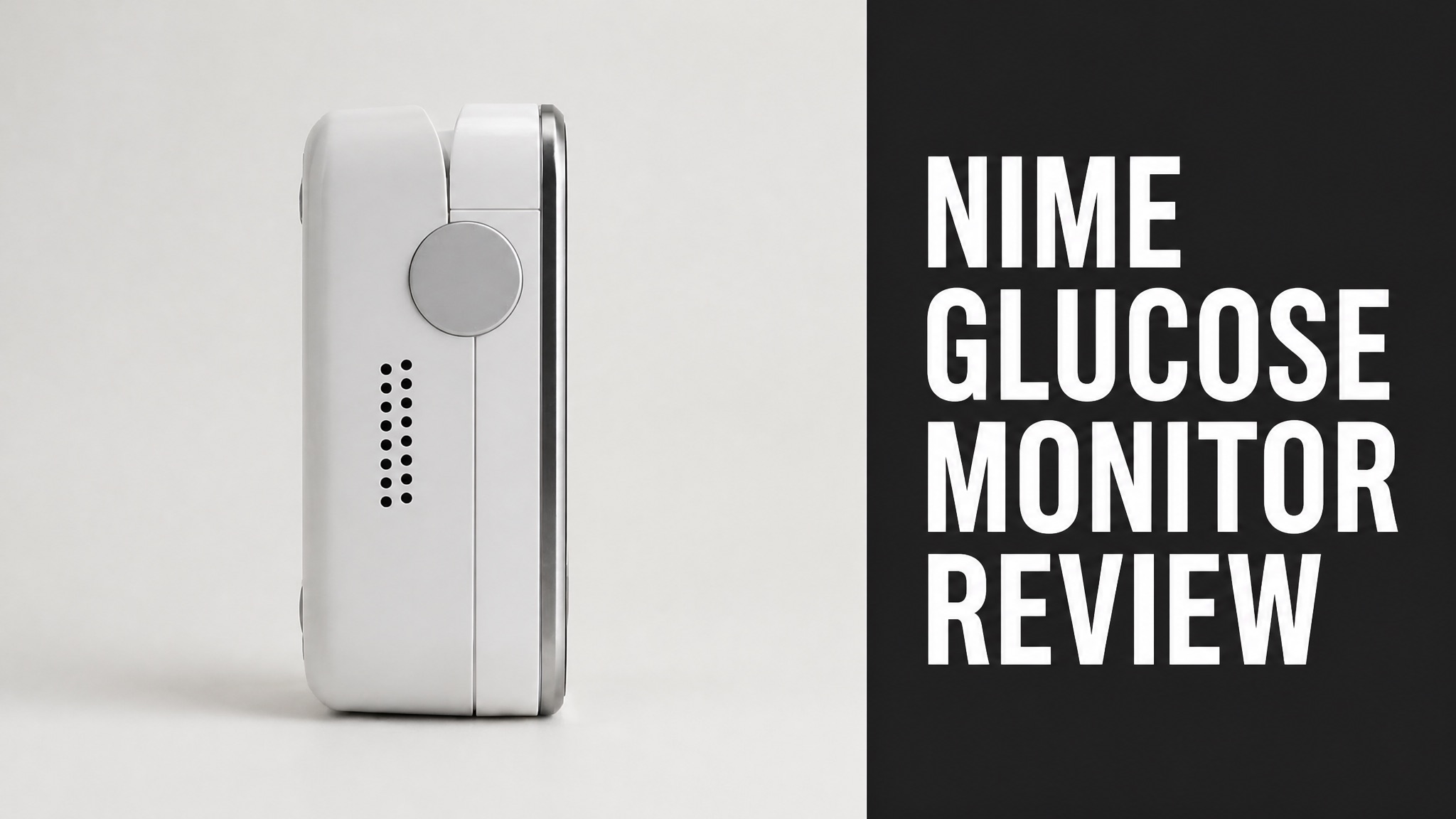
The Nime brand glucose monitor is a handheld finger-touch gadget sold online as a needle-free meter. The listings promise 99% accuracy in five seconds. No regulator listing or clinical study supports that claim, and the store also sells beauty and home items. Buyers get no proof.
Diabetes groups state that no device reads glucose accurately through the skin surface. Researchers have tested many optical methods without success. Reviews of the seller point to order and support problems. The price sits near 36 euros (38 USD) after a steep markdown. Safer tools exist at pharmacies. Check any claim twice before paying.
The verdict is clear: this gadget fails the tests that matter for health decisions. Read on to see how it works, what buyers report, who must avoid it, and which proven meters and CGMs make better choices. Each answer rests on cited sources, so you can decide with confidence.
What Is Nime Brand Glucose Monitor?
Nime brand glucose monitor is a handheld gadget sold online as a non-invasive meter that reads sugar through a finger touch. The listing promises 5-second readouts and 99% accuracy. No clinical study or regulator listing backs those numbers. Buyers face pure marketing claims with no proof behind them. The product page names no maker.
The product appears on nimebrand.com and trynime.com under names like NEW 2.0 Non-Invasive Blood Glucose Monitor. In fact, both pages describe the same idea: place a finger on the sensor, wait, and read a number.
Quick facts:
- Sold as: NEW 2.0 Non-Invasive Blood Glucose Monitor
- Claimed speed: about 5 seconds per reading
- Claimed accuracy: 99%
- Test method: light-based finger placement, no strips
Who Sells Nime Brand Glucose Monitor?
Nimebrand.com operates as a general Shopify store that mixes beauty, kitchen, decor and clothing items with the glucose monitor. The homepage shows short testimonials about makeup and home goods. Not one mentions glucose testing or any medical use. A store like that has no medical track record at all. Trust starts with a track record.
The sister page trynime.com lists the same device with a sale price of 35.95 euros (about 38 USD). The regular price shows as 71.95 euros. Here’s the thing: a permanent 50% discount is a common retail pressure tactic.
How Does Nime Brand Glucose Monitor Work?
The seller says the device uses light-based scanning to estimate glucose when a fingertip rests on its sensor window. The page offers no wavelength, no calibration method and no published error rate. Buyers get a marketing description, not an engineering explanation of how the number is produced. The method stays a black box.
The usage steps are short. Place the finger on the sensor, wait a few seconds, and read the screen. The page also hints that the unit may track heart and circulation trends, though it names no sensor for that.
Claimed usage steps:
- Place your finger on the sensor window.
- Wait about five seconds.
- Read the glucose number on the screen.
Does Nime Brand Glucose Monitor Actually Measure Glucose?
No. Current evidence shows that no device measures glucose accurately without piercing the skin. Diabetes Victoria calls skin-surface glucose gadgets scams. Credentialed diabetes nurse educator Catherine Amadio leads the team behind that warning. The group points buyers to pharmacies. Reliable tools all need a skin puncture first.
Why does this matter? A wrong number can trigger wrong food or insulin choices. The risk is real for anyone with diabetes. Short answer: a fingertip light reading is not a medical measurement.
Is Non-Invasive Glucose Sensing Possible?
Not yet. Researchers have tested near-infrared, mid-infrared, Raman and several other optical methods, but none has produced a commercially reliable device. A 2012 review of ten technologies reached that conclusion. Work continues at big firms like Samsung and Apple. Progress has been slow for decades. Each method has failed on accuracy.
The bar is high. Marketed blood glucose meters in the US show error between 5.6% and 20.8%. A non-invasive meter would need an error under 20% to earn wide acceptance. The one US-approved skin device was withdrawn after poor performance.
Technologies reviewed in 2012:
- Bioimpedance spectroscopy
- Microwave and radio frequency sensing
- Mid-infrared and near-infrared spectroscopy
- Raman spectroscopy
- Reverse iontophoresis
- Ultrasound technology
What Do Nime Brand Glucose Monitor Reviews Say?
Nime brand glucose monitor reviews split into glowing store testimonials and critical third-party reports about delivery and refunds. The store quotes are generic and relate to beauty or home items. Independent pages like Trustpilot and JustAnswer carry customer service concerns instead. Verified glucose results are absent.
Search results also show a JustAnswer thread about a wrong product delivered for a non-invasive glucose meter. To be clear, one thread proves nothing alone. Still, it matches the pattern warned about by diabetes groups.
Review sources compared:
| Source | What it shows | Trust level |
|---|---|---|
| Store homepage | Generic praise for beauty and home items | Low |
| Trustpilot page | Customer service reviews of nimebrand.com | Medium |
| JustAnswer thread | Wrong glucose meter delivered, scam concern | Medium |
| Diabetes Victoria | Skin-surface glucose devices are scams | High |
What Positive Experiences Do Buyers Report?
Positive notes focus on convenience, speed and the absence of needles. The product page highlights painless testing and quick results. These are marketing lines from the seller itself. No verified buyer has posted a side-by-side test against a lab meter. The praise stays unproven. Praise without data is only advertising.
Think of it this way: a fast number is only useful if it is right. A reading that comes in five seconds but misses by 40 mg/dL (2.2 mmol/L) is worse than no reading.
What Complaints Do Buyers Report?
Complaints center on wrong products arriving, slow support and doubt about whether the readings are real. Trustpilot hosts a review page for nimebrand.com with customer service reviews. JustAnswer hosts a consumer protection thread with similar concerns. Both point to a risky purchase. Neither source confirms accurate glucose readings.
Does a low price excuse this? Not at all. Cheap devices that cannot measure glucose cost more in the end, because the buyer still needs a real meter.
Is Nime Brand Glucose Monitor Safe and Legit?
Nime brand glucose monitor carries no visible FDA clearance, TGA listing or clinical validation in the sources reviewed. The seller shows no regulatory number. The FDA and Diabetes Victoria both stress that reliable glucose tools are tested devices, sold through pharmacies and approved companies. No lab reports are shown.
The device itself is likely harmless to touch. The danger is decision error. Bottom line: the harm comes from trusting a number that has no verified link to real blood sugar.
Legitimacy checklist:
| Check | Result |
|---|---|
| Regulator clearance shown | None found |
| Clinical accuracy data | None published |
| Independent lab test | None found |
| Sold through pharmacies | No |
Who Should Avoid Nime Brand Glucose Monitor?
People with diabetes must never replace a finger-stick meter or CGM with this device. Anyone who adjusts insulin, medication or meals from glucose numbers faces the highest risk. Pregnant users and people with type 1 diabetes face the same warning. A wrong number can cause real harm. Wrong numbers lead to wrong doses and meals.
Casual curiosity buyers have less risk, but the money still goes to an unproven gadget. Talk to a diabetes educator first. That is the advice Diabetes Victoria gives for any doubtful device.
How Much Does Nime Brand Glucose Monitor Cost?
The device sells for 35.95 euros (about 38 USD) on trynime.com, down from a listed 71.95 euros. Nimebrand.com lists the same type of monitor under its own page and price. No ongoing strip cost applies, since the product claims to need no strips. The discount looks permanent rather than seasonal. Such markdowns are common.
Price comparison:
| Option | Typical cost |
|---|---|
| Nime monitor (sale) | 35.95 euros (38 USD) |
| Nime monitor (listed regular) | 71.95 euros (76 USD) |
| FreeStyle Libre 3 Plus CGM | $0 to $75 per month, by insurance |
Is Nime Brand Glucose Monitor Worth the Price?
No. A device that cannot be verified as accurate has no value for health decisions, even at 36 euros (38 USD). The money buys a number with no proven meaning. A tested meter from a pharmacy costs little more and delivers readings that doctors accept and trust. Value starts with accuracy, and accuracy is missing here. Accuracy decides everything.
And here’s the part most people miss: insured patients can often get a CGM for $0 to $75 monthly. The real alternative can cost less than expected.
Should You Try Nime Brand Glucose Monitor?
No. Nime brand glucose monitor fails the basic tests of regulatory approval, published accuracy and trustworthy reviews. The science does not support skin-surface glucose reading yet, and diabetes groups call such products scams. Skip it and spend the money on a proven tool instead. The verdict is clear for every buyer. Trust only tested tools.
Think about it. Would you trust a medical number from a store that also sells makeup and decor? Most readers will say no, and that instinct is sound.
What Should You Use Instead?
Proven options include finger-stick blood glucose meters and continuous glucose monitors that sense interstitial fluid. Healthline names the FreeStyle Libre 3 Plus, Eversense 365, Medtronic MiniMed 780G and Lingo by Abbott as CGM picks. Libre 3 Plus lasts up to 15 days per sensor. Each needs a prescription or a pharmacy visit.
Buy from a pharmacy or from the approved company. Ask your doctor or diabetes educator which option fits your needs. That one call beats any 5-second promise.
Proven alternatives:
- FreeStyle Libre 3 Plus for discreet wear
- Eversense 365 for long sensor life
- Medtronic MiniMed 780G for pump integration
- Lingo by Abbott for over-the-counter use