
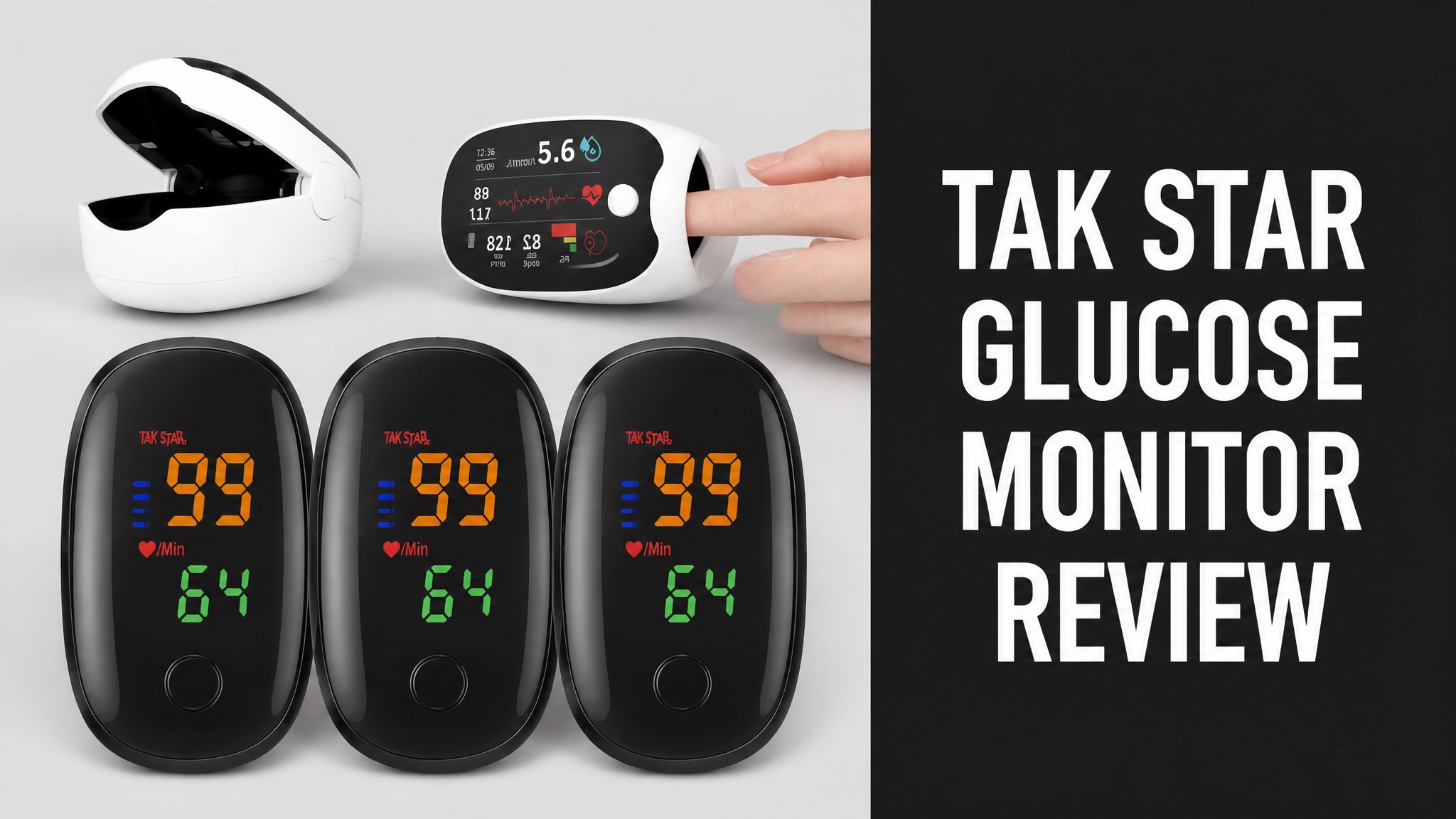
The Tak Star glucose monitor is a handheld device sold online as a no-pricking glucose meter. It claims to measure sugar through the fingertip. Retail listings promise fast fingertip readings without blood. Shopabunda lists every Tak Star item as out of stock, while Ubuy lists a one-unit version.
Several facts matter here. The brand name is TAKSTAR, but no manufacturer details appear. No published accuracy data exists for the device. The FDA has authorized no smartwatch or smart ring that measures glucose alone. Health Canada warns that similar devices give false readings. These gaps make the product impossible to trust for health choices.
So what should buyers do? This review covers how the device works, its accuracy, its price, and where it sells. It also shows safer cleared options. Read on before spending money on any glucose monitor. Each section answers one buyer question, from cost to safety to the final verdict.
What Is the Tak Star Glucose Monitor?
The Tak Star glucose monitor is a handheld device marketed as a no-pricking glucose meter for home and outdoor use. Sellers list it as a non invasive monitor with a clear display and fast fingertip readings. Retail pages offer white and black versions in packs of one, two or three units. Specifications vary by seller, and none cites a model number.
Here’s the thing: the listings use generic titles such as Non Invasive for Meter-Glucose monitor. That vague naming makes the exact model hard to verify. Does the brand name help? Not much, since TAKSTAR appears as a label only.
Listing Facts:
| Detail | What Listings Show |
|---|---|
| Brand label | TAKSTAR |
| Device type | Non invasive, no-pricking meter |
| Colors | White and black |
| Pack sizes | 1, 2 or 3 units |
| Stock status | Out of stock at Shopabunda |
Who Makes the Tak Star Glucose Monitor?
The maker appears only as the brand name TAKSTAR on retail pages. No company address, FDA registration or regulatory number shows up in the sources reviewed. A real medical device maker normally publishes that information. Its absence is a red flag. Only a brand label and a retailer item number identify the product, and neither points to a company.
Ubuy lists the item under number 167319456 with the TAKSTAR label. Shopabunda carries the same product family. Still, neither page names a manufacturer. Bottom line: the source of the device stays unknown.
How Does the Tak Star Glucose Monitor Work?
The Tak Star glucose monitor claims to read glucose through the fingertip without drawing blood. The listing promises quick results on a clear display. No lancet or test strip is mentioned. The seller gives no technical explanation of the sensor, so the method stays unverified and unproven. No independent test of that method turned up in the research.
Noninvasive optical systems usually pass light or radiation through the skin. Healthline describes spectroscopy as a technique that identifies chemicals through electromagnetic radiation. Researchers have studied it for decades. Why isn’t it everywhere? The accuracy hurdles are huge.
Bloodless Monitor Categories:
| Category | Method | Status |
|---|---|---|
| Noninvasive optical | Radiation passes into a vascular region | Mostly in development |
| Noninvasive fluid sampling | Tears, sweat or saliva are analyzed | Mostly in development |
| Minimally invasive | Sensor sits under the skin | Today’s authorized CGMs |
Does the Tak Star Glucose Monitor Work Without Pricking?
No. The claim lacks any published clinical evidence in the sources reviewed. The Diabetes Technology Society noted that company hyperbole outstrips public data. Healthline calls the field mostly hype versus hope, since attempts to build these products have fallen flat. Without trial data, the pain-free promise stays a sales claim rather than a result.
In plain English: promises are easy, proof is hard. GoodRx reports that one similar noninvasive device, InCheck, met accuracy requirements only about 18% of the time. That means it missed the mark more than 80% of the time.
Is the Tak Star Glucose Monitor Accurate?
No. The Tak Star glucose monitor has no published accuracy data in the sources reviewed. Similar noninvasive devices have missed accuracy targets in published tests. Health Canada also warns that comparable unauthorized glucose devices can give false readings, especially when blood sugar changes fast. Treat each displayed number as unconfirmed until tested.
Type1better reports that people compared such watches with CGMs and fingertip readings. The results often differed from authorized CGM values. Were those tests scientific? No, they were informal. Still, the pattern fits the official warnings.
Reported Accuracy Results:
| Device | Reported Result | Caveat |
|---|---|---|
| InCheck monitor | About 18% met requirements | Published study |
| Unnamed smartwatch | About 84% accurate | 23 people, half with diabetes |
| GWave | 97% to 98% accurate | Standards differ from the FDA |
| Tak Star | No data found | Unverified |
What Accuracy Standard Must a Glucose Monitor Meet?
An over-the-counter glucose monitor must read within 15% of a cleared meter for 95% of all results. GoodRx cites the FDA rule. At least 99% of readings must also land within 20%. A monitor that misses these marks fails FDA clearance. Sellers cannot meet it with a promise alone, because clearance requires lab and clinical testing against a reference.
For example, a true reading of 100 mg/dL (5.6 mmol/L) must show between 85 and 115 mg/dL most times. That range equals 4.7 to 6.4 mmol/L. That is a tight window. Can an unproven device hit it? Nobody has shown that yet.
Is the Tak Star Glucose Monitor FDA Approved?
No. The Tak Star glucose monitor shows no FDA clearance in any source reviewed. The FDA stated in February 2024 that it has authorized no smartwatch or smart ring that measures glucose alone. Sellers of noninvasive monitors often skip that fact. Always search the FDA database for a clearance number before buying. Sellers rarely mention this important step.
To be clear, Tak Star is not a watch. Yet no clearance record surfaced either. Why does clearance matter? The FDA tests safety and effectiveness first. GoodRx notes that cleared glucometers and CGMs have all passed that review.
What To Check Before Buying:
- An FDA clearance number
- A named manufacturer with contact details
- A published accuracy study
- A low sugar alarm
- A clear return policy
What Do Health Authorities Say About Noninvasive Monitors?
Health authorities warn against unauthorized noninvasive glucose monitors. Health Canada issued a public advisory in 2024 for people with type 1 diabetes and their families. It states that the safety and efficiency of glucose smartwatches are not scientifically proven. It also calls them a serious health hazard. Both agencies urge buyers to avoid them.
Health Canada has not authorized any smartwatch that measures blood sugar through the skin. The FDA issued its own safety communication in February 2024. The message is the same on both sides of the border. Don’t rely on these devices.
What Are the Risks of Using the Tak Star Glucose Monitor?
The biggest risk of the Tak Star glucose monitor is a false reading that triggers a wrong treatment choice. Type1better gives an example. A falsely high reading may prompt an unneeded insulin bolus. That mistake puts the user at significant risk of hypoglycemia. A wrong number can hide a real emergency because the user trusts a screen nobody has verified.
And it gets worse. Most of these devices lack an alarm for oncoming hypoglycemia. A missed low is the second hazard. So what does that mean for you? A wrong number can hurt, and the device may not warn you.
Main Risks:
- False high readings that prompt extra insulin
- False normal readings that hide a real high
- No alarm for oncoming low blood sugar
- No regulatory oversight of the device
- Delayed care from trusting bad data
Who Should Avoid the Tak Star Glucose Monitor?
Anyone who uses insulin must not rely on this device for dosing decisions. People with type 1 diabetes need cleared devices that regulators have tested. The same holds for type 2 diabetes treated with insulin. Guesswork has no place in dosing. Cleared devices carry testing records, while this device carries only a seller’s promise and a clear display.
Curious users without diabetes face less risk. But the readings still carry no proof. Here is the part most people miss: a pretty display doesn’t make a number true. Treat every reading as a guess.
What Do Tak Star Glucose Monitor Reviews Say?
Tak Star glucose monitor reviews are scarce and mostly unverified across the sources reviewed. Searches surfaced retailer listings, social group threads and forum posts. None offered a lab test or a documented side-by-side comparison with a cleared meter. Independent proof is missing. Weigh any glowing comment with care, since fans and sellers write most.
Marketplace listings carry the seller’s own claims about fast readings and portability. Those claims are marketing, not independent results. Can you trust a listing as a review? Not really. Medical sites give the more useful signal here.
Review Source Quality:
| Source | What It Offers | Trust Level |
|---|---|---|
| Retailer listings | Seller claims | Low |
| Social groups | Personal opinions | Low |
| Medical sites | Category warnings | High |
| Clinical studies | None found for Tak Star | Not available |
What Do Buyers Claim About the Tak Star Glucose Monitor?
Sellers and buyers praise the no-pricking promise, the clear display and the portable size. Listings stress home, travel and outdoor use. These are the same selling points repeated on every product page. None comes with test data behind it. The promise of easy, painless testing appeals to anyone tired of lancets, which explains the appeal of such listings.
Painless testing is a real appeal. Fingerstick lancets hurt, and CGMs feel uncomfortable to some people, according to GoodRx. But a painless wrong answer is still wrong. The good news? Cleared options keep improving.
How Much Does the Tak Star Glucose Monitor Cost?
The Tak Star glucose monitor has no confirmed current price in the sources reviewed. Shopabunda marks every listing out of stock. The store offers financing from $9 per month (USD) on Tak Star products. A monthly plan hides the full price, so check the total before agreeing. Always confirm the total cost, shipping and return terms in writing first.
Ubuy’s Indian store lists a one-unit version, so prices there differ from US prices. Cost also varies by seller and by pack size. Is a multi-pack a bargain? Only if the device works, and that remains unproven.
Price Signals:
| Source | Price Signal |
|---|---|
| Shopabunda | Out of stock, financing from $9 per month |
| Ubuy India | Single unit listed |
| Multi-packs | Two and three unit options |
Is the Tak Star Glucose Monitor Worth the Price?
No. The Tak Star glucose monitor offers no proven benefit to justify any cost. A meter that cannot show accuracy data adds risk, not value. Cleared meters give readings backed by FDA review at known prices. Peace of mind has value only when the reading is right. Buyers pay for a promise, and no evidence backs it. Cleared meters cost less than a mistake.
A cheap wrong reading can cost far more than a pricey right one. Why? Wrong insulin dosing carries a significant hypoglycemia risk, according to type1better. Short answer: spend the money on a cleared device.
Where to Buy the Tak Star Glucose Monitor?
The Tak Star glucose monitor appears on third-party retail sites such as Shopabunda and Ubuy. Shopabunda lists nine Tak Star items, all out of stock. Ubuy shows a one-unit listing. No official brand store surfaced during the research, which limits where a buyer can verify the product. Availability changes often, and stock shows as unavailable today.
Shopabunda also tells shoppers to find the item on Amazon first and paste the link. That wording suggests the store acts as a reseller. Now watch this: resellers rarely offer warranty support for medical devices.
Is It Safe to Buy From Marketplace Sellers?
No. Marketplace sellers offer no guarantee of authenticity, warranty or regulatory compliance. Some listings use scrambled letters in the title, such as altered spellings of invasive and glucose. That trick appears designed to dodge search filters. Treat such listings with suspicion. Verify the seller’s reputation and refund terms before paying them.
Pay with a card that offers buyer protection. Check the return policy before ordering. Save the order record in case a refund claim becomes necessary. Also, never skip a doctor’s advice because a listing sounds confident.
What Are the Alternatives to the Tak Star Glucose Monitor?
Cleared alternatives include fingerstick glucometers and continuous glucose monitors. GoodRx recommends an FDA-cleared glucometer or CGM for anyone with diabetes. Both types have passed FDA review for safety and effectiveness. The Mayo Clinic and the American Diabetes Association publish guides on choosing devices. Pick one with a documented record.
SugarBEAT, a peel-and-place patch from Nemaura Medical, holds European approval. It sends readings every 5 minutes by Bluetooth, according to Healthline’s 2022 report. What’s more, new options keep emerging. Check current regulatory status before buying any of them.
Option Comparison:
| Option | Method | Status |
|---|---|---|
| Fingerstick meter | Blood drop with a lancet | FDA-cleared models exist |
| CGM | Sensor under the skin | Authorized by regulators |
| Tak Star | Claims a bloodless fingertip reading | No clearance found |
Is a CGM Better Than a Noninvasive Meter?
Yes. A CGM delivers continuous readings from a sensor that regulators have reviewed. It reads glucose in the interstitial fluid under the skin. Health Canada notes that authorized CGMs can pair with a watch or smartphone to display results. Studies of unauthorized wearables show far weaker results, and regulators issued warnings instead of approvals.
Some users find CGMs uncomfortable, per GoodRx. Even so, comfort never outweighs proven accuracy. And here is the best part: a CGM gives you the screen-on-your-wrist experience without the false readings.
Should You Buy the Tak Star Glucose Monitor?
No. The Tak Star glucose monitor lacks the clearance, accuracy data and verified reviews that a medical device needs. Health agencies warn against similar unauthorized devices. Choose a cleared meter or CGM for any health decision, and talk with a doctor first. The device may improve someday, but today’s record gives a buyer nothing to trust or verify.
This verdict rests on missing evidence, not proven failure. Could future testing change it? It could. Until then, the product remains unverified, and that’s reason enough to skip it.
Who Might Still Consider the Tak Star Glucose Monitor?
Curious shoppers can treat it as a novelty gadget, never a medical tool. Users must keep a cleared meter for every health decision. Even then, expect unreliable numbers. The device earns no place in a diabetes routine. It carries no clearance, no accuracy data and no named maker. It can serve only as a curiosity for people who knowingly accept that risk.
Seeking a pain-free option? Ask a doctor about cleared CGMs instead. This is important: your health data deserves a tool with proof behind it. Anything less is a gamble.