
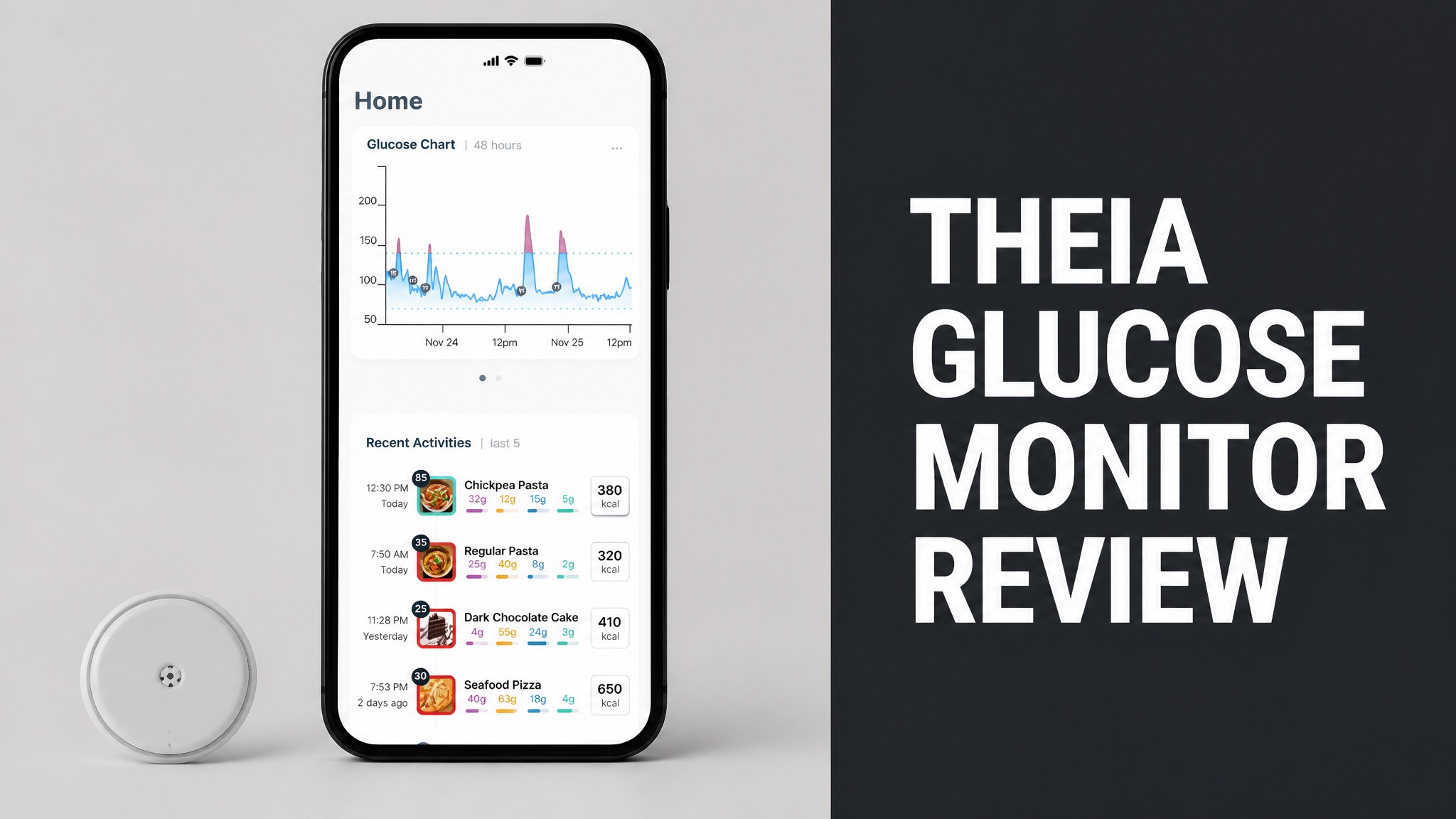
The Theia glucose monitor is a provider-led platform that pairs Libre or Dexcom sensors with an AI food logging app. Boris Berjan founded Theia Health to give patients real-time data. This review covers how it works, what it costs and what users say. Real users weigh in on daily use.
Theia ships prescription-grade sensors after a short questionnaire. The app scores each meal and activity against the glucose curve. Sensors cost about $99 per 14 days. Reviews praise the data and criticize the app, which holds a 2.4 out of 5 rating. Levels offers a no-prescription alternative at $99 for 30 days. Providers handle every prescription.
The sections below compare Theia with Levels, explain the safety record of the sensors, and break down pricing by wear period. Readers also learn where to buy and who should skip the platform. The verdict follows at the end. Each answer comes from clinic notes, user reviews and published pricing.
What Is Theia Glucose Monitor?
Theia is a glucose monitoring platform that providers use to put continuous glucose monitor sensors on patients. Patients answer a short questionnaire, and prescription-grade, FDA-approved sensors ship to their door. The app pairs glucose data with logged meals, exercise and supplements. Providers and patients then view the same dashboards. Setup is fast.
To be clear, Theia is not a sensor maker. Is it a device, then? Not really. The platform sits on top of existing sensors and adds dashboards, scores and reports for patient and provider.
Who Makes Theia?
Theia Health was founded by Boris Berjan, who built the company after juggling conflicting advice from seven different doctors. He named it after Theia, the Greek goddess of insight. The company says it serves over 6,318 health businesses and has recorded over 197 million readings. Berjan leads the company today. Berjan frames the goal as clear insight.
Berjan lived with severe Crohn’s disease in his late teens. Why does that matter? It shaped the product. He wanted real-time, objective data that every practitioner on a care team could see.
How Does Theia Glucose Monitor Work?
The system works by pairing a wearable sensor with the Theia app and a provider dashboard. A small sensor on the back of the upper arm tracks glucose day and night. The app syncs those readings, and the provider reviews the trends before each patient meeting or call. Patients need no pharmacy visit to start. Setup is quick, and the process is fully remote.
Steps:
- Answer a brief questionnaire to start the process.
- Receive the sensor at home in under five days.
- Apply the sensor to the back of the upper arm.
- Log meals and activities in the Theia app.
- Review scores and reports with the provider.
Here’s the part most people miss: logging is what makes the data useful. Theia ties each meal, workout or supplement to the glucose curve. The platform then scores each day and each activity.
What CGM Does Theia Use?
Theia supplies FreeStyle Libre or Dexcom sensors through its physician network. Help center articles clearly name the Libre 2 Plus and Libre 3 Plus. Patients with an outside prescription can also bring their own sensor on a paid plan, per the Levels comparison page. Both brands report readings every few minutes to a phone. Each reading shows a number.
The original Libre 14 day sensor measures 5 mm (0.2 inches) tall and 35 mm (1.4 inches) wide. A 5 mm filament sits just under the skin, held by an adhesive pad. Each sensor lasts up to 14 days.
What Features Does the Theia App Have?
The Theia app combines glucose tracking, AI food logging, wearable sync and a scoring system in one dashboard. Users log meals, exercise and supplements. The app then ties each entry to the glucose curve. A breakfast or a walk gets its own impact score. Reports reach providers online or as a PDF download for each client. Scores update through the day.
Key Features:
- Glucose trend dashboards
- Daily metabolic score
- Activity impact scores
- AI photo meal logging
- Wearable sync with Apple Health, Oura, Fitbit and Garmin
- Weekly provider reports
In fact, sleep, activity and recovery data land beside the glucose trend. Providers see everything through online reports. They can also download a PDF.
How Accurate Is Theia Food Logging?
Theia claims 88 percent accuracy on macros when users log a meal with a photo. That figure comes from the company’s own provider page, not an independent test. App Store reviewers describe a rougher experience than that number suggests, especially for calorie tracking. Accuracy matters most for users who count calories. Users can edit entries by hand.
One reviewer says the AI photo tool does a pretty good job. But changing a portion from 2 eggs to 3 does not update the calories. Another reviewer says the AI rewrites typed entries into something else.
What Are the Benefits of Theia?
Theia gives users objective, real-time data on how food, sleep, stress and exercise move their glucose. Partner clinics say this replaces guesswork with a clear window into each body. Routine lab visits show only a few blood sugar snapshots a year. Better awareness is the core promise, and the app supplies the tools to act on it. Users learn limits.
Main Benefits:
- Real-time glucose feedback
- Personalized food insights
- Prescription handled by a physician network
- Weekly reports with action tips
- Less prep time for providers
Providers gain too. Theia’s provider page claims each patient review saves 10 to 14 minutes, since trendlines are ready before the meeting. What’s more, patients who see their own data engage more with the care plan.
Does Theia Show Food Spikes?
Yes. Theia pairs each logged meal with the glucose curve, so post-meal spikes show up right away. One clinic describes a 34 year old patient with PCOS. Her readings topped 160 mg/dL (8.9 mmol/L) after an oat milk latte and a banana. The patient then adjusted breakfast with more protein and fiber, and her readings steadied. Providers then coach swaps.
The 2015 Cell study on personalized nutrition shows why this matters. People reacted very differently to identical foods. Does a healthy label guarantee a flat curve? No, and the sensor proves it.
What Do Theia Reviews Say?
Theia reviews split sharply between the sensor experience and the app experience. Clinics praise the real-time data. The App Store rating is 2.4 out of 5 from 11 ratings. Most written complaints target the app, not the sensor itself. Clinic blogs read warmly, while verified app users sound far more frustrated about daily use. Both views matter here.
Review Snapshot:
| Source | Verdict | Main Point |
|---|---|---|
| App Store | 2.4 out of 5 | Food logging and app bugs |
| Partner clinic blogs | Positive | Insight into meals, stress and sleep |
| Levels comparison | Mixed | Prescription CGM, no lab ordering |
Keep the sample size in mind. Eleven ratings is small. Still, the complaints repeat across several reviewers.
What Do Users Like?
Users praise the real-time data and the way it supports decisions with a healthcare team. One App Store reviewer calls Theia a game changer and a powerful tool in a wellness journey. Clinics add that their teams tested the sensors and spotted which foods caused spikes. Fast shipping adds to the appeal for new users. Providers also value simple dashboards.
The AI photo logging earns some credit too. One reviewer says it does a pretty good job on a typical plate. Fast delivery helps as well, since Theia ships sensors in under five days.
What Do Users Complain About?
Complaints center on food logging, app freezes and notifications that refuse to switch off. One reviewer calls logging a nightmare. Another says the app randomly adds activities that cannot be deleted. A third says the AI changes typed entries into different foods. Several reviewers describe the experience as frustrating. Logging errors top the list.
The bad news? Many users did not choose the app. A provider assigned it with the sensor. One former Levels customer says Theia falls short for tracking macros and nutrients.
Theia vs Levels: Which Is Better?
Theia suits patients whose provider uses its network, while Levels suits people who buy sensors directly. Levels sells the Stelo sensor over the counter for $99 per 30 days, with no prescription. Theia routes sensors through a prescription network and ships in under five days. Both platforms pair glucose with nutrition, sleep and activity data for clients.
Theia vs Levels:
| Feature | Theia | Levels |
|---|---|---|
| Sensors | Libre or Dexcom via network | Stelo, or Dexcom G6 and G7 |
| Prescription | Handled by network | Not needed for Stelo |
| Sensor cost | $99 per 14 days | $99 per 30 days |
| Lab ordering | None published | 28-marker panel for $99 |
| Food logging | AI photo, 88% claimed | Photo, voice, barcode |
Note the source. The comparison page belongs to Levels, so it leans toward Levels. Theia’s public materials fill the Theia column, and gaps mean Theia publishes nothing.
Who Should Choose Theia Over Levels?
Theia fits patients who need a prescription CGM or whose provider already runs a Theia program. The provider handles the care plan, and Theia handles the sensors, the app and the reports. Practices also get syncing with Biocanic and Practice Better. Setup stays simple. Practices that want one vendor for sensors and prescriptions find this setup simple.
Levels fits shoppers who want to buy alone and track lab results as well. So, which one wins? It depends on who guides the data. A clinic picks Theia. A solo buyer picks Levels.
Is Theia Safe?
Yes. The platform uses FDA-approved, prescription-grade sensors, and a physician network handles the prescribing. The Theia help center states this directly. The sensors are Libre or Dexcom devices from established makers, and Theia’s own software adds the app layer on top. Users keep a physician in the loop, which adds oversight. Support is available.
To be clear, a CGM shows glucose trends and does not diagnose disease. Anyone with diabetes follows a physician’s guidance. The Flagstaff clinic notes that users do not need diabetes to benefit.
Does the Sensor Cause Skin Reactions?
Yes, in a small share of users. An Abbott Diabetes Care study found mild skin irritation in 8 of 95 subjects (8.4 percent). All wore a Libre 14 day sensor. Reactions included redness, bruising, bleeding, infection and small bumps near the insertion site and adhesive. Most people tolerate the adhesive well. Users with sensitive skin can ask a provider.
The sensor is water resistant. Users can bathe, shower, swim or exercise. Just keep it under 3 feet (0.9 meters) of water for under 30 minutes at a time.
How Much Does Theia Cost?
Theia costs about $99 per 14-day sensor, based on a partner clinic’s published pricing. The clinic charges $99 for the first sensor and $99 for each one after. Pricing can differ by provider, since each practice sets its own plan. The Theia app is included with the sensor. Annual cost follows from the sensor count. Confirm the price before ordering.
Sensor Cost by Wear Period:
| Wear Period | Sensors | Cost (USD) |
|---|---|---|
| 14 days | 1 | $99 |
| 28 days | 2 | $198 |
| 84 days | 6 | $594 |
| 1 year | 26 | $2,574 |
Short test blocks cost far less than year-round wear. Is a full year necessary? Not for most goals. A few weeks often reveals the main food patterns.
Is Theia Worth the Price?
Yes, for users who want guided data and have a provider to read it. The price runs about double the per-day cost of Levels, which charges $99 for a 30-day Stelo supply. Theia’s $99 covers 14 days. Prescription handling and provider reports are what the premium buys. The decision turns on how much guidance a user wants. Coaching fans accept that premium.
The weak spot is the app. At 2.4 out of 5, it drags down the value for people who log every meal. One reviewer prefers Levels for macro tracking.
Where Can You Buy Theia?
Patients buy Theia through a provider’s co-branded sign-up link or the Theia sign-up page. Clinics such as Hutsell Chiropractic send patients to a link that accepts credit cards and HSA or FSA cards. Theia then ships the sensor to the patient’s door. The process takes only a few minutes online. Orders from a provider link include coaching and support.
How to Order:
- Pick a partner provider or open the Theia sign-up page.
- Complete the short questionnaire.
- Pay by credit card or HSA or FSA card.
- Receive the sensor at home.
- Download the app and apply the sensor.
Here is the kicker: buying through a clinic adds coaching. Buying alone does not exist for most users, since the platform is built around providers.
Do You Need a Prescription?
Yes, but Theia handles the prescription through its physician network. The Hutsell clinic says patients skip the hassle of dealing with doctors and pharmacies. Theia takes care of everything and delivers the sensors right to the door. Patients answer a questionnaire first. The network reviews answers and issues it, then ships the sensor to the door.
Users who bring their own sensor need an outside prescription plus a paid plan. Want to skip prescriptions entirely? Levels sells the Stelo sensor without one, at $99 for 30 days.
Is Theia Glucose Monitor Worth It?
Yes, for people whose provider uses it. Theia delivers real sensors, real-time data and provider reports, but the app lags behind the hardware. The sensor side relies on Libre or Dexcom devices. Food logging draws most of the criticism, with a 2.4 out of 5 App Store rating. Providers who engage with the data get the most from it. Daily use is simple.
Bottom line: the platform is strongest as a clinical add-on. It works less well as a standalone consumer app. Does that make it a bad buy? Not for patients with an engaged provider.
Who Should Skip Theia?
Solo shoppers are better served by Levels, which sells Stelo without a prescription or a provider. Theia is built around a care team. Without one, the reports and scores lose much of their value. Clinics are the natural customers, so lone buyers get less from the platform overall. Others can wait until a clinic offers it. Coaching stays in place then.
People who need exact calorie counts should also test the app first. Reviewers report portion errors and freezes. And the app is mandatory, since it is paired with the sensor.