
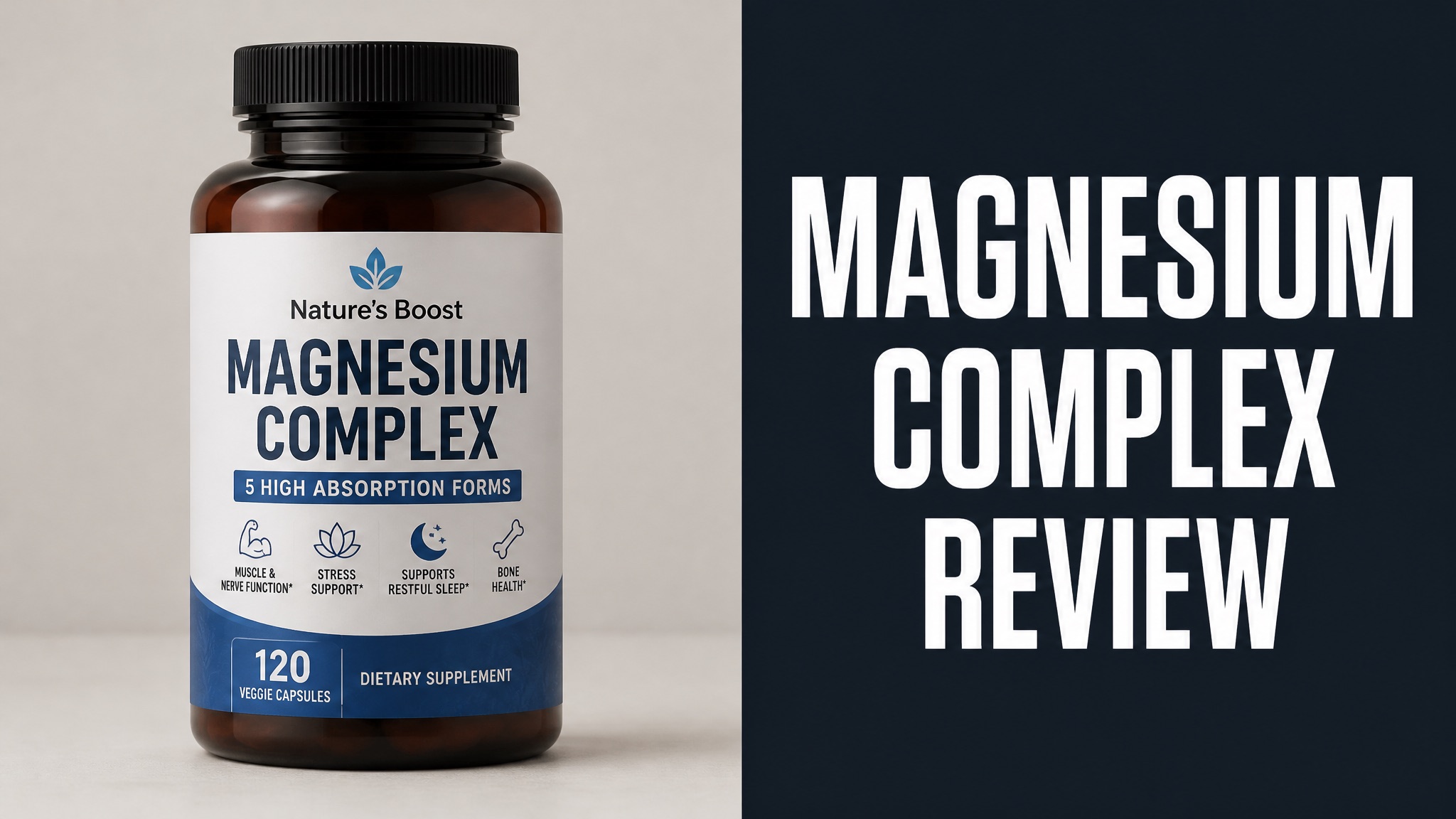
A magnesium complex is a supplement that blends several forms of magnesium, such as glycinate, citrate and malate, in one capsule. The mineral drives over 300 reactions in the body, and blends aim to cover more of them.
Magnesium complex works by mixing forms that absorb at different rates. Its benefits center on sleep, cramps and regularity. Reviews run positive but note large capsules and stomach upset. Side effects, dosage limits and safety rules decide who should skip it.
Blends suit people with mixed goals, but label transparency and dose control decide the result. Read on to see how to dose it, who should avoid it, how to choose a formula and whether it earns a place in your routine.
What Is Magnesium Complex?
A magnesium complex is a dietary supplement that blends several forms of magnesium into one capsule or powder. Common blends mix glycinate, citrate, malate, oxide or taurate. Magnesium never comes alone in a supplement, so each form pairs the mineral with a partner molecule.
Common Forms in Blends:
- Magnesium glycinate or bisglycinate
- Magnesium citrate
- Magnesium malate
- Magnesium oxide
- Magnesium taurate
Magnesium itself matters. The mineral drives over 300 reactions in the body, from energy production to muscle and nerve function. So why blend forms? Each form absorbs differently, and a mix aims to cover more ground.
Labels vary a lot. Some products carry three forms, and some 12-in-1 formulas carry twelve. Bolt Pharmacy notes that clinical proof of an edge over single forms remains limited.
What Forms Does a Magnesium Complex Contain?
Most magnesium complexes contain two to eight forms of magnesium, with glycinate, citrate and malate leading the lineup. Verywell Health describes the typical triple blend as malate, citrate and glycinate. Oxide often joins the mix because it packs a lot of elemental magnesium into a small space.
Each form has a job. Glycinate is gentle on the stomach, and citrate supports regularity. Malate pairs magnesium with malic acid, and research links it to pain relief in fibromyalgia. Oxide absorbs poorly, so it acts mostly as a laxative.
Here’s the catch: the split matters. A blend heavy in oxide behaves very differently from one built on glycinate, even when both say magnesium complex on the front.
How Does Magnesium Complex Work?
A magnesium complex works by delivering several magnesium salts that the gut absorbs at different rates. The partner molecule shapes how the body takes in the mineral and where it acts. Bound forms such as glycinate pass through the gut gently, while citrate pulls water into the bowel.
In plain English: the blend spreads the dose across routes. Does that raise absorption? Possibly, since the gut can handle several forms at once. Still, no strong trial proves a blend beats a well-absorbed single form.
Once absorbed, magnesium helps muscles relax and nerves fire properly. It also supports blood sugar control, blood pressure and the making of protein, bone and DNA.
How Is Magnesium Complex Different From Single-Form Magnesium?
A magnesium complex splits the elemental magnesium across several compounds, while a single-form product relies on one. Mito Health calls the complex a multi-tool and the single form a precision tool. Glycinate alone targets calm and tolerance, and citrate alone targets regularity.
Complex vs Single Form:
| Feature | Complex | Single Form |
|---|---|---|
| Goal coverage | Broad, mixed goals | One focused goal |
| Dose clarity | Split across forms | One compound |
| Stomach tolerance | Can balance laxative forms | Depends on the form |
| Best for | Multi-purpose support | Targeted use |
The trade-off is dosing clarity. Because elemental magnesium is divided among compounds, each share counts. Always read the Supplement Facts panel for the total elemental amount per serving.
So who wins? Choose a complex for mixed goals like sleep plus regularity. Choose a single form when one clear goal drives the purchase.
What Are the Benefits of Magnesium Complex?
The benefits of magnesium complex center on muscle function, nerve function, sleep, relaxation and digestive regularity. Verywell Health lists muscle, nerve, blood glucose and blood pressure support among magnesium’s roles. A blend packs several of those angles into one product.
Main Benefits:
- Muscle and nerve function
- Calmer sleep and relaxation
- Digestive regularity
- Blood sugar and blood pressure support
Different forms lean toward different goals. Glycinate has links to migraine reduction, and citrate supports bone and nerve health. In fact, the fit between forms and goals drives results more than the word complex itself.
Keep expectations grounded. Benefits depend on the forms and doses inside, and evidence strength varies by outcome.
Does Magnesium Complex Help Sleep and Relaxation?
Yes. Magnesium complex often helps with sleep quality and relaxation, mainly through the glycinate portion. Reviewers on retail sites most often praise deeper relaxation and better sleep. Glycinate pairs the mineral with glycine, an amino acid tied to calming effects.
To be clear, results vary by person. Does it work for everyone? No. People with normal magnesium levels may notice little, while people running low often feel the biggest shift.
Does Magnesium Complex Help Muscle Cramps?
Yes. Magnesium complex can ease muscle cramps in many users, because magnesium controls how muscles contract and relax. Reviewers frequently report fewer nighttime leg cramps after a few weeks of daily use.
Malate adds another angle. Research links it to pain management in fibromyalgia, a condition marked by widespread pain and fatigue. Worth knowing: cramps can signal low magnesium, but other causes exist, so a doctor visit helps.
What Do Magnesium Complex Reviews Say?
Magnesium complex reviews are generally positive, with sleep, relaxation and fewer cramps leading the praise. Independent testing adds a warning. Multi-form blends vary widely in quality and label transparency, so the brand matters as much as the formula.
Review Patterns:
| Theme | What Reviewers Say |
|---|---|
| Sleep | Deeper rest and easier wind-down |
| Cramps | Fewer nighttime leg cramps |
| Digestion | Milder regularity support |
| Capsules | Large and hard to swallow |
| Taste and stomach | Bitter taste or loose stools for some |
The pattern is consistent across retailers. Happy buyers mention calmer evenings and steadier digestion. Unhappy buyers mention capsule size and stomach upset. Bottom line: the product category earns decent marks, and the individual formula decides the outcome.
What Do Positive Reviews Say?
Positive reviews highlight better sleep quality, deeper relaxation and a reduction in nighttime muscle cramps. Many buyers also note mild daily energy support and steadier digestion. The glycinate and malate portions get most of the credit.
And here is the part most people miss: the happiest reviewers often take the dose with food and stay consistent for several weeks.
What Are the Common Complaints?
The common complaints involve large capsules, a bitter taste and mild stomach disruption. High-count formulas pack many compounds into big pills that some people struggle to swallow.
Stomach trouble usually traces back to citrate or oxide. The good news? Taking the supplement with a meal reduces diarrhea and stomach upset, and a lower dose often fixes the problem.
What Are the Side Effects of Magnesium Complex?
The most common side effects of magnesium complex are diarrhea, upset stomach, nausea and abdominal cramping. These effects grow stronger with higher doses and with poorly absorbed forms such as oxide.
Possible Side Effects:
- Diarrhea and loose stools
- Upset stomach and nausea
- Abdominal cramping
- Low blood pressure at excessive intake
Overdoses are rarer but serious. Verywell Health lists breathing problems, confusion, heart rhythm problems, very low blood pressure and coma at excessive intake. Think of it this way: the mineral is safe in range and risky well past it.
Interactions matter too. Magnesium can reduce absorption of bisphosphonates, tetracycline antibiotics, quinolones and levothyroxine. Separate doses and ask a pharmacist for timing.
Who Should Avoid Magnesium Complex?
People with serious kidney disease should avoid magnesium complex, because failing kidneys cannot clear the excess. Bolt Pharmacy flags chronic kidney disease stages 4 and 5 as a contraindication due to the risk of dangerous hypermagnesemia.
Check with a doctor first if you take diuretics, antibiotics, thyroid medicine or bone drugs. Pregnant and breastfeeding people need a clinician’s guidance on dose as well.
How Much Magnesium Complex Should You Take?
Daily magnesium needs run 310 to 320 mg for adult women and 400 to 420 mg for adult men, counting food and supplements. Pregnant adults need 350 to 360 mg, and breastfeeding adults need 310 to 320 mg.
Daily Magnesium Needs:
| Group | Daily Amount |
|---|---|
| Adult women | 310-320 mg |
| Adult men | 400-420 mg |
| Pregnant adults | 350-360 mg |
| Breastfeeding adults | 310-320 mg |
| Supplement upper limit (US) | 350 mg |
The supplement upper limit is the number to watch. Verywell Health puts the tolerable upper intake level at 350 mg (0.35 g) for adults, and the UK sets 400 mg. Food magnesium does not count toward that cap.
Take the capsules with a meal and a full glass of water, about 8 ounces (240 milliliters). That simple habit cuts stomach upset.
Is Magnesium Complex Safe?
Yes. Magnesium complex is safe for most healthy adults when the dose stays under the supplement upper limit. The risk climbs when people stack several magnesium products or take antacids and laxatives that also contain magnesium.
So what’s the smart move? Add up the elemental magnesium from every source and check with a healthcare provider before starting.
How Do You Choose a Magnesium Complex?
A good magnesium complex lists every form by name and states the elemental magnesium amount per serving. Skip vague proprietary blends that hide the split. Transparency is the clearest sign of a serious brand.
Selection Steps:
- Check the elemental magnesium per serving.
- Confirm every form is named on the label.
- Match the forms to your main goal.
- Look for third-party testing.
- Start low and take it with food.
Match the forms to the goal. Pick glycinate-heavy blends for sleep and calm, and look for citrate if regularity matters. Be careful with oxide-heavy formulas, because poor absorption and loose stools often follow.
Third-party testing helps too, since independent labs have found large quality gaps between blends.
Is Magnesium Complex Worth It?
Yes. Magnesium complex is worth it for people with mixed goals, low dietary magnesium or stomach trouble from single forms. The blend gives broad support in one product and can soften the laxative effect of a high-dose citrate.
Bottom line: skip it if one proven form already works for you. Food-first remains the standard advice, and a complex fills the gap when meals fall short.