
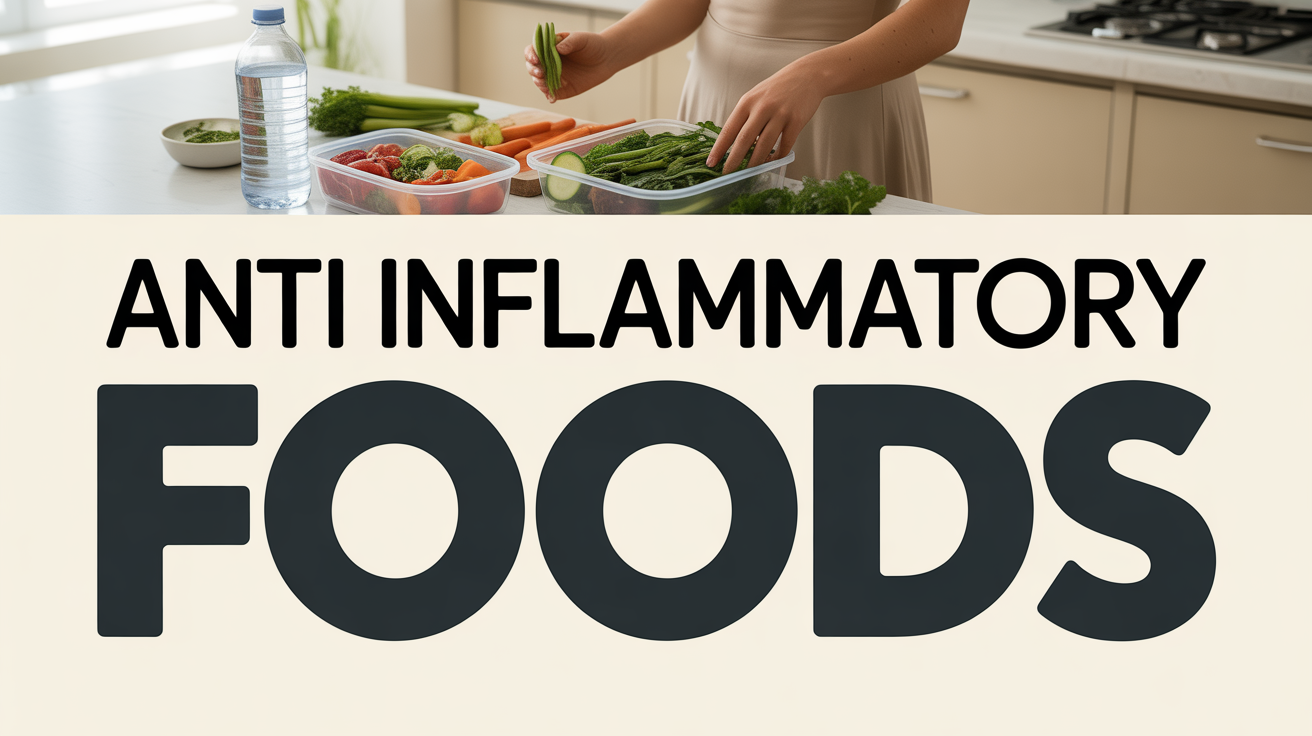
Anti-inflammatory foods are whole, unprocessed foods that reduce chronic inflammation — the silent driver of heart disease, diabetes, and autoimmune conditions. Fruits, vegetables, fatty fish, nuts, seeds, and whole grains form the foundation of this approach.
Antioxidants in berries neutralize free radicals before they damage cells. Omega-3 fatty acids in cold-water fish block prostaglandin production. Curcumin in turmeric inhibits NF-kB signaling. Fiber from legumes feeds gut bacteria that produce short-chain fatty acids, reducing intestinal inflammation directly. Each food works through a distinct mechanism — together they address inflammation across multiple pathways simultaneously.
This guide covers the top anti-inflammatory foods, what to drink, what to avoid, how to build a daily eating pattern, and how quickly results appear. The science is clear. The food list is practical. Here is everything needed to start.
What Are Anti-Inflammatory Foods?
Anti-inflammatory foods are whole, minimally processed foods that contain compounds — antioxidants, polyphenols, omega-3 fatty acids, and dietary fiber — that reduce the production of pro-inflammatory cytokines in the body. These compounds work through multiple biological pathways to interrupt the chronic inflammatory cycle linked to most modern chronic diseases.
The term ‘anti-inflammatory’ is not marketing language. It describes a measurable biological effect. Studies consistently show that diets high in fruits, vegetables, fatty fish, and whole grains reduce CRP, IL-6, and TNF-alpha — three primary markers of systemic inflammation — within 4-8 weeks of consistent intake.
How Do Anti-Inflammatory Foods Reduce Inflammation?
Anti-inflammatory foods reduce inflammation by delivering antioxidants that neutralize free radicals, polyphenols that suppress NF-kB signaling, omega-3 fatty acids that block prostaglandin synthesis, and fiber that feeds gut bacteria producing anti-inflammatory short-chain fatty acids.
Each food category targets a different step in the inflammatory cascade. Berries address oxidative stress. Fish address eicosanoid signaling. Olive oil delivers oleocanthal, which inhibits COX-2 enzymes. Legumes and whole grains restore gut microbiome balance, which reduces systemic inflammatory load from the gut upward.
The omega-6 to omega-3 ratio in the diet matters significantly. Most Western diets run a 15:1 ratio — heavily pro-inflammatory. Shifting toward fatty fish, walnuts, and flaxseed while reducing processed seed oils brings this ratio down to 4:1 or lower, the range associated with reduced disease risk.
What Is the Difference Between Acute and Chronic Inflammation?
Acute inflammation is a short-term protective immune response to injury or infection that resolves within days — chronic inflammation is a persistent, low-grade immune activation that continues for months or years without a clear cause.
Acute inflammation is essential. It heals wounds, clears infection, and signals the immune system to repair tissue. Chronic inflammation is the opposite — it damages healthy tissue, impairs organ function, and drives the progression of heart disease, type 2 diabetes, Alzheimer’s, and cancer.
Diet is the most modifiable driver of chronic inflammation. Processed foods, refined sugars, and trans fats each activate inflammatory pathways with every meal. Anti-inflammatory foods interrupt this cycle at the same frequency — at every meal, three times a day.
What Are the Top Anti-Inflammatory Foods?
The top anti-inflammatory foods include blueberries, cherries, leafy greens, broccoli, wild salmon, sardines, walnuts, flaxseed, extra-virgin olive oil, turmeric, ginger, green tea, and dark chocolate — each delivering distinct anti-inflammatory compounds at meaningful dietary doses.
No single food eliminates inflammation alone. The anti-inflammatory effect comes from consistent daily intake across multiple food categories. Variety is the mechanism — diverse polyphenol sources address different inflammatory pathways simultaneously.
Which Fruits and Vegetables Fight Inflammation Best?
Blueberries, strawberries, raspberries, and cherries deliver anthocyanins — the most potent anti-inflammatory plant pigments — with documented effects on CRP, oxidative stress markers, and endothelial function at one cup (150g) per day.
Leafy greens including spinach, kale, and Swiss chard provide vitamin K and quercetin, both of which suppress inflammatory gene expression. Dark leafy greens also deliver magnesium — a mineral deficiency linked to elevated CRP in population studies. Two to three cups (60-90g) daily provides therapeutic levels.
Cruciferous vegetables — broccoli, Brussels sprouts, cauliflower — contain sulforaphane, a compound that activates the Nrf2 pathway, the body’s primary antioxidant defense system. Half a cup (80g) of broccoli provides a meaningful sulforaphane dose. The enzyme that activates sulforaphane is destroyed by heat — chopping and resting for 5 minutes before cooking preserves it.
Top Anti-Inflammatory Fruits and Vegetables:
- Blueberries — anthocyanins, CRP reduction
- Cherries — anthocyanins, joint pain relief
- Strawberries and raspberries — vitamin C, polyphenols
- Spinach and kale — vitamin K, quercetin, magnesium
- Broccoli and Brussels sprouts — sulforaphane, Nrf2 activation
- Tomatoes — lycopene, particularly effective cooked with olive oil
- Avocado — monounsaturated fat, reduces inflammatory gene expression
What Are the Best Anti-Inflammatory Fish, Nuts, and Seeds?
Wild salmon, sardines, and mackerel are the highest-priority anti-inflammatory animal foods because they deliver EPA and DHA — the most bioavailable omega-3 fatty acids — at two to four servings (455-900g / 1-2 lb) per week, the therapeutic dose confirmed in clinical trials.
Walnuts are the only nut with meaningful omega-3 content in the form of ALA (alpha-linolenic acid). A 28g (1 oz) serving provides 2.5g of ALA. The body converts ALA to EPA and DHA at a low rate — roughly 5-15% — making walnuts a supplement to, not a replacement for, fatty fish intake.
Flaxseed and chia seeds deliver ALA, fiber, and lignans — plant compounds with anti-inflammatory and anti-estrogenic effects. Ground flaxseed (not whole) is required for nutrient absorption. One tablespoon (10g) ground daily provides a meaningful combined dose of ALA and soluble fiber.
Top Anti-Inflammatory Fish, Nuts, and Seeds:
- Wild salmon — EPA and DHA omega-3 fatty acids
- Sardines — EPA, DHA, vitamin D, calcium
- Mackerel — highest omega-3 concentration per serving
- Walnuts — ALA omega-3, polyphenols
- Flaxseed (ground) — ALA, lignans, soluble fiber
- Chia seeds — ALA, fiber, magnesium
- Almonds — vitamin E, monounsaturated fat
What Spices and Herbs Have Anti-Inflammatory Properties?
Turmeric, ginger, cinnamon, rosemary, and black pepper are the most evidence-backed anti-inflammatory spices, each delivering specific bioactive compounds that suppress inflammatory enzymes, cytokines, or signaling pathways at doses achievable through daily cooking.
Spices are among the most concentrated sources of anti-inflammatory compounds per gram of any food category. Small amounts used daily accumulate significant anti-inflammatory activity over time. The key is consistency, not quantity.
Does Turmeric Really Reduce Inflammation?
Yes. Turmeric contains curcumin, a compound that inhibits COX-2 enzymes and NF-kB signaling — the same molecular targets as many pharmaceutical anti-inflammatory drugs — at doses achievable through regular dietary use.
Curcumin bioavailability is low when consumed alone. Adding black pepper increases absorption by 2,000% through piperine’s inhibition of hepatic metabolism. One teaspoon (3g) of turmeric with a pinch of black pepper provides a functional daily dose. Consuming it with a fat source — olive oil, coconut milk, fatty fish — further enhances absorption.
Research on curcumin supplements shows measurable reductions in CRP and IL-6 in doses of 500-1,000 mg per day. That dose requires supplementation — not cooking quantities. For cooking use, turmeric contributes anti-inflammatory effects as part of a broader dietary pattern rather than as a standalone therapeutic agent.
What Other Spices Belong in an Anti-Inflammatory Kitchen?
Ginger contains gingerols and shogaols that inhibit prostaglandin synthesis through COX-1 and COX-2 inhibition — producing measurable reductions in joint pain and muscle soreness in clinical studies using 2g (0.07 oz) daily doses.
Cinnamon reduces inflammatory markers by improving insulin sensitivity and reducing blood glucose spikes after meals. Ceylon cinnamon (not cassia) is the safer variety for daily use — cassia contains coumarin, which can cause liver damage at high doses. Half a teaspoon (1.3g) daily of Ceylon cinnamon delivers benefit without risk.
Rosemary contains rosmarinic acid and carnosic acid, both of which suppress NF-kB activation. Oregano, thyme, and cloves deliver similar polyphenol concentrations. Dried herbs contain higher compound concentrations per gram than fresh — a teaspoon of dried rosemary delivers more rosmarinic acid than a tablespoon of fresh.
What Can You Drink to Reduce Inflammation?
Green tea, coffee, tart cherry juice, and water are the most evidence-backed anti-inflammatory beverages, each delivering anti-inflammatory compounds that reduce CRP, oxidative stress markers, or inflammatory cytokines in clinical studies at achievable daily intake volumes.
What people drink matters as much as what they eat. Sugary beverages — soda, fruit juice, energy drinks — drive inflammation with every serving. Replacing them with anti-inflammatory beverages shifts the baseline inflammatory load down consistently throughout the day.
Is Coffee Anti-Inflammatory?
Yes. Coffee contains chlorogenic acids, polyphenols, and caffeic acid that reduce inflammatory markers including CRP and IL-6, with two to three cups (480-720 mL) per day associated with measurably lower inflammation in multiple large observational studies.
Coffee is the largest source of dietary antioxidants for most adults in Western countries — outpacing fruits and vegetables combined in population surveys. The anti-inflammatory effect holds for both caffeinated and decaffeinated varieties, confirming the mechanism is polyphenol-based rather than caffeine-based.
Black coffee delivers the full polyphenol dose without inflammatory additives. Adding refined sugar, flavored syrups, or cream high in saturated fat partially offsets the anti-inflammatory benefit. Unsweetened plant milks are the most compatible additions.
Which Teas Are the Most Anti-Inflammatory?
Green tea is the most anti-inflammatory tea category, with EGCG (epigallocatechin gallate) shown to reduce TNF-alpha and IL-6 in randomized trials at three to four cups (750-1000 mL) per day — making it one of the most potent anti-inflammatory beverages available.
Matcha is concentrated green tea powder delivering 137x the EGCG of standard brewed green tea per serving. One teaspoon (2g) of matcha whisked in hot water provides the anti-inflammatory equivalent of approximately 10 cups of brewed green tea. Matcha also contains L-theanine, which blunts caffeine’s cortisol-raising effect.
Rooibos tea contains aspalathin, a rare antioxidant shown to reduce inflammatory markers and cortisol in animal studies. Ginger tea delivers gingerols in a bioavailable liquid form. Turmeric-based ‘golden milk’ — turmeric, black pepper, and a fat source in warm milk — combines multiple anti-inflammatory compounds in one beverage.
Anti-Inflammatory Beverage Guide:
| Beverage | Key Compound | Daily Target |
|---|---|---|
| Green tea | EGCG | 3-4 cups (750-1000 mL) |
| Matcha | EGCG (concentrated) | 1-2 tsp (2-4g) |
| Coffee (black) | Chlorogenic acids | 2-3 cups (480-720 mL) |
| Rooibos tea | Aspalathin | 2-3 cups (480-720 mL) |
| Tart cherry juice | Anthocyanins | 240 mL (8 oz) |
| Water | Hydration — supports kidney inflammatory clearance | 2-3 L (68-102 oz) |
What Foods Should You Avoid to Fight Inflammation?
Ultra-processed foods, refined sugars, trans fats, refined seed oils, and processed meats are the primary pro-inflammatory food categories — each activates inflammatory signaling pathways with every serving and sustains chronic low-grade inflammation when consumed regularly.
Reducing pro-inflammatory foods is as important as adding anti-inflammatory ones. Eliminating the inflammatory dietary load is the fastest route to measurable marker improvement. The two actions — add and remove — work synergistically. Doing only one produces partial results.
Why Do Ultra-Processed Foods Cause Inflammation?
Ultra-processed foods cause inflammation through multiple simultaneous mechanisms: synthetic additives activate the gut immune system, refined seed oils shift the omega-6 to omega-3 ratio toward the inflammatory range, and rapid glucose spikes from refined starches trigger cytokine production after every meal.
Emulsifiers — found in most packaged baked goods, sauces, and dairy alternatives — disrupt the gut mucus barrier, increasing intestinal permeability. A permeable gut allows bacterial toxins (lipopolysaccharides) into the bloodstream, which triggers the immune system and sustains systemic inflammation. This mechanism operates independently of calorie intake.
Studies show that switching from ultra-processed to minimally processed foods reduces CRP within 4 weeks — even when calorie intake remains identical. The inflammatory effect of processed foods is compositional, not caloric.
Pro-Inflammatory Foods to Eliminate:
- Ultra-processed snack foods and packaged ready meals
- Refined seed oils (corn, soy, sunflower, canola)
- Processed meats (hot dogs, deli meats, sausages)
- Refined sugars and high-fructose corn syrup
- Trans fats and partially hydrogenated oils
- Sugary beverages — soda, fruit juice, energy drinks
- Fried foods cooked in refined oils
How Does Added Sugar Drive Chronic Inflammation?
Added sugar drives chronic inflammation by triggering rapid blood glucose spikes that activate the production of advanced glycation end-products (AGEs) and pro-inflammatory cytokines — repeated multiple times daily, this cycle sustains the low-grade inflammation linked to metabolic syndrome and accelerated aging.
Fructose — the sweetener in high-fructose corn syrup and table sugar — is metabolized exclusively in the liver. High fructose intake overwhelms hepatic capacity, producing inflammatory byproducts including uric acid and reactive oxygen species. This is the mechanism linking sugar consumption to gout, fatty liver disease, and metabolic inflammation.
The American Heart Association recommends limiting added sugar to 25g per day for women and 36g per day for men. The average American consumes 77g daily. Cutting to the recommended limit removes the primary dietary driver of chronic inflammation for most people.
How Do You Build an Anti-Inflammatory Diet Around These Foods?
Building an anti-inflammatory diet means structuring each meal around a base of vegetables, a protein source from fatty fish, legumes, or poultry, a healthy fat from olive oil, avocado, or nuts, and a whole grain carbohydrate — then adding anti-inflammatory spices and beverages consistently throughout the day.
The framework is additive, not restrictive. Add anti-inflammatory foods first. Crowd out pro-inflammatory foods naturally as whole foods fill the plate. Start with the highest-impact swaps: olive oil for seed oils, fatty fish twice a week, berries daily, and green tea replacing one daily beverage.
The team at Millennial Hawk has reviewed dozens of dietary frameworks. The consistent finding: the most effective anti-inflammatory eaters do not follow rigid meal plans. They maintain a small set of daily non-negotiables — one cup of berries, two tablespoons of olive oil, one serving of leafy greens, and one anti-inflammatory beverage — then vary everything else by season and preference.
What Does a Daily Anti-Inflammatory Eating Pattern Look Like?
A daily anti-inflammatory eating pattern starts with a breakfast of oatmeal with berries and ground flaxseed or eggs with leafy greens and olive oil, continues with a lunch of a legume-based grain bowl or sardines on whole grain bread, and ends with a dinner of salmon or mackerel with roasted vegetables and a salad dressed in extra-virgin olive oil.
Snacks from the anti-inflammatory category include a small handful of walnuts (28g / 1 oz), dark chocolate at 70%+ cacao (30g / 1 oz), or hummus with raw vegetables. Green tea or coffee replaces mid-morning and afternoon sugary drinks. One glass of red wine in the evening is optional.
Ready to accelerate results? Get a proven anti-inflammatory weight loss plan built around these exact foods and daily patterns.
Daily Anti-Inflammatory Meal Framework:
| Meal | Anti-Inflammatory Pattern |
|---|---|
| Breakfast | Oats + berries + ground flaxseed OR eggs + leafy greens + olive oil |
| Mid-morning | Green tea or coffee (black) + walnuts (28g / 1 oz) |
| Lunch | Grain bowl with legumes + leafy greens + olive oil OR sardines on whole grain bread |
| Afternoon | Green tea + dark chocolate (30g / 1 oz, 70%+ cacao) |
| Dinner | Salmon or mackerel + roasted cruciferous vegetables + olive oil dressing |
| Evening | Rooibos or chamomile tea (optional: 1 glass red wine) |
How Long Do Anti-Inflammatory Foods Take to Work?
Anti-inflammatory foods produce measurable improvements in energy, digestion, and joint comfort within 1-2 weeks — and measurable reductions in blood inflammatory markers including CRP within 4-8 weeks of consistent daily intake across multiple food categories.
The timeline is dose-dependent. Sporadic inclusion of anti-inflammatory foods produces minimal measurable effect. Consistent daily intake across multiple food categories — berries, fatty fish twice a week, vegetables at every meal, olive oil as the primary fat — is what produces documented marker improvement.
What Results Can You Expect When Eating Anti-Inflammatory Foods?
Documented outcomes from dietary intervention studies include reduced CRP and IL-6 levels, lower fasting glucose, improved lipid profiles, reduced joint pain and stiffness, improved cognitive performance, and 2-4 kg (4.4-8.8 lbs) of weight loss over 12 weeks in Mediterranean-style dietary trials.
Early changes are subjective: better energy levels, improved digestion, less bloating, and clearer skin within 1-2 weeks. These effects precede any measurable change in bloodwork markers. The gut microbiome responds to dietary fiber within 72 hours — early comfort improvements reflect this rapid microbial shift.
Long-term adherence produces cumulative benefit. People who maintain anti-inflammatory eating patterns for 6+ months show 18% lower all-cause mortality risk and significantly reduced incidence of cardiovascular events in large cohort studies. The compounding effect means every consistent week adds protective benefit.
Ready for Your Free Anti-Inflammatory Food Guide from Millennial Hawk?
You have the list. Now put it into action. The Millennial Hawk free guide takes every food, spice, and beverage covered here and turns it into a practical daily framework — with shopping lists, meal ideas, and the exact daily non-negotiables that produce results. It takes the guesswork out of the first week completely.
Get it free. Start eating differently today.