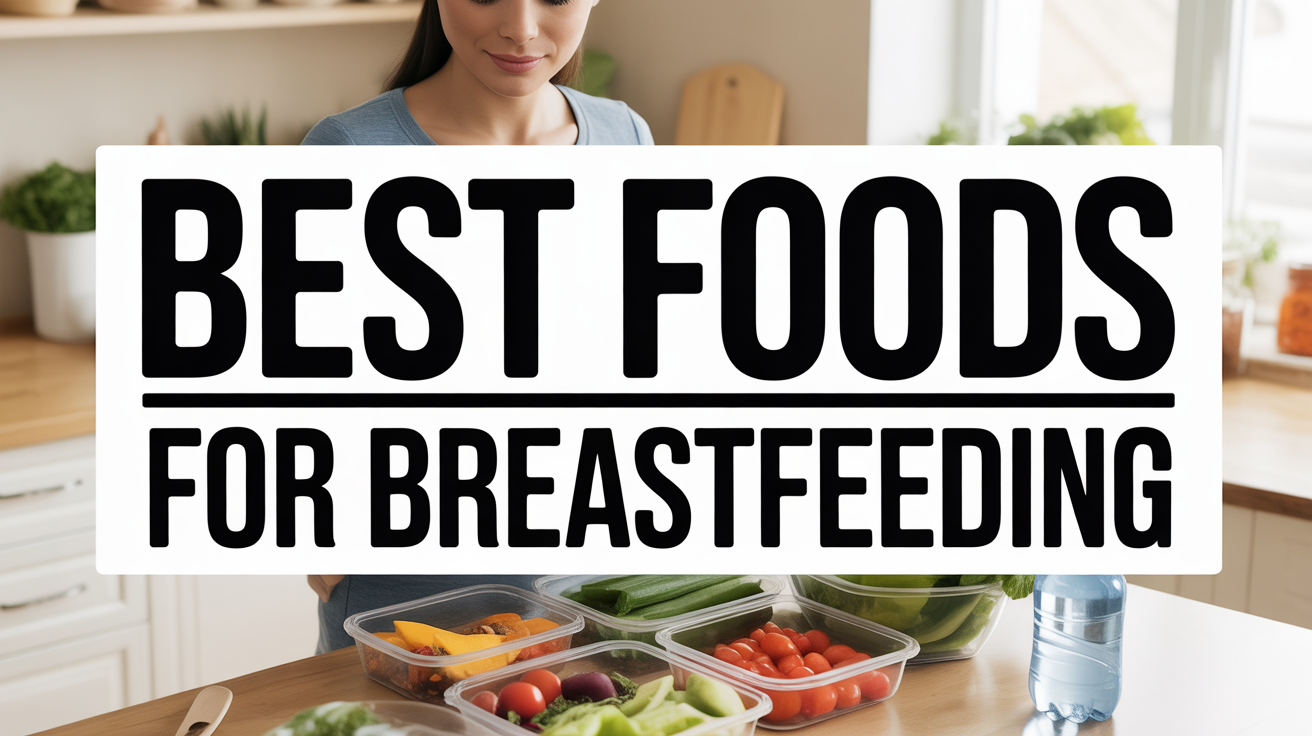
Best foods for breastfeeding are whole, minimally processed options that support milk production and maternal energy. Fruits, vegetables, whole grains, nuts, seeds, and legumes form the core. What you eat directly shapes the quality and quantity of milk your baby receives.
Galactagogue foods like oats, fenugreek, leafy greens, and legumes are among the most studied for milk support. Protein intake plays a direct role in sustaining supply and tissue repair. Calorie needs rise significantly during lactation. Iron, calcium, iodine, choline, vitamin B12, and DHA are the most critical micronutrients for nursing mothers.
Your diet also affects your baby through allergens, caffeine, and flavor compounds that pass into breast milk. Certain fish must be avoided entirely. This article covers what to eat, what to skip, how much to drink, and how to build a meal plan that keeps both you and your baby well-nourished.
What Are the Best Foods for Breastfeeding?
The best foods for breastfeeding center on whole, minimally processed categories: fruits, vegetables, whole grains, nuts, seeds, and beans form the foundation, supporting both milk production and maternal energy levels throughout the nursing period.
You’ve probably heard the term ‘galactagogue’ tossed around in mom groups. Here’s what it actually means: these are foods traditionally linked to supporting milk supply. Oats, barley, flaxseeds, fenugreek, alfalfa, brewer’s yeast, leafy greens, legumes, and sesame seeds all fall into this category. And nursing mothers have been reaching for them for generations.
Common Galactagogue Foods:
- Oats
- Barley
- Flaxseeds
- Fenugreek
- Alfalfa
- Brewer’s yeast
- Leafy greens
- Legumes
- Sesame seeds
Smith et al. (2021) in the Journal of Maternal Nutrition found that a diet centered on whole grains, fruits, and lean proteins correlated with higher milk production and improved maternal energy levels across the study population. In plain English: eat real food, and your body tends to respond.
Which Foods Actually Boost Milk Supply?
Galactagogue foods include oats, fenugreek, leafy greens, and legumes among the most studied options, with their association to boosted milk supply linked to nutrient density and plant compounds believed to stimulate prolactin activity.
Here’s why protein and iron matter more than most people realize. Both directly influence milk supply volume. When either drops too low, production tends to follow. So pairing lean protein sources with iron-rich legumes and leafy greens isn’t just good nutrition. It’s a practical strategy for keeping output steady.
Barley and oats are the most cited milk-supportive whole grains. Their beta-glucan content is thought to raise prolactin levels. That makes them one of the easiest food-first moves for any mom worried about her supply.
What Should You Drink to Increase Breast Milk?
Water is the primary fluid recommendation for breastfeeding mothers, but fortified plant milk, juice, and lactation teas featuring fenugreek, ginger, or fennel are also recognized options for meeting the elevated fluid demands of nursing.
Lactation teas are worth knowing about. They combine hydration with galactagogue support in a single daily habit. Fenugreek, fennel, and ginger are the most common ingredients, and they’re an easy way to build milk-supply support into your routine without overthinking it.
Hydration Options for Nursing Mothers:
- Water (primary recommendation)
- Fortified plant milk
- 100% fruit juice
- Fenugreek lactation tea
- Fennel lactation tea
- Ginger lactation tea
What Nutrients Do Breastfeeding Moms Need Most?
Breastfeeding increases demand for several micronutrients beyond pregnancy levels, with iron, calcium, iodine, choline, vitamin B12, and DHA omega-3 identified as most critical for both milk quality and maternal health during the nursing period.
Key Nutrients Elevated During Breastfeeding:
| Nutrient | Why It Matters | Key Food Sources |
|---|---|---|
| Iron | Supports milk supply and maternal energy | Legumes, leafy greens, lean meat |
| Calcium | Maintains maternal bone density | Dairy, fortified plant milk, almonds |
| Iodine | Essential for infant neurological development | Seafood, dairy, iodized salt |
| Choline | Passes into milk; supports infant brain development | Eggs, liver, soybeans |
| Vitamin B12 | Critical for maternal and infant nerve function | Fish, meat, dairy, fortified foods |
| DHA Omega-3 | Supports infant brain and eye development | Salmon, trout, flounder |
Here’s what most people miss about iodine and choline: breastfeeding mothers actually need more of both than women who aren’t nursing. Both nutrients pass directly into breast milk from what you eat, and they’re essential for your baby’s neurological development in those early months.
DHA is another one to pay attention to. Eating fatty fish like salmon, trout, and flounder two to three times a week raises DHA concentration in your breast milk. That increase directly supports your baby’s developing brain and eyes across the entire nursing period.
How Much Protein Do You Need While Nursing?
Protein intake plays a direct role in milk supply maintenance, and insufficient amounts are associated with decreased production. Nursing mothers need more protein than their pre-pregnancy baseline to sustain both milk output and their own tissue repair.
Think of it this way: your body is building milk from scratch at every feeding. It needs the raw materials to do that. Lean proteins like poultry, fish, legumes, eggs, and low-fat dairy aren’t just protein sources. They also deliver iron, choline, and B12, which lactation demands in higher amounts than most people expect.
Recommended Lean Protein Sources:
- Poultry (chicken, turkey)
- Fish (salmon, trout, flounder)
- Legumes (lentils, chickpeas, black beans)
- Eggs
- Low-fat dairy
Should You Keep Taking Vitamins While Breastfeeding?
Yes. Prenatal vitamins are typically recommended by OB-GYNs through the entire breastfeeding period, with additional targeted supplementation of iodine, choline, and vitamin B12 to meet the elevated demands of lactation.
The good news? This one’s simple. Keep taking your prenatals. But here’s what no one tells you: vegetarian and vegan nursing mothers face a real risk of B12 deficiency that can quietly affect both mom and baby. B12 passes into breast milk from your stores, and if those stores are low, your infant’s nerve development takes the hit. Supplementing isn’t optional in that case. It’s critical.
How Many Calories Do Breastfeeding Moms Need?
Calorie needs during lactation rise significantly above pre-pregnancy levels because milk production is an energy-intensive process. Mothers need additional calories each day to sustain supply without depleting their own nutrient reserves.
And here’s the kicker: it’s not just about eating more. It’s about eating better. Smith et al. (2021) linked whole grain, fruit, and lean protein intake to higher milk production and maternal energy levels. Food quality drives outcomes during breastfeeding. Calorie count alone doesn’t determine supply or how you feel day to day.
How Do You Get Enough Calories Without Overeating?
A calorie strategy for breastfeeding moms built on nutrient-dense additions rather than empty calories delivers vitamins, protein, and healthy fats alongside the extra energy lactation requires. Whole-grain bread with peanut butter, fruit, and yogurt are practical examples.
Ultra-processed foods like candy, chips, and pastries fill a caloric gap without delivering what your body and your milk actually need. No iron. No calcium. No choline. No DHA. Nutrient-poor calories don’t just fall short. They actively displace the compounds lactation depends on.
Nutrient-Dense vs. Nutrient-Poor Calorie Sources:
| Nutrient-Dense Option | Nutrient-Poor Alternative | Key Benefit of Dense Option |
|---|---|---|
| Whole-grain bread with peanut butter | White bread with butter | Protein, fiber, and healthy fats |
| Greek yogurt with fruit | Flavored candy or pastries | Calcium, protein, and natural sugars |
| Nuts and seeds | Chips or crackers | Healthy fats, iron, and magnesium |
| Oat-based energy balls | High-sugar granola bars | Beta-glucan and complex carbohydrates |
What Foods Should Breastfeeding Moms Avoid?
Tilefish, swordfish, shark, and king mackerel are high-mercury species that must be avoided entirely during breastfeeding. Mercury passes into breast milk and poses direct neurological risks to the developing infant, making complete elimination of these species the safest choice for lactating mothers.
Now here is the thing about dairy, soy, wheat, and eggs: they’re the most common dietary allergens that can reach your baby through breast milk. The sign to watch for? Green, mucus-like, or blood-specked stools. That’s your signal to start elimination testing.
Ultra-processed foods high in added sugar don’t just crowd out the nutrients your milk needs. They slow your own recovery too. Whole foods protect both milk quality and how you feel as your body continues to heal.
Foods to Avoid or Limit While Breastfeeding:
- Tilefish, swordfish, shark, and king mackerel (high mercury)
- Alcohol (limit strictly; 4-hour clearance window required)
- Caffeine above 300 mg per day
- Ultra-processed foods high in added sugar
- Common allergens if infant shows reaction signs (dairy, soy, wheat, eggs)
How Much Caffeine Is Safe While Breastfeeding?
The caffeine limit during breastfeeding is 300 mg per day, roughly equivalent to three standard cups of coffee. Staying within this threshold prevents the infant fussiness and disrupted sleep that excess caffeine transferred through breast milk can cause.
Go over that 300 mg threshold and things can get rough fast. Babies metabolize caffeine far more slowly than adults do. That means even a moderate maternal excess gets amplified on the infant’s end, showing up as fussiness, hyperactivity, or a baby who simply won’t settle. It’s worth keeping count.
Is It Safe to Eat Fish While Breastfeeding?
Yes. Low-mercury fish including salmon, trout, flounder, bass, bluefish, and tuna are recommended at two to three servings per week during breastfeeding. These species deliver DHA omega-3 that raises breast milk DHA concentration to support infant brain development without significant mercury risk.
But, and this is important: tilefish, swordfish, shark, and king mackerel are a hard no. These species bioaccumulate mercury at levels that transfer into breast milk at concentrations harmful to your baby’s neurological development. There’s no safe threshold for them.
Safe vs. Unsafe Fish During Breastfeeding:
| Safe (Low Mercury) | Avoid (High Mercury) |
|---|---|
| Salmon | Tilefish |
| Trout | Swordfish |
| Flounder | Shark |
| Bass | King mackerel |
| Bluefish | |
| Tuna (light, canned) |
Can Spicy Foods Affect Your Baby Through Breast Milk?
Maternal diet directly changes the flavor profile of breast milk, transmitting taste compounds from spices and strong flavors to the nursing infant. Dietary variety including spices may help babies accept a wider range of solid foods more easily when weaning begins.
Spicy food isn’t on the universal avoidance list. Most babies handle it without a problem. Some may show a little fussiness or gas, and if that happens, you can pull back temporarily. But don’t assume spice is off the table just because you’re nursing.
Can Your Baby React to What You Eat?
Compounds from food including allergens, caffeine, alcohol, and flavor molecules pass into breast milk in varying concentrations, creating a direct nutritional and sensory link between what the mother eats and what the baby receives at every feeding.
Dairy, soy, wheat, and eggs are the most likely allergens to trigger a reaction. Skin rashes, unusual fussiness, or changes in stool appearance are all signals worth taking seriously. If you see them, that’s your cue to start an elimination trial before assuming something else is going on.
How Does Your Diet Affect Breast Milk Quality?
Lee and Patel (2020), published in Breastfeeding Medicine, found that mothers consuming probiotic-rich foods produced breast milk with an improved nutritional profile, and their infants demonstrated better gut health outcomes compared to control groups in the same study cohort.
DHA levels in breast milk rise and fall in direct proportion to what you eat. Consuming DHA-rich fish two to three times per week is one of the most measurable levers you have for improving milk quality. It’s not complicated. It just has to become a habit.
A varied maternal diet also changes the sensory profile of your milk. Your baby tastes what you eat. That early flavor exposure may be one of the reasons kids raised on a diverse diet are easier to feed when solids start. Our writers at Millennial Hawk find this one of the most underrated benefits of eating well during the nursing period.
Could Food Allergies in Your Baby Be Linked to Your Diet?
Food allergens in breast milk follow a direct transmission pathway from maternal diet to infant, with proteins from dairy, soy, wheat, and eggs capable of passing into milk and triggering immune responses in sensitive infants. Elimination diets remain the primary diagnostic tool when an allergic reaction is suspected.
Green, mucus-like, or blood-specked stools are the most specific early warning sign. Why does that matter? Because they point directly to a dietary trigger rather than a general digestive issue, and they tell you where to start: with the most common allergens, beginning with dairy.
Steps for an Elimination Trial:
- Identify the most likely allergen based on infant symptoms (dairy is the most common first suspect).
- Remove the suspected allergen completely from your diet for two to four weeks.
- Monitor infant symptoms daily for improvement in stool appearance, skin, and fussiness.
- If symptoms resolve, reintroduce the eliminated food to confirm the trigger.
- Consult a pediatrician or registered dietitian before eliminating multiple food groups simultaneously.
What About Alcohol While Breastfeeding?
Alcohol during breastfeeding operates within a specific safety framework rather than a categorical ban: a single drink is acceptable only once the baby is at least 3 months old and feeding is well established, with a minimum 4-hour gap required before the next feed.
Here’s what most people get wrong about this: pumping and dumping doesn’t speed anything up. Alcohol clears from breast milk at the same rate it clears from your blood. Pumping removes milk from your body. It does not remove alcohol from your system. The clock is the only thing that works here.
Is It Ever Safe to Drink Alcohol While Nursing?
Yes. A single alcoholic drink is conditionally safe when the baby is 3 months or older, feeding is well established, and the mother waits at least 4 hours before nursing again, giving alcohol sufficient time to clear from breast milk.
The smartest move? Nurse right before you have a drink. That way you’re starting the clearance clock at the highest possible milk volume and giving yourself the full window before your baby needs to feed again. Don’t rely on pumping as your workaround. It doesn’t change the timeline.
Safe Alcohol Protocol While Breastfeeding:
- Confirm the baby is at least 3 months old and feeding is well established.
- Nurse or pump immediately before having a drink to maximize clearance time.
- Limit intake to a single standard drink.
- Wait a minimum of 4 hours before nursing again.
- Do not rely on pumping and dumping to speed clearance. It does not work.
How Do You Meal Plan as a Breastfeeding Mom?
A breastfeeding meal plan is built around whole foods, lean proteins, dairy or fortified plant-based alternatives, and galactagogue ingredients like oats and legumes, with meals structured to meet the elevated calorie and micronutrient demands of nursing.
The research backs this up directly. Smith et al. (2021) in the Journal of Maternal Nutrition link diets centered on whole grains, fruits, and lean proteins with higher milk production and sustained maternal energy levels. The Millennial Hawk approach to breastfeeding nutrition is rooted in exactly this kind of evidence, not trends or guesswork.
What Are the Best Snacks for Breastfeeding Moms?
The best snacks for nursing moms combine protein, complex carbohydrates, and healthy fats in a single option, with whole-grain bread with peanut butter, Greek yogurt with fruit, and nuts paired with whole fruit all meeting that nutrient profile efficiently.
For example, oat-based energy balls, flaxseed-topped yogurt, and hummus with vegetables all sneak galactagogue ingredients into portable, easy formats. You get complex carbs, healthy fats, and milk-supply support in one grab-and-go option. That’s the kind of efficiency a tired, nursing mom actually needs.
Top Snack Options for Nursing Moms:
- Whole-grain bread with peanut butter
- Greek yogurt with fruit
- Nuts paired with whole fruit
- Oat-based energy balls
- Flaxseed-topped yogurt
- Hummus with vegetables
Want Your Free Breastfeeding Meal Plan from Millennial Hawk?
You’ve got the science. Now you need the plan. Our team at Millennial Hawk put together a free breastfeeding meal plan that takes everything covered here and turns it into a ready-to-use daily eating guide. Galactagogue foods. DHA-rich fish. Lean proteins. Smart snacks. All organized so you don’t have to think twice.
Don’t leave your supply, your energy, and your baby’s development to guesswork. Get the free plan from Millennial Hawk and start eating with intention from day one.