
Dealing with hair loss is hard enough without wading through endless treatments promising thicker, healthier hair. From specialist scalp treatments to products that promise to wake up dormant follicles, the options can feel overwhelming. The tougher question is which treatments have evidence to support them.
If you’re experiencing thinning hair, start by understanding the research. Published medical studies and peer-reviewed research and clinical observations can help distinguish between treatments that are under investigation for their potential benefit and those that are heavily dependent on marketing claims. One area of interest is stem cell-derived proteins in hair restoration. Scientists have examined how exosome proteins affect inflammation, follicle activity, and hair regeneration.
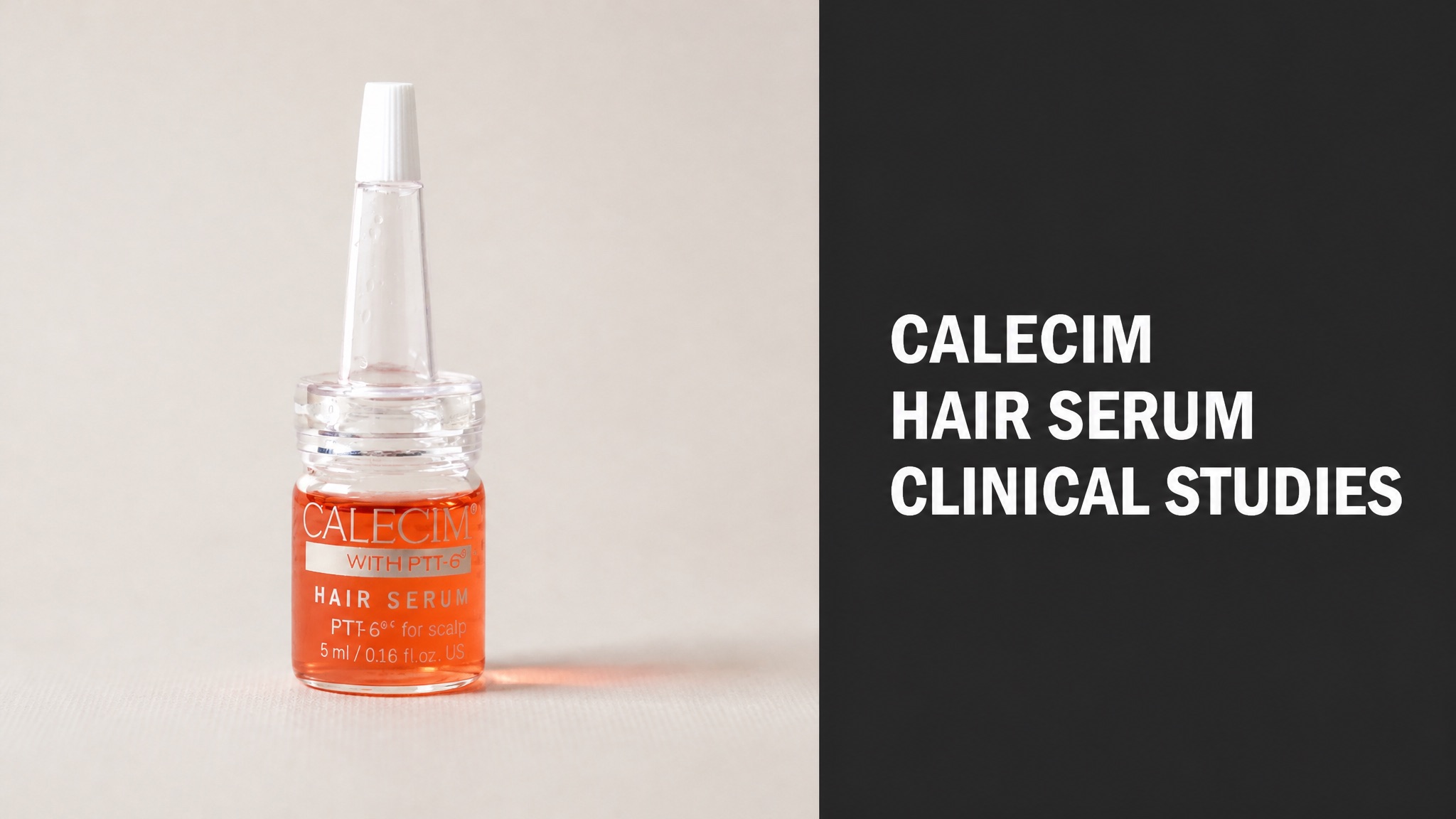
One of the treatments studied in the research is PTT-6®, a patented ingredient in Calecim Professional’s Hair Serum. It has been studied in peer-reviewed medical journals and through clinical observations for its effects on hair follicles.
What Makes a Hair Loss Treatment Clinically Proven?
A treatment’s scientific credibility depends on how much evidence supports its claims. Many products claim to improve hair density or growth, but those claims mean more when documented research backs them up.
One way to evaluate that evidence is to look at peer-reviewed medical publications. Specialists familiar with the subject evaluate a research article before publication. Reviewers evaluate the methodology, the significance of the results, and the contribution the paper makes to existing scientific knowledge. This helps set the quality of published research but does not mean every treatment discussed has been definitively proven effective.
Hair restoration is particularly tricky because various forms of hair loss may respond differently to treatment. Findings from one condition cannot be automatically applied to everyone with thinning hair. So, when considering clinical evidence, the type of hair loss, the treatment plan, and the results all matter.
Why Do Researchers Study Stem Cell Exosomes for Hair Growth?
Stem cell research has opened up new avenues for understanding how hair follicles respond to their cellular environment. One key focus is exosomes, small, membrane-bound structures produced by cells. They carry and encapsulate biological materials such as growth factors, cytokines, peptides, lipids, and nucleic acids.
What these materials contain depends on the cells that produce them. Some cytokines and growth factors stimulate cell growth, making them relevant to tissue repair and regeneration studies. Hair restoration experts are especially intrigued by how these proteins can affect the environment surrounding hair follicles.
One candidate mechanism is inflammation. Inflammatory activity around the dermal papilla, a structure associated with the hair follicle, may interfere with normal hair growth, according to research discussed in the medical literature.
If you could reduce this inflammation, you might allow these follicles to re-enter the active part of the hair cycle. This has led researchers to explore whether stem cell proteins can support hair regrowth through cellular repair mechanisms.
What is the Research Saying About PTT-6®?
Calecim Professional’s hair treatment contains a patented ingredient, PTT-6®, derived from red deer umbilical cord lining. The ingredient was cited in an article in the December/January 2024 issue of The PMFA Journal, which looked at cord-line mesenchymal stem cell exosomal proteins and their impact on hair follicles.
Among the contributors to the magazine were specialists in hair restoration and aesthetic medicine, including Dr. Neil Sadick and Dr. Munir Somji. According to the peer-reviewed article, stem cell exosomal proteins and hair follicles could reduce inflammation and support hair growth. “Dr. Sadick presented data showing that PTT-6® proteins may inhibit inflammation and vitamin D and promote hair growth by reactivating hair follicles in the resting, or telogen, phase. The suggested link between inflammation and follicle activity matters because it may explain the treatment’s ability to encourage regrowth. This study examines the biological processes that can affect hair follicle health rather than the outward signs of thinning hair.
What does the human data indicate on hair regrowth?
Promising results from topical use of PTT-6® have been reported in research and clinical observations. One reported case was of a patient with post-COVID-19 telogen effluvium. They used a topical extract of the umbilical cord lining of red deer called PTT-6® for the treatment of this type of hair loss. The case report published described hair regrowth post-treatment.
Other clinical observations included 60 patients on medical therapy for alopecia. In this group, PTT-6® proteins were applied topically to the scalp after microneedling. The results showed that 90% of the patients had better hair growth, texture, and density, and there were no side effects. The protocol of treatment is an important detail. Observations do not independently determine the degree of improvement derived from the ingredient alone, as PTT-6® was used in conjunction with microneedling and medical alopecia therapy.
Can stem cell protein therapy help different kinds of hair loss?
PTT-6® has also been studied in clinical observations in patients affected by androgenetic alopecia, a type of hair loss that affects both men and women. A London-based trichologist applied PTT-6® applications weekly after microneedling in male and female patients with this condition. There were improvements in hair growth and quality up to 6 months after treatment. Some patients with greying hair also experienced a darkening of hair color. Likewise, positive findings have been reported in Singapore and Australia.
A second reported case treated similarly with six weekly sessions of the same combination approach was done for a patient with alopecia areata. The clinical abstract details improvement in hair growth of the patient after the treatment course. These findings together suggest that stem cell proteins should be investigated in various hair loss disorders.
How does inflammation influence the regeneration of hair follicles?
This research suggests a link between hair follicle activity and body repair processes. Hair follicles experience periods of growth and rest. The telogen phase is a resting phase for the follicle, not growing new hair.
The PMFA Journal reports research suggesting that inflammation around the dermal papilla may contribute to interrupted hair growth. The proposed mechanism suggests that suppressing inflammation may create conditions for resting follicles to become active again. The researchers also draw parallels between wound-healing processes and those that may support follicle reactivation. The article hinted that similar mechanisms might explain the hair growth findings. Researchers have studied proteins in stem cell exosomes for their role in tissue repair.
How To Select A Science-Backed Hair Treatment
As demand for regenerative hair treatments grows, careful evaluation is especially important. Consumers should not be swayed by blanket claims about hair growth; they should look at what the published evidence actually says. How results are interpreted depends on the condition treated, the number of patients observed, and whether other procedures were used.
For example, the Calecim Professional PTT-6® has been researched in peer-reviewed medical literature and clinically observed on different types of hair loss. The findings provide a scientific basis for interest in the ingredient, especially its potential link to inflammation and follicle reactivation.
At the same time, many reported treatment protocols included microneedling, so it is important to distinguish the results of combined procedures from the effects of a single topical serum. If you are seeking treatment, understanding these differences will help you have more educated conversations with reputable hair restoration specialists.
Stem Cell Proteins Could Define the Future of Hair Loss Treatment?
Hair restoration research is shifting from the physical effects of hair thinning to the biological environment where follicle growth occurs.
Results with PTT-6® highlight why this approach is gaining interest. Published observations report improvements in hair growth, density, and quality, while medical researchers suggest inflammation suppression and follicle reactivation as possible contributing mechanisms. Although researchers need to conduct further studies to determine the effectiveness of individual treatment approaches, the present findings provide useful direction for future investigation.
If you’re considering hair loss treatments, the biggest difference you can make is between what a product promises and the evidence behind those claims. Recognising the evidence is a practical first step in selecting a treatment with a credible scientific basis.