
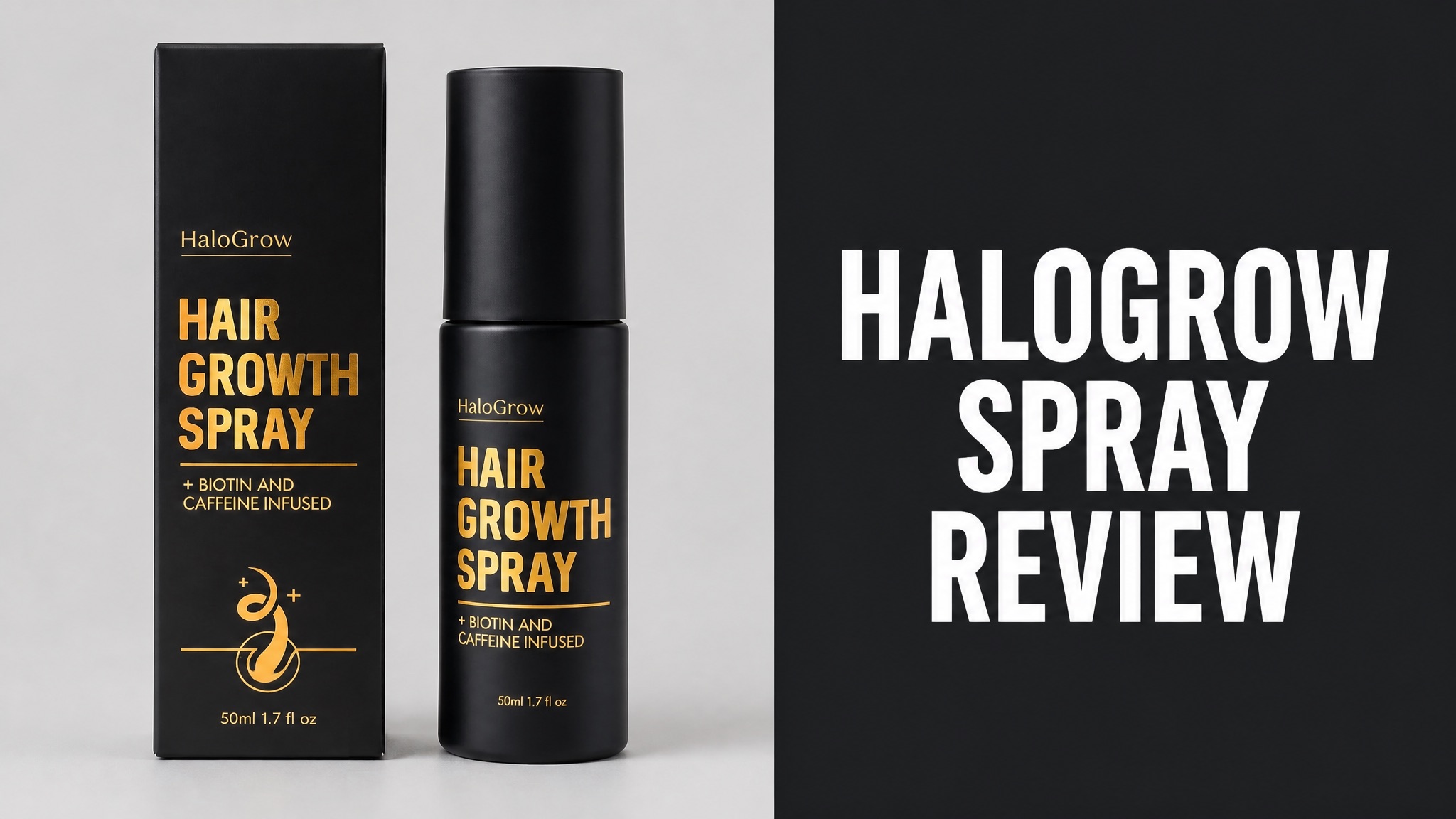
HaloGrow is a topical hair growth spray sold for thinning hair in men and women. The 50 ml (1.7 fl oz) bottle mixes biotin, caffeine, castor oil and herbal extracts. Ads promise thicker hair, but the proof behind those promises is thin. Results vary a lot by user. Here’s what the evidence shows.
The formula targets DHT, scalp blood flow and follicle nutrition. Users spray it on the scalp and massage it in daily. Amazon buyers rate it 3.9 out of 5 stars. Early reports mention less shedding within weeks. Complaints focus on billing, slow results and scalp dryness. The spray isn’t FDA approved for hair loss. Price sits at $29.99 (USD) per bottle.
So is HaloGrow a smart buy or just clever marketing? This review covers the ingredients, real feedback, side effects and price. It also compares the spray with Rogaine and Nutrafol. By the end, the right choice for your scalp will be clear. No hype, just the facts in plain words.
What Is HaloGrow?
HaloGrow is a leave-in hair growth spray marketed to reduce shedding and support thicker-looking hair on thinning areas. The brand says it spent three years on the formula. It targets early thinning in both men and women. One 50 ml (1.7 fl oz) bottle holds 60+ applications. That’s about two months of daily use, according to the brand. Results take months.
Here’s the thing: HaloGrow isn’t a drug. It’s a cosmetic scalp spray. The brand pitches it for stress shedding, postpartum loss, menopause and age-related thinning. Who is it really for? Mostly people in the early stages of thinning. Advanced baldness is a different story.
Who Makes HaloGrow?
HaloGrow is sold by a direct-to-consumer brand through tryhalogrow.com and an Amazon store called HALOGROW. A Better Business Bureau profile lists a Halo Hair Growth business in Tampa, Florida. A ProvenExpert listing gives a Michigan address. The brand shares little else about its owners, chemists or labs. Buyers mostly order online, not in drugstores.
Worth knowing: much of the online buzz is paid. Yahoo Finance ran a HaloGrow piece clearly marked as a paid press release. Several ‘review’ sites are sponsored posts with buy links. So treat glowing write-ups with care. Independent data is far harder to find.
What Ingredients Are in HaloGrow?
HaloGrow contains 14 ingredients, led by water, alcohol, ginger root extract and hydrolyzed oat protein. The actives include He Shou Wu, ginseng, panthenol, castor oil, caffeine, zinc PCA and biotin. Skinsort lists the formula as paraben-free, sulfate-free and silicone-free. It’s not alcohol-free or fragrance-free. Each spray mixes all 14 in one base.
Key Ingredients:
| Ingredient | Claimed Role | Evidence Level |
|---|---|---|
| Caffeine | Stimulates follicles, extends growth phase | Moderate (lab and small human studies) |
| Biotin | Supports keratin production | Weak unless biotin deficient |
| Castor oil | Moisturizes scalp | Weak for regrowth |
| Diaminopyrimidine oxide (aminexil) | Keeps follicle tissue supple | Limited |
| He Shou Wu | Traditional follicle tonic | Limited human data |
| Panax ginseng | Improves scalp circulation | Limited |
Alcohol sits second on the list. Why does that matter? High alcohol content can dry the scalp. Skinsort flags the formula as possibly worsening dryness, eczema and rosacea. Angelica root also adds scent, so fragrance-sensitive users should note it.
What Does Caffeine Do in HaloGrow?
Caffeine is the spray’s main DHT-fighting active, chosen to stimulate follicles and extend the hair growth phase. Lab studies show caffeine counters testosterone effects on follicle cells. HaloGrow’s marketing leans hard on this link. The brand doesn’t disclose how much caffeine each spray delivers, though. Caffeine also appears in many thinning shampoos.
And that’s the catch. Dose matters for any active. Without a stated percentage, nobody can compare HaloGrow with tested caffeine lotions. In plain English: the ingredient is promising, but the amount is a mystery.
Does HaloGrow Contain Minoxidil?
No. HaloGrow does not contain minoxidil, finasteride or any other FDA-approved hair loss drug. The label lists only cosmetic ingredients. Amazon reviewers like the minoxidil-free formula because it avoids the shedding phase some minoxidil users get. The brand also says it’s sulfate-free and paraben-free. Buyers who want a proven drug must look elsewhere.
The good news? No minoxidil means no risk of minoxidil-specific side effects. The bad news? It also means no drug with decades of proof behind it. That trade-off shapes everything else in this review.
How Does HaloGrow Work?
HaloGrow works by delivering actives straight to the scalp, where the brand says they block DHT and boost circulation. DHT is a hormone that shrinks follicles over time. The brand claims topical delivery beats pills because it skips digestion. Caffeine, ginseng and botanicals carry the main load in this approach. Results depend on steady daily application.
Does the theory hold up? Partly. Topical caffeine has some research support. But the brand hasn’t published studies on its finished formula. So the mechanism is plausible on paper, yet unproven for this exact spray.
How Do You Use HaloGrow?
HaloGrow is sprayed on a clean, slightly damp scalp once or twice daily. Users then massage it in for one to two minutes. Users part their hair to reach thin spots first. The spray can stay in all day or be rinsed after 30 minutes. Styling right after application is fine, according to the brand. Wash hands after each use to keep it away from the eyes.
Steps:
- Wash and towel-dry the hair so the scalp is clean and slightly damp.
- Part the hair to expose the thinning areas.
- Spray directly onto the scalp, not the hair lengths.
- Massage the scalp with fingertips for one to two minutes.
- Leave it in, or rinse after 30 minutes, then style as usual.
Consistency is the whole game. Skipping days slows any results. Brand promoters say three months is the minimum test period. So plan for daily use before judging it.
Does HaloGrow Work?
Yes, for some users HaloGrow reduces shedding and improves hair feel, but strong proof of real regrowth is missing. Promoters cite a 489-person study with 78% satisfaction. That study isn’t published anywhere independent. Amazon’s 3.9-star average from 280 ratings shows mixed real-world results. Expect modest gains at best. Patience is essential here.
To be clear, satisfaction isn’t the same as regrowth. A user can feel happy with softer hair and still see no new strands. And sponsored sites tout a 4.7-star rating from 5,731 reviews. Those numbers come from the brand itself.
How Long Does HaloGrow Take to Work?
HaloGrow takes at least three months of daily use before most users judge the results. One 90-day tester reported less shedding by week four. Fine baby hairs showed up around week eight. Denser crown coverage arrived near month three. The brand’s own marketing promises thicker hair in 18 weeks. Most users quit far too early to judge the spray fairly.
Reported Timeline:
| Time | Reported Change |
|---|---|
| Weeks 1 to 2 | Softer, shinier hair and a calmer scalp |
| Week 4 | Less hair in the shower drain |
| Week 8 | Fine baby hairs at temples and crown |
| Month 3 | Slightly denser crown and thicker ponytail |
Here’s what no one tells you: that timeline comes from a single promotional blog. Hair cycles are slow for everyone. So early changes in feel are common with almost any scalp product.
Does HaloGrow Regrow Hair on Bald Spots?
No. HaloGrow has no published evidence of regrowing hair on fully bald, shiny scalp areas. Follicles that have stopped working for years rarely return with cosmetic sprays. A doctor on JustAnswer flagged the brand’s baldness claims as exaggerated. Results are realistic only for early thinning and active shedding. Smooth bald patches need a medical plan.
Bottom line: think of the spray as support, not a cure. People with advanced loss need a dermatologist. Proven options like minoxidil, finasteride or transplants are far more likely to help.
What Do HaloGrow Reviews Say?
HaloGrow reviews are mixed, with praise for less shedding and a light feel, and anger over billing and weak results. Amazon shows 3.9 stars from 280 ratings and 1,000+ monthly purchases. Trustpilot reviews swing between five-star raves and one-star refund disputes. Google’s summary calls overall feedback mixed. Verified buyers tell the most honest story.
Which reviews deserve trust? Verified Amazon buyers are the safest bet. Many blog reviews are sponsored and include affiliate links. Trustpilot also shows a deleted-reviews notice on one HaloGrow-related page.
What Are the Positive HaloGrow Reviews?
Positive HaloGrow reviews praise reduced shedding, softer strands and a lightweight spray that dries fast without grease. Some users report baby hairs after one to several months. Others like the minoxidil-free, sulfate-free formula. Many say the routine takes under two minutes, which helps them stay consistent. Several call the botanical scent light.
In fact, texture comes up more than regrowth. Users describe shinier hair and a calmer, less oily scalp. Those are real wins. They just aren’t the dramatic regrowth the ads suggest.
What Are the Common HaloGrow Complaints?
Common HaloGrow complaints center on confusing checkout upsells, surprise charges and slow refund replies. Trustpilot and BBB posts describe extra bottles added at checkout. Some buyers say subscriptions were unclear. Others report little or no visible change after weeks of use. A few mention scalp dryness and itching. These issues drag the ratings down.
Top Complaints:
- Extra bottles or upsells added during checkout
- Slow or disputed refunds
- No visible regrowth after weeks of use
- Scalp dryness, itching or flaking
- Ads that overpromise fast results
Now here’s the thing: billing pain is avoidable. Buying on Amazon skips the official site’s upsell flow. Amazon’s own return rules then apply.
How Does HaloGrow Compare to Rogaine and Nutrafol?
HaloGrow is a cosmetic spray, while Rogaine uses FDA-approved minoxidil and Nutrafol is an oral supplement. Rogaine has the strongest evidence for regrowth. Nutrafol works from the inside with botanicals and vitamins. HaloGrow costs less upfront and avoids minoxidil, but it has the weakest research. Each option fits a different buyer and a different budget.
Comparison:
| Product | Format | Key Active | FDA Approved |
|---|---|---|---|
| HaloGrow | Scalp spray | Caffeine, biotin, botanicals | No |
| Rogaine | Foam or solution | Minoxidil 5% | Yes |
| Nutrafol | Daily capsules | Saw palmetto, ashwagandha | No (supplement) |
So what does that mean for you? Proof matters most for real regrowth. Rogaine wins there. HaloGrow suits people who want a gentle, drug-free routine.
Is HaloGrow Better Than Minoxidil?
No. HaloGrow is not better than minoxidil for regrowing hair, because minoxidil has decades of clinical proof. Minoxidil is one of only two FDA-approved hair loss drugs. HaloGrow has no published trials on its formula. Its only edge is comfort, since it avoids minoxidil’s early shedding phase. Comfort is nice, but proof drives results for thinning hair.
Think of it this way: HaloGrow is a scalp-care add-on. Some people use a caffeine spray alongside minoxidil. That combo is worth asking a dermatologist about first.
Is HaloGrow Safe?
Yes, HaloGrow is generally safe for healthy scalps, since it holds common cosmetic ingredients and no prescription drugs. Skinsort rates panthenol and polysorbate 20 at zero irritancy. Still, alcohol ranks second on the label. Alcohol can dry the scalp. People with sensitive skin should patch test first. A small test spot on the inner arm works well.
Here’s the part most people miss: natural doesn’t mean risk-free. Ginger, angelica and He Shou Wu are plant extracts. Plant extracts can trigger allergies in some users.
What Are HaloGrow Side Effects?
HaloGrow side effects are usually mild and include scalp dryness, itching, flaking and redness. Google’s review summary notes a subset of users with irritation. Skinsort warns the formula may worsen eczema, rosacea and general sensitivity. Serious reactions aren’t widely reported in public reviews. Most reactions fade after users pause the spray for days.
Reported Side Effects:
- Scalp dryness from the alcohol base
- Itching or tingling after application
- Flaking that looks like dandruff
- Redness on sensitive or eczema-prone skin
Who should skip it? People with psoriasis, eczema or open scalp wounds. Pregnant or nursing users should check with a doctor. Stop use if burning lasts more than a day.
Is HaloGrow FDA Approved?
No. HaloGrow is not FDA approved, because the FDA treats it as a cosmetic, not a hair loss drug. Only minoxidil and finasteride hold FDA approval for pattern hair loss. Cosmetics don’t need approval before sale. They also can’t legally claim to treat a disease like alopecia. So HaloGrow can only promise thicker-looking hair. Some paid ads go much further.
That’s why the wording matters. ‘Thicker-looking hair’ is a cosmetic claim. ‘Cures baldness’ is not. Watch for ads that blur the line.
How Much Does HaloGrow Cost?
HaloGrow costs $29.99 (USD) for one 1.7 fl oz (50 ml) bottle on Amazon, about $17.64 per fluid ounce. A three-pack option is also listed there. The official site sells single bottles and multi-bottle bundles with bulk discounts. One bottle lasts roughly two months, according to the brand. That puts it in the low-to-middle range for scalp serums and sprays.
Pricing:
| Option | Size | Price (USD) |
|---|---|---|
| Amazon single bottle | 1.7 fl oz (50 ml) | $29.99 |
| Amazon three-pack | 3 x 1.7 fl oz (150 ml) | Varies by listing |
| Official site bundles | 1 to 6 bottles | Varies by promotion |
A three-month trial needs about two bottles. That’s roughly $60 (USD) on Amazon. Is that steep? Not really. It’s cheaper than many branded hair supplements.
Where Can You Buy HaloGrow?
HaloGrow is sold on its official website and through the HALOGROW store on Amazon. Amazon reports 1,000+ bottles bought in a single month. The official site offers a 30-day money-back guarantee, per promoters. Buying on Amazon avoids the checkout upsells many Trustpilot reviewers complain about. Shoppers should skip unknown sellers and copycat pages.
Pay attention to this: stick to those two sources. Copycat sites and odd landing pages already exist. Third-party sellers can’t guarantee a genuine, fresh bottle.
Is HaloGrow Worth It?
Yes, HaloGrow is worth a try for early thinning or shedding, but not for advanced baldness. At $29.99 (USD) a bottle, the risk is low. The formula is light, simple and minoxidil-free. Users with serious loss should start with a dermatologist and proven treatments instead. The spray is a reasonable, low-cost first step for mild cases. Expect slow change.
Short answer: buy it for scalp care, not miracles. Give it three months of daily use. Track progress with photos in the same light. If nothing changes by then, move on to minoxidil.