
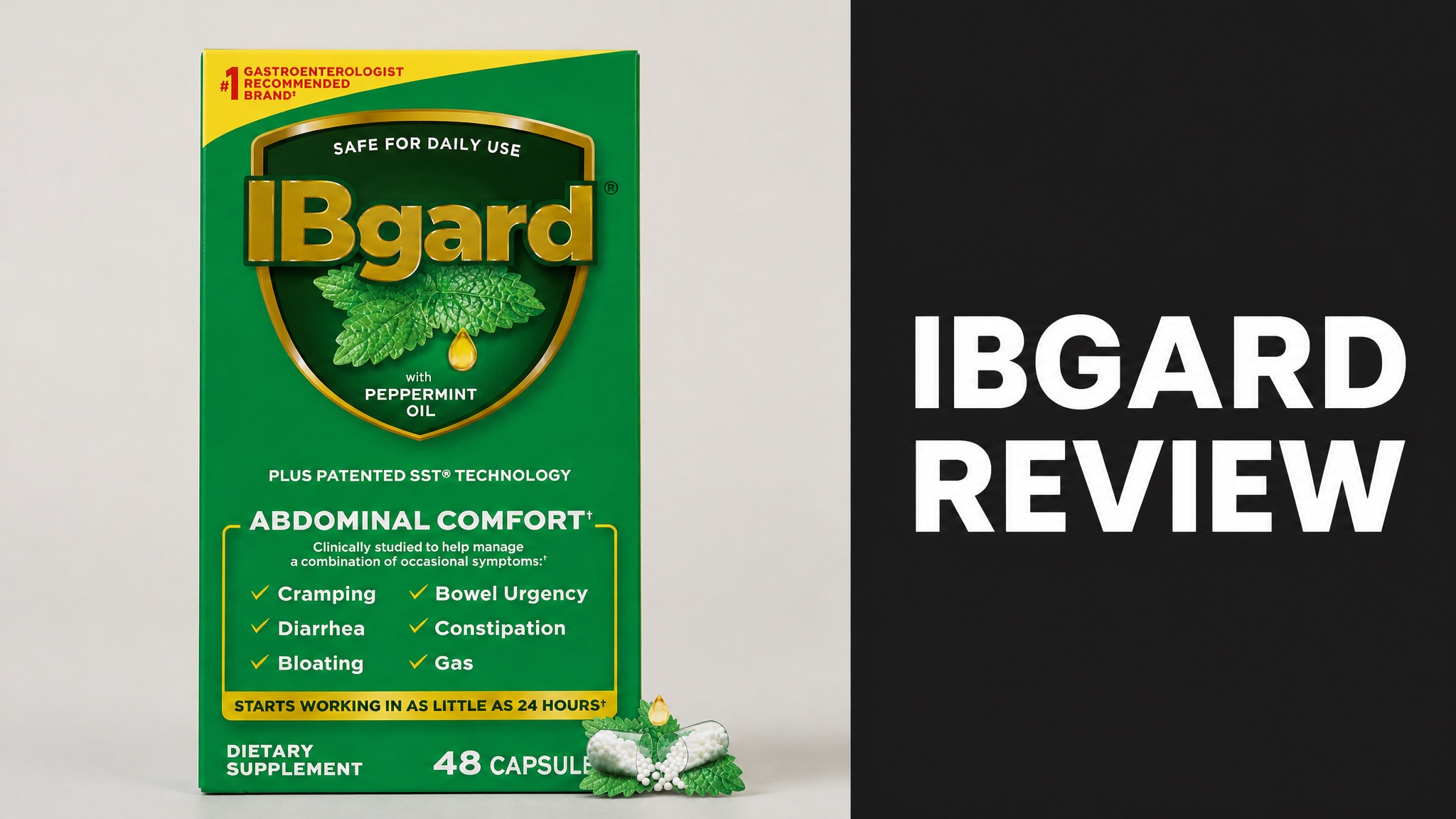
IBgard is an over-the-counter peppermint oil capsule sold for irritable bowel syndrome (IBS) symptoms. Nestlé Health Science owns the brand. The capsules target cramping, bloating, gas, diarrhea and constipation. Gastroenterologists often name it as a peppermint option, though the FDA has not approved it.
Each capsule holds 90 mg of ultra-purified peppermint oil in coated microspheres. The coating delays release until the small intestine. A 2016 trial of 72 people showed a 40% symptom drop versus 24% on placebo. Users report fast relief, but reflux sufferers and budget shoppers report problems. The review also weighs price, safety and who benefits most.
So is the product worth your money? This review covers the formula, dosage, side effects, price, user feedback and legitimacy. Read on to see who benefits most, who should skip it, and how to take it safely. Expect clear, honest answers backed by the published research available today.
What Is IBgard?
IBgard is a peppermint oil supplement made for adults who want to manage occasional IBS symptoms without a prescription. The brand markets it as a medical food for dietary management. Capsules target abdominal pain, bloating, gas, diarrhea and constipation. Doctors still advise a diagnosis before you start. The capsules are sold without a prescription.
IBS is common. Estimates put it at 10% to 15% of the US population. So what makes this capsule different from plain peppermint pills? The coating. The coating protects the oil on the way down.
Who Makes IBgard?
IM Health Science created IBgard in Boca Raton, Florida, after its 2013 founding by pharmaceutical research executives. Nestlé Health Science acquired the company in 2020. The capsules are made in the United States under good manufacturing practices. The brand began as a private company before the Nestlé deal. Today it sits inside a global health firm.
In fact, the same team also developed products for ulcerative colitis and Crohn’s disease. The background gives the brand a clinical feel. Still, a pharma pedigree is not a drug approval.
How Does IBgard Work?
Peppermint oil contains menthol, which relaxes the smooth muscles of the intestines and calms the cramping linked to IBS. Menthol also has a cooling, anti-inflammatory effect. Researchers have studied peppermint oil for IBS for years. WebMD notes that benefits for other digestive issues are less clear. The effect stays local to the gut, not the whole body.
Think of it this way: the oil only helps if it reaches the right spot. Plain capsules often dissolve in the stomach. IBgard tries to fix that problem.
What Is Site-Specific Targeting?
Site-Specific Targeting (SST) packs the oil into tiny triple-coated microspheres that bypass stomach acid and open in the small intestine. The brand patented the design. Studies cited by reviewers suggest at least 70% of coated oil reaches the intestines. Each microsphere carries a measured dose of oil. The shell dissolves only in the right gut region.
To put it simply, the coating slows release. Does that matter for comfort? It can. Less oil in the stomach means fewer reflux complaints.
What Is in IBgard?
The main ingredient is ultra-purified peppermint oil, which supplies menthol as the active compound in every capsule. Each capsule holds 90 mg of oil. Two capsules deliver 180 mg. Gelatin forms the capsule shell, and the microspheres carry the coating. The oil is purified to remove unwanted compounds. Peppermint oil holds over 80 natural components.
Here’s the thing: the formula is simple. There’s no herbal blend or probiotic. A version with 1,000 IU of added vitamin D also exists.
IBgard Formula Facts:
| Item | Detail |
|---|---|
| Active ingredient | Ultra-purified peppermint oil |
| Per capsule | 90 mg |
| Per serving (2 capsules) | 180 mg |
| Delivery | Triple-coated microspheres |
| Vitamin D version | 1,000 IU added |
How Much Peppermint Oil Is in IBgard?
Each IBgard capsule contains 90 mg of ultra-purified peppermint oil, so a standard two-capsule dose delivers 180 mg. The oil sits inside coated microspheres. Reviewers say the dose matches amounts used in clinical IBS research on peppermint oil. A flare-up plan uses up to six capsules a day. The total reaches 540 mg of oil across the whole day of dosing.
But here’s the catch. No third-party seal confirms purity or content. WellnessVerge flagged that gap. So you rely on the brand’s own testing.
What Are the Benefits of IBgard?
IBgard aims to relieve abdominal pain, bloating, gas, urgency, diarrhea and constipation by relaxing intestinal muscles. The brand claims relief can start within 24 hours. Users take it daily for maintenance or during flare-ups. Peppermint oil has centuries of traditional use for gut complaints. Daily users say the capsules fit easily into a routine.
Let me break that down: the claimed gains are comfort gains. The product is not a cure. Does that make it useless? No, because the capsules manage symptoms, and that is the goal.
Main Benefits:
- Eases abdominal cramping and pain
- Reduces bloating and gas
- Supports more regular bowel movements
- Reduces bowel urgency
- May lower reflux risk versus older peppermint capsules
Does IBgard Actually Work?
Yes. IBgard reduced IBS symptoms by 40% in a 2016 four-week trial, compared with 24% for placebo. The study enrolled 72 people. A larger share of IBgard users also reported relief within 24 hours. Experts still call the evidence modest. Reviewers rate the product as supported by some scientific research. The 16-point gap is meaningful for a symptom study.
The trial was small. Does that make the results useless? Not at all, but it does mean you shouldn’t expect miracles. Results vary by person and by IBS type.
What Do IBgard Reviews Say?
Customer feedback is largely positive. Amazon shows over 11,000 reviews and an average rating near 4.5 out of 5 stars. Many reviewers describe calmer digestion and fewer flare-ups. Critics focus on reflux, price and slow results. Ratings differ across retailers. Scores vary by retailer, so read several review sources. Doctors seem to agree with shoppers.
In fact, doctors seem to agree with shoppers. A press release says US gastroenterologists endorsed the brand four years in a row. The claim comes from the company, so treat it with care.
What Do Users Like About IBgard?
Satisfied buyers praise fast relief from cramping, better bowel regularity and gentler digestion compared with plain peppermint pills. One five-star Amazon reviewer reports no IBS problems since starting. Others like the small, easy-to-swallow capsules. Many call it the only product that calmed their gut without side effects. Target and CVS reviewers agree.
Bottom line: people who respond tend to respond quickly. Some feel better within a day. Is that typical? Not always. Others need the full four-week course.
What Do Users Complain About?
Critical buyers complain about cost, heartburn and a lack of results, with two- and three-star reviews citing reflux flare-ups. Peppermint can relax the valve between stomach and esophagus. The effect worsens reflux in some people. Some reviewers also say the capsules failed to help at all. A few call the cost steep for a long-term daily plan of care.
Here is the part most people miss: cost adds up fast. Flare-up dosing burns through a box in about eight days. Some shoppers quit for that reason alone. Is cost really the issue? For many, yes.
Pros and Cons:
| Pros | Cons |
|---|---|
| Fast relief for many users | Costly at flare-up doses |
| Coated for intestinal release | Can worsen reflux |
| Small clinical trial support | No third-party purity seal |
| Widely sold in pharmacies | No FDA approval |
What Are the Side Effects of IBgard?
IBgard causes mild side effects in some users, mainly heartburn, nausea, dry mouth and stomach pain. Peppermint oil can also cause burning around the anus after digestion. Serious reactions are rare. Allergic reactions can happen in people sensitive to peppermint or menthol. Most tolerate short-term use well. WebMD lists these as the most common ones.
Stop taking it if you notice a rash, swelling, trouble breathing or wheezing. Get help right away. Is that overkill? No, because allergic reactions can escalate fast. Report any reaction to the FDA.
Reported Side Effects:
- Heartburn
- Nausea
- Dry mouth
- Stomach pain
- Burning around the anus
- Allergic reaction (rare)
Does IBgard Cause Heartburn?
No. IBgard is designed to avoid the heartburn that older peppermint capsules cause, though a minority of users still report it. A three-year safety analysis found no pattern of heartburn. The coating keeps oil away from the stomach. People with severe reflux often find peppermint of any kind hard to tolerate. The coating cuts that risk but cannot erase it.
That said, ‘less likely’ is not ‘never.’ Reflux-prone users report flare-ups. Talk to your doctor first if reflux is a daily problem.
Who Should Avoid IBgard?
People allergic to peppermint or menthol should avoid IBgard, as should children and anyone with serious medical conditions. The brand states the product is for adults. Pregnant or nursing women should ask a doctor first. Any history of severe reaction to mint products is a major red flag for users. Doctors can suggest safer options for those users.
Also, check your medicines. Could peppermint oil interact with them? Yes, with some drugs. A pharmacist can confirm what is safe for you.
How Do You Take IBgard?
Adults take two capsules with a full glass of water, 30 to 90 minutes before a meal. Swallow them whole. Do not chew. The directions allow opening a capsule onto non-dairy food. Missed doses can be taken after the meal. Timing matters because the oil needs time to travel through the stomach. Dosing before food gives the coating time to reach the small gut.
For maintenance, take two capsules once daily. During a flare-up, take two capsules three times daily for four weeks. Do not exceed eight capsules a day.
How to Take IBgard:
- Pick a meal and plan the dose 30 to 90 minutes before it.
- Take two capsules with a full glass of water.
- Swallow the capsules whole without chewing.
- Repeat up to three times daily during a flare-up.
- Stay under eight capsules in a day.
How Long Should You Take IBgard?
Flare-up dosing runs for four weeks, the same length as the clinical trial. After that, many users drop to a daily maintenance dose. IBS is a long-term condition, so ongoing use is common. Doctors usually review progress after the first month. If symptoms improve, a lower daily dose is a common next step. If nothing changes, a different plan makes sense.
Check in with your doctor if symptoms persist. New symptoms deserve a proper exam. Do not rely on a supplement alone.
How Much Does IBgard Cost?
A 48-capsule box costs about $25.69 to $31 (USD), which varies by retailer. A 12-capsule pack runs about $10 to $15. Amazon lists a 48-count box near $25.99. Walmart and Walgreens list prices up to about $31. Prices shift with sales and seller. Buying the larger box lowers the cost per capsule. Always compare several listings before you check out online.
Here’s what that means in practice. Maintenance dosing runs about $32.50 per month. Flare-up dosing runs closer to $91 per month, since a box lasts about eight days.
IBgard Price Snapshot:
| Pack Size | Typical Price (USD) |
|---|---|
| 12 capsules | $10-$15 |
| 48 capsules | $25-$31 |
| Maintenance month | About $32.50 |
| Flare-up month | About $91 |
Is IBgard Worth the Price?
Yes, for responders. IBgard delivers value if two capsules a day control your symptoms, but flare-up dosing gets expensive fast. Compare the cost against doctor visits and lost workdays. IBS is a leading cause of absenteeism after the common cold. Weigh the monthly cost against how much relief you get. Responders often call the money well spent daily.
The good news? You can test a 12-count pack first. The small buy tells you whether your gut responds. Why risk more upfront? You don’t have to.
Where Can You Buy IBgard?
IBgard is sold at Amazon, Walmart, Target, Walgreens and CVS, both online and in store. Many CVS locations offer same-day pickup. Some sources mention 10% off with auto-delivery, so check the current offer. The 48-count box is the most common size online. Store shelves usually carry the 12-count pack. Check the label for the correct product version.
Buy from a trusted seller. Packaging may vary between listings. Look for sealed boxes and a clear expiration date.
Is IBgard Legit?
Yes. IBgard is a real product from an established company, backed by one peer-reviewed trial and wide retail availability. The brand is not a scam. Still, it is a supplement, so claims face less scrutiny than drug claims. Reviewers note that the brand shows a clear contact phone number. Buyers should still treat marketing claims with care and read labels.
WellnessVerge praises the brand for urging users to see a doctor. The brand also lists a contact number. We could not find a stated money-back guarantee in some reviews. Does that sink the brand? No, but it is worth noting.
Legitimacy Checks:
- Owned by Nestlé Health Science
- Made in the United States under good manufacturing practices
- Supported by a peer-reviewed 2016 trial
- Sold by major pharmacies and retailers
- Lacks a third-party purity seal
Is IBgard FDA Approved?
No. IBgard is not FDA approved, because it is sold as a dietary supplement or medical food rather than a drug. The FDA has not reviewed it for safety or effectiveness. WebMD states this clearly. Supplement makers must follow manufacturing rules, but the FDA does not approve these products before sale. Any claim on the label is the maker’s own, not FDA’s.
So what does that mean for you? Quality rests on the manufacturer. Use it under a doctor’s guidance, especially with other medicines.
Should You Try IBgard?
Yes, if you have diagnosed IBS and no reflux. IBgard is a reasonable first step for managing cramping and bloating, and the coated design beats plain peppermint pills. Expect modest, personal results. Give it the full four weeks. The 12-count pack makes a low-cost test. Track symptoms in a diary during the trial. A doctor can then help judge the result.
Skip it if you have strong reflux or a peppermint allergy. Also skip it if the cost strains your budget. Talk to a doctor about alternatives.
Who Is IBgard Best For?
Adults with IBS-type cramping and bloating get the most from IBgard, particularly those who want a natural option before prescriptions. Peppermint oil works for many IBS types, such as diarrhea-predominant and mixed forms. Adults seeking a natural option often start here. Doctors tend to suggest it as a first-line step before stronger drugs are tried.
Pay attention to this: see a doctor first. Symptoms that mimic IBS can signal other conditions. A diagnosis keeps you safe and your spending smart.