
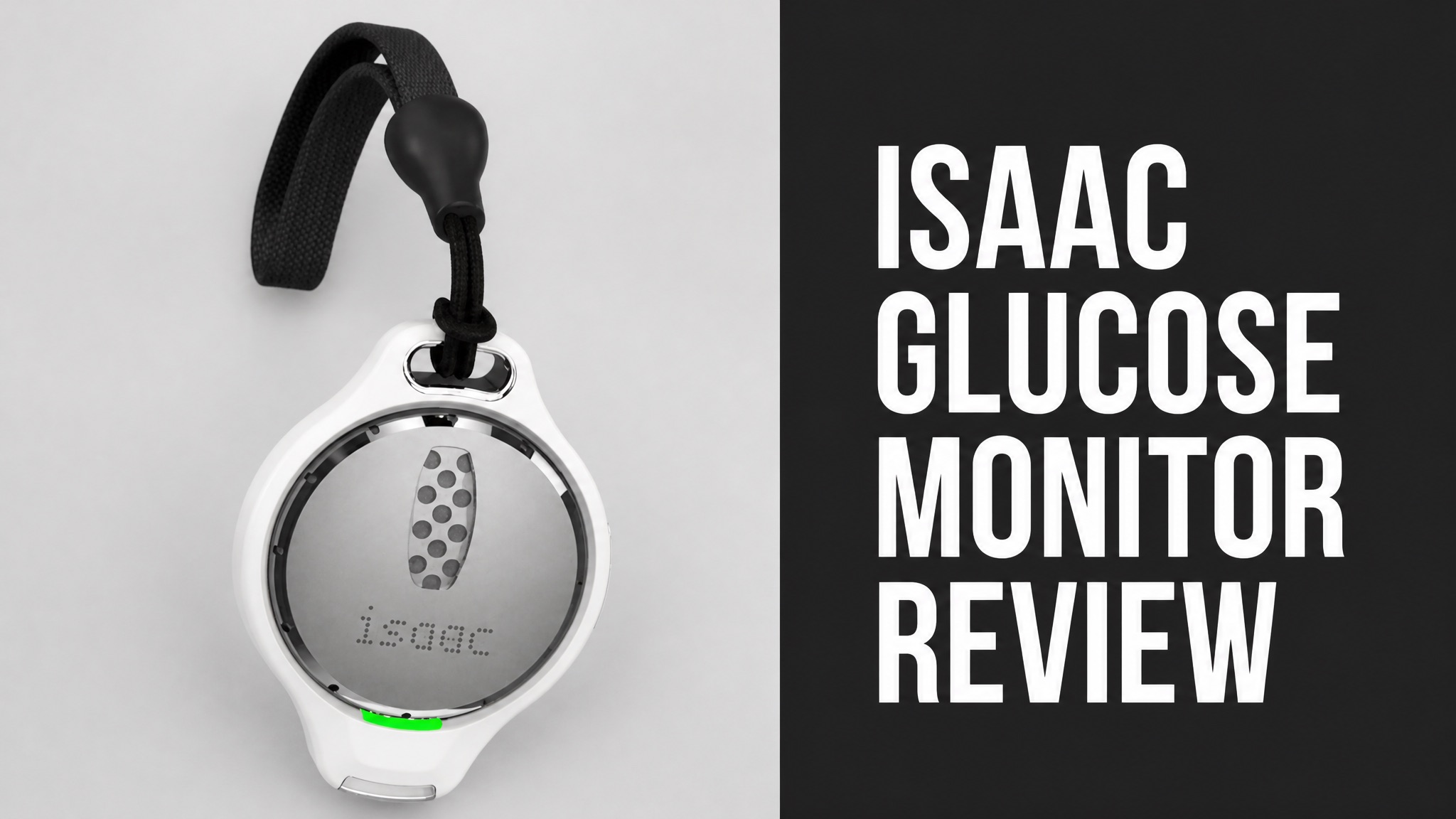
The Isaac glucose monitor is a coin-sized wearable from PreEvnt that estimates blood sugar from breath. The company showed it at CES 2026 in Las Vegas. The device remains in clinical trials. Readers want to know if a needle-free glucose device is real, accurate and safe to trust.
Isaac measures acetone and other compounds in exhaled breath. A neck loop keeps the disc close, and a smartphone app logs each result. Trials at Indiana University compare the device with traditional monitoring. The FDA has not authorized it, and PreEvnt has announced no price. Every early impression comes from a single CES demo.
The evidence so far is thin but promising. Reviewers praise the idea, yet independent accuracy data is missing. This review covers the technology, the FDA status, the cost outlook and the comparison with CGMs. Read on to learn who needs to wait and where to watch for official news.
What Is the Isaac Glucose Monitor?
The Isaac glucose monitor is a coin-sized wearable that estimates blood sugar from breath instead of a finger prick. The disc hangs from a loop on a neck cord. Its maker, PreEvnt, showed it at CES 2026 in Las Vegas. Clinical trials are still running, so it remains a prototype. Nothing is for sale yet, and PreEvnt has announced no public price or launch date.
Key Facts:
- Maker: PreEvnt
- Size: about the size of a coin
- Method: breath analysis of acetone
- Wear style: neck loop or bag
- Status: clinical trials, no FDA authorization
In fact, the design targets children first. Here’s why: a toddler won’t tolerate constant pokes. A child can breathe on the disc without a needle or a bathroom trip. The device also rides in a bag.
Who Makes the Isaac Glucose Monitor?
PreEvnt makes the Isaac glucose monitor and named it after the inventor’s grandson. Bud Wilcox created the concept after his grandson was diagnosed with type 1 diabetes at age 2. Wilcox noticed that sweet, fruity ‘acetone breath’ could signal blood sugar events. That observation became the core idea. Children sit at the very center of the whole design.
PreEvnt first presented the concept at CES 2025. Is the FDA involved yet? Fredrick Brooks, director of health technologies at PreEvnt, handles the FDA conversation. So the agency stays informed, because the company plans a de novo application.
How Does the Isaac Glucose Monitor Work?
The Isaac measures volatile organic compounds in exhaled breath to detect biomarkers such as acetone. Acetone levels can correlate with rising blood glucose. The device converts that signal into a glucose estimate. Optical sensing through the skin plays no part, which separates Isaac from smartwatch glucose claims. Its accuracy remains unproven today.
To be clear, this is correlation, not direct measurement. Does that matter? Yes, because only clinical data can show how closely breath chemistry tracks real blood sugar.
How a Reading Works:
- The user breathes on the disc.
- The sensor detects volatile organic compounds such as acetone.
- The device calculates a blood sugar level.
- The smartphone app records the reading.
What Does the Isaac App Do?
The Isaac app records each breath reading and keeps a timeline of results on a smartphone. A reviewer who tried it at CES saw the log. Users can also write down what they ate along that timeline. The app was still in final development at the show, so the software will change before any launch. That meal log lets users compare their food and readings.
Here is the kicker: the app also lets users ask emergency contacts for help. Why does that matter? A child wearing the device needs an adult in the loop. Final features may still change.
Does the Isaac Glucose Monitor Actually Work?
No. The Isaac has no public accuracy data yet, because its clinical trials are still underway. The device entered human trials at Indiana University in 2025. Those trials compare Isaac against traditional monitoring. Testers started with adolescents who have type 1 diabetes, then expand to adults with type 2. That staged plan follows a formal study path.
Think of it this way: a CES reviewer saw readings appear in a demo. A demo isn’t a study, though. Does a working demo prove accuracy? Not at all. Only the Indiana University results can answer that.
Is the Isaac Glucose Monitor FDA Approved?
No. The Isaac holds no FDA authorization today and is still moving toward clearance. PreEvnt plans a de novo application, the FDA path for a new type of device. The company expects regulatory review after the trials finish. The sources confirm no clearance date. Until then, the maker cannot market it as a cleared medical glucose monitor to patients.
Short answer: wait for clearance before trusting any reading. Is Isaac a smartwatch? The FDA warned in February 2024 that no smartwatch or smart ring is authorized to estimate glucose alone. No, yet the same demand for proof applies.
Isaac Regulatory Path:
| Stage | Status |
|---|---|
| Concept shown | CES 2025 |
| Human clinical trials | Underway at Indiana University |
| Product demo | CES 2026 |
| FDA de novo application | Planned after trials |
| FDA authorization | Not granted |
What Do Isaac Glucose Monitor Reviews Say?
Isaac glucose monitor reviews are scarce, because the device has only appeared in hands-on demos so far. One reviewer tested it at CES 2026 in Las Vegas. That reviewer called a needle-free option a big step forward in quality of life. No owner reviews exist, since nobody can buy it yet. Early impressions come from a single hands-on session at one trade show.
The reviewer named children as the biggest winners. Why? Constant pricking is hard on them. And the reviewer admitted to barely tolerating finger pricks as an adult. Many diabetic children, the review argues, will have far easier lives with a device like this.
What Are the Common Concerns?
The main concern is the lack of independent accuracy data for a breath-based glucose estimate. Wrong readings carry real danger for anyone who doses medication from a number. The FDA states that inaccurate glucose values can cause a wrong insulin dose. Too much insulin can bring coma or death within hours. That risk makes independent proof essential.
The second concern is timing. Why does it matter? The app is unfinished, and no launch date exists. Bottom line: shoppers have nothing to buy today, and scam sellers may fill the gap. Diabetes Victoria runs a warning page about scam glucose monitor ads.
Main Concerns:
- No independent accuracy data
- Unfinished smartphone app
- No FDA authorization
- No announced price or release date
- Risk of scam listings
How Does Isaac Compare to CGMs and Finger Pricks?
Isaac differs from both CGMs and finger pricks because it samples breath rather than blood or skin fluid. A CGM places a sensor just under the skin. It reads interstitial glucose, the sugar in fluid between cells. A finger prick tests a drop of blood directly. Isaac touches neither skin fluid nor blood. That makes the method appealing for children.
By comparison, costs vary widely. Is Isaac cheaper? Nobody knows. NBC News reported in 2021 that finger sticks cost less than $1 a day. CGMs ran about $1,000 to $3,000 a year (USD) without insurance. Isaac has no published price.
Method Comparison:
| Method | Sample | FDA Status | Cost |
|---|---|---|---|
| Isaac | Breath | Not authorized | Not announced |
| CGM | Interstitial fluid | Authorized devices exist | $1,000-$3,000 a year |
| Finger prick | Blood | Authorized devices exist | Under $1 a day |
How Does Isaac Differ From Smartwatch Glucose Trackers?
Isaac differs from smartwatch trackers because it analyzes breath chemicals rather than reading glucose optically through the skin. A CES reviewer noted it may not fit on a ring or watch. A neck loop suits the design instead. Apple has chased needle-free glucose sensing for years without shipping it. Breath analysis is a truly different route here.
In plain English: the FDA has authorized no smartwatch or smart ring that estimates glucose by itself. That warning covers dozens of brands. Isaac is neither a watch nor a ring. Even so, it has no clearance, so the same standard of proof applies.
How Much Does the Isaac Glucose Monitor Cost?
The Isaac glucose monitor has no announced price, because PreEvnt has not published retail pricing in any source reviewed. The device is still in trials. Pricing usually follows clearance and launch planning. Any listing that shows a price today deserves suspicion. Real pricing needs a real product first. Watch for official announcements from PreEvnt.
Is there a price benchmark? For context, NBC News listed the FreeStyle Libre at $70 for the reader in 2021. Sensors cost about $75 monthly. Those figures give a rough benchmark. And they are not Isaac prices.
Where to Buy the Isaac Glucose Monitor?
Buyers cannot purchase the Isaac glucose monitor anywhere right now. The device remains in clinical trials and awaits FDA review. PreEvnt showed it at CES but announced no retail launch. Treat any site selling Isaac today as a scam risk. A real launch would come with news from PreEvnt, not a random store page. Wait for that announcement before paying anyone.
Where should buyers look instead? Check PreEvnt’s official channels for launch news. The FDA warns that unauthorized glucose devices sell on online marketplaces and directly from sellers. Diabetes Victoria also warns about scam glucose monitor advertisements.
Is the Isaac Glucose Monitor Worth It?
No. The Isaac is not worth buying today, because it cannot be bought and its accuracy is unproven. The concept still earns attention. Breath-based testing could spare children and needle-averse adults from constant pricks. Watch the Indiana University results and the FDA decision before forming a view. Patience costs little. A wrong reading costs a lot.
Here’s the thing: promise and proof are different. Is the idea worth following? Yes, since a real company, real trials and an FDA conversation back it. Is it ready to replace a meter? Not even close.
Who Should Avoid the Isaac Glucose Monitor?
People who take insulin must avoid using Isaac for any dosing decision. The FDA states that inaccurate glucose values can cause a wrong insulin dose. Isaac has no clearance and no public accuracy data. An authorized meter or CGM remains the safe choice. Nothing about a prototype changes that. Parents of young children need exactly the same caution.
What does that mean for you? Anyone managing type 1 or type 2 diabetes needs an FDA-authorized device today. Talk to a health care provider about the right option. That is the FDA’s own advice for patients whose care depends on accurate readings.
Avoid Relying on Isaac If You:
- Take insulin or sulfonylureas
- Care for a child with type 1 diabetes
- Make medication decisions from glucose readings
- Found a seller offering Isaac today