
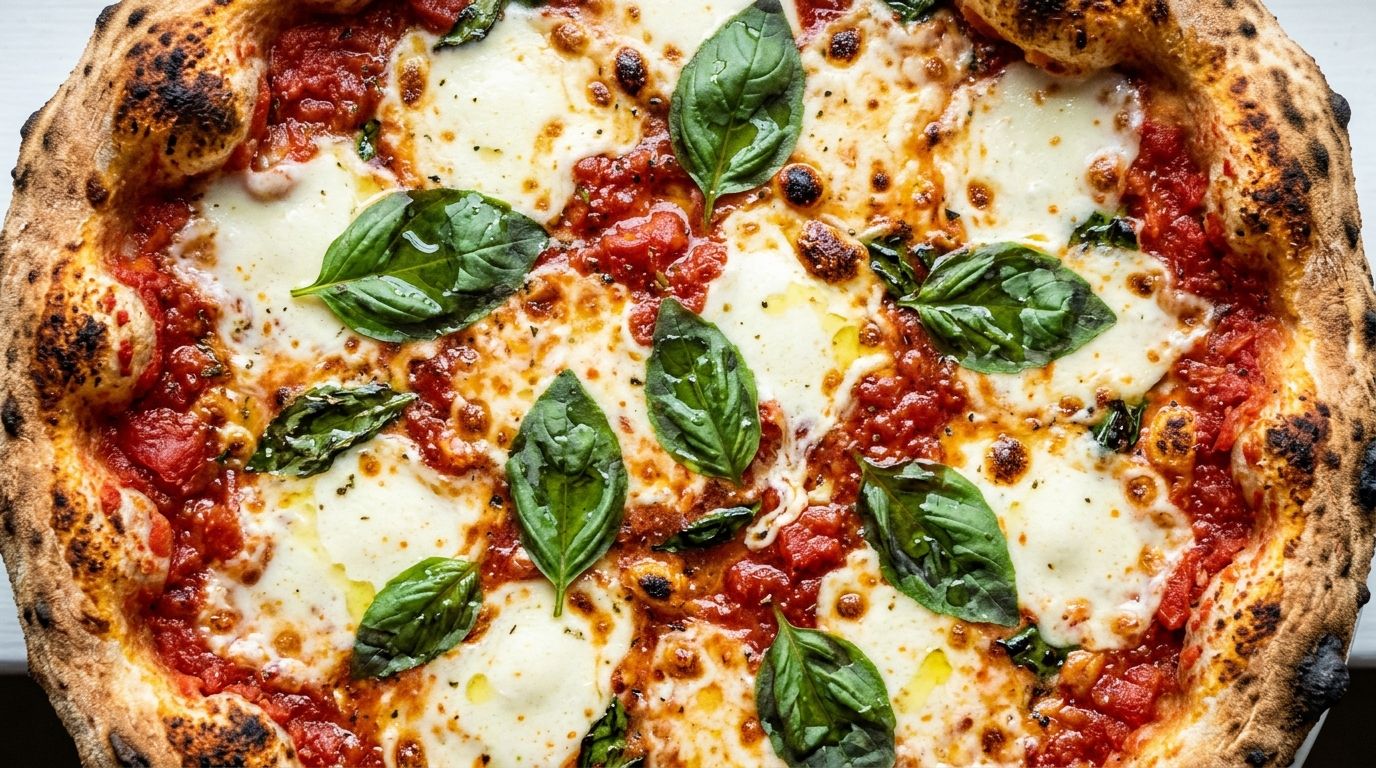
I make this italian pizza every Friday night and it never disappoints. Delivery takes 45 minutes and tastes nothing like what you get in Italy. This recipe uses 00 flour, a 24-hour cold ferment, and a simple no-cook tomato sauce for the real thing.
Prep Time: 20 minutes
Cook Time: 12 minutes
Total Time: 32 minutes (plus 24 hours ferment)
Servings: 4
Method: Baking
Why This Italian Pizza Works Every Time
The dough ferments cold for 24 hours. That slow ferment builds complex flavor you cannot get any other way. The crust bakes up with a golden, blistered edge and a tender, chewy interior.
The no-cook tomato sauce is the second secret. You blend San Marzano tomatoes with olive oil and salt — that is it. Heat destroys the bright, fresh flavor that makes authentic italian pizza taste so different.
The oven does the rest. Crank it as high as it goes, usually 500°F (260°C), and preheat for 45 minutes. A screaming hot surface is what gives you that charred, pizzeria-style bottom.
Ingredients
- 2 1/4 cups (280g) 00 flour, plus more for dusting
- 3/4 cup (180ml) lukewarm water
- 2 tablespoons extra virgin olive oil, divided
- 1 teaspoon sugar
- 2 1/4 teaspoons (7g) active dry yeast
- 1/2 teaspoon fine salt
- 1 can (14 oz / 400g) San Marzano whole peeled tomatoes
- 1/4 teaspoon salt, for sauce
- 4 oz (115g) fresh mozzarella, torn into pieces
- 8 fresh basil leaves
- 1 tablespoon extra virgin olive oil, for drizzling
What You Need for Homemade Italian Pizza
00 flour — this finely milled Italian flour has a lower protein content than all-purpose flour. It creates a softer, more extensible dough that stretches thin without tearing. All-purpose flour works but produces a slightly tougher crust.
Active dry yeast — feeds the slow ferment over 24 hours. Instant yeast also works. The cold fridge environment slows fermentation so the dough develops deep flavor without over-proofing.
San Marzano tomatoes — grown near Naples, these have lower acidity and natural sweetness. Regular crushed tomatoes work but taste sharper. Look for the DOP certification on the can for the real thing.
Fresh mozzarella — has higher moisture than low-moisture mozzarella, so it melts into creamy, irregular pools instead of a solid layer. Tear it by hand so the pieces are uneven — that is part of the look.
Extra virgin olive oil — used twice: in the dough for a tender crumb, and drizzled on top right before serving for fragrance. Do not substitute with light olive oil; the flavor difference is significant.
Fresh basil — add it after baking. Heat turns basil black and bitter. Lay leaves on the hot pizza the moment it comes out of the oven.
How to Make Italian Pizza
- Combine lukewarm water, sugar, and yeast in a large bowl. Stir gently and let sit for 5 minutes until foamy.
- Add 00 flour, 1 tablespoon olive oil, and salt. Mix until a shaggy dough forms.
- Turn onto a lightly floured surface. Knead for 8 minutes until smooth and elastic. The dough should spring back when poked.
- Divide dough into 2 equal balls. Rub each with a little olive oil and place in separate bowls covered with plastic wrap.
- Let the dough rise at room temperature for 2 hours until doubled in size.
- Punch down each ball, re-form into tight rounds, and place in the refrigerator for 24 hours to ferment slowly.
- Remove dough from fridge 30 minutes before baking to take the chill off.
- Preheat your oven to its highest setting — 500°F (260°C) or higher. Place a baking stone or heavy baking sheet on the top rack.
- While the oven heats, make the sauce: drain the San Marzano tomatoes and crush them by hand into a bowl. Add 1 tablespoon olive oil and 1/4 teaspoon salt. Stir to combine.
- On a floured surface, press and stretch one dough ball into a 12-inch (30cm) round. Work from the center outward, leaving a thicker border for the crust.
- Transfer the stretched dough to a sheet of parchment paper. Spoon sauce across the surface, stopping 1/2 inch from the edge.
- Scatter torn mozzarella pieces over the sauce.
- Slide the pizza (on parchment) onto the hot baking stone or sheet. Bake for 10 to 12 minutes until the crust is blistered and the cheese is golden in spots.
- Remove from oven. Drizzle with olive oil and lay fresh basil leaves on top. Slice and serve immediately.
Italian Pizza Variations
Pizza Bianca
Skip the tomato sauce entirely. Brush the stretched dough with 2 tablespoons olive oil and scatter with flaky sea salt and fresh rosemary. The crust bakes up crispy and fragrant — a Roman classic that works as a side or appetizer base.
Spicy Italian Pizza (Diavola)
Lay thin slices of spicy salami or nduja on top of the sauce before the cheese. Add a pinch of dried chili flakes over the mozzarella. The fat from the salami renders during baking and bastes the entire surface in heat.
Mushroom Italian Pizza
Saute 2 cups sliced cremini mushrooms in olive oil with thyme for 5 minutes before using as a topping. Moisture in raw mushrooms makes the crust soggy. Pre-cooking drives off the liquid so your base stays crisp.
Whole Wheat Italian Pizza
Swap half the 00 flour for whole wheat flour. The crust turns out denser and nuttier with more fiber. Increase water by 2 tablespoons to compensate for the higher absorption. Ferment time stays the same.
Four Cheese Italian Pizza (Quattro Formaggi)
Replace the single mozzarella with a mix of mozzarella, gorgonzola, fontina, and parmigiano reggiano. Skip the tomato sauce and use olive oil as the base. The four cheeses melt into each other and create a rich, salty, complex topping.
Tips for the Best Italian Pizza
- I always use 00 flour. It makes the dough noticeably silkier and easier to stretch than all-purpose.
- The 24-hour cold ferment is non-negotiable for authentic flavor. A same-day dough works but tastes flat by comparison.
- Preheat the baking stone for at least 45 minutes. A stone that has not fully heated through will steam instead of crisp the bottom crust.
- Stretch the dough by hand, not with a rolling pin. A rolling pin presses out the air bubbles that make the crust light and chewy.
- Less sauce is more. A thin, even layer lets the dough cook through. Too much sauce makes the center wet and the base soggy.
- Tear the mozzarella, do not slice it. Irregular pieces melt differently and create better visual texture on the finished pizza.
Make Ahead & Storage
The dough keeps in the fridge for up to 3 days after the initial 24-hour ferment. Longer ferments actually improve the flavor — 48 to 72 hours produces an even more complex, tangy crust.
To freeze, shape the dough into balls after the room-temperature rise, before the fridge ferment. Wrap each ball tightly in plastic and freeze for up to 3 months. Thaw in the fridge overnight, then let it warm up for 30 minutes before shaping.
Leftover baked pizza keeps in the fridge for 3 days. Reheat in a dry skillet over medium heat for 3 to 4 minutes, lid on, until the bottom crisps and the cheese melts back. The oven at 375°F (190°C) for 8 minutes also works well.
Common Questions
Can I make italian pizza without a pizza stone?
Yes. Flip a heavy baking sheet upside down and preheat it in the oven for 45 minutes. It will not hold heat quite as long as a stone, but it produces a much better bottom crust than baking on a cold pan.
What is the difference between italian pizza dough and regular pizza dough?
Italian pizza dough uses 00 flour and almost always includes a cold ferment of at least 24 hours. American-style dough often uses all-purpose or bread flour and rises for 1 to 2 hours at room temperature. The Italian method produces a lighter, more extensible dough with better flavor.
Why does my italian pizza crust turn out tough?
The most common cause is overworking the dough or not letting it rest long enough. Over-kneading develops too much gluten tension. Let the dough rest 15 minutes covered before your final stretch — it relaxes and becomes much easier to handle without springing back.
Can I use all-purpose flour instead of 00 flour for italian pizza?
Yes, it works. The crust will be slightly chewier and less tender. Bread flour also works and gives a slightly crispier exterior. If 00 flour is available near you, it is worth buying for a noticeably softer, more authentic result.
How long do I bake italian pizza at 500°F?
Ten to 12 minutes on a preheated stone or sheet at 500°F (260°C) is the right range. Watch the crust edge — when it blisters and turns deep golden brown, the pizza is done. A pale edge means the oven or stone was not hot enough.
This homemade italian pizza recipe is worth every minute of the 24-hour wait. Save this recipe and come back to it every pizza night — you will not want delivery after the first try.
Easy Homemade Italian Pizza Recipe Made at Home
Classic Neapolitan-style pizza made with 00 flour dough cold-fermented for 24 hours, no-cook San Marzano tomato sauce, fresh mozzarella, and basil.
Ingredients
- 2 1/4 cups (280g) 00 flour, plus more for dusting
- 3/4 cup (180ml) lukewarm water
- 2 tablespoons extra virgin olive oil, divided
- 1 teaspoon sugar
- 2 1/4 teaspoons (7g) active dry yeast
- 1/2 teaspoon fine salt
- 1 can (14 oz / 400g) San Marzano whole peeled tomatoes
- 1/4 teaspoon salt, for sauce
- 4 oz (115g) fresh mozzarella, torn into pieces
- 8 fresh basil leaves
- 1 tablespoon extra virgin olive oil, for drizzling
Instructions
- Combine lukewarm water, sugar, and yeast in a large bowl. Stir gently and let sit for 5 minutes until foamy.
- Add 00 flour, 1 tablespoon olive oil, and salt. Mix until a shaggy dough forms.
- Turn onto a lightly floured surface. Knead for 8 minutes until smooth and elastic. The dough should spring back when poked.
- Divide dough into 2 equal balls. Rub each with a little olive oil and place in separate bowls covered with plastic wrap.
- Let the dough rise at room temperature for 2 hours until doubled in size.
- Punch down each ball, re-form into tight rounds, and place in the refrigerator for 24 hours to ferment slowly.
- Remove dough from fridge 30 minutes before baking to take the chill off.
- Preheat your oven to its highest setting — 500°F (260°C) or higher. Place a baking stone or heavy baking sheet on the top rack.
- While the oven heats, make the sauce: drain the San Marzano tomatoes and crush them by hand into a bowl. Add 1 tablespoon olive oil and 1/4 teaspoon salt. Stir to combine.
- On a floured surface, press and stretch one dough ball into a 12-inch (30cm) round. Work from the center outward, leaving a thicker border for the crust.
- Transfer the stretched dough to a sheet of parchment paper. Spoon sauce across the surface, stopping 1/2 inch from the edge.
- Scatter torn mozzarella pieces over the sauce.
- Slide the pizza (on parchment) onto the hot baking stone or sheet. Bake for 10 to 12 minutes until the crust is blistered and the cheese is golden in spots.
- Remove from oven. Drizzle with olive oil and lay fresh basil leaves on top. Slice and serve immediately.