
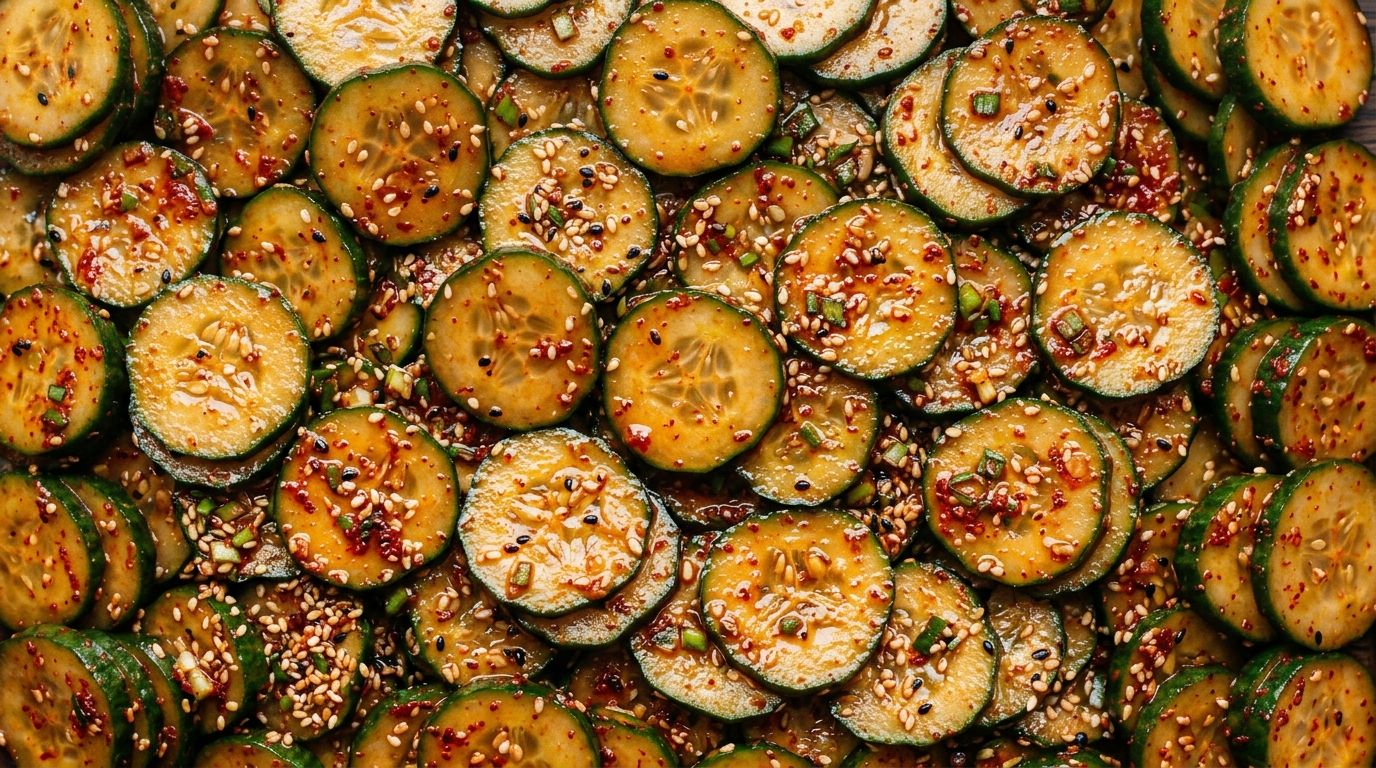
This Korean cucumber salad (oi muchim) is one of my favorite 10-minute side dishes. Most cucumber salads sit in a watery pool after 20 minutes. This Korean version uses gochugaru, soy sauce, and sesame oil to build a bold, tangy dressing the cucumbers actually absorb. It holds its crunch for hours.
Prep Time: 10 minutes
Cook Time: 0 minutes
Total Time: 10 minutes
Servings: 4
Method: No Cook
Why This Korean Cucumber Salad Works
Salting the cucumbers first draws out excess moisture before the dressing goes on. The result is a crunchy, crisp bite that does not turn limp or water down the dressing. This step takes 5 minutes and makes the whole salad better.
Gochugaru (Korean red pepper flakes) gives this korean cucumber salad its characteristic bright red color and mild, fruity heat. It is different from cayenne — sweeter and less sharp. Toasted sesame oil adds a nutty finish that pulls the whole dressing together.
Ingredients
- 2 medium English cucumbers (about 1 lb / 450g), thinly sliced
- 1 teaspoon salt (for drawing out moisture)
- 2 tablespoons soy sauce
- 1 tablespoon rice vinegar
- 1 tablespoon gochugaru (Korean red pepper flakes)
- 1 teaspoon sesame oil
- 1 teaspoon sugar
- 2 cloves garlic, minced
- 2 green onions, thinly sliced
- 1 teaspoon toasted sesame seeds
What You Need for Korean Cucumber Salad
English cucumbers — thin skin, fewer seeds, and a crispier texture than standard cucumbers. Persian cucumbers work equally well. Regular cucumbers work but peel them first and scoop the seeds.
Gochugaru — Korean red pepper flakes available at any Asian grocery store. The flavor is fruity and moderately spicy. Regular red pepper flakes are much sharper — use half the amount if substituting.
Soy sauce — the salt base of the dressing. Use regular soy sauce or tamari for a gluten-free version.
Rice vinegar — mild and slightly sweet. Apple cider vinegar works as a substitute at the same amount.
Sesame oil — use toasted sesame oil, not plain. Toasted has a rich, nutty aroma that raw sesame oil lacks.
Garlic — freshly minced. Garlic powder does not deliver the same punch in this raw dressing.
How to Make Korean Cucumber Salad
- Slice the cucumbers into thin rounds (about 1/8 inch / 3mm thick). A mandoline makes this quick and consistent.
- Place sliced cucumbers in a colander or bowl. Toss with 1 teaspoon of salt. Let sit for 5 minutes.
- Squeeze the cucumbers gently with your hands to remove the excess water. Pat dry with a paper towel.
- In a large bowl, whisk together soy sauce, rice vinegar, gochugaru, sesame oil, sugar, and minced garlic.
- Add the squeezed cucumbers and green onions to the bowl. Toss to coat evenly.
- Sprinkle sesame seeds over the top. Taste and adjust soy sauce or vinegar to your preference.
- Serve immediately or refrigerate for up to 30 minutes for the flavors to deepen.
Korean Cucumber Salad Variations
Mild Korean Cucumber Salad
Reduce the gochugaru to 1/2 teaspoon for a lightly spiced version. Add a 1/2 teaspoon of gochujang (Korean chili paste) if you want the flavor without as much heat. The paste brings depth and umami without the raw flake burn.
Korean Cucumber Salad with Vinegar (No Soy Sauce)
Replace the soy sauce with an extra tablespoon of rice vinegar and a pinch of salt. The result is lighter and more acidic, closer to a quick-pickled cucumber. This version stays crunchy longer because there is less umami drawing moisture from the cucumbers.
Korean Cucumber Salad with Carrot
Add 1 medium carrot, julienned, to the cucumbers before dressing. Carrots bring a sweet crunch that contrasts the spicy dressing well. Use this version as a banchan alongside Korean rice bowls or bibimbap.
Creamy Korean Cucumber Salad
Stir 1 tablespoon of mayonnaise into the dressing before tossing. It mellows the spice and thickens the coating on the cucumber slices. This version is popular in Korean fusion cooking and pairs well with grilled meats.
Tips for the Best Korean Cucumber Salad
- I always salt the cucumbers first. Skip this step and the dressing turns watery within 10 minutes of sitting on the table.
- Use gochugaru, not cayenne. The flavor difference is significant — gochugaru is fruity and mild, cayenne is harsh and sharp.
- Slice the cucumbers thin and even. Thick slices do not absorb the dressing and taste underdressed.
- Toast the sesame seeds in a dry pan for 2 minutes before adding. The extra toasty flavor is worth the step.
- Taste after tossing and adjust. More soy sauce = saltier; more vinegar = sharper; more sugar = rounder and milder.
- This Korean cucumber salad pairs well with steamed rice, bulgogi, or any grilled protein.
Make Ahead & Storage
This Korean cucumber salad is best served within 2 hours of making. After that, the cucumbers continue releasing liquid and the texture softens. I make it right before the meal and serve from the bowl.
If making ahead, complete the salting and squeezing step and store the dry cucumber slices in the fridge. Make the dressing separately. Toss together 10 minutes before serving. Leftovers keep in the fridge for up to 2 days — drain off any pooled liquid and toss again before serving. Do not freeze.
Common Questions
What is oi muchim?
Oi muchim is the Korean name for seasoned cucumber salad. Oi means cucumber and muchim means mixed or seasoned. It is a traditional banchan (side dish) served alongside rice and other Korean dishes. The spicy, tangy version with gochugaru is the most common style.
Can I make Korean cucumber salad without gochugaru?
Yes. Use 1/4 teaspoon of red pepper flakes as a substitute, but note the flavor will be sharper and less fruity. Gochugaru is the authentic ingredient and worth sourcing at an Asian grocery store or online. The salad without it is still good but less distinctly Korean.
How long does Korean cucumber salad last?
Up to 2 days in the fridge. The cucumbers soften and release more liquid over time. Drain and retoss before eating leftovers. The flavor is still good on day two but the texture is softer than fresh.
Is Korean cucumber salad vegan?
Yes. This recipe contains no animal products — soy sauce, rice vinegar, gochugaru, sesame oil, sugar, garlic, and green onions are all plant-based. Use tamari instead of soy sauce for a certified gluten-free version.
This Korean cucumber salad is the fastest side dish I put on any dinner table. Save this recipe for your next weeknight dinner or Korean barbecue spread.
Easy Korean Cucumber Salad Recipe at Home
Thinly sliced cucumbers tossed in a spicy, tangy soy-sesame dressing with gochugaru — a 10-minute Korean banchan side dish.
Ingredients
- 2 medium English cucumbers (about 1 lb / 450g), thinly sliced
- 1 teaspoon salt (for drawing out moisture)
- 2 tablespoons soy sauce
- 1 tablespoon rice vinegar
- 1 tablespoon gochugaru (Korean red pepper flakes)
- 1 teaspoon sesame oil
- 1 teaspoon sugar
- 2 cloves garlic, minced
- 2 green onions, thinly sliced
- 1 teaspoon toasted sesame seeds
Instructions
- Slice the cucumbers into thin rounds (about 1/8 inch / 3mm thick). A mandoline makes this quick and consistent.
- Place sliced cucumbers in a colander or bowl. Toss with 1 teaspoon of salt. Let sit for 5 minutes.
- Squeeze the cucumbers gently with your hands to remove the excess water. Pat dry with a paper towel.
- In a large bowl, whisk together soy sauce, rice vinegar, gochugaru, sesame oil, sugar, and minced garlic.
- Add the squeezed cucumbers and green onions to the bowl. Toss to coat evenly.
- Sprinkle sesame seeds over the top. Taste and adjust soy sauce or vinegar to your preference.
- Serve immediately or refrigerate for up to 30 minutes for the flavors to deepen.