
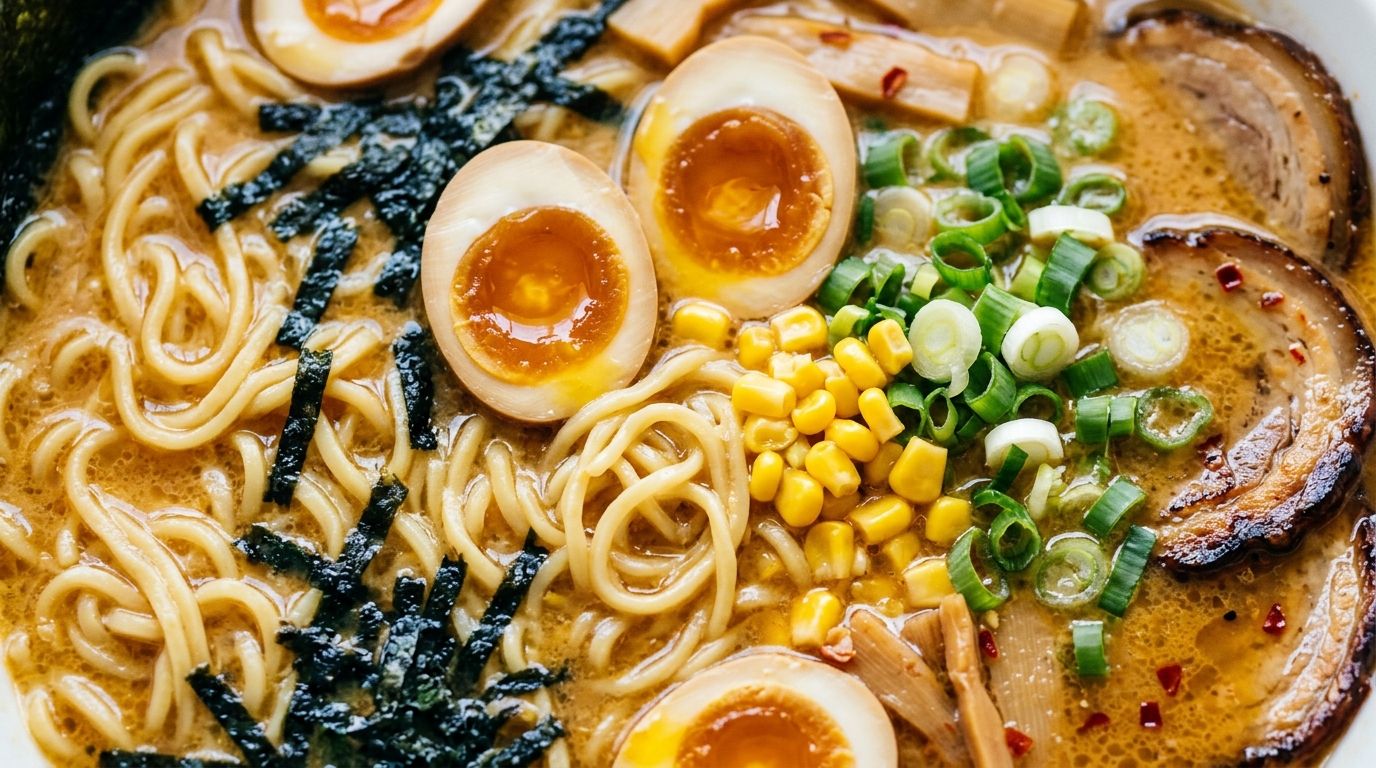
I make this creamy miso ramen on weeknights when I want a warming, savory bowl without a long commute. Restaurant ramen is expensive and rarely hits that rich, silky balance at home. This recipe builds a deep miso broth with white miso paste, tahini, and dashi in 30 minutes.
Prep Time: 10 minutes
Cook Time: 20 minutes
Total Time: 30 minutes
Servings: 2
Method: Stovetop
Why This Miso Ramen Works
This creamy miso ramen gets its silky texture from white miso paste whisked together with tahini. White miso ferments for a shorter time than red miso. It tastes mild and slightly sweet, the right base for a balanced ramen broth.
Dashi adds a clean, savory depth that chicken broth alone cannot replicate. I dissolve dashi powder directly in the pot. That umami layer is what separates a flat broth from one that tastes complete.
Soft-boiled eggs and sliced pork belly finish the bowl as a full meal. The jammy yolk breaks into the hot broth and adds another layer of richness. Corn brings natural sweetness that cuts through the salt in the miso paste.
Ingredients
- 2 portions ramen noodles, fresh or dried (about 6 oz / 170g total)
- 3 cups (710ml) chicken broth
- 1 cup (240ml) water
- 1 teaspoon dashi powder
- 3 tablespoons white miso paste
- 2 tablespoons tahini
- 2 tablespoons soy sauce
- 1 tablespoon sesame oil
- 3 cloves garlic, minced
- 1 teaspoon fresh ginger, grated
- 2 soft-boiled eggs, halved
- 4 oz (115g) pork belly or rotisserie chicken, sliced thin
- 1/2 cup (75g) corn kernels
- 2 green onions, sliced thin
- 2 sheets nori, cut in half
What You Need for Creamy Miso Ramen
Ramen noodles — Fresh ramen noodles give the best texture: springy, slightly chewy, and bouncy in hot broth. Dried ramen noodles work very well when fresh is unavailable. I skip instant noodle discs here since the broth is rich enough without the seasoning packets.
White miso paste — White miso (shiro miso) ferments for a shorter time than red miso. It tastes mild, lightly sweet, and only moderately salty. Red miso works as a substitute but the broth turns heavier and more intense. Use 2 tablespoons instead of 3 if switching.
Tahini — Tahini adds creaminess and a subtle nutty flavor to the broth. Sesame paste is a direct substitute and the more traditional choice. If neither is available, a small spoonful of peanut butter adds a similar creamy texture to the miso base.
Dashi powder — Dashi is a Japanese stock base made from dried kelp and bonito flakes. The powder dissolves in seconds and lifts the whole broth with clean umami. Substitute with an extra cup of chicken broth plus a teaspoon of soy sauce if dashi is not in your pantry.
Pork belly or chicken — Chashu pork belly is the classic topping and adds a rich, fatty bite that contrasts the miso broth. Rotisserie chicken is a faster substitute that works just as well. I keep thin slices of rotisserie chicken in my fridge for exactly this kind of weeknight bowl.
Nori — Nori sheets add a faint ocean flavor and visual contrast against the golden broth. Cut each sheet in half and prop the pieces against the inside of the bowl just before serving. Nori softens quickly in hot broth, so serve immediately after plating.
Corn kernels — Canned, frozen, or fresh all work here. Corn adds a pop of sweetness that balances the salt in the miso paste. I keep a bag of frozen corn in the freezer and thaw a small handful under warm water while the broth simmers.
How to Make Miso Ramen
- Bring a pot of water to a boil. Cook ramen noodles per package directions. Drain and set aside.
- Heat sesame oil in a medium saucepan over medium heat.
- Add minced garlic and grated ginger. Cook for 1 minute until fragrant and slightly golden.
- Pour in chicken broth and water. Stir in dashi powder until fully dissolved.
- Bring the broth to a gentle simmer over medium heat.
- In a small bowl, whisk white miso paste, tahini, and soy sauce together until smooth.
- Reduce heat to low. Slowly stir the miso mixture into the hot broth.
- Do not boil the broth after adding miso. Boiling destroys the flavor compounds.
- Divide noodles evenly between two bowls.
- Ladle the creamy miso broth over the noodles.
- Top each bowl with a halved soft-boiled egg, sliced pork belly or chicken, corn, green onions, and nori.
Miso Ramen Variations
Spicy Miso Ramen
Add 1 to 2 tablespoons of gochujang (Korean chili paste) to the miso mixture in Step 6. The heat builds slowly and pairs well with pork belly and corn. A drizzle of chili oil across the top at the end adds even more punch without making the broth heavy.
Vegetarian Miso Ramen
Replace chicken broth with vegetable broth and skip the pork. Use pan-seared firm tofu in its place for protein and texture. Standard dashi powder contains bonito flakes, so substitute kombu dashi powder instead, or skip dashi and add an extra tablespoon of soy sauce.
Rich Butter Miso Ramen
Add 1 tablespoon of unsalted butter to the finished broth just before serving. The butter melts into the miso and makes the broth velvety and noticeably richer. I use this variation on cold nights when I want the bowl to feel more substantial.
Lighter Shio-Style Miso Ramen
Reduce white miso paste to 1 tablespoon and add an extra tablespoon of soy sauce. The broth turns clearer and lighter, letting the dashi and garlic flavors come forward. I use this version when I want something less heavy but still deeply savory.
Tips for the Best Miso Ramen
- Never add miso paste to boiling broth. Heat above 150°F (65°C) destroys the glutamates that give miso its savory depth. Always reduce to a bare simmer first, then stir in the miso mixture.
- Cook noodles in a separate pot. Adding them directly to the broth makes it starchy and thick. I keep the broth and noodles separate until the moment of plating.
- Prep all toppings before starting the broth. The broth comes together in about 15 minutes and bowls should be assembled quickly while everything is hot.
- Taste the broth before adding more seasoning. Miso and soy sauce are both salty, and this broth rarely needs any additional salt.
- For jammy soft-boiled eggs, cook them for exactly 6 minutes 30 seconds in boiling water. Move them straight to an ice bath to stop cooking. The yolk should be set but creamy in the center.
- Use white miso for a mild, creamy broth and red miso for something deeper and more earthy. I keep both in my fridge and blend them sometimes for a middle-ground flavor.
Make Ahead & Storage
The miso broth keeps in the fridge for up to three days in an airtight container. Store it without the noodles — noodles absorb the liquid overnight and turn soft. Reheat gently over low heat without bringing it to a boil.
The broth also freezes well for up to one month. I pour cooled broth into 2-cup portions in zip bags, lay them flat, and freeze. Thaw in the fridge overnight or on the counter for 30 minutes. Always cook fresh noodles when reheating frozen broth.
Common Questions
Can I use red miso instead of white miso for miso ramen?
Yes. Red miso ferments longer and has a deeper, more intense flavor than white miso. Use 2 tablespoons instead of 3 since the flavor is stronger. The broth will be darker and more savory, which I actually prefer during colder months.
How do I make soft-boiled eggs for miso ramen?
Bring a pot of water to a full boil. Lower eggs in carefully and cook for exactly 6 minutes 30 seconds. Transfer immediately to an ice bath. Peel once cool. The yolk should be jammy and slightly runny in the center.
Can I make miso ramen vegetarian?
Yes. Replace chicken broth with vegetable broth and swap pork belly for pan-seared firm tofu. Standard dashi powder contains bonito, so use kombu dashi powder instead. The miso paste, tahini, noodles, and all toppings stay exactly the same.
Why does my miso broth taste flat?
The most common reason is adding miso to boiling broth. Heat above 150°F (65°C) destroys the compounds that give miso its depth. Always reduce to a low simmer before whisking in the miso mixture. Under-salting is the second reason. Taste and adjust with a small splash of soy sauce.
This creamy miso ramen recipe delivers a rich, savory bowl in 30 minutes. Save this recipe and make it the next time you want restaurant-quality miso ramen at home.
Creamy Miso Ramen Recipe for Dinner Tonight
A rich miso broth with ramen noodles, soft-boiled eggs, pork belly, and corn ready in 30 minutes.
Ingredients
- 2 portions ramen noodles, fresh or dried (about 6 oz / 170g total)
- 3 cups (710ml) chicken broth
- 1 cup (240ml) water
- 1 teaspoon dashi powder
- 3 tablespoons white miso paste
- 2 tablespoons tahini
- 2 tablespoons soy sauce
- 1 tablespoon sesame oil
- 3 cloves garlic, minced
- 1 teaspoon fresh ginger, grated
- 2 soft-boiled eggs, halved
- 4 oz (115g) pork belly or rotisserie chicken, sliced thin
- 1/2 cup (75g) corn kernels
- 2 green onions, sliced thin
- 2 sheets nori, cut in half
Instructions
- Bring a pot of water to a boil. Cook ramen noodles per package directions. Drain and set aside.
- Heat sesame oil in a medium saucepan over medium heat.
- Add minced garlic and grated ginger. Cook for 1 minute until fragrant and slightly golden.
- Pour in chicken broth and water. Stir in dashi powder until fully dissolved.
- Bring the broth to a gentle simmer over medium heat.
- In a small bowl, whisk white miso paste, tahini, and soy sauce together until smooth.
- Reduce heat to low. Slowly stir the miso mixture into the hot broth.
- Do not boil the broth after adding miso. Boiling destroys the flavor compounds.
- Divide noodles evenly between two bowls.
- Ladle the creamy miso broth over the noodles.
- Top each bowl with a halved soft-boiled egg, sliced pork belly or chicken, corn, green onions, and nori.