
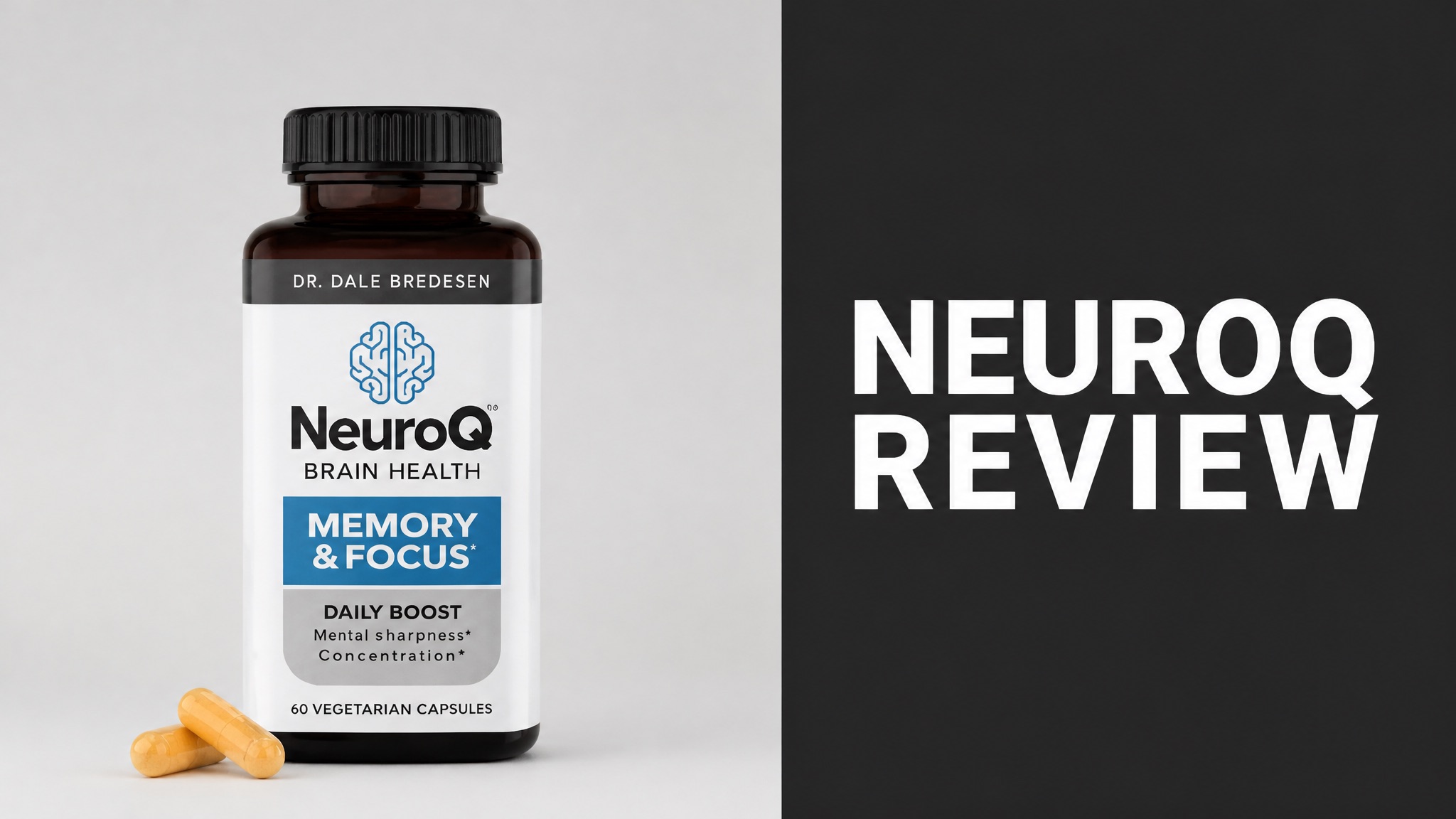
NeuroQ is a daily brain supplement from LifeSeasons, formulated with neurologist Dr. Dale Bredesen, known for his Alzheimer’s research. The capsule blends six ingredients aimed at memory, focus and mental clarity in adults over 40. Retail ratings run from 4.1 to 4.7 stars across major stores.
The formula pairs phosphatidylserine, coffee fruit extract and gotu kola with ginkgo, turmeric and propolis. Doses sit at 75 to 250 mg each. A company study reports gains in processing speed and working memory. Independent proof is thin, and several doses fall below clinical ranges. The product suits gradual support, not fast results.
The sections below cover ingredients, dosing, reviews, side effects and price. Each answer rests on label data, retailer feedback and medical guidance. By the end, the real value of NeuroQ for your memory goals will be clear. Expect honest answers, including the limits.
What Is NeuroQ?
NeuroQ is a daily dietary supplement that supports memory, focus and cognitive health in older adults through a six-ingredient capsule. Neurologist Dr. Dale Bredesen developed the formula, and LifeSeasons sells it. Two capsules with food make one serving, and a bottle holds 30 servings. LifeSeasons markets it mainly to adults over 40 worried about memory.
In fact, the product is not a drug. The label carries the standard dietary supplement disclaimer and makes no claim to treat dementia. Bottom line: NeuroQ is a wellness product, not a medical treatment.
Quick Facts:
- Maker: LifeSeasons, a Texas-based supplement brand
- Formulator: Dr. Dale Bredesen, neurologist and author
- Serving: 2 capsules daily with food
- Format: vegetarian capsules, 30 servings per bottle
- Guarantee: 60-day refund on the official site
Who Makes NeuroQ?
LifeSeasons makes NeuroQ in the USA with globally sourced ingredients. The brand is based in Texas and focuses on targeted wellness formulas. The label lists no yeast, wheat, colors, flavors or preservatives, and every dose appears on the panel. Orders placed before 4pm ship the same day, and tracking arrives by email. Shipping is free in the USA.
Dr. Bredesen leads the science side. He is known for The End of Alzheimer’s and the Bredesen protocol. Here’s the catch: the protocol spans diet, sleep and exercise. NeuroQ covers only the supplement piece.
What Ingredients Are in NeuroQ?
NeuroQ contains six active ingredients: gotu kola, turmeric, ginkgo biloba, phosphatidylserine, coffee fruit extract and propolis. One two-capsule serving delivers 895 mg of actives in total. Each dose is printed on the label, so no proprietary blend hides the amounts from buyers. The capsule shell is vegetarian, and the label lists no wheat or yeast.
NeuroQ Supplement Facts:
| Ingredient | Dose | Studied Range |
|---|---|---|
| Gotu kola extract | 250 mg | 250-500 mg |
| Turmeric extract | 250 mg | 500-1,000 mg |
| Ginkgo biloba extract | 120 mg | 120-240 mg |
| Phosphatidylserine | 100 mg | 100-300 mg |
| Coffee fruit extract | 100 mg | 100-200 mg |
| Propolis extract | 75 mg | Varies |
The turmeric is standardized to 95% curcuminoids, or 237 mg. The coffee fruit extract is NeuroFactor, which holds less than 1 mg of caffeine. So the formula is effectively stimulant-free.
Are the NeuroQ Doses Clinically Effective?
Partly. Gotu kola, ginkgo and coffee fruit extract sit at the low end of studied ranges. Phosphatidylserine and turmeric fall below common clinical amounts. Most memory trials on phosphatidylserine used 300 mg daily, three times the NeuroQ dose. Ginkgo and gotu kola land inside their studied windows. Coffee fruit extract matches its trial dose.
Here’s the thing: low-end dosing is not the same as useless. The Noobru analysis calls phosphatidylserine the formula’s strongest card. Curcumin also absorbs poorly, so the label amount does not equal what reaches the brain.
How Does NeuroQ Work?
NeuroQ targets four causes of age-related mental decline: neurotransmitter loss, weaker neuron health, poor cerebral blood flow and chronic inflammation. Each ingredient maps to one cause. The brand calls the approach four causes, six ingredients, and says no cause is left unaddressed. Each cause maps to specific ingredients inside the capsule.
Phosphatidylserine and coffee fruit extract support acetylcholine, a key messenger for learning. Gotu kola and coffee fruit extract support BDNF, a protein tied to new neural connections. Ginkgo supports blood flow. Turmeric and propolis target inflammation.
Does NeuroQ Improve Memory?
Possibly. NeuroQ shows memory gains in a company-sponsored 90-day study, but independent long-term evidence remains limited. The brand reports 97% of participants saw improvement in memory, focus or concentration. Average gains reached 10% in processing speed and 12% in executive function. The test used computerized neurocognitive scoring over 90 days.
Sound too good? Fair question. The study was funded by the seller, and the greatest gains appeared at month three. A hands-on tester found better afternoon energy by week six. Memory recall did not change in any clear way.
What Do NeuroQ Reviews Say?
NeuroQ reviews skew positive across major retailers, with average ratings between 4.1 and 4.7 stars from hundreds of verified buyers. Praise centers on calmer afternoon focus and less mental fatigue. Criticism centers on price and slow results. Brand-run pages skew warmer than independent retailers. Walmart and iHerb ratings sit higher than Amazon.
Retailer Ratings:
| Retailer | Rating | Volume |
|---|---|---|
| iHerb | 4.7 stars | 92 ratings |
| Walmart | 4.5 stars | 810 ratings |
| Swanson Vitamins | 4.4 stars | 855 reviews |
| Amazon | 4.1 stars | Several hundred reviews |
What Do Users Like About NeuroQ?
Buyers praise NeuroQ for clearer afternoons, steadier focus and a stimulant-free feel. Many reviews come from adult children buying for aging parents. One daughter wrote that she felt she had her father back after a few months of use. Walmart buyers report less mental fatigue. Others describe fewer memory stumbles after months of steady use.
Why does the formula win fans? Users like the plant-based mix and the lack of jitters. The capsule also works at night, since no caffeine is present. In plain English: it feels gentle and builds slowly.
What Are the Common NeuroQ Complaints?
Critics flag the high price, slow onset and subtle results as the main weaknesses of NeuroQ. Roughly 15 to 20% of Amazon reviewers gave two stars or fewer. Several saw no benefit after 30 days and asked for refunds. Some buyers expected dramatic memory gains that a supplement does not deliver. Refund requests follow the same pattern. Results vary by person.
The bad news? Effects are not dramatic. One reviewer stopped after two bottles because the change was impossible to judge. Experts add that the supplement sector offers limited clinical evidence compared with lifestyle changes.
How Does NeuroQ Compare to Prevagen?
NeuroQ and Prevagen take opposite approaches: NeuroQ uses six ingredients, while Prevagen relies on one protein called apoaequorin. Quincy Bioscience makes Prevagen. Its main study missed the primary endpoint, and regulators challenged its marketing claims in the past. Prevagen launched in 2007 and sells widely in pharmacies across the United States.
NeuroQ vs Prevagen:
| Feature | NeuroQ | Prevagen |
|---|---|---|
| Active ingredients | Six | One (apoaequorin) |
| Evidence base | Individual ingredient trials | Disputed company study |
| Monthly price | $69.95-$89.95 | $32-$40 |
| Availability | Online, select retailers | Pharmacies nationwide |
Is NeuroQ Better Than Prevagen?
Yes, on formula depth. NeuroQ offers more independently studied ingredients than Prevagen, though it costs roughly double each month. Reviewers at Athletic Insight give NeuroQ the edge. They call apoaequorin unvalidated by independent trials and hard to justify at its price. Prevagen’s regular strength holds 10 mg of apoaequorin, and stronger tiers reach 40 mg.
Prevagen wins on reach. Pharmacies stock it, and it costs less. To be clear, both products remain supplements with modest evidence. Neither replaces medical care for memory loss.
What Are the Side Effects of NeuroQ?
NeuroQ is well tolerated by most users, with mild digestive upset as the most common complaint. Taking the capsules on an empty stomach raises that risk. Two capsules with a full meal remove the issue for most people. Digestive upset tends to fade once the capsules are taken with breakfast. The bigger cautions involve ginkgo and propolis.
Known Cautions:
- Ginkgo adds a mild blood-thinning effect at higher doses
- Propolis can trigger reactions in people allergic to bees or honey
- Propolis makes the formula unsuitable for vegans
- Pregnant and nursing women need medical supervision
- Ginkgo can interact with some prescription medications
Who Should Avoid NeuroQ?
People on blood thinners or daily aspirin need a doctor’s approval before taking NeuroQ because ginkgo affects clotting. The same rule applies to anyone with bee, pollen or honey allergies. Pregnant or nursing women should also skip it without medical guidance. Propolis is a bee product, so allergy sufferers face a separate risk. Check the label first.
Here is the part most people miss: a supplement can still interact with drugs. Cleveland Clinic specialist Dr. Babak Tousi notes that brain supplement research is in its infancy. Safety concerns exist.
Is NeuroQ Legit?
Yes. NeuroQ is a real product from an established US brand with a fully disclosed label. The company offers a 60-day refund. Legit does not mean proven, though. Marketing claims run ahead of independent clinical evidence. Retail reviews come from verified buyers. The company offers a 60-day refund, which lowers the risk of a first purchase.
Legitimacy Checklist:
- Full dose disclosure with no proprietary blends
- Sold at Walmart, iHerb, Swanson and Amazon
- Formulated with a named, credentialed neurologist
- Backed by a company-sponsored 90-day study
- No independent long-term trials of the full formula
Is NeuroQ FDA Approved?
No. NeuroQ is not FDA approved, because the agency does not approve dietary supplements before they reach shoppers. The label states the FDA has not evaluated the product. The product is not intended to diagnose, treat, cure or prevent any disease, including dementia. Supplements reach shelves without that review, and makers carry the burden of honest labeling.
AARP warns readers about dementia pseudomedicine. Preventive neurologist Dr. Kellyann Niotis flags marketing aimed at people with cognitive problems. So treat bold TV claims with care, and talk to your doctor first.
How Much Does NeuroQ Cost?
NeuroQ costs $89.95 for one 60-capsule bottle, or $69.95 per bottle on a 30-day subscription. Longer bundles cut the price further. Third-party Amazon listings run $45 to $55 per bottle, and Spectrum Supplements lists it at $60.00. Subscriptions renew every 30, 90 or 180 days. Bundles include a free 7-step brain health guide. Shipping is free.
Official Site Pricing:
| Plan | Total | Per Bottle |
|---|---|---|
| One-time purchase | $89.95 | $89.95 |
| 1 month subscription | $69.95 | $69.95 |
| 3 month subscription | $139.90 | $46.63 |
| 6 month subscription | $209.85 | $34.97 |
Is NeuroQ Worth the Price?
Plan choice decides it. NeuroQ sits in the premium tier at one bottle, but the 6-month bundle drops the cost to $34.97 per bottle. Comparable nootropics cost $30 to $40 monthly. The 60-day refund lowers the risk of a first trial. Cost per serving falls from $3.00 on a single bottle to about $1.17 on the 6-month plan. Prevagen costs $32-$40 monthly.
Does a lower dose justify a higher price? Often not. Pay the one-bottle price and you fund a premium for modest doses. The bundle is the smarter buy if you plan to stay consistent.
Where to Buy NeuroQ?
NeuroQ is sold on the official neuroq.com site and through Amazon, Walmart, iHerb, Swanson Vitamins and several supplement retailers. The brand site offers the best bundles and a free bottle of DHA-400 with larger orders. The brand ships from the USA. Amazon prices vary by seller, so check each listing carefully. Walmart and iHerb list verified reviews.
Buy from the official store or a known retailer. Skip unfamiliar marketplace sellers. Authentic bottles carry a printed safety seal under the cap. Do not use any bottle with a broken seal.
Should You Buy NeuroQ?
NeuroQ is a decent daily supplement for cognitive maintenance, but it works as support and not as a performance enhancer. The formula has real ingredients, honest labeling and a refund window. Effects are gradual, with most users noticing change between weeks three and eight. Anyone expecting dramatic results will be let down. Think of it as maintenance.
NeuroQ Verdict:
- Pro: transparent label with every dose listed
- Pro: stimulant-free and safe for evening use
- Pro: 60-day money-back guarantee
- Con: several ingredients dosed below studied ranges
- Con: premium price on single bottles
- Con: independent clinical evidence is limited
Who Is NeuroQ Best For?
NeuroQ suits adults over 40 who want gentle memory support, avoid caffeine and accept slow, modest results. Stimulant-sensitive users and buyers who value a transparent label gain the most. Vegans and people on blood thinners need other options. Anyone seeking proven, high-dose results will find stronger formulas elsewhere. Budget buyers should pick a bundle.
So what does that mean for you? Try the 3-month bundle, give it eight weeks and track your focus. Lifestyle habits still matter more. Diet, sleep and exercise drive brain health, and NeuroQ simply adds a layer on top.