
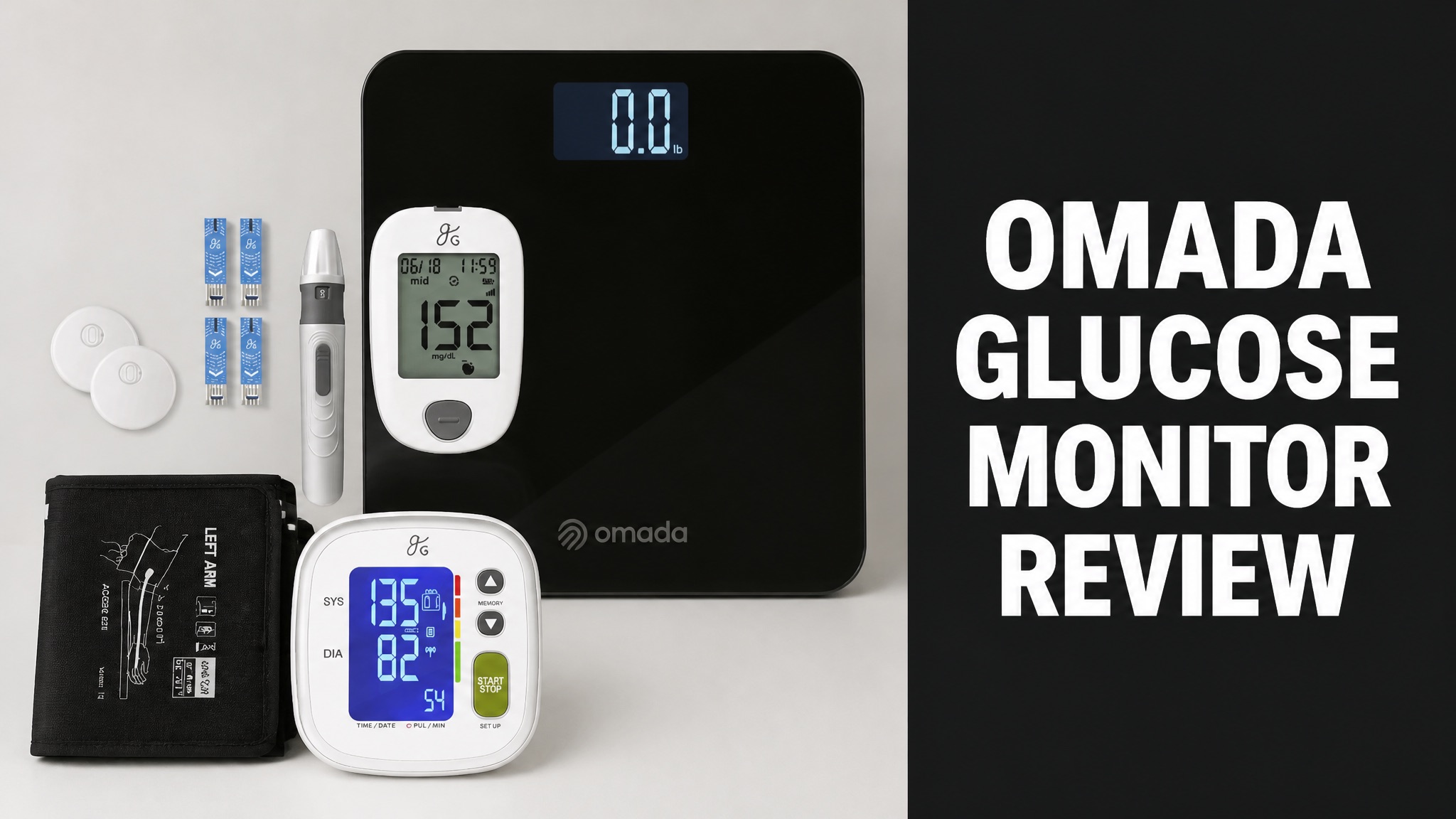
The Omada glucose monitor is a set of connected glucose tools inside Omada’s digital diabetes program. A FreeStyle Libre CGM and a blood glucose meter feed one coaching app. Employers and health plans usually pay for it.
The program pairs a Libre sensor with coaches, lessons and physician visits. A 2026 randomized trial shows better glucose control against usual care. Setup needs a matching Libre or Dexcom app. Reviews praise the coaching but flag access limits and fading engagement over time.
The cost is usually $0 through a benefit, and eligibility starts with the plan. Read on for the devices, the trial data, the Livongo comparison and the steps to get started with the program.
What Is the Omada Glucose Monitor?
The Omada glucose monitor is not one gadget but a set of connected glucose tools inside Omada’s digital diabetes program. Omada is a digital care program that delivers coaching, an app and devices through employers and health plans. Short answer: it’s a program, not a standalone sensor.
Omada began with diabetes prevention. By 2019 it had enrolled more than 250,000 participants. Partners include Cigna, Kaiser Permanente and Blue Cross Blue Shield Minnesota. So, who stands behind it? Large health plans.
Which Devices Does Omada Use?
Omada ships four devices to type 2 diabetes members. Those are a FreeStyle Libre CGM, a blood glucose meter, a weight scale and a blood pressure meter. Diatribe lists them beside coaches, lessons and a peer support group. To be clear, the exact kit depends on the member’s plan.
Omada Devices:
| Device | Role | Detail |
|---|---|---|
| FreeStyle Libre CGM | Continuous glucose tracking | Sensor on the upper arm, worn up to 14 days |
| Blood glucose meter | Fingerstick checks | Mio and Greater Goods meters have Omada setup guides |
| Weight scale | Weight tracking | Wireless scale in the welcome kit |
| Blood pressure meter | Blood pressure tracking | Listed in the diabetes program by Diatribe |
Omada’s support site also covers Dexcom G6 and G7 sensors. Members who already wear one can connect it. The Libre sensor, in contrast, arrives in the welcome kit. Here’s the thing: the sensor choice decides which app syncs.
How Does the Omada Glucose Monitor Work?
Omada pairs real-time glucose data with human coaching inside one smartphone app. Eligible members get an online physician consultation and a Libre prescription. A welcome kit follows with the CGM and a wireless scale. Then the readings flow into the coaching app.
A one-second phone scan over the sensor returns a reading. The Libre sensor sits on the back of the upper arm for up to 14 days. Arrows show where glucose is heading. Most checks need no fingerstick.
Certified diabetes educator coaches review progress and chat inside the app. Lessons, a peer group and a tailored action plan round out the program. Does the sensor do the work? Not alone. The coach turns the data into habits.
How Do You Connect a CGM to Omada?
Members connect a supported CGM by syncing the sensor’s own app with the Omada app. Omada’s support site lists Dexcom G6, Dexcom G7, Libre 14-day and Libre 2 sensors as eligible. Each sensor needs its matching app.
Connection Steps:
- Confirm the sensor is a Dexcom G6, Dexcom G7, Libre 14-day or Libre 2.
- Install the matching Dexcom or Libre app on the phone.
- Keep that app running so it syncs glucose data to Omada.
- Link the CGM to the Omada Health account in the Omada app.
Two Dexcom apps don’t work. Dexcom Clarity and Dexcom Follow are not compatible with Omada’s CGM experience. Also, Omada’s complimentary CGM works only with the Libre app. Pay attention to this before ordering.
Does the Omada Glucose Monitor Work?
Yes. The program improves glucose control when digital diabetes education is paired with a CGM. Omada’s research library lists a 2026 randomized trial in JMIR. HbA1c fell more at 3 months than with usual care. The 6-month HbA1c gap was not significant.
In fact, the CGM numbers held up longer. Glucose management indicator, time in range, time above range and mean glucose all improved at 6 months. Is that a clear win? Mostly, though the sample was small.
What Does the Clinical Trial Show?
The trial randomized 100 adults with type 2 diabetes to digital education plus CGM or usual care for 6 months. Participants started with an HbA1c of 8% or higher (64 mmol/mol). The average was 9.6% (81.2 mmol/mol). Berthoumieux and colleagues ran the study.
Trial Results Versus Usual Care:
| Measure | Difference | Significant? |
|---|---|---|
| HbA1c at 3 months | -0.7% (-8.1 mmol/mol) | Yes (P=.03) |
| HbA1c at 6 months | -0.6% (-6.9 mmol/mol) | No (P=.12) |
| Time in range | +14.6 percentage points | Yes (P=.04) |
| Mean glucose | -36.4 mg/dL (-2.0 mmol/L) | Yes (P=.03) |
Mean glucose fell 36.4 mg/dL (2.0 mmol/L) more than under usual care. Time above range dropped 14.9 percentage points. The authors conclude that digital education plus CGM supports adults with type 2 diabetes. The bottom line: the effect is real but modest.
What Do Omada Reviews Say?
Omada reviews split between praise for coaching and data, and frustration with access and fading engagement. Independent coverage is thinner than for consumer CGMs. Most detailed commentary comes from Diatribe and Longevity Benchmark. And here’s why that matters: Omada’s own pages carry only glowing testimonials.
What Do Members Praise?
Members praise easy blood sugar tracking and a responsive health coach. One member, Anthony, says the program taught him to avoid constant up and down swings. Omada publishes that testimonial itself, so treat it as marketing. What’s more, Diatribe highlights physician access.
Diatribe describes a virtual clinic with physicians, health coaches and diabetes educators. Members can see their glucose data in the app. Physicians can change medications and order labs in virtual visits. That fills the gap between in-person appointments.
What Are the Common Complaints?
Complaints center on access limits, app compatibility and fading engagement over time. Employers and health plans sell Omada, so most people can’t buy it directly. Diatribe notes individuals can sign up and pay themselves. Free CGMs work only with the Libre app.
Pros and Cons:
| Pros | Cons |
|---|---|
| Usually free through a benefit | Access depends on employer or plan |
| Coach and physician support in one app | Free CGM works only with the Libre app |
| CGM data tied to lessons | Engagement can fade after the first weeks |
Longevity Benchmark names drift as Omada’s typical failure mode. Lessons start feeling repetitive and daily check-ins lapse. It adds that sustained engagement, not the device, separates members who improve from those who don’t. Fingersticks are also still required when symptoms don’t match readings.
How Does Omada Compare to Livongo?
Omada puts a curriculum at the center. Livongo, now part of Teladoc Health, puts a connected meter there instead. Teladoc Health acquired Livongo in 2020. Both programs are usually free to members through employers and health plans. The difference is emphasis.
Livongo ships a cellular glucometer with unlimited test strips. It triggers outreach when a reading is out of range. That meter is a fingerstick device, not a worn sensor. Omada’s Libre is a wearable sensor. Which matters more to you?
Omada Versus Livongo:
| Criterion | Omada | Livongo (Teladoc) |
|---|---|---|
| Core method | Curriculum, coaching, connected devices | Connected glucometer, real-time alerts |
| Member cost | Usually $0 through a benefit | Usually $0 through a benefit |
| Glucose tool | Libre CGM and meter | Cellular meter, unlimited strips |
| Condition breadth | Diabetes, hypertension, weight, MSK, prevention | Diabetes and hypertension |
Who Should Pick Each Program?
Livongo suits people who want tight monitoring and instant alerts on out-of-range readings. Omada suits people who want habit change across diabetes, blood pressure and weight together. Both are free in most cases, so the benefit you have decides.
Neither program targets diabetes reversal. Longevity Benchmark points to Virta for that goal. Think of it this way: Omada manages the condition, and it doesn’t promise to end medication. Check the plan first, then the format.
Is Omada Legit and Safe?
Yes. Omada operates as a legitimate clinical program backed by major health plans and Abbott. Abbott partnered with Omada in 2019 to integrate FreeStyle Libre. Omada raised a $73 million round that year. Investors included Cigna Ventures and Kaiser Permanente Ventures.
Legitimacy Signals:
- Contracted by employers and health plans
- Abbott FreeStyle Libre integration since 2019
- Peer-reviewed trial listed in its research library
- Certified diabetes educator coaches
The program coordinates with a member’s own physician rather than replacing one. Safety rules from Abbott still apply. Fingersticks are required when readings seem wrong. So, is it risky? Not when used as directed.
Who Should Look Elsewhere?
People chasing diabetes reversal should look elsewhere, since neither Omada nor Livongo targets reversal. Anyone without a benefit may find Omada hard to reach. A consumer app such as Noom is purchasable today. Standard primary care also stays available.
How Much Does Omada Cost?
Omada usually costs members nothing because employers and health plans pay for the program. Longevity Benchmark calls $0 through a benefit the typical member cost. The sources list no consumer price. In plain English: the price is whatever your plan negotiated.
Is Omada Worth the Price?
Yes. At $0 the program is worth trying when a benefit covers it. The trial shows better glucose control against usual care. The real cost is time. Is that fair? Members who skip lessons and check-ins get little back.
Where Can You Get Omada?
Omada is available mainly through employers and health plans that contract the program. Diatribe says individuals can also sign up independently and pay themselves. Omada’s site invites visitors to see if they qualify at no cost.
How Do You Check Eligibility?
Eligibility starts with the employer or health plan, followed by a type 2 diabetes diagnosis. Omada’s qualification check on its website takes the guesswork out. Now here is the thing: sensor compatibility matters too.
Before You Apply:
- Check employer or health plan benefits
- Confirm a type 2 diabetes diagnosis
- Confirm the CGM works with Omada
- Keep a primary care or endocrinology team informed
And it gets better: members who already wear a supported sensor can often keep it. Just pair the right app. Then the coaching starts.