
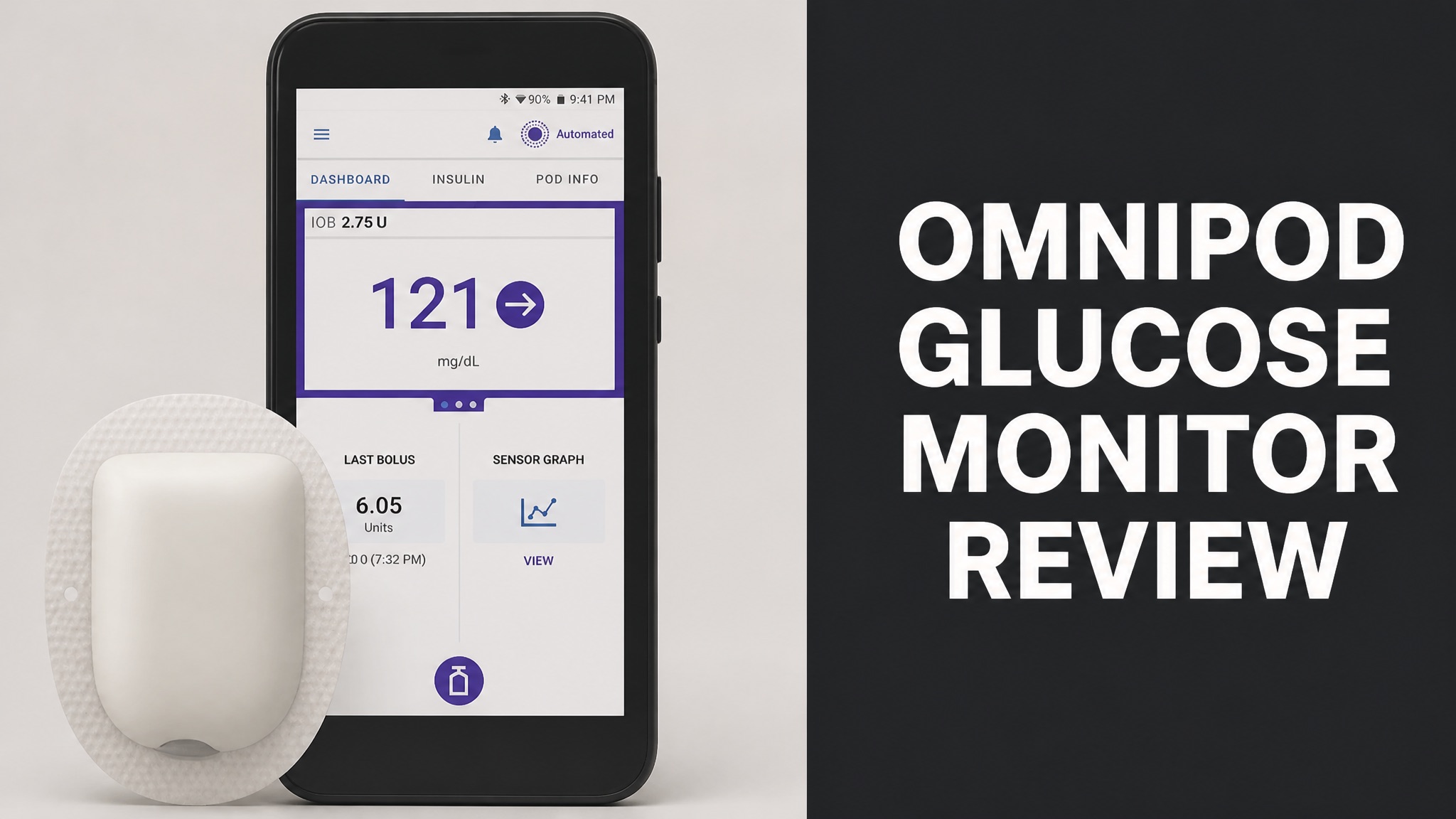
Omnipod is a tubeless insulin pump from Insulet, not a glucose monitor. Omnipod 5 pairs with a Dexcom sensor and adjusts insulin automatically. Each pod lasts up to 3 days and resists water to 25 feet (7.6 meters). Buyers need the full picture before choosing a system, so here it is.
The pod works through SmartAdjust, which updates insulin every five minutes. Studies show lower A1C and more time in range. Reviews praise the tubeless design but flag alarm fatigue. The FDA clears the system for type 1 and type 2 diabetes. Costs run around $600 without insurance. Pods need replacing every three days. Insulet provides user training.
Omnipod 5 suits wearers who want automation without tubing, but meal boluses stay manual. Costs, safety, and alternatives each shape the choice. The sections below answer the questions buyers ask most, from sensor pairing to getting started. Read on for the details and the honest trade-offs.
What Is Omnipod?
Omnipod is a wearable, waterproof, tubeless insulin pump from Insulet Corporation, not a glucose monitor. Each disposable pod delivers rapid-acting insulin for up to 3 days. A controller or smartphone app programs the doses. In plain English: the pod replaces daily injections and the tubes of a traditional pump. Insulet has built diabetes tech since 2000.
The first Omnipod reached the market in 2005 after FDA clearance in 2003. Insulet says the pods now serve people in 24 countries. Here’s the kicker: the idea began with a Massachusetts father who wanted better options for his young son.
Here are the core specs of the current Omnipod 5 pod. The numbers come from Diabetesnet and Diabic.
Omnipod 5 Specs:
| Spec | Value |
|---|---|
| Insulin capacity | 200 units |
| Wear time | Up to 72 hours (3 days) |
| Size | 1.53 x 2.05 x 0.57 inches (3.9 x 5.2 x 1.45 cm) |
| Weight | 0.88 ounces (25 grams) without insulin |
| Water rating | IP28, 25 feet (7.6 meters) for 60 minutes |
| Glucose target | 110 to 150 mg/dL (6.1 to 8.3 mmol/L) |
The pod is about the size of a large bottle cap. Is it bulky? For some wearers, yes. Diabic says a slim tubed pump in a pocket is smaller.
Does Omnipod Track Blood Sugar?
No. The pod cannot read glucose by itself and needs a separate continuous glucose monitor. Omnipod 5 pairs with a Dexcom G6 or G7 sensor over Bluetooth. The sensor supplies the readings, and the pod acts on them. Short answer: Omnipod is the pump, and Dexcom is the monitor. The Omnipod 5 app then shows the Dexcom data next to insulin details for easy review.
Does the pod still work without a sensor? Yes. Manual mode delivers insulin at pre-programmed rates whether or not a CGM is connected. Automated mode needs the sensor connection.
How Does Omnipod Work?
Omnipod works by placing a small pod on the skin that infuses insulin through a soft cannula. The pod inserts the cannula automatically when the user activates it. A wireless controller or app sends the dosing commands. Here’s the thing: no tubing links the pod to a separate pump, so nothing dangles or tangles. The pod then delivers insulin on schedule.
In fact, the pod carries its own insulin reservoir and battery. Users fill it, wear it for up to 72 hours (3 days), and swap it for a fresh pod.
The Omnipod 5 system runs in three modes. The active mode depends on the CGM connection and the user’s activity.
Operating Modes:
- Automated mode adjusts insulin delivery and needs a CGM connection
- Manual mode delivers pre-programmed rates with or without a CGM
- Activity mode sets the target to 150 mg/dL (8.3 mmol/L) and suspends insulin delivery
Activity mode exists for workouts and other times of higher insulin sensitivity. The goal is lower hypoglycemia risk during exercise.
What Does SmartAdjust Do?
SmartAdjust is the Omnipod 5 algorithm that raises, lowers, or pauses insulin delivery automatically every five minutes. The algorithm uses CGM data and a glucose target the user chooses. The pod holds the software, so automation continues when the phone or controller is out of range. Each adjustment reacts to the newest sensor reading, day and night.
Targets run from 110 to 150 mg/dL (6.1 to 8.3 mmol/L) in 10 mg/dL steps. The algorithm also counts insulin on board, which is insulin still active from earlier boluses.
Meals still need manual boluses. Diabic notes that the system does not auto-bolus for food. Why does that matter? Some competing automated systems handle more of the meal dosing.
Which CGMs Work With Omnipod 5?
Omnipod 5 works with the Dexcom G6 and Dexcom G7 continuous glucose monitors. Users need different pods for each sensor type. Outside the US, the system also pairs with the Abbott FreeStyle Libre 2 in the UK and the Netherlands. Diabetech reports that the Libre 3 Plus is compatible as well. Pairing happens over Bluetooth, so no cables are ever needed.
The smartphone app runs on compatible Android phones and, in the US, on supported iPhones. Diabetech notes that the iPhone app is not available outside the US. A controller ships with the starter kit as the alternative.
What Are the Benefits of Omnipod?
Omnipod delivers three main benefits: freedom from tubing, automated insulin adjustment, and discreet wear. Users can swim, shower, and exercise with the pod on. The Omnipod 5 version adds SmartAdjust automation for people on a Dexcom sensor. In fact, a Diabetic Warehouse survey cites 97% of users who would recommend it. Parents like that too, of course.
Let me break that down into the main advantages reported across the sources.
Main Benefits:
- Tubeless design with no tubing to tangle
- Waterproof pods rated to 25 feet (7.6 meters)
- Automated basal adjustment every five minutes
- Control from a smartphone app on supported devices
- Data sharing with caregivers and clinicians
Diabetic Warehouse sells Omnipod products, so weigh the survey figure with care. The design benefits still hold across independent reviews.
Is Omnipod Waterproof?
Yes. The Omnipod 5 pod is rated IP28 for submersion up to 25 feet (7.6 meters) for 60 minutes. Showers, swimming, and beach days are fine. Diabetech’s reviewer adds that Insulet does not recommend hot tubs or saunas. The pod itself, not the controller, carries the water rating. Rinse off and keep on going. Sunscreen is the exception, as noted below.
Does the pod always stay stuck? Mostly. The reviewer sees early peeling in humid travel and fixes it with a Skin Grip overlay. He warns that bug spray and sunscreen can crack a pod in heat.
Does Omnipod 5 Improve Glucose Control?
Yes. Omnipod 5 improves glucose control in clinical studies, with lower A1C and more time in range. A 2021 multicenter trial funded by Insulet showed fewer highs and lows after three months. To be clear, several authors are tied to the company, so read the results with care. The good news? Independent reviewers report similar benefits in daily use.
SECURE-T2D, presented at the ADA, tested adults with type 2 diabetes. Results showed lower A1C, less time above range, and a smaller total daily insulin dose. Participants also reported less diabetes distress.
Retention looks strong too. Per diaTribe, 92% of adults and adolescents and 99% of children kept using Omnipod 5 after the trial.
What Do Omnipod Reviews Say?
Omnipod reviews are mostly positive on design and mixed on algorithm performance. Long-term wearers praise the tubeless pod. Newer users sometimes report alarm fatigue and glucose swings. The Diabetes UK forum and independent reviewers show the same split. The bad news? Experiences vary a lot from person to person. Read both sides before deciding on a pump.
To be clear, personal stories are not clinical evidence. They do show where real wearers hit friction.
What Do Users Praise?
Users praise the tubeless, disposable pod as the main reason they stay with Omnipod. Justin at Diabetech has worn Omnipod for nearly five years and calls the design a clear winner. Each pod ships in its own package with a needle and syringe, which eases travel. He also swims, showers, works out, and bathes with the pod on. In fact, the pod stays on for him.
Pod expiry alarms earn praise as well. A pod that runs out of insulin expires with an alert the reviewer calls hard to ignore. He values that safeguard.
A seller-run survey adds that 97% of users would recommend an Omnipod to a friend. Treat that number as marketing support rather than neutral proof.
What Do Users Complain About?
Complaints center on alarms, overcorrection, and the learning curve of the algorithm. One Diabetes UK forum member described daily low alerts followed by high alerts in his first week. He called the training rushed and the repeated high-glucose alarm pointless. His experience is one account, not a trend. The alarms felt unreliable and inconsistent.
Common Complaints:
- Frequent low and high alerts in the first weeks
- Slow correction after treating a low
- Pod bulk compared with slim tubed pumps
- Pod replacement every three days
- Adhesion trouble in heat and humidity
- Initial setup and training demands
Bottom line: most complaints cluster in the first weeks. Is the learning curve permanent? No. A nurse told that forum member the algorithm needs time to learn. He planned a clinic review after one month.
How Does Omnipod Compare With Alternatives?
Omnipod competes with tubed pumps and with its own Omnipod DASH model. Its main edge is the fully tubeless pod. Diabic calls it the only tubeless pump on the US market, though Diabetech says that will change. Other automated systems include the MiniMed 780G and the Tandem t:slim X2. Diabeteswise lists an Omnipod 5 versus MiniMed 780G comparison tool.
Short answer: the right pick depends on body, routine, and insurance. No single pump wins for everyone.
How Does Omnipod 5 Differ From DASH?
Omnipod 5 adds automated insulin delivery that Omnipod DASH lacks. DASH delivers basal insulin from programmed rates, and users enter every meal and correction dose. DASH can pair with a Dexcom sensor but does not adjust insulin automatically. Skin Grip and Diabetic Warehouse both draw that line. Both use 200-unit pods. Both are tubeless and waterproof.
Omnipod 5 vs DASH:
| Feature | Omnipod 5 | DASH |
|---|---|---|
| Automation | SmartAdjust every 5 minutes | None |
| Control device | Controller or smartphone app | Handheld PDM |
| Insulin capacity | 200 units | 200 units |
| Dexcom link | G6 and G7, with automation | Integration, no automation |
| Cost without insurance | Around $600 | $609 for 10 pods |
DASH also includes a food library of more than 80,000 items for carb counting. Is that enough reason to pick it? Only if manual control is the goal.
Is Omnipod Better Than a Tubed Pump?
No. Omnipod is not better for everyone, but it suits wearers who dislike tubing. Diabic puts it plainly: no universally best pump exists. The right one fits the body, the routine, and the insurance plan. Pump choice shapes sleep, exercise, clothing, and swimming. Think of it this way: the pod trades pocket space for freedom of movement and discretion.
A tubed pump tucks into a pocket and feels slimmer. The pod sits on the skin and is bulkier, but nothing needs carrying. And that trade-off decides it for many wearers.
Is Omnipod Safe?
Omnipod has clinical evidence of safe performance in people aged 6 to 70 in an Insulet-funded 2021 outpatient evaluation. Another 2021 article supports safety in very young children with type 1 diabetes. Insulet funded those studies, so independent data would add confidence. Real-world risks also exist, such as alert fatigue, adhesion issues, or cracks.
Do you need a doctor’s sign-off? Yes, so start with an endocrinologist before changing insulin therapy. Diabic stresses that its articles are educational, not personalized medical advice.
Is Omnipod FDA Approved?
Yes. Omnipod 5 holds FDA clearance for type 1 diabetes in people aged 2 and older. Clearance came in January 2022. In August 2024, adults with type 2 diabetes on insulin gained clearance. That was a first for an automated system. Insulet received the first FDA clearance for the pod system back in 2003. Diabetic Warehouse also confirms that 2003 date.
The algorithm cleared as an interoperable automated glycemic controller under 510(k) K203774. Omnipod DASH is approved for anyone with insulin-requiring diabetes.
Who Should Avoid Omnipod?
Wearers who want automatic meal boluses need a different system, because Omnipod 5 requires manual meal doses. Anyone who dislikes bulk on the body also faces a real trade-off. The pod is larger than a slim tubed pump, even though it needs no tubing. Diabetech’s reviewer also notes the iPhone app is limited to the US, which matters a lot for travelers.
Children under 2 fall outside the Omnipod 5 clearance. People who struggle with adhesive may also need extra tape or overlays. Here’s why: heat and humidity can loosen pods.
How Much Does Omnipod Cost?
Omnipod 5 costs around $600 without insurance, and most insured customers pay $50 or less per month. Coverage varies by plan. The Omnipod 5 app and the provided controller carry no extra charge. Skin Grip lists a ten-pod DASH package at $609 without insurance. Plan for pod replacements every three days. Pharmacy benefits often handle those costs for users.
Omnipod Cost Snapshot:
| Item | Price (USD) |
|---|---|
| Omnipod 5 without insurance | Around $600 |
| DASH, 10 pods without insurance | $609 |
| Typical monthly cost with insurance | $50 or less |
| Omnipod 5 app | No extra cost |
Prices change, so confirm current figures with Insulet or a supplier. Why does coverage matter so much? Most insured users pay $50 or less per month.
Is Omnipod Worth the Price?
Yes. Omnipod 5 is worth the price for insured wearers who value automation and tubeless wear. Most insured customers pay $50 or less per month. That figure is far below the uninsured sticker price. The value case weakens for uninsured buyers who prefer cheaper manual options. Short answer: coverage decides, so check your plan before buying anything.
Is the uninsured price a dealbreaker? For many, yes. Check coverage on omnipod.com first, because insurance changes the math.
Where Can You Buy Omnipod?
Omnipod is available by prescription from a diabetes physician and through pharmacy benefits or authorized suppliers. Insulet sells through omnipod.com. Diabetic Warehouse and Advanced Diabetes Supply also list Omnipod products. Diabetic Warehouse advertises free delivery on every order. The Omnipod site also offers an quick insurance coverage check.
Current users can upgrade through the Podder Central portal. Upgrades run from older pods to DASH or Omnipod 5.
How Do You Get Started With Omnipod?
Getting started takes a prescription, an insurance check, and Insulet training. Insulet provides training so users learn the system properly. One forum member found a group video call rushed, so ask questions during setup. The Omnipod Get Started page walks through the process. Pharmacy benefits often cover the pods after approval, so ask your pharmacy.
Steps:
- Ask a diabetes specialist for a prescription
- Check insurance coverage on omnipod.com
- Choose Omnipod 5 or Omnipod DASH
- Complete the Insulet training session
- Fill and apply the first pod
Place pods on the arm, leg, back, abdomen, or buttocks. Keep each new pod 1 inch (2.5 cm) from the last and 2 inches (5 cm) from the navel.
Should You Try Omnipod?
Yes. Omnipod 5 is worth trying if you want automated insulin delivery without tubing and use a compatible CGM. The evidence for glucose control is encouraging, and the tubeless design is a real advantage. The learning curve and manual meal boluses are the main drawbacks. Bottom line: strong technology, honest trade-offs, and a real learning curve ahead.
Remember the core point. Omnipod does not monitor glucose itself. A Dexcom sensor does that job.
Who Is Omnipod Best For?
Omnipod fits active users, children, and anyone who disliked tubed pumps. Diabic says the tubeless design appeals to those groups. Omnipod 5 is cleared for type 1 diabetes from age 2 and for adults with type 2 diabetes. Think of the pod as the answer for people who want freedom of movement. Diabic also says it works well for swimmers and for gym sessions.
Will it match your routine? Ask your care team. And bring your questions about sensors, coverage, and training.