
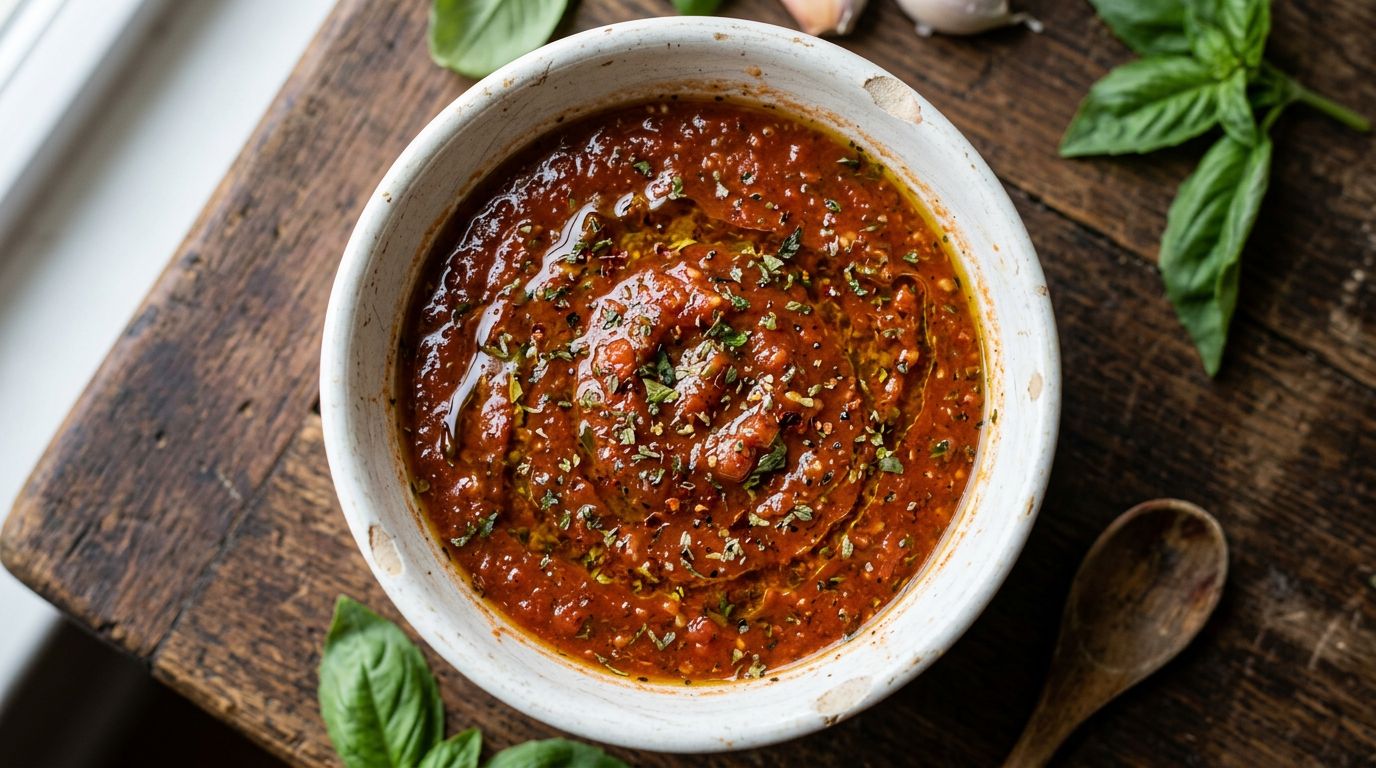
This pizza sauce comes together in 5 minutes with no stovetop required. Store-bought jars are loaded with sugar and taste flat under the heat of the oven. My no-cook version uses 7 pantry ingredients and beats anything in a jar.
Prep Time: 5 minutes
Cook Time: 0 minutes
Total Time: 5 minutes
Servings: 8
Method: No Cook
Why This Pizza Sauce Works Better Than Cooked
Most homemade pizza sauce recipes simmer the tomatoes first. I skip that step entirely. A no-cook sauce keeps the tomatoes bright and fresh-tasting. When the pizza bakes at 450°F, the sauce cooks right on the dough.
San Marzano tomatoes are key. They have lower acidity than regular canned tomatoes and a natural sweetness that doesn’t need added sugar. A 28-ounce can gives you enough thick, glossy sauce for two large pizzas.
The garlic goes in raw. Raw garlic in a no-cook sauce stays sharp and aromatic. It mellows as the pizza bakes and adds a punchy depth you won’t get from garlic powder.
The no-cook approach also means no scorched garlic or over-reduced sauce that tastes cooked twice. I’ve made both versions and the fresh, raw approach wins every time for classic pizza flavor.
Ingredients
- 1 can (28 oz) whole peeled San Marzano tomatoes, drained
- 2 tablespoons extra virgin olive oil
- 2 cloves garlic, minced
- 1 teaspoon dried oregano
- 1 teaspoon dried basil
- 1/2 teaspoon salt
- 1/4 teaspoon red pepper flakes
What You Need for Homemade Pizza Sauce
Whole peeled San Marzano tomatoes — The best base for pizza sauce. Whole peeled tomatoes hold more juice than diced and process into a thicker, richer sauce. One 28-ounce can makes enough sauce for two large 12-inch pizzas. Regular crushed tomatoes work, but the flavor is sharper and may need a pinch of sugar to balance.
Extra virgin olive oil — Adds body and a slightly fruity finish to the raw sauce. Light olive oil or avocado oil works as a substitute but gives less flavor.
Fresh garlic — Two cloves give the right amount of punch without being overpowering. Garlic powder works at 1/4 teaspoon per clove if fresh isn’t available.
Dried oregano and basil — Classic pizza sauce herbs. Dried distributes evenly through the sauce without turning it green. Rub the herbs between your fingers before adding — it wakes up the flavor compounds.
Salt — Season after you taste, not before. The salt content in canned tomatoes varies by brand. Start with 1/2 teaspoon and adjust from there.
Red pepper flakes — Optional but recommended. Just 1/4 teaspoon adds gentle warmth that rounds out the tomato flavor. Skip it for a mild sauce.
How to Make Pizza Sauce From Scratch
A food processor does all the work. No blender, no saucepan — just pulse and spread. The whole process takes 5 minutes from can to dough.
- Drain the tomatoes through a fine mesh strainer and discard the liquid.
- Pour the drained tomatoes into a food processor.
- Add olive oil, minced garlic, oregano, basil, salt, and red pepper flakes.
- Pulse 8 to 10 times until the sauce is thick and slightly chunky.
- Taste and adjust salt as needed.
- Spread onto pizza dough immediately or refrigerate in a sealed jar.
The sauce should be slightly chunky, not smooth like pasta sauce. If it comes out too thin, add 1 tablespoon of tomato paste and pulse once more. That firms it up without changing the flavor.
Pizza Sauce Variations
Spicy Pizza Sauce
Double the red pepper flakes and add 1/2 teaspoon of Calabrian chili paste to the food processor. The heat builds gradually and pairs well with sausage or pepperoni toppings. This variation also works as a dipping sauce for breadsticks.
Roasted Garlic Pizza Sauce
Roast a full head of garlic at 400°F for 40 minutes until the cloves are soft and golden. Squeeze the roasted cloves into the processor with the tomatoes. The roasted garlic gives the sauce a mellower, sweeter depth than raw garlic.
Fresh Herb Pizza Sauce
Add a handful of fresh basil leaves and 2 sprigs of fresh oregano to the processor before pulsing. The sauce comes out flecked with green and smells incredible straight from the blender. Use it the same day — fresh herbs don’t hold up in the fridge.
Thick Tomato Paste Pizza Sauce
Add 2 tablespoons of tomato paste to the processor along with the canned tomatoes. It deepens the flavor and gives an even more concentrated sauce. This works especially well for thin-crust pizzas where you don’t want a soggy base.
Sun-Dried Tomato Pizza Sauce
Swap half the canned tomatoes for 1/3 cup of oil-packed sun-dried tomatoes, drained. The sauce comes out darker, richer, and slightly sweet with a roasted tomato depth. I use this version for flatbreads and white pizzas where it pairs well with ricotta.
Tips for the Best Pizza Sauce
- I always drain the tomatoes well. Excess liquid from the can makes the sauce watery and turns the pizza crust soggy.
- Don’t over-process. Pulse 8 to 10 times for a sauce with real texture. More than that and it turns too thin.
- Use the sauce straight from the fridge. Cold sauce spreads onto dough just fine. It heats through fast in a 450°F oven.
- Make a double batch. This recipe doubles easily and the extra sauce keeps for a week. Pizza night becomes a 10-minute job.
- Spread it thin. I use 3 to 4 tablespoons per 12-inch pizza — just enough to coat the dough without pooling in the center.
- San Marzano tomatoes make a real difference. I’ve tried every brand and the flavor gap between San Marzanos and generic canned tomatoes is real.
Make Ahead & Storage
This pizza sauce keeps in the fridge for up to 7 days in a sealed glass jar. I make a double batch on Sunday so pizza night is fast all week. The flavor deepens by day two as the garlic and herbs fully meld.
To freeze, pour the sauce into an ice cube tray and freeze solid. Transfer the cubes to a zip bag — each cube is roughly 2 tablespoons, enough for one personal pizza. Frozen sauce keeps for up to 3 months and thaws in 20 minutes on the counter.
Common Questions
Can I use fresh tomatoes instead of canned?
Yes. Blanch and peel 2 pounds of ripe Roma tomatoes, then remove the seeds and as much liquid as possible. The flavor will be brighter in peak summer but more watery. Drain the tomatoes thoroughly before processing.
Is pizza sauce the same as pasta sauce?
Not quite. Pizza sauce is thicker and more concentrated so it doesn’t make the dough soggy. Pasta sauce is usually cooked and has a looser consistency. You can use pasta sauce in a pinch, but simmer it down first to remove excess water.
How much pizza sauce goes on one pizza?
I use 3 to 4 tablespoons for a 12-inch pizza. That covers the dough without pooling in the center. More sauce than that and the center won’t cook through properly. Spread it thin and stop just short of the edge.
Can you freeze homemade pizza sauce?
Yes. This pizza sauce freezes well for up to 3 months. The best method is an ice cube tray — freeze the sauce solid, then transfer to a zip bag. Each cube thaws in 20 minutes and covers one small pizza perfectly.
This easy pizza sauce from scratch is the only sauce recipe I keep coming back to. Save it before your next homemade pizza night.
Easy Homemade Pizza Sauce Recipe From Scratch
A quick no-cook pizza sauce made with San Marzano tomatoes, garlic, and herbs — ready in 5 minutes.
Ingredients
- 1 can (28 oz) whole peeled San Marzano tomatoes, drained
- 2 tablespoons extra virgin olive oil
- 2 cloves garlic, minced
- 1 teaspoon dried oregano
- 1 teaspoon dried basil
- 1/2 teaspoon salt
- 1/4 teaspoon red pepper flakes
Instructions
- Drain the tomatoes through a fine mesh strainer and discard the liquid.
- Pour the drained tomatoes into a food processor.
- Add olive oil, minced garlic, oregano, basil, salt, and red pepper flakes.
- Pulse 8 to 10 times until the sauce is thick and slightly chunky.
- Taste and adjust salt as needed.
- Spread onto pizza dough immediately or refrigerate in a sealed jar.