
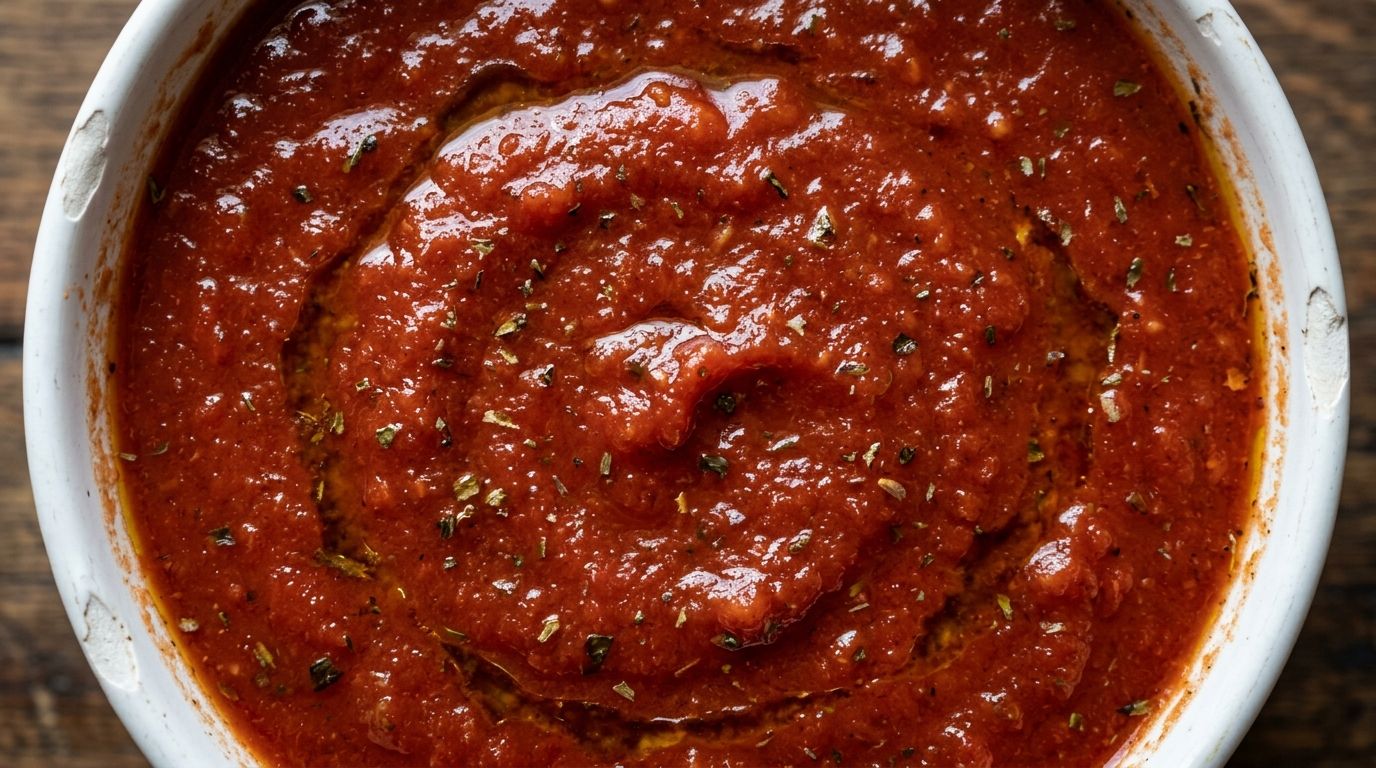
My pizza sauce homemade recipe uses 7 pantry staples and takes 5 minutes flat. Skip the jarred versions — they pack sugar and kill the natural tomato brightness. This blender method gives you a thick, herb-forward sauce that beats anything from a shelf.
Prep Time: 5 minutes
Cook Time: 0 minutes
Total Time: 5 minutes
Servings: 8
Method: No Cook
Why This Pizza Sauce Homemade Recipe Works
San Marzano tomatoes are lower in acid than standard canned tomatoes. That natural sweetness means I never need added sugar to balance the sauce. One 28-ounce (800g) can makes enough for two large pizzas or four medium ones.
Fresh garlic, olive oil, and dried herbs all go in raw — no sautéing, no extra pan, no stove time at all. The blender handles everything in under a minute. The texture stays slightly chunky, which grips toppings better than a watery puree.
I’ve tested no-cook against simmered versions side by side over a dozen pizza nights. The no-cook sauce keeps a brighter, fresher tomato flavor even after the oven. Once I switched, I never went back to simmering.
Modifier keywords like “sauce” and “homemade” aren’t just labels here. The garlic blooms raw under oven heat and the herbs perfume the entire pie. This pizza sauce homemade recipe is everything the jar never delivers.
Ingredients
- 1 can (28 oz / 800g) San Marzano crushed tomatoes
- 2 tablespoons extra virgin olive oil
- 3 cloves garlic, minced
- 1 teaspoon dried oregano
- 1 teaspoon dried basil
- 1/2 teaspoon salt
- 1/4 teaspoon red pepper flakes
What You Need for Homemade Pizza Sauce
San Marzano crushed tomatoes — these carry lower acidity and a natural sweetness that generic canned tomatoes lack. Regular crushed tomatoes work in a pinch, but the flavor runs sharper and may need a pinch of sugar to balance.
Extra virgin olive oil — adds body and a light fruity finish that enriches the final sauce. Light olive oil or avocado oil substitutes cleanly without changing the texture.
Garlic — fresh cloves give the most intensity since there is no heat to mellow them before baking. Use 1/4 teaspoon garlic powder per clove if fresh isn’t available.
Dried oregano — the backbone herb for any Italian-style pizza sauce. Fresh oregano works at a 3-to-1 ratio; stir it in after blending so it stays vibrant.
Dried basil — rounds out the oregano and adds faint sweetness to the sauce. Fresh basil works at 2 tablespoons, torn and folded in after blending.
Salt — draws out the tomato flavor and ties every other ingredient together. Start with 1/2 teaspoon and taste before adding more since canned tomato brands vary in saltiness.
Red pepper flakes — add gentle heat that builds slowly through the sauce as it bakes. Skip entirely for a mild version or double the amount for a spicy pie.
How to Make Pizza Sauce Homemade
- Add San Marzano crushed tomatoes to a blender or food processor.
- Pour in the olive oil and add the minced garlic.
- Sprinkle in dried oregano, basil, salt, and red pepper flakes.
- Pulse 4 to 5 times until smooth but slightly textured.
- Taste and adjust salt as needed.
- Refrigerate for at least 30 minutes before spreading on pizza dough.
Pizza Sauce Homemade Variations
Spicy Homemade Pizza Sauce
Double the red pepper flakes and add 1/2 teaspoon of calabrian chili paste before blending. The heat builds gradually and pairs especially well with sausage or hot honey toppings. I use this version on my Friday night pepperoni pie every single week.
Roasted Garlic Pizza Sauce
Roast a full head of garlic at 400°F (200°C) for 40 minutes until the cloves are golden and soft. Squeeze them directly into the blender with the tomatoes before pulsing. The flavor turns mellow and caramel-sweet with none of the raw garlic sharpness.
Fresh Herb Pizza Sauce
Swap the dried herbs for 2 tablespoons of torn fresh basil and 1 tablespoon of fresh oregano, added after blending. Pulse once to combine without fully breaking down the leaves. The sauce stays bright green-flecked and tastes fresh even after a hot oven.
Sun-Dried Tomato Pizza Sauce
Replace 1/4 of the crushed tomatoes with drained oil-packed sun-dried tomatoes before blending. The result is a deeper, more concentrated sauce with a rich savory edge. This version works best on thin-crust pies where you want bold flavor in a thinner layer.
No-Garlic Pizza Sauce
Skip the garlic entirely and add 1/4 teaspoon of fennel seeds and an extra pinch of dried oregano for depth. The sauce turns milder and slightly sweeter. For a low-FODMAP option, use garlic-infused olive oil — it gives the aroma without the actual garlic.
Tips for the Best Pizza Sauce Homemade
- I always choose San Marzano over generic crushed tomatoes — the flavor difference is noticeable in every slice.
- Pulse, don’t blend continuously — a slightly chunky texture holds toppings better than a smooth puree.
- Refrigerate the sauce for at least 30 minutes before spreading so the herbs bloom fully into the tomatoes.
- Use the sauce cold, straight from the fridge on room-temperature dough — it helps the crust stay crisper.
- Spread thin — about 1/4 cup (60ml) for a 12-inch (30cm) pizza — and stop 1 inch from the edge.
- Make a double batch on Sunday. Weeknight pizza takes under 15 minutes when the sauce is already done.
Make Ahead & Storage
This pizza sauce homemade recipe keeps in the fridge for up to 2 weeks in a sealed jar or airtight container. The flavor actually improves overnight as the garlic and herbs settle into the tomatoes. I always batch it on Sundays so pizza nights stay fast all week.
To freeze, spoon the sauce into an ice cube tray and freeze solid overnight. Transfer the cubes to a zip-top freezer bag — each cube equals about 2 tablespoons (30ml), enough for one personal pizza. Frozen sauce keeps for up to 3 months and thaws on the counter in 20 minutes.
Common Questions
Can I use fresh tomatoes instead of canned?
Yes. Blanch and peel 2 pounds (900g) of ripe Roma tomatoes, then crush them by hand before blending. Fresh tomatoes vary in sweetness and water content, so taste and adjust salt and add a pinch of sugar if needed. The sauce may be slightly thinner than the canned version.
What is the difference between pizza sauce and pasta sauce?
Pizza sauce is thicker, more concentrated, and typically not cooked before it goes on the dough. Pasta sauce is usually simmered longer and has a thinner consistency designed to coat noodles. Spreading pasta sauce on pizza often makes the crust soggy from the extra moisture.
Do I need to cook this pizza sauce before using it?
No — this is a no-cook pizza sauce that goes straight onto the dough raw. The oven heat during baking finishes cooking it perfectly. Cooking it first is optional and gives a richer, more concentrated flavor if you prefer a slower-cooked style.
How much pizza sauce do I need per pizza?
I use about 1/4 cup (60ml) for a 12-inch (30cm) pizza and 1/3 cup (80ml) for a 14-inch (35cm) pie. Spread it with the back of a spoon in a thin, even layer stopping 1 inch from the edge. Less sauce means a crispier, sturdier crust.
How long does homemade pizza sauce last in the fridge?
This pizza sauce homemade recipe keeps for up to 2 weeks in an airtight jar in the refrigerator. Always use a clean spoon to avoid introducing bacteria that shorten its shelf life. The garlic scent intensifies after a few days, which I actually prefer for flavor.
This pizza sauce homemade recipe is the base every great pizza deserves. Save it to your board and make a batch before your next pizza night.
Pizza Sauce Homemade Recipe From Scratch
A 5-minute no-cook sauce blended from San Marzano tomatoes, garlic, and dried herbs — enough for two large pizzas.
Ingredients
- 1 can (28 oz / 800g) San Marzano crushed tomatoes
- 2 tablespoons extra virgin olive oil
- 3 cloves garlic, minced
- 1 teaspoon dried oregano
- 1 teaspoon dried basil
- 1/2 teaspoon salt
- 1/4 teaspoon red pepper flakes
Instructions
- Add San Marzano crushed tomatoes to a blender or food processor.
- Pour in the olive oil and add the minced garlic.
- Sprinkle in dried oregano, basil, salt, and red pepper flakes.
- Pulse 4 to 5 times until smooth but slightly textured.
- Taste and adjust salt as needed.
- Refrigerate for at least 30 minutes before spreading on pizza dough.