
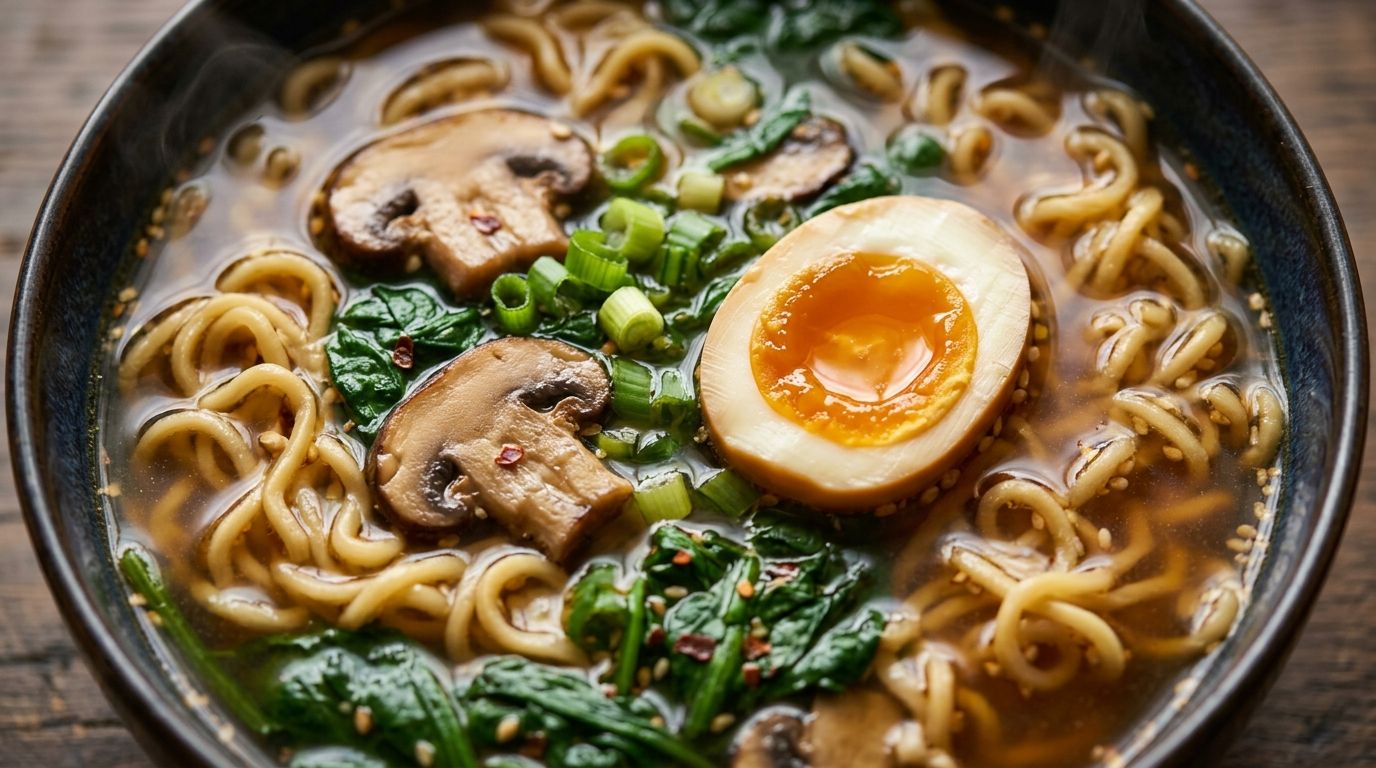
A homemade ramen bowl takes 20 minutes and tastes nothing like a packet from a bag. The broth is rich, garlicky, and layered with miso and sesame. I top mine with a soft-boiled egg, green onions, and whatever vegetables I have on hand.
Prep Time: 5 minutes
Cook Time: 15 minutes
Total Time: 20 minutes
Servings: 4
Method: Stovetop
Why This Homemade Ramen Bowl Works
The broth is the entire recipe. A good ramen bowl broth needs three things: aromatics (garlic and ginger), salt and umami (soy sauce and miso), and fat (sesame oil). Get those right and the bowl comes together in minutes.
Miso paste is the ingredient most people skip. It adds a fermented depth that makes the broth taste like it simmered for hours. White miso is milder and sweet. Red miso is bolder and saltier. I use white miso for weeknight ramen bowls — it blends smoothly and never overpowers the other flavors.
Instant ramen noodles work here. The noodle cakes from the standard packages are the right texture for a homemade broth — springy and slightly chewy. You discard the flavor packets and use the noodles only. No shame in that shortcut.
Ingredients
- 8 cups chicken broth
- 4 ramen noodle cakes (discard flavor packets)
- 3 cloves garlic, minced
- 1 tablespoon fresh ginger, grated
- 2 tablespoons soy sauce
- 2 tablespoons white miso paste
- 1 teaspoon sesame oil
- 2 soft-boiled eggs, halved
- 1 cup mushrooms, sliced
- 2 green onions, thinly sliced
- 1 handful fresh spinach or kale
- 1 tablespoon neutral oil (for sautéing)
What You Need for a Ramen Bowl
Chicken broth — use the best-quality broth you can find. Low-sodium gives you more control over salt level. Vegetable broth works for a meatless version. Bone broth adds extra body and a slightly richer finish.
Miso paste — stir it in at the end, off the heat. Boiling miso kills the beneficial enzymes and dulls its flavor. White miso (shiro miso) is the most accessible and mildest option. Red miso (aka miso) is sharper — use 1 tablespoon instead of 2.
Ramen noodle cakes — the instant variety from any grocery store. Discard the seasoning packets and use just the noodles. Cook them in a separate pot of boiling water according to package directions. Do not cook them directly in the broth — they cloud it.
Soy sauce — adds saltiness and umami. Tamari is a gluten-free swap. Start with 2 tablespoons and adjust to taste after adding miso, since miso also contributes saltiness.
Sesame oil — always toasted sesame oil. Add it at the end with the miso. Heat destroys its fragrance quickly, so it goes in last.
Soft-boiled eggs — cook eggs in boiling water for exactly 6 minutes and 30 seconds, then transfer to an ice bath for 2 minutes. Peel carefully. The yolk will be jammy and bright orange — perfect for a ramen bowl.
Mushrooms — shiitake mushrooms are traditional and add an earthy, meaty flavor. Cremini or button mushrooms work well too. Slice them thin and sauté briefly before adding to the broth.
How to Make a Homemade Ramen Bowl
- Bring a medium pot of water to a boil. Cook ramen noodle cakes per package instructions, then drain and set aside.
- Heat neutral oil in a large saucepan over medium heat. Add garlic and ginger. Cook for 1 minute until fragrant.
- Add sliced mushrooms. Sauté for 3 minutes until softened and slightly golden.
- Pour in chicken broth and soy sauce. Bring to a gentle simmer over medium heat.
- Add spinach or kale. Stir until just wilted, about 1 minute.
- Remove from heat. Whisk miso paste and sesame oil into the hot broth until fully dissolved.
- Divide noodles between four bowls. Ladle hot broth and vegetables over the noodles.
- Top each ramen bowl with half a soft-boiled egg and sliced green onions. Serve immediately.
Ramen Bowl Variations
Spicy Ramen Bowl
Add 1 tablespoon of gochujang (Korean chili paste) or chili crisp to the broth after the miso. Gochujang adds a deep, smoky heat that builds slowly. This version pairs especially well with sliced pork belly or crispy tofu.
Chicken Ramen Bowl
Poach two boneless chicken breasts directly in the simmering broth for 12 minutes. Remove, shred with two forks, and return the chicken to the pot. The chicken adds protein and makes the broth slightly richer. Season with an extra splash of soy sauce to compensate.
Vegetarian Ramen Bowl
Swap chicken broth for vegetable broth and add 1 teaspoon of white miso extra for depth. Top with sliced firm tofu, edamame, corn, and nori (dried seaweed sheets). The broth is still bold and satisfying without any meat. This version is naturally vegan.
Creamy Sesame Ramen Bowl
Whisk 2 tablespoons of tahini into the broth along with the miso. The tahini creates a slightly thicker, creamier broth with a pronounced nutty flavor. Reduce the sesame oil to 1/2 teaspoon since tahini already brings sesame richness.
Tonkotsu-Style Ramen Bowl
Use pork bone broth instead of chicken broth. Stir in 1 tablespoon of butter with the miso for extra richness. Top with thinly sliced chashu pork, bamboo shoots, and a sheet of nori. This version is the closest homemade approximation to a restaurant tonkotsu bowl.
Tips for the Best Ramen Bowl
- Cook noodles in a separate pot — adding them directly to the broth makes it starchy and cloudy.
- Never boil the miso paste. Add it off the heat and whisk until dissolved. Boiling kills the flavor compounds that make miso worth using.
- Warm your bowls before serving. Pour hot water into them, swirl, and dump it out. Warm bowls keep ramen hot for twice as long.
- I always make soft-boiled eggs for ramen — the jammy yolk breaks into the broth and enriches every spoonful.
- Build layers in the bowl: noodles first, then broth, then toppings last. This keeps the toppings visible and the noodles from floating to the top.
- For extra umami, add a teaspoon of fish sauce or a small piece of kombu (dried kelp) to the simmering broth. Remove the kombu before serving.
Make Ahead & Storage
Store the broth and noodles separately in the fridge for up to 4 days. Noodles stored in broth absorb all the liquid and become soft. Keep them in a sealed container with a drizzle of sesame oil to prevent sticking.
Reheat the broth on the stovetop over medium heat until just simmering. Reheat noodles separately in boiling water for 30 seconds, then drain and assemble the bowl fresh. This takes 5 minutes and the result is far better than reheating everything together.
The broth freezes well for up to 3 months in airtight containers or zip-lock bags. Freeze in individual portions — one portion per bowl. Thaw overnight in the fridge or in a pot of warm water. Cook fresh noodles when ready to serve.
Common Questions
What broth is best for a homemade ramen bowl?
Chicken broth is the most accessible and produces a clean, savory base. Bone broth adds more body and richness. For a deeper flavor, simmer the broth with a piece of kombu and a few dried shiitake mushrooms for 10 minutes before adding the other aromatics. Remove both before serving.
Can I use instant ramen noodles for a homemade ramen bowl?
Yes — and I recommend it. The noodle cakes from standard instant ramen packages are perfectly textured for homemade broth. Discard the seasoning packets and cook the noodles in a separate pot. The quality difference between instant noodles and fresh ramen noodles in a homemade broth is minimal.
How do I make the perfect soft-boiled egg for ramen?
Bring water to a boil and lower eggs in gently with a spoon. Cook exactly 6 minutes and 30 seconds, then transfer immediately to a bowl of ice water. Let sit for 2 minutes. Peel under running water. The yolk should be jammy and deep orange — fully set around the edges, creamy in the center.
How do I add more flavor to ramen broth?
Layer your umami sources. Miso paste, soy sauce, and sesame oil are the three essentials. Beyond that, try a small splash of fish sauce, a teaspoon of rice vinegar for brightness, or a piece of dried kombu simmered in the broth. Taste and adjust before serving — the broth should be bold but not salty.
What toppings go on a ramen bowl?
The classics: soft-boiled egg, green onions, mushrooms, bamboo shoots, corn, nori, sesame seeds, and bean sprouts. For protein, add shredded chicken, sliced chashu pork, tofu, or a handful of shrimp simmered in the broth for 2 minutes. Mix and match based on what you have on hand.
This homemade ramen bowl recipe is one of the most satisfying weeknight dinners in my rotation — rich broth, springy noodles, and a jammy egg in under 20 minutes. Save this recipe for your next ramen night.
Homemade Ramen Bowl Recipe for Dinner Tonight
A rich miso-garlic broth with springy noodles, mushrooms, soft-boiled egg, and green onions — ready in 20 minutes.
Ingredients
- 8 cups chicken broth
- 4 ramen noodle cakes (discard flavor packets)
- 3 cloves garlic, minced
- 1 tablespoon fresh ginger, grated
- 2 tablespoons soy sauce
- 2 tablespoons white miso paste
- 1 teaspoon sesame oil
- 2 soft-boiled eggs, halved
- 1 cup mushrooms, sliced
- 2 green onions, thinly sliced
- 1 handful fresh spinach or kale
- 1 tablespoon neutral oil (for sautéing)
Instructions
- Bring a medium pot of water to a boil. Cook ramen noodle cakes per package instructions, then drain and set aside.
- Heat neutral oil in a large saucepan over medium heat. Add garlic and ginger. Cook for 1 minute until fragrant.
- Add sliced mushrooms. Sauté for 3 minutes until softened and slightly golden.
- Pour in chicken broth and soy sauce. Bring to a gentle simmer over medium heat.
- Add spinach or kale. Stir until just wilted, about 1 minute.
- Remove from heat. Whisk miso paste and sesame oil into the hot broth until fully dissolved.
- Divide noodles between four bowls. Ladle hot broth and vegetables over the noodles.
- Top each ramen bowl with half a soft-boiled egg and sliced green onions. Serve immediately.