
These are my 20 go-to ramen noodle recipes for any night of the week. I chose them for variety: some are rich broth-based bowls, others are quick stir-fries ready in 20 minutes. Whether you want umami-forward tonkotsu or a weeknight garlic butter fix, there is a ramen recipe here for you.
1. Shoyu Ramen
Shoyu ramen is my starting point for any ramen night. The broth builds on soy sauce, chicken stock, and mirin. It is clear, salty, and bright. A soft-boiled egg and crisp nori sheet finish the bowl.
The soy tare is the component that makes this recipe repeatable. Make a double batch and keep it in the fridge. It covers two weeks of weeknight bowls without extra prep.
- Simmer chicken stock with soy sauce, mirin, and kombu for 30 minutes.
- Cook ramen noodles in a separate pot and drain well.
- Slice chashu pork or rotisserie chicken and soft-boil eggs.
- Assemble: noodles first, broth ladled over top, toppings arranged last.
Time: 45 min | Difficulty: Medium | Best For: Weeknight
2. Miso Ramen
Miso ramen has a thick, savory broth that coats the noodles completely. I use white miso for a milder base and add ground pork for body. The flavor deepens with each spoonful.
Dissolve the miso directly into the hot broth at the very end. Boiling miso kills the live cultures and flattens the flavor. Add it off heat and whisk until fully incorporated.
- Brown ground pork with garlic and ginger in a wide pot.
- Add chicken stock and simmer for 20 minutes.
- Remove from heat and whisk in white miso paste.
- Cook noodles, add to bowls, then ladle broth and top with corn and butter.
Time: 35 min | Difficulty: Easy | Best For: Weeknight
3. Tonkotsu Ramen
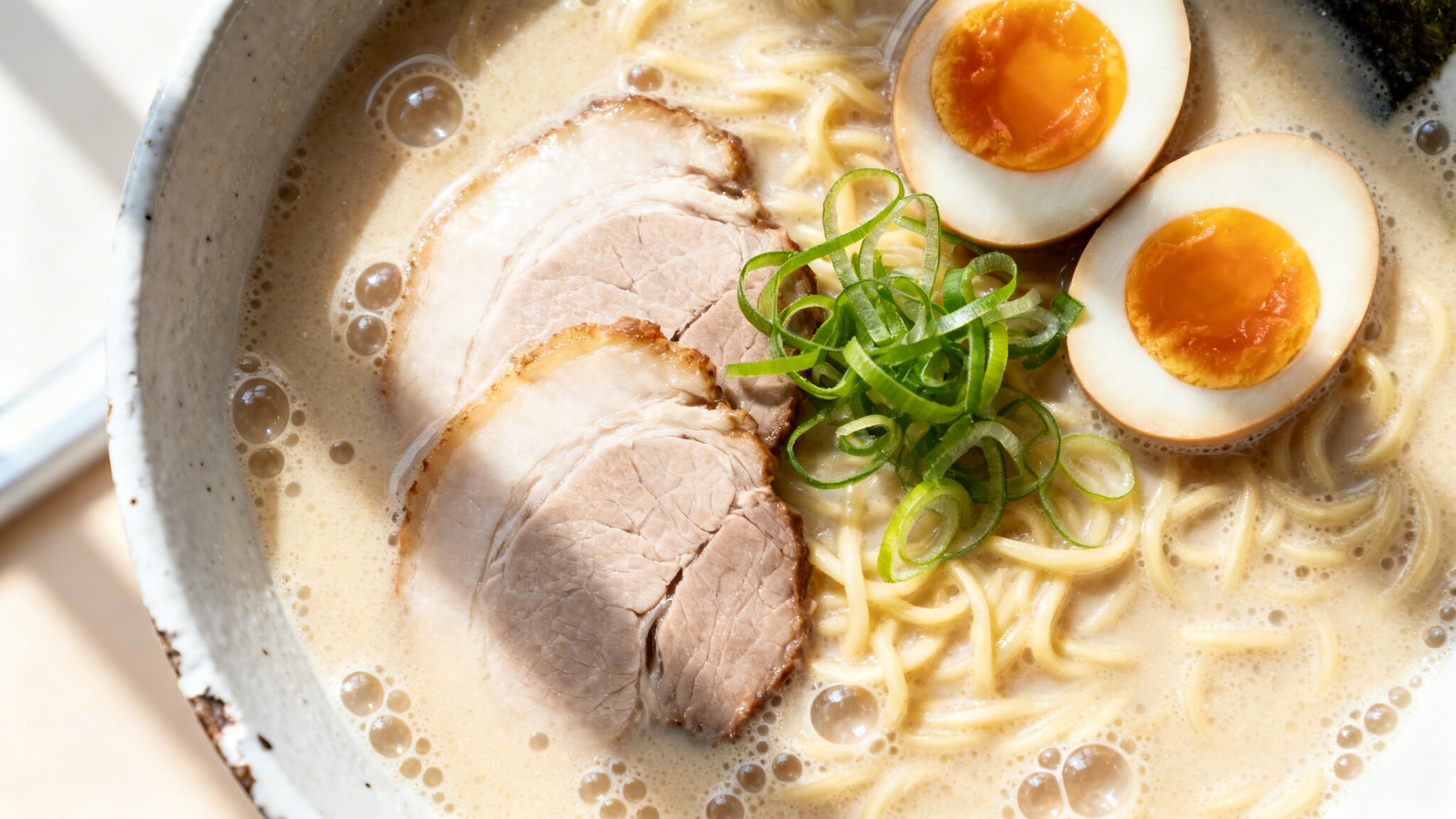
Tonkotsu ramen is the one I cook when I want something deeply rich. The pork bone broth simmers for hours until it turns opaque and silky. It takes time, but the result is unlike anything from a packet.
The fat layer on top is not a mistake. That rendered pork fat makes every sip coat your mouth with deep, rounded flavor. Skim it and you lose the entire point of tonkotsu.
- Blanch pork bones in boiling water for 10 minutes, then rinse thoroughly.
- Simmer bones in fresh water at a rolling boil for 4 to 6 hours until broth turns milky.
- Strain, season with salt, and keep warm over low heat.
- Serve over fresh ramen noodles with chashu pork, soft egg, and green onions.
Time: 5-6 hr | Difficulty: Hard | Best For: Weekend
4. Spicy Miso Ramen
Spicy miso ramen combines miso richness with a serious chili kick. I use gochujang and toban djan together for layered heat that builds slowly. The noodles absorb the sauce from the bottom up.
Ground pork adds body to the broth. Stir it directly into the aromatics before adding liquid so it gets time to brown and develop flavor. Skipping this step leaves the broth flat.
- Cook ground pork with garlic, ginger, gochujang, and toban djan until browned.
- Add chicken stock and simmer for 15 minutes.
- Whisk in white miso off heat.
- Add noodles to bowls, pour broth, and top with chili oil and sesame seeds.
Time: 30 min | Difficulty: Easy | Best For: Weeknight
5. Shio Ramen
Shio ramen is the most delicate style in this list. The salt-based broth is pale gold, clean, and lets the chicken and dashi flavors come through clearly. I make this when I want something light but still filling.
The seasoning here is a salt tare made from sea salt, sake, and mirin. Add it to the broth at the end so you control the saltiness precisely. The tare keeps in the fridge for weeks.
- Simmer chicken stock with kombu and dried mushrooms for 20 minutes.
- Strain and add salt tare gradually, tasting as you go.
- Cook ramen noodles and portion into bowls.
- Ladle the clear broth over noodles and top with sliced chicken and yuzu zest.
Time: 30 min | Difficulty: Easy | Best For: Weeknight
6. Vegetarian Miso Ramen
Vegetarian miso ramen proves you do not need pork to build depth. I use kombu dashi as the base and pack it with roasted mushrooms and corn. The miso ties everything into a cohesive bowl.
Roasting the mushrooms before adding them to the broth is not optional. The caramelized edges add smokiness that keeps the bowl from tasting flat. This single step separates good veggie ramen from great.
- Roast shiitake and king oyster mushrooms at 425F (220C) for 20 minutes.
- Simmer kombu dashi with garlic and ginger for 15 minutes.
- Whisk in white or red miso off heat.
- Assemble with noodles, roasted mushrooms, corn, and a drizzle of chili oil.
Time: 35 min | Difficulty: Easy | Best For: Weeknight, Meatless Monday
7. Chicken Ramen Soup
Chicken ramen soup is my weeknight reset. I poach chicken thighs directly in the broth so the meat stays moist and the stock gains more body. It takes 30 minutes from start to bowl.
Use bone-in chicken thighs if you have them. The bone releases collagen into the broth, giving it a fuller texture without hours of simmering. Boneless thighs work too but the broth will be thinner.
- Simmer chicken thighs in chicken stock with ginger, garlic, and soy sauce for 20 minutes.
- Pull the chicken and shred it while the broth continues at low heat.
- Cook ramen noodles and add to bowls.
- Ladle broth over, arrange shredded chicken, and top with soft egg and scallions.
Time: 30 min | Difficulty: Easy | Best For: Weeknight
8. Ramen Noodle Stir Fry
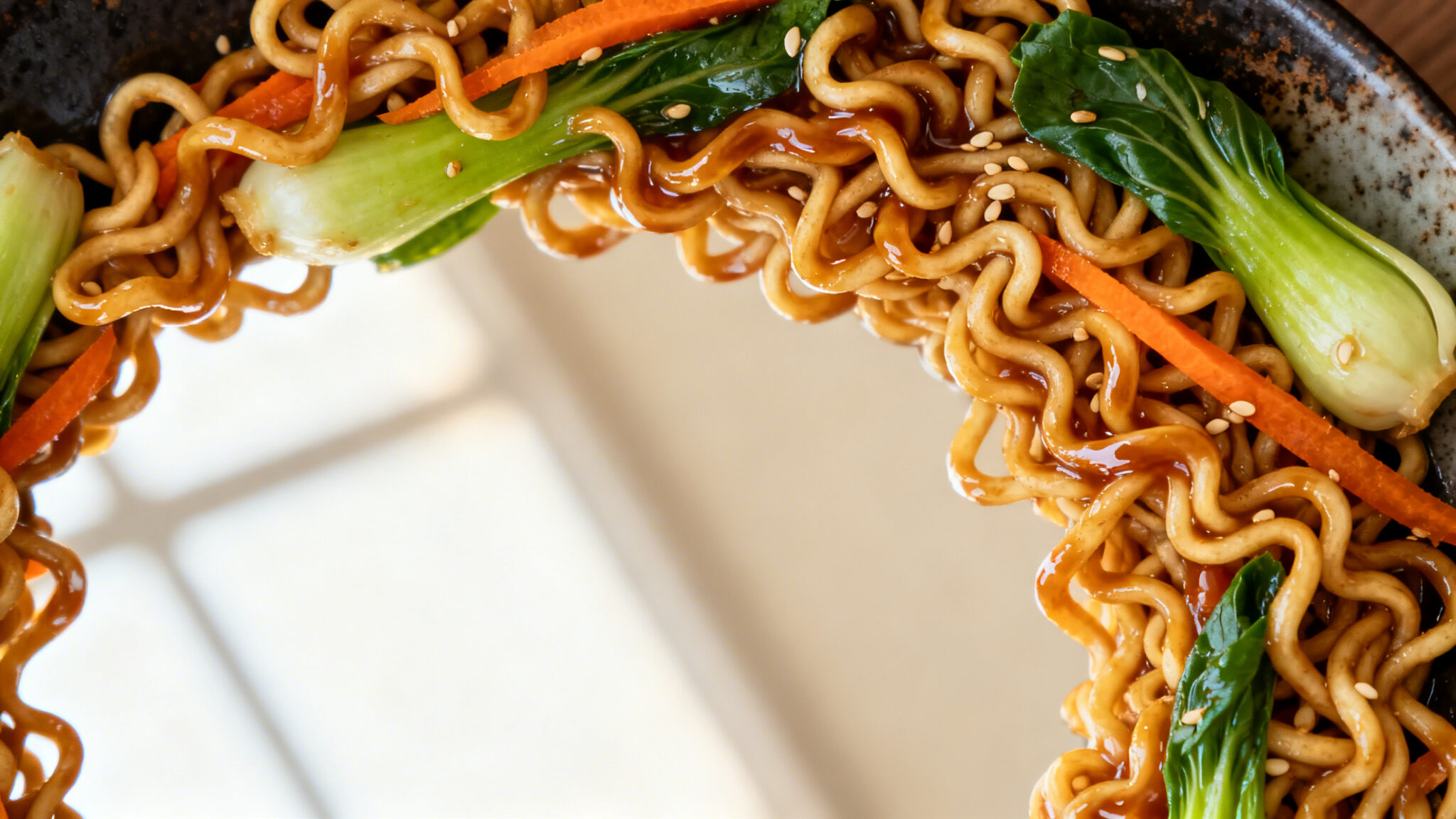
Ramen noodle stir fry is my answer when I need dinner in under 20 minutes. The noodles absorb the soy-sesame sauce as they cook in a hot wok. Every bite has a glossy, savory coating and crisp vegetable texture.
High heat is everything here. A cold wok makes the noodles steam and go soggy instead of frying. Get the wok smoking before anything else goes in and keep tossing throughout.
- Cook ramen noodles 1 minute less than package directions, then drain and toss with oil.
- Heat wok over high heat until smoking; stir-fry garlic, ginger, and vegetables for 3 minutes.
- Add noodles and pour soy sauce, sesame oil, and oyster sauce over the top.
- Toss for 2 minutes until sauce coats every strand, then plate immediately.
Time: 20 min | Difficulty: Easy | Best For: Weeknight
9. Ramen Noodle Cabbage Stir Fry
Ramen noodle cabbage stir fry is one of my most-made weeknight dishes. The cabbage caramelizes at the edges while the noodles pick up the savory browned bits. It is cheap, fast, and full of texture contrast.
Slice the cabbage thin and do not skip the browning step. Steamed pale cabbage has none of the nuttiness you get from letting it char at high heat. Let it sit without stirring for the first two minutes.
- Cook ramen noodles according to package directions, drain, and set aside.
- Stir-fry sliced cabbage in a hot skillet with butter and garlic until charred at edges.
- Add noodles, soy sauce, rice vinegar, and sesame oil to the pan.
- Toss over high heat and finish with sesame seeds and a pinch of chili flake.
Time: 15 min | Difficulty: Easy | Best For: Weeknight
10. Garlic Butter Ramen Noodles
Garlic butter ramen noodles are the simplest recipe in this list. The sauce is just four ingredients: butter, garlic, soy sauce, and a splash of pasta water. It coats the noodles in a glossy, rich film.
Brown the butter before adding the garlic. The nutty, toasted notes make the sauce taste far more complex than the ingredient list suggests. This takes about 3 extra minutes and is worth every second.
- Cook ramen noodles, reserving a few tablespoons of cooking water before draining.
- Brown butter in a skillet over medium heat until golden and fragrant.
- Add minced garlic and cook for 1 minute, then add soy sauce and reserved water.
- Toss noodles in the pan until sauce thickens and coats each strand evenly.
Time: 15 min | Difficulty: Easy | Best For: Weeknight
11. Spicy Sesame Ramen
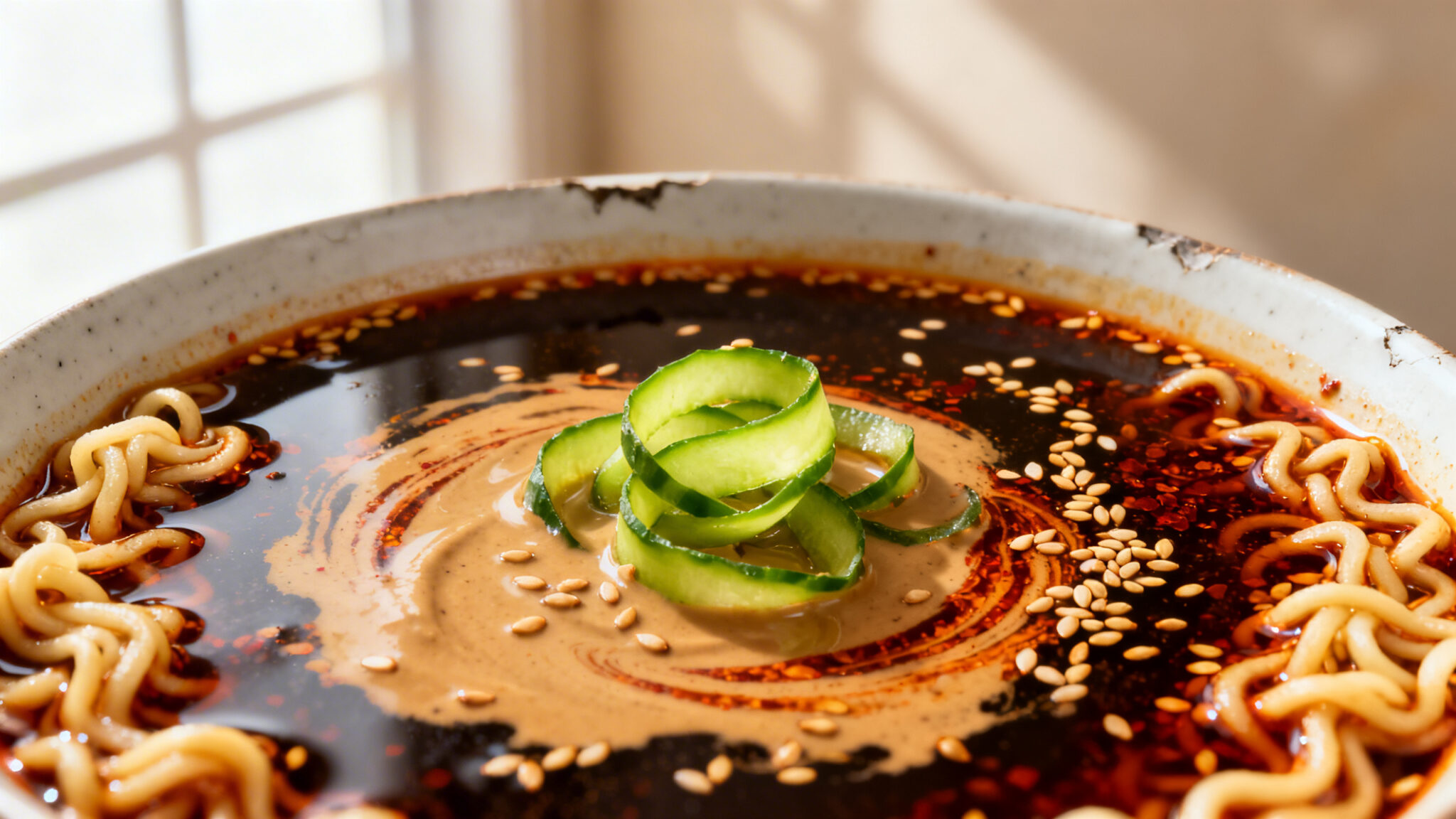
Spicy sesame ramen has a thick, nutty broth built on tahini and chili crisp. I make this when I want something bold without a long simmer. The sesame deepens everything it touches.
Add the tahini off heat after the broth is done. Boiling breaks the emulsion and turns the sauce grainy. Whisk it in at the last moment for a smooth, cohesive bowl that coats every noodle.
- Simmer chicken or vegetable stock with garlic, ginger, and soy sauce for 10 minutes.
- Off heat, whisk in tahini, chili crisp, and a splash of rice vinegar.
- Cook ramen noodles and add to bowls.
- Pour sesame broth over noodles and top with cucumber ribbons and toasted sesame seeds.
Time: 20 min | Difficulty: Easy | Best For: Weeknight
12. Tantanmen (Dan Dan Ramen)
Tantanmen is Japan’s take on Sichuan dan dan noodles. The broth combines sesame paste, spicy ground pork, and a hit of Sichuan peppercorn. The numbing heat builds slowly from the first sip to the last.
A small spoonful of peanut butter smooths the broth without dulling the heat. Use just enough to round the sharpness. Any more and the peanut butter flavor takes over the whole bowl.
- Brown ground pork with soy sauce, gochujang, and Sichuan peppercorn until cooked through.
- Mix sesame paste, soy sauce, and chili oil into hot chicken or pork stock.
- Cook ramen noodles and add to bowls.
- Ladle broth over, top with spiced pork, crushed peanuts, and scallions.
Time: 25 min | Difficulty: Medium | Best For: Weeknight
13. Chashu Pork Ramen
Chashu pork ramen is the bowl I make when I want to impress. The pork belly is braised in soy, mirin, and sake until the fat turns translucent. The meat becomes tender enough to pull apart with chopsticks.
Make the chashu the day before. The braise needs to cool in the liquid overnight for the glaze to set and the fat to firm up for clean slicing. Cold pork slices far more neatly than warm.
- Roll pork belly and tie with kitchen twine, then sear all sides in a Dutch oven.
- Add soy sauce, mirin, sake, and water; braise at a low simmer for 2 hours.
- Cool overnight in the braising liquid, then slice into half-inch rounds.
- Serve over shoyu or tonkotsu broth with soft egg and bamboo shoots.
Time: 2.5 hr + overnight | Difficulty: Hard | Best For: Weekend
14. Kimchi Ramen
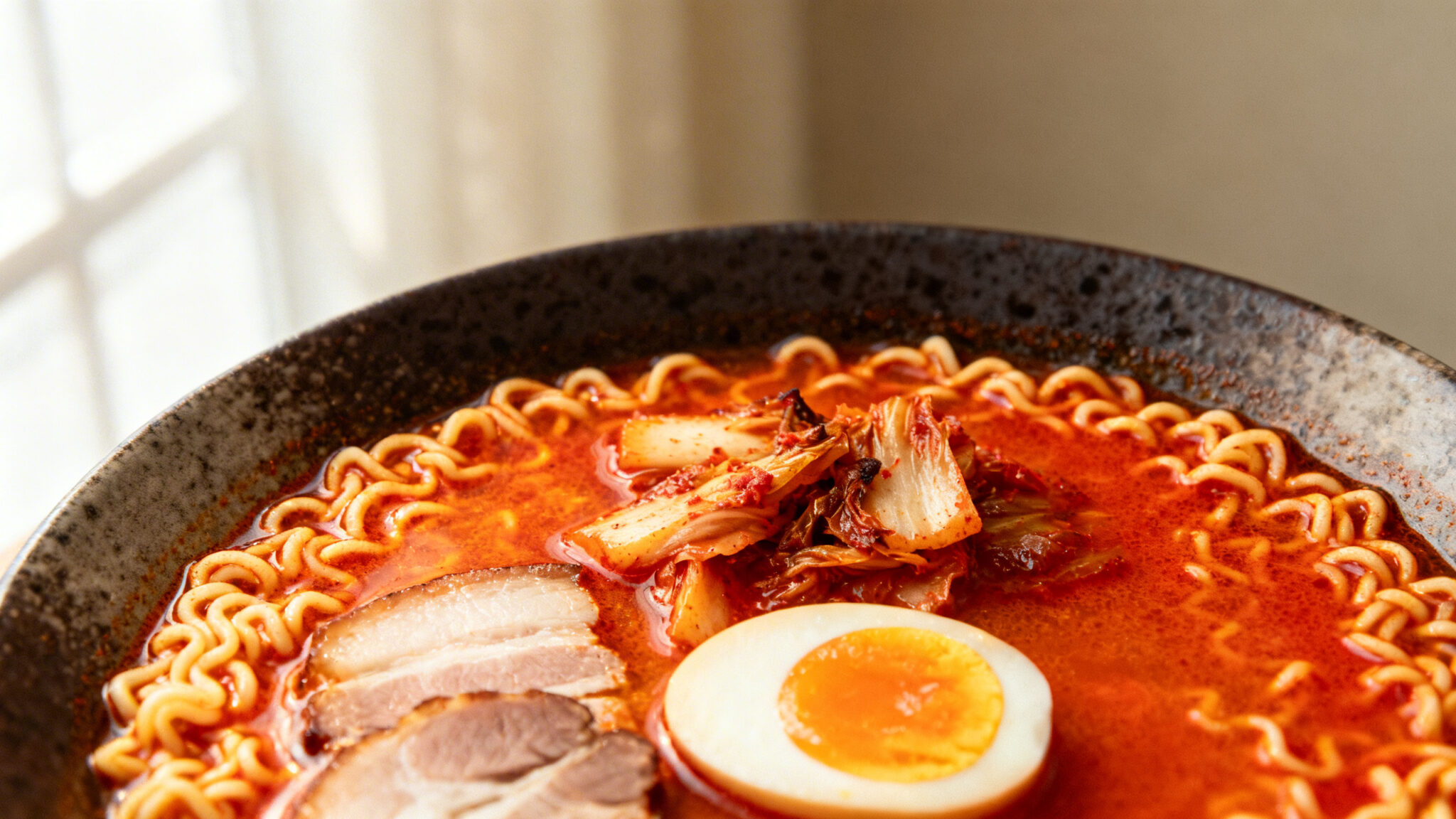
Kimchi ramen is my most-opened recipe on cold mornings. Aged kimchi breaks down into the broth and gives it a funky, sour heat that no other ingredient replicates. Use the oldest kimchi you have.
Fry the kimchi in oil first before adding any liquid. This caramelizes the sugars and reduces the sharpness, letting the deep fermented flavor come through in the broth. Do not skip this step.
- Fry chopped kimchi in oil over medium-high heat for 5 minutes until slightly caramelized.
- Add gochujang and cook for 1 minute, then pour in chicken or pork stock.
- Simmer for 15 minutes, then taste and adjust salt.
- Cook ramen noodles, add to bowls, and ladle the vivid red broth over top with sliced pork.
Time: 25 min | Difficulty: Easy | Best For: Weeknight, Cold Days
15. Ramen Carbonara
Ramen carbonara is the fusion recipe I was most skeptical about before I tried it. The Italian carbonara technique applied to springy ramen noodles is a perfect pairing. The curly texture holds the egg sauce better than spaghetti ever does.
The rules are the same as classic carbonara. Pull the pan off heat before adding the egg mixture. Residual heat sets the sauce without scrambling. Move fast once the eggs go in.
- Render guanciale or thick-cut bacon until crispy; reserve the fat in the pan.
- Cook ramen noodles until just tender and reserve half a cup of cooking water.
- Off heat, toss noodles in the fat, then add egg and Pecorino Romano mixture.
- Add cooking water a splash at a time until the sauce turns glossy and silky.
Time: 20 min | Difficulty: Medium | Best For: Weeknight, Brunch
16. Cold Ramen (Hiyashi Chuka)
Cold ramen, known as hiyashi chuka, is the one I make every summer. Chilled noodles sit on a bed of shredded toppings and get dressed with a soy-sesame vinaigrette. It is refreshing and substantial at the same time.
Rinse the cooked noodles under cold water, then rub them together to remove surface starch. This keeps them from clumping when chilled. Chill the serving bowls too for an extra-cold result on hot days.
- Cook ramen noodles, then rinse under cold running water until fully chilled.
- Whisk soy sauce, rice vinegar, sesame oil, and sugar into a bright dressing.
- Arrange chilled noodles in a bowl with julienned cucumber, egg strips, and ham.
- Drizzle the dressing over the top and serve immediately while the noodles are cold.
Time: 20 min | Difficulty: Easy | Best For: Summer, Lunch
17. Homemade Ramen Noodles
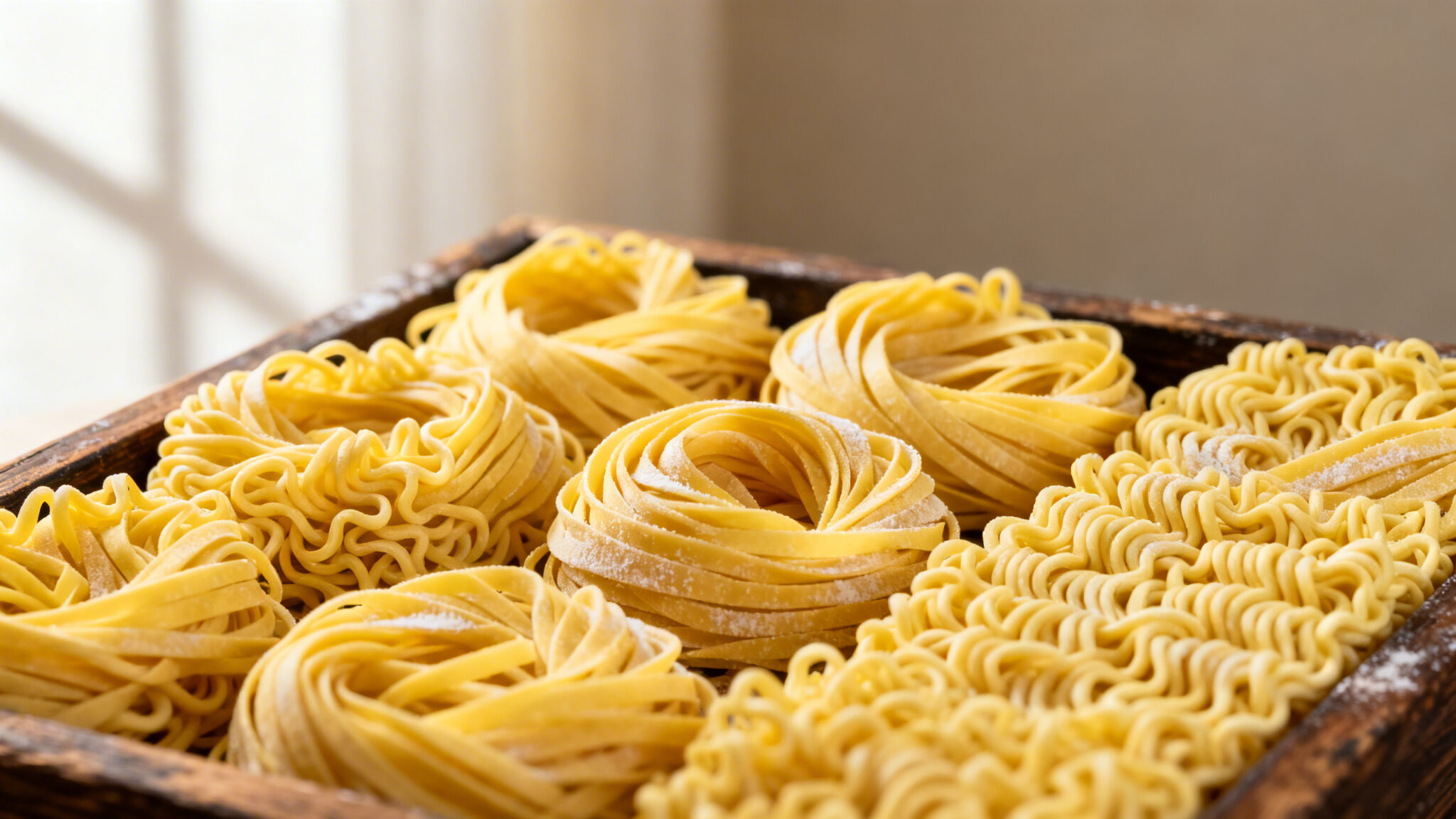
Homemade ramen noodles have a chew and spring that dried noodles cannot replicate. The dough needs just flour, water, and baked soda. Baked soda gives ramen noodles their yellow color and firm, springy texture. The batch takes 45 minutes.
Rest the dough for at least 30 minutes before rolling. This relaxes the gluten so the noodles cut cleanly and cook evenly. A pasta machine makes thin, consistent strands. A sharp knife and a well-floured board work just as well.
- Mix bread flour with baked soda and water into a stiff dough, then rest for 30 minutes.
- Roll thin and cut into noodle strips using a pasta machine or a sharp knife.
- Boil in unsalted water for 1 to 2 minutes until springy and just tender.
- Rinse under cold water if using immediately, or toss with oil to store.
Time: 45 min | Difficulty: Medium | Best For: Weekend
18. Curry Ramen
Curry ramen is the one I reach for on cold winter nights. Japanese curry roux dissolves into the broth and turns it thick, golden, and warming. The sweetness of the curry plays off the salty noodles perfectly.
Use Japanese curry roux blocks, not Indian curry powder. The starch in the roux blocks is what gives this soup its distinctive thick texture. Red curry paste can substitute in a pinch but changes the flavor profile significantly.
- Saute onion, carrot, and potato in oil until softened, about 8 minutes.
- Add chicken or pork stock and simmer until vegetables are fork-tender.
- Add Japanese curry roux blocks and stir until fully dissolved and smooth.
- Cook ramen noodles and ladle the thick golden curry broth over top.
Time: 35 min | Difficulty: Easy | Best For: Winter, Weeknight
19. Pho-Style Ramen
Pho-style ramen borrows the star anise and clove from Vietnamese pho and applies them to a lighter ramen base. The result is a fragrant, complex broth distinct from both traditional pho and classic ramen.
Charring the ginger and onion under the broiler before adding them to the stock adds smokiness. This single step sets a good pho-style broth apart from a flat one. Do not skip the char.
- Char halved onion and ginger under the broiler until blackened in spots.
- Simmer with beef or chicken stock, star anise, cinnamon, and cloves for 45 minutes.
- Strain, season with fish sauce and salt, and keep warm over low heat.
- Serve over ramen noodles with thin beef slices, fresh basil, and lime wedges.
Time: 50 min | Difficulty: Medium | Best For: Weekend
20. Instant Ramen Upgrade
Instant ramen upgrade is the technique I use when I have 10 minutes and low motivation. Packet noodles get serious work from a few additions: miso, soft egg, chili crisp, and sesame oil. It tastes like something I actually cooked.
Cook the egg directly in the broth for 7 minutes on a gentle simmer. Pull it out and peel it. The yolk will be jammy and warm when you cut it at the table.
- Boil the packet broth with an extra half cup of water and a spoonful of white miso.
- Add the dried noodles and cook for 2 minutes.
- Top with a soft-boiled egg, chili crisp, sesame oil, and chopped scallions.
- Add a square of nori and eat immediately before the noodles absorb all the broth.
Time: 10 min | Difficulty: Easy | Best For: Any Night
Common Questions About Ramen Noodle Recipes
Can I use instant ramen noodles for these recipes?
Yes, most stir-fry and broth recipes in this list work with instant noodles. Cook them one minute less than the packet says and toss with oil before adding to the pan. The packet seasoning is optional. I usually skip it and build my own flavor base.
What is the best ramen noodle for stir fry?
I use fresh or frozen ramen noodles for stir fry whenever possible. Dried noodles work but tend to stick unless you toss them with oil right after cooking. Look for fresh ramen in the refrigerated section of Asian grocery stores.
How do I make ramen broth rich without simmering for hours?
Miso paste and a spoonful of tahini are the fastest shortcuts. Stir them into hot stock at the end and the broth gains depth immediately. Adding a piece of kombu while the stock heats also builds umami without long simmering times.
What toppings go best on homemade ramen?
Soft-boiled eggs, chashu pork, and bamboo shoots are my standard three. Corn and butter are a classic miso ramen addition that adds sweetness and richness to the broth. Nori, scallions, and a drizzle of chili oil finish almost any bowl.
Can I freeze ramen broth?
Yes, ramen broth freezes well for up to three months. Let it cool completely and store in airtight containers or freezer bags. I keep a batch of shoyu tare in my freezer for weeknight bowls on demand.
These ramen noodle recipes cover every style, from slow-simmered tonkotsu to quick weeknight stir fries. Save this list and come back whenever the noodle craving hits.