
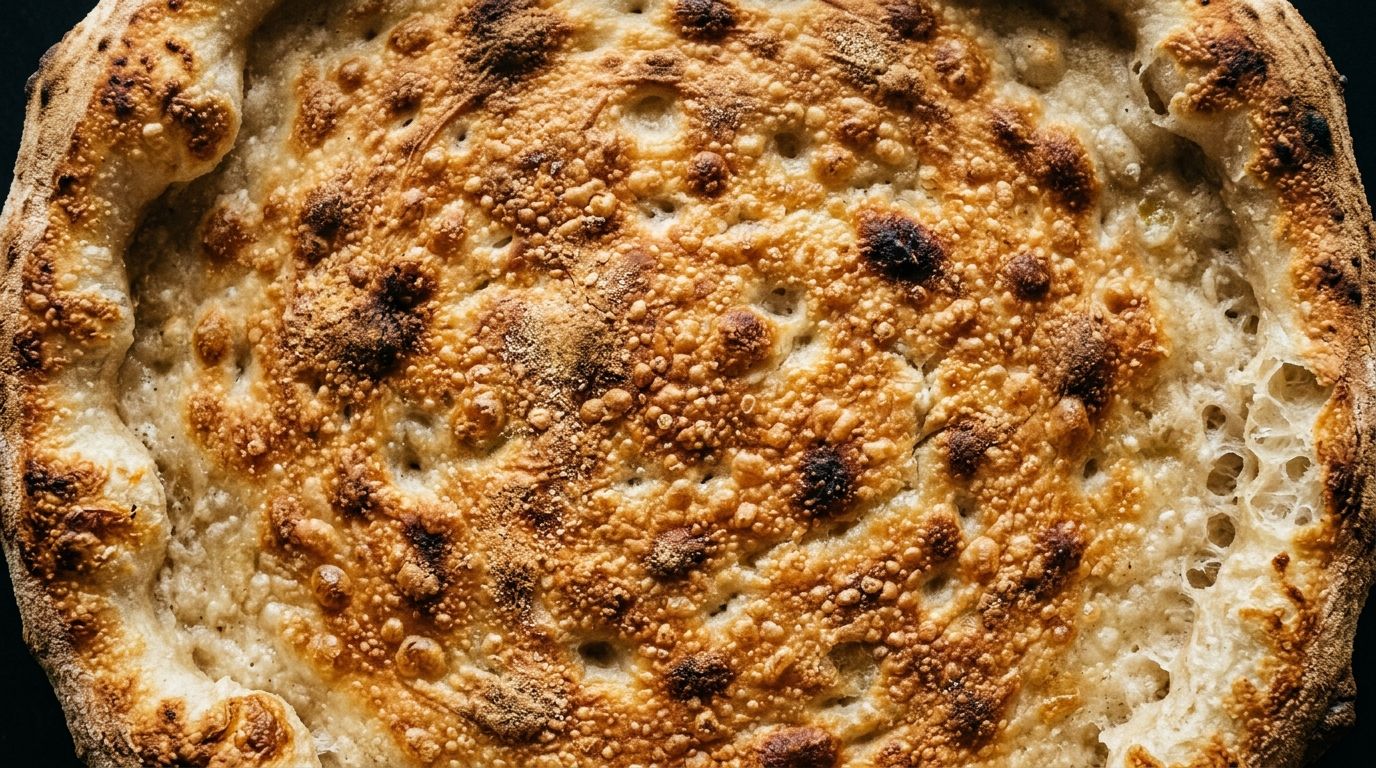
My sourdough pizza crust is the crispiest, tangiest crust I’ve ever pulled from a home oven. Most pizza doughs are flat and forgettable without that chewy interior and charred edge that makes pizza worth eating. This recipe uses an active starter, bread flour, and a par-bake technique that locks in the texture every time.
Prep Time: 20 minutes
Cook Time: 20 minutes
Total Time: 340 minutes (includes 5-hour rise)
Servings: 8
Method: Baking
Why This Sourdough Pizza Crust Works
The active starter is doing two things at once. It ferments the dough for a deep, tangy flavor that commercial yeast never produces. It also builds gluten strands that trap air and keep the sourdough crust chewy after baking.
Bread flour makes a real difference here. It carries 12 to 14 percent protein — more than all-purpose flour. That extra protein builds a stronger gluten network so the crust holds shape under heavy toppings without tearing or going limp.
The par-bake step is what most homemade sourdough pizza crust recipes skip entirely. Baking the base for 8 minutes at 450°F (230°C) before toppings go on sets the crust firm. Sauce stays on top instead of soaking through, and the bottom crisps properly under the weight of the cheese.
Cold fermentation in the fridge overnight is my secret for peak tang. The long, slow rise develops complex flavor compounds that a quick 2-hour rise cannot match. Even a single overnight rest transforms the sourdough crust from good to genuinely memorable.
Ingredients
- 1 cup (240g) active sourdough starter (100% hydration)
- 3/4 cup (180ml) warm water
- 2 tablespoons (30ml) olive oil
- 1 teaspoon honey
- 2 1/2 cups (300g) bread flour, plus more for dusting
- 1 teaspoon salt
What You Need for Sourdough Pizza Crust
Active sourdough starter — the starter must be fed within 4 to 8 hours and showing active bubbles before you mix the dough. A flat or unfed starter still works but produces a denser sourdough crust with less oven spring and less tang.
Bread flour — its higher protein content (12–14%) creates a chewier, more structured crust. All-purpose flour works in a pinch but the sourdough crust will be softer and less able to hold heavy toppings without tearing.
Warm water — use water between 80°F and 90°F (27–32°C). Water that is too hot kills the live starter cultures. Cold water slows fermentation significantly and extends rise time by several hours.
Olive oil — adds tenderness and helps the bottom of the sourdough crust crisp against the pan. Avocado oil is a neutral substitute that works just as well.
Honey — a small amount feeds the yeast in the starter and encourages browning on the crust. Swap it for maple syrup to make the sourdough crust vegan, or skip it entirely with minimal impact on texture.
Salt — enhances flavor throughout and controls the fermentation speed during the rise. Add it after combining the starter and water — direct contact between salt and a live starter can weaken the cultures.
How to Make Sourdough Pizza Crust
- Combine sourdough starter, warm water, olive oil, and honey in a large bowl. Stir until evenly mixed.
- Add bread flour and salt. Mix until a shaggy dough forms with no dry patches remaining.
- Turn dough out onto a lightly floured surface. Knead for 8 minutes until smooth and elastic.
- Shape dough into a ball. Place it in a lightly oiled bowl and cover with plastic wrap.
- Let rise at room temperature (70–75°F / 21–24°C) for 4 to 6 hours until doubled in size.
- Punch down the dough and divide into 2 equal portions.
- Press each portion into a greased 12-inch pan or rimmed baking sheet. Use your fingertips to dimple the surface deeply and evenly.
- Cover loosely and rest for 30 minutes. The dough will puff slightly around the dimples.
- Preheat oven to 450°F (230°C). Par-bake each sourdough crust for 8 minutes until lightly golden on the surface.
- Remove from oven. Add sauce, cheese, and toppings. Bake for another 10 to 12 minutes until the crust is golden and the cheese bubbles.
Sourdough Pizza Crust Variations
Sourdough Discard Pizza Crust
Use unfed sourdough discard instead of active starter. Add 1/2 teaspoon of instant yeast to compensate for the weaker leavening. The flavor is slightly milder but the sourdough crust bakes up crispy and chewy with the same structure.
Thin Sourdough Pizza Crust
Divide the dough into 3 portions instead of 2. Roll each piece very thin with a rolling pin before pressing it into the pan. Par-bake time drops to 5 to 6 minutes for a cracker-like sourdough crust with maximum crunch.
Whole Wheat Sourdough Crust
Replace 1 cup of bread flour with whole wheat flour. The sourdough crust gets a nuttier, earthier flavor with a slightly denser texture. Add 2 extra tablespoons of water to account for whole wheat’s higher absorbency during mixing.
Herb Sourdough Crust
Mix 1 teaspoon dried rosemary and 1 teaspoon dried oregano directly into the dough with the flour. The herbs become fragrant as the sourdough crust bakes. This variation pairs well with simple tomato or white garlic sauce bases.
Garlic Sourdough Crust
Brush the par-baked sourdough crust with 2 tablespoons of garlic-infused olive oil before adding toppings. The garlic oil soaks into the surface during the final bake. The edges come out toasted and deeply savory.
Tips for the Best Sourdough Pizza Crust
- I always use starter that has peaked — risen and just beginning to fall. This stage gives the most lift and the strongest tangy flavor in the finished crust.
- Dimple the dough deeply before the rest period. Shallow dimples spring back during the 30-minute rest. Deep dimples stay and give the sourdough crust its rustic, focaccia-style surface texture.
- Never skip the par-bake. Eight minutes at 450°F sets the sourdough crust firm enough to hold sauce without going soggy, especially under wet toppings like fresh mozzarella.
- Bread flour is worth buying specifically for this recipe. I tested it with all-purpose flour and the crust tore under heavy toppings on the second slice.
- Preheat the pan in the oven for 10 minutes before pressing in the dough. A hot pan gives the sourdough crust an extra-crispy bottom with no effort.
- If the dough snaps back when you try to press it out, cover it and rest for 10 more minutes. Relaxed gluten stretches without tearing and stays put.
Make Ahead & Storage
The dough can ferment in the refrigerator overnight instead of at room temperature. Mix it the night before, place it in a lightly oiled bowl, and refrigerate for 8 to 12 hours. Cold fermentation deepens the tang without any extra hands-on time. Take it out 1 hour before shaping.
Par-baked sourdough crusts keep wrapped at room temperature for 2 days. Freeze them right after par-baking for up to 3 months. Wrap each one tightly in plastic wrap and seal in a freezer bag. Add toppings and bake directly from frozen at 450°F (230°C) for 12 to 14 minutes.
Unbaked dough balls freeze well too. After the first rise, shape into balls, wrap individually in plastic wrap, and freeze for up to 2 months. Thaw in the fridge overnight, then rest at room temperature for 1 hour before pressing into the pan.
Common Questions
Can I use sourdough discard instead of active starter?
Yes. Sourdough discard works in this recipe. Add 1/2 teaspoon of instant yeast to support leavening. The sourdough crust will be slightly less tangy but still full of flavor and crispy after baking.
Why is my sourdough pizza crust soggy in the middle?
Skipping the par-bake is almost always the cause. The sourdough crust needs 8 minutes at 450°F before toppings go on. This sets the base firm and stops sauce from soaking through and softening the interior.
How long does sourdough pizza dough need to rise?
At room temperature, plan for 4 to 6 hours. Cooler kitchens may need up to 8 hours. The dough is ready when it has doubled in size and looks airy with visible bubbles near the surface.
Can I freeze sourdough pizza dough?
Yes. Freeze after the first rise. Shape into balls, wrap tightly in plastic wrap, and freeze for up to 2 months. Thaw overnight in the fridge, then rest at room temperature for 1 hour before shaping.
What flour is best for sourdough pizza crust?
Bread flour is the best choice. Its 12 to 14 percent protein builds a strong gluten network. That gives the sourdough crust its chewy texture and lets it hold toppings without tearing or collapsing.
This sourdough pizza crust recipe turns any home oven into a proper pizza kitchen. Save this recipe and make your next pizza night from scratch with a crust worth every minute of the rise.
Easy Homemade Sourdough Pizza Crust Recipe for a Crowd
A tangy, chewy sourdough crust made with active starter and bread flour — par-baked so it stays crispy under any topping.
Ingredients
- 1 cup (240g) active sourdough starter (100% hydration)
- 3/4 cup (180ml) warm water
- 2 tablespoons (30ml) olive oil
- 1 teaspoon honey
- 2 1/2 cups (300g) bread flour, plus more for dusting
- 1 teaspoon salt
Instructions
- Combine sourdough starter, warm water, olive oil, and honey in a large bowl. Stir until evenly mixed.
- Add bread flour and salt. Mix until a shaggy dough forms with no dry patches remaining.
- Turn dough out onto a lightly floured surface. Knead for 8 minutes until smooth and elastic.
- Shape dough into a ball. Place it in a lightly oiled bowl and cover with plastic wrap.
- Let rise at room temperature (70–75°F / 21–24°C) for 4 to 6 hours until doubled in size.
- Punch down the dough and divide into 2 equal portions.
- Press each portion into a greased 12-inch pan or rimmed baking sheet. Use your fingertips to dimple the surface deeply and evenly.
- Cover loosely and rest for 30 minutes. The dough will puff slightly around the dimples.
- Preheat oven to 450°F (230°C). Par-bake each sourdough crust for 8 minutes until lightly golden on the surface.
- Remove from oven. Add sauce, cheese, and toppings. Bake for another 10 to 12 minutes until the crust is golden and the cheese bubbles.