
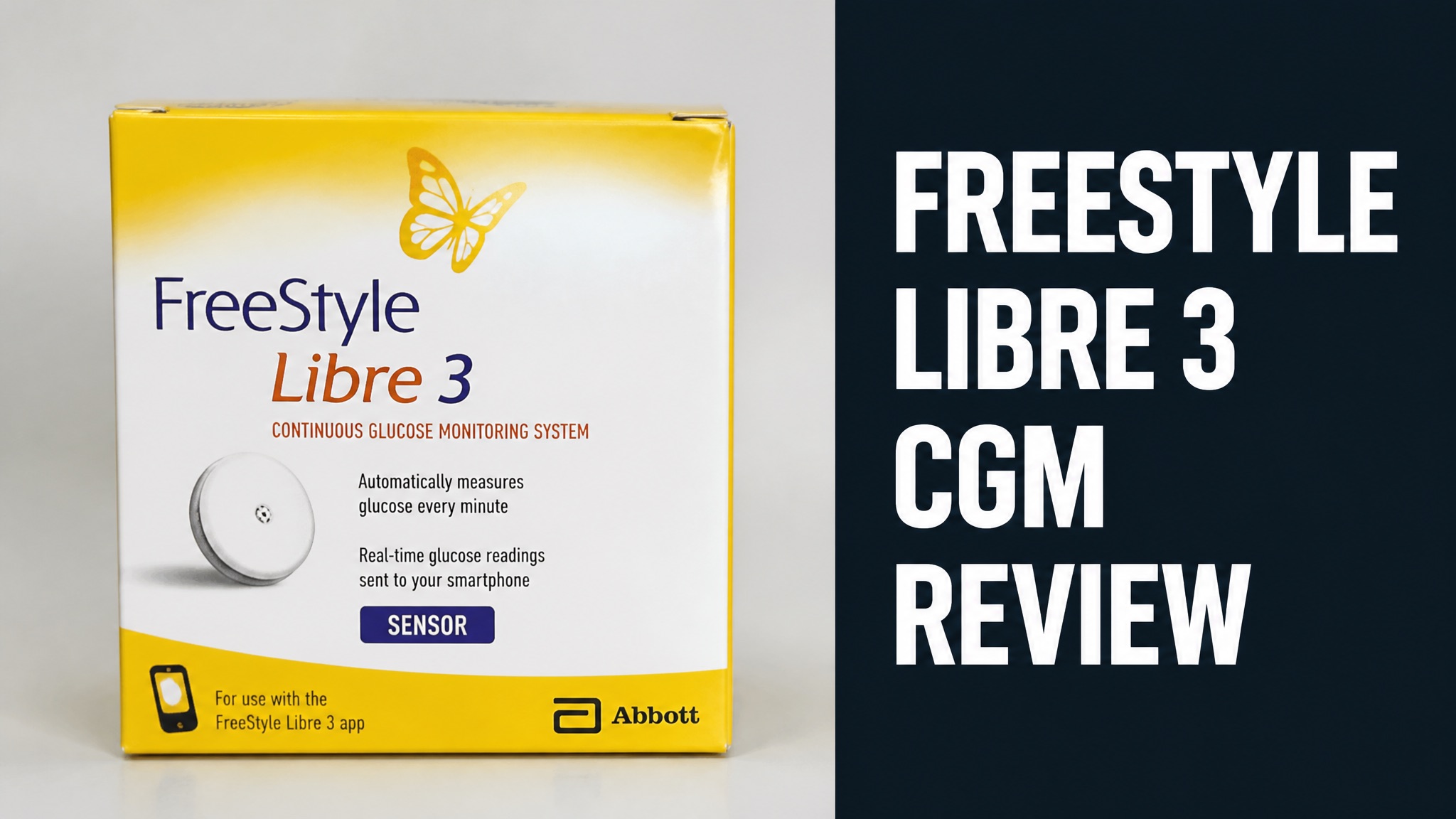
The Freestyle Libre 3 is Abbott’s wearable continuous glucose monitor for people with diabetes. The tiny sensor reads glucose every minute and streams the data to a phone. The FDA cleared it in May 2022 for ages 4 and up. Abbott calls it the smallest CGM sensor on the market today.
This review covers what the sensor is, how it works, and who it fits. Accuracy figures show a 7.9% MARD. Users praise the size and the live streaming. Complaints focus on alarms and app limits. Recalls, price and safety also get a clear look here. Every claim comes from clinical data, news reports, medical sites and user write-ups on the Libre 3 line.
By the end, you’ll know if the Libre 3 deserves a place on your arm. The verdict weighs real accuracy data against recall history. Cost, buying steps and alternatives round out the picture. Read on for a straight answer on whether the sensor earns its price and its place in your routine.
What Is the Freestyle Libre 3 Continuous Glucose Monitor?
The Freestyle Libre 3 is a disposable glucose monitor from Abbott that tracks glucose in fluid under the skin. The sensor sits on the back of the upper arm. Short answer: it replaces routine fingersticks with a live phone reading in real time. Abbott first launched the Libre line in the US in 2017. Wear lasts up to 14 days per sensor, then it is replaced.
Abbott calls the sensor the smallest and thinnest CGM available. It is about the size of two stacked pennies. The sensor is 70% smaller than the Libre 2 sensor, according to Breakthrough T1D.
Here’s the thing: the sensor measures interstitial fluid, not blood. A short lag exists between blood glucose changes and sensor readings. Does that matter? Abbott advises a fingerstick test when symptoms don’t match the number.
Key Specs:
| Spec | Libre 3 Detail |
|---|---|
| Wear time | Up to 14 days |
| Reading frequency | Every 1 minute |
| Warm-up time | 60 minutes |
| Bluetooth range | 33 feet (10 meters) |
| Water resistance | 1 meter (3.3 feet) for 30 minutes |
Who Is the Freestyle Libre 3 Made For?
The Libre 3 suits adults and children ages 4 and up who have diabetes and need frequent glucose checks. Many users have Type 1 or insulin-treated Type 2 diabetes. The FDA cleared it in May 2022, per Breakthrough T1D, and Abbott sells it as a prescription device. Parents of young kids often choose it for discreet wear. Prescribers decide who qualifies.
The newer Libre 3 Plus sensor covers children from age 2 and lasts up to 15 days. Drugwatch reports that Abbott plans to retire the standard Libre 3 in favor of the Plus version.
How Does the Freestyle Libre 3 Work?
The Libre 3 works through a pre-assembled sensor that sends glucose readings to a phone app or reader by Bluetooth. A tiny filament sits under the skin. The transmitter is built into the sensor. No separate parts are needed, and the sensor is single-use. Values update on screen every 60 seconds. Bluetooth carries each reading to the device quietly.
The receiver shows the current number, a trend arrow and a graph. And it can alert you to highs and lows. In fact, the app can also share live data with family or a care team through LibreView. Who sees the data? Only people you invite.
Now, watch this: the sensor stores 14 days of data. If your phone is out of range, the sensor backfills the graph once it reconnects. The Libre 2 stores only 8 hours, per Aeroflow Diabetes.
How Do You Apply the Freestyle Libre 3 Sensor?
Applying the sensor takes under a minute because the sensor arrives attached to a one-piece applicator. Earlier models needed assembly first. To put it simply, you clean the skin, press the applicator down and pull it away. The back of the upper arm is the only approved site. Most users finish in about a minute. Skin prep matters a lot for adhesion.
Application Steps:
- Wash the back of the upper arm with soap and water, then let it dry.
- Clean the site with an alcohol wipe and wait for it to dry.
- Press the applicator firmly onto the arm until it clicks.
- Pull the applicator away and confirm the sensor sits flat.
- Scan with the app and wait 60 minutes for warm-up.
What Are the Benefits of the Freestyle Libre 3?
The Libre 3 delivers real-time glucose data every minute without scanning, which cuts down on routine fingersticks. Readings appear the moment you open the app. And the 1,440 daily readings reveal trends that a meter can’t show. Doctors can review those trends through the cloud. Care teams use reports to adjust insulin. Fewer finger pricks mean less pain.
The small size is a big draw. The sensor hides under clothing and rarely snags. By comparison, older sensors looked bulky. One reviewer wrote that he forgot the sensor was on his arm.
Main Benefits:
- Glucose readings every minute with no scanning
- Two-stacked-pennies size for discreet wear
- Customizable target range and optional alarms
- Phone or reader display with cloud sharing
- Up to 14 days of wear per sensor
Is the Freestyle Libre 3 Accurate?
Yes. The Libre 3 posted a 7.9% overall MARD in clinical trials, the best result for a 14-day CGM, per Abbott. Lower MARD means readings sit closer to lab values. Adults scored 7.6% and ages 6 to 17 scored 8.7%. Accuracy is strong on paper. That figure beats earlier Libre models and rivals top CGMs. Fingerstick checks still apply during rapid glucose swings.
Children ages 4 and 5 scored just over 10%. At the 2022 American Diabetes Association meeting, Abbott’s Mahmood Kazemi, M.D., said users can trust the values for treatment decisions.
The reviewer at T1D Living reported readings within 5 to 10 mg/dL (0.3 to 0.6 mmol/L) of fingersticks. Is that enough? Backup tests still apply. Real life varies. Bad lots have produced wrong readings, as the safety section explains.
Does the Freestyle Libre 3 Work With Insulin Pumps?
No. Not for most US users yet. The FDA cleared the Libre 3 for use with insulin pumps, but GoodRx reported the link was not yet live. Abbott said it intended to add pump support soon. Compatibility lists change often, so check Abbott’s site. Pump makers must also enable the sensor in their own software. Updates arrive in stages, and each region differs.
By comparison, the Libre 2 already pairs with the Tandem t:slim X2 pump. So should pump users wait? Yes, until support is live. Check current compatibility lists. Your care team can confirm which Libre sensor works with your pump today.
What Do Freestyle Libre 3 Reviews Say?
Freestyle Libre 3 reviews lean positive on size, comfort and accuracy, with complaints about alarms, app tools and recall worries. Long-term users on diabetes forums and review blogs repeat the same themes. Worth knowing: much of the praise predates the 2025 recall news. Most reviewers rate accuracy highly. Cost and coverage questions also appear often.
The picture is mixed on trust. One user said he rarely sees lost-signal errors in three years of Libre use. Another warned that a faulty sensor can swing numbers. Which view is right? Both can be true, lot by lot.
What Do Freestyle Libre 3 Users Like?
Users like the tiny sensor, the automatic streaming, the one-hour warm-up and the strong accuracy. The T1D Living reviewer said the sensor was so low profile that he forgot it was there. That comfort drives much of the praise and most five-star ratings. Reviewers also like the phone app, which looks clean. Cloud sharing lets family check in during the night.
Top Pros:
- Small, light sensor that stays out of the way
- No scanning needed to see a number
- Fewer fingersticks and fewer test strips
- Smaller packaging with less plastic waste
What Do Freestyle Libre 3 Users Complain About?
Users complain most about harsh alarm sounds, a limited graph view and lost trust after the recalls. The T1D Living reviewer said the Libre 3 offers only two alarm tones. One is so loud that coworkers thought he was in trouble. Neither tone can be changed. Some reviewers also mention adhesive peeling near the end of wear. Skin sensitivity varies by person.
The app also lacks tools like standard deviation. Is that a dealbreaker? For most users, no. The sensor needs a phone nearby for live alerts. And a prescription is required. So, the Libre 3 isn’t perfect. It simply trades some app polish for a smaller, smarter sensor.
How Does the Freestyle Libre 3 Compare to the Libre 2?
The Libre 3 beats the Libre 2 on size, streaming and memory, while the Libre 2 keeps pump pairing. Both read glucose every minute. The Libre 3 pushes data automatically. The Libre 2 needs a scan to show current numbers. Aeroflow Diabetes lists accuracy, memory and range as the main upgrades. Both sensors wear on the back of the upper arm, per Abbott.
Libre 3 vs Libre 2:
| Feature | Libre 2 | Libre 3 |
|---|---|---|
| Monitoring | Flash, scan needed | Automatic streaming |
| Graph update | Every 15 minutes | Every 5 minutes |
| Sensor memory | 8 hours | 14 days |
| Range | 20 feet (6 meters) | 33 feet (10 meters) |
Should You Choose the Libre 3 or the Libre 2?
Yes. Choose the Libre 3 if you want hands-free streaming, a smaller sensor and a longer memory buffer. Pick the Libre 2 if you need pump pairing right now. Check coverage first, because insurers often name a preferred brand and may limit your choice. Ask your care team which option fits your insulin routine, since needs differ between users and plans too.
The price is nearly identical. Aeroflow Diabetes notes that Abbott’s CGMs cost the same across the line. Does cost decide it? No. The decision comes down to features. Here’s the kicker: the Libre 3 Plus now replaces both.
Is the Freestyle Libre 3 Safe?
Yes. Mostly, with a caveat. The Libre 3 causes mild skin reactions for some users, but defective lots have produced dangerously wrong readings. Drugwatch links most injuries to incorrect glucose values. Backup fingersticks matter when symptoms and numbers clash. Report any problem to Abbott and the FDA. A sensor that feels wrong should be replaced.
Skin irritation and insertion site reactions are the common issues. The bigger concern is trust. A wrong high reading can push extra insulin and cause low blood sugar. Why does this matter? Insulin decisions follow the number.
Has the Freestyle Libre 3 Been Recalled?
Yes. Abbott has issued two corrections for the Libre 3, one in 2024 and a far larger one in November 2025. CNET reported the first covered just three lots and under 1% of US users. The second drew an FDA early alert for the whole line. Abbott said affected customers receive free replacements. Check lot numbers on the carton before applying any new sensor.
Recall Timeline:
| Date | Event | Issue |
|---|---|---|
| 2024 | Voluntary correction, three lots | Falsely high readings |
| Nov 2025 | FDA early alert, about 3 million devices | Falsely low readings |
| Early 2026 | FDA warning letter to Abbott | Testing and quality gaps |
Drugwatch reports 736 serious injuries and seven deaths worldwide tied to the 2025 problem. Abbott offers free replacements at FreeStyleCheck.com. Is replacement easy? Abbott says yes. Check your serial number, and stop using any flagged sensor.
How Much Does the Freestyle Libre 3 Cost?
The Libre 3 costs about $223.36 (USD) for two sensors, a 28-day supply, without insurance, per GoodRx. That works out to roughly $111.68 per 14-day sensor. Insurance copays vary by plan and preferred brand, so call your insurer before you order any sensors. Prices differ across pharmacies and discount programs. Always compare cash prices before you pay.
Ways to Save:
- GoodRx coupons from about $164.93 at some pharmacies
- Abbott’s free 14-day trial through the MyFreeStyle program
- Insurance or Medicare coverage for qualifying patients
- Pharmacy savings programs on Libre 3 Plus
Is the Freestyle Libre 3 Worth the Price?
Yes. For most insulin users. The Libre 3 can cut test strip spending and give far more glucose data than a meter. The T1D Living reviewer said fewer fingersticks saved real money. And the data helps doctors adjust treatment faster. Fewer test strips and fewer lows also reduce hidden costs. Still, the monthly bill adds up quickly for uninsured users.
But the value depends on coverage. Without insurance, the monthly cost is steep. Bottom line: use coverage or coupons if you can. The good news? A meter backup is cheap.
Where Can You Buy the Freestyle Libre 3?
You can buy the Libre 3 at US pharmacies with a valid prescription, or through mail-order and telehealth services. Abbott’s website doesn’t sell it directly. GoodRx says a prescriber must approve the order first, so book that visit early. Stock can vary by store. Mail-order options help with refills. Your plan decides which supplier handles each claim.
Many pharmacies stock sensors, and some insurers route orders to a durable medical equipment supplier. Ask your care team which path your plan prefers. Can you skip the doctor? No. First-timers should see a clinician in person, per GoodRx.
Should You Try the Freestyle Libre 3?
Yes. Go in with eyes open. The Libre 3 is a small, accurate and convenient CGM that fits most people who need a CGM. The recall history is real. Buy it with a backup meter and a serial number check, and keep your doctor informed. Strong data and a tiny design make it a leading pick. Users who value alerts and live graphs benefit the most from this sensor.
The verdict is simple. The design and data quality rank near the top. Quality control has slipped at times. Is it perfect? No, but it’s close. The sensor earns a conditional recommendation. Talk to your doctor and watch for new FDA notices.
Who Should Avoid the Freestyle Libre 3?
People who rely on pump integration today, or who can’t tolerate adhesive, should look at other options. Children under 4 need the Libre 3 Plus or another model. Anyone without a backup meter should add one before starting. Pump users should wait for confirmed support. People with adhesive allergies need a dermatologist’s advice. Keep test strips at home.
Consider Alternatives If:
- Your insulin pump isn’t yet compatible with the Libre 3
- Your insurer covers only a different CGM brand
- Adhesive irritates your skin
- Your child is younger than 4 years old