
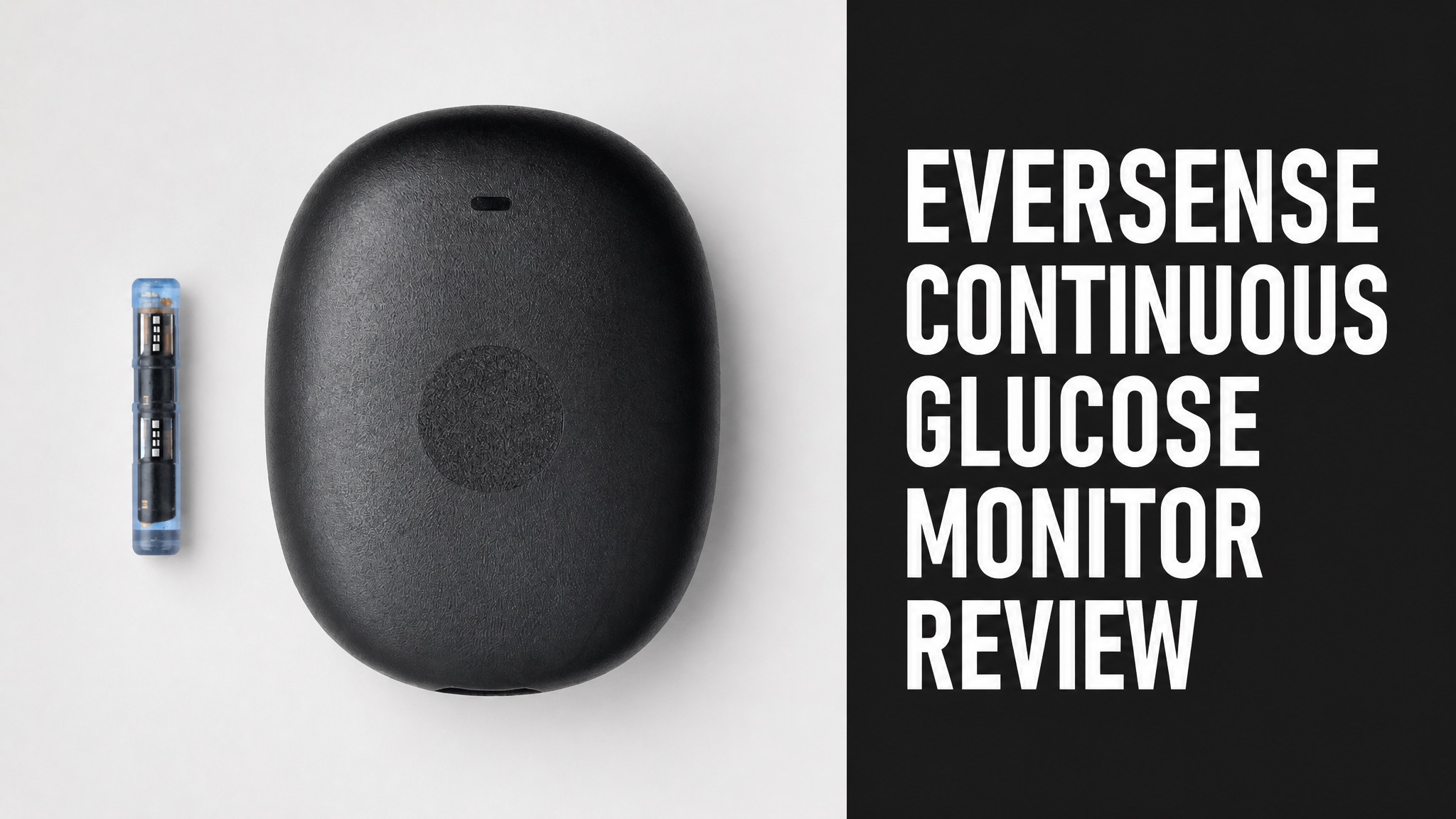
The Senseonics Eversense is an implantable continuous glucose monitor for adults with diabetes. A clinician places the sensor under the skin of the upper arm. The Eversense 365 version tracks glucose for up to a full year. Ascensia Diabetes Care sells it in the United States.
The system pairs that sensor with a removable smart transmitter and an app. Readings arrive every 5 minutes, and vibration alerts reach the arm. Accuracy matches leading CGMs, though fingerstick calibration is required. Reviews praise fewer sensor swaps. Users also flag the clinic procedure, the bulky transmitter and the price.
The sections below cover how the device works, how it compares with the Dexcom G7, and who should avoid it. You’ll also see costs, insurance rules and a clear verdict. Read on to learn whether Eversense is worth it for your daily routine.
What Is the Senseonics Eversense Continuous Glucose Monitor?
The Senseonics Eversense system is the only implantable continuous glucose monitor sold in the United States. The current Eversense 365 pairs a tiny under-skin sensor with a removable smart transmitter and a phone app. Together, these parts track glucose in adults with diabetes for up to one year. Ascensia Diabetes Care is the commercial partner here.
The FDA approved Eversense 365 in 2024. Mercy health system placed the first commercial sensor that October. Ascensia Diabetes Care runs the commercial launch. So the system is new, but earlier 90-day and 180-day Eversense versions came first.
Three parts make up the system. Here’s what each one does:
Key Components:
- Implantable sensor placed in the upper arm by a clinician
- Removable, rechargeable smart transmitter worn over the sensor
- Eversense app that shows readings, trends and alerts
Who Can Use Eversense?
Adults aged 18 and older with diabetes can use Eversense 365 with a prescription from a healthcare provider. The system replaces fingerstick checks for treatment decisions. The label still requires fingersticks for calibration and when symptoms don’t match the reading on screen. A prescription is required, and a clinician must insert the sensor for you.
Medicare covers the device for people who use insulin and meet its criteria. Commercial coverage varies by plan. Medicaid rules also differ from state to state.
Children are left out for now. The studies enrolled only adults. In fact, the Dexcom G7 10 Day is the only option here cleared from age 2.
How Does Eversense Work?
Eversense measures glucose in the fluid under the skin with an optical sensor and passes the data to a phone. A gel layer on the sensor glows when it binds glucose, and an optic reader measures that light. The sensor has no battery. The transmitter powers it wirelessly and relays each reading. The setup needs no hand-held reader, only a compatible phone.
The transmitter sends a reading to the app every 5 minutes. The transmitter also vibrates on the arm for high and low alerts. Does that matter? Yes, because alerts still reach you when the phone is out of range.
The setup runs in a fixed order. Follow these steps and the system goes live:
Setup Steps:
- A clinician inserts the sensor in the upper arm.
- The sensor completes a 24-hour warm-up.
- The wearer attaches the transmitter over the sensor with an adhesive patch.
- The wearer completes the first four calibrations within 36 hours.
- Readings then appear in the Eversense app every 5 minutes.
How Is the Eversense Sensor Inserted?
A trained clinician inserts the Eversense sensor through a small incision in the back of the upper arm. The skin is numbed first. The whole procedure takes about 5 minutes. Healthcare providers also remove the sensor at the end of its life. The sensor sits in the upper arm. A clinician removes the old sensor when a new year begins, then places a new one.
Aftercare matters. One user kept the site covered with bandages for 7 days. A small scab formed by day 8. He reported no bleeding beyond the first day.
Infection is the main worry. If the site gets infected, the sensor may need to come out. Rotating arms between insertions helps limit scar tissue.
How Does the Smart Transmitter Work?
The smart transmitter sits over the sensor and relays glucose data to the Eversense app by Bluetooth. Adhesive patches hold it in place. The system ships with 390 patches, so one fresh patch covers each day of the year. You swap one daily, usually after charging the transmitter and taking a shower. The patch peels off cleanly, with no residue left.
You can take the transmitter off anytime. Just remember that no glucose data or alerts come while it’s off. Reconnection can take up to 10 minutes after you put it back.
The transmitter needs daily charging. It’s water resistant to 1 meter (3.2 feet) for up to 30 minutes. Before an MRI, remove it. The sensor itself can stay in place.
How Accurate Is Eversense?
Eversense tests as accurate as the leading short-wear CGMs on the market. The earlier Eversense E3 posted a mean absolute relative difference (MARD) of 8.5% in the PROMISE study. Lower MARD means higher accuracy. Short-wear rivals post similar figures. Reviewers weigh real use over lab numbers. A weekly meter check is an easy way to verify results.
Here’s how the published numbers compare. Keep in mind that each figure comes from a different study:
Reported MARD Values:
| CGM | MARD | Wear Time |
|---|---|---|
| Eversense E3 | 8.5% | 180 days |
| Dexcom G7 | 8.2% | 10 days |
| FreeStyle Libre 3 | 7.6% | 14 days |
| Dexcom G6 | 9% | 10 days |
So, Eversense isn’t the most accurate. Where does it shine? Reviewers note solid results in low glucose ranges. One adult user saw a maximum gap of 14 mg/dL (0.77 mmol/L) against a meter in week one.
Does Eversense Need Calibration?
Yes. Eversense requires fingerstick calibration, unlike factory-calibrated CGMs such as the Dexcom G7. The first 36 hours need four calibrations. Daily calibration follows for 13 days. After day 13, the schedule drops to once a week for the rest of the sensor’s life. A 24-hour warm-up follows insertion, with no readings. Plan day one around your meter.
Extra checks apply too. Fingersticks are needed when symptoms don’t match the app. Tetracycline antibiotics can cause falsely low readings. Mannitol or sorbitol given by IV can cause falsely high ones.
What Are the Benefits of Eversense?
Eversense cuts sensor changes to one a year and lets you remove the transmitter whenever you like. Short-wear CGMs need a new sensor every 10 to 15 days. Short-wear users face roughly two dozen swaps a year. Eversense replaces them with one procedure. Fewer swaps also mean less waste. Each avoided swap also saves an adhesive patch and a skin reaction.
Diabetes educators list several more perks. Here’s the short version:
Main Benefits:
- One sensor insertion per year
- Silicone adhesive with fewer skin reactions
- No wasted sensors when a patch falls off
- Fewer compression lows reported
- No interference from vitamin C or acetaminophen
Does Eversense Have Vibration Alerts?
Yes. Eversense is the only CGM with on-body vibration alerts that work without a phone nearby. The transmitter buzzes on the arm for dangerous highs and lows. It stores data while the phone is away. The transmitter sends everything once they reconnect. The alert works at night and in the car. Data syncs once the phone is back in range, so nothing is lost.
Think about night. A phone on silent can miss a low. A buzz on the arm doesn’t. Users call this the feature that finally ends the nuisance phone alarms of other brands.
What Do Eversense Reviews Say?
Eversense reviews praise the one-year sensor and removable transmitter, but criticize the procedure, the bulk and the app. Clinicians and users agree on the core trade-off. You give up a DIY sensor and gain a year without swaps. Costs and coverage shape the final verdict. Costs, coverage and the clinic visit decide the final verdict for most buyers.
The split looks like this. Real-world feedback falls into a clear pattern:
Review Summary:
| Topic | Users Like | Users Dislike |
|---|---|---|
| Sensor | One insertion a year | Needs a clinic visit |
| Transmitter | Removable for showers | Bulky, daily charging |
| Adhesive | No sticky residue | Edges peel after 24 hours |
| App | Real-time alerts | Connection quirks |
What Do Eversense Users Like?
Eversense users like the freedom to remove the transmitter for showers, workouts and skin breaks. One long-time Dexcom wearer called naked showers the biggest win. Old patches left sticky residue for days. The Eversense patch changes daily and leaves none. Others praised clean skin after removal. Silicone adhesive caused fewer reactions for sensitive users.
Battery life also gets credit. One tester saw about 80% charge left after 24 hours. Charging took less time than a shower. And that’s not all: the sensor needs no battery of its own.
What Are the Common Complaints About Eversense?
Common complaints center on the clinic procedure, the bulky transmitter, daily charging and app glitches. The transmitter measures 1.48 by 1.9 inches (37.6 by 48 mm). That’s bigger than a patch CGM. One reviewer also dislikes the older Micro USB charging cable. Charging adds a chore, and app glitches interrupt readings. The trade is a year without swaps.
Adhesives draw fire too. White patches stick about 15% to 20% harder than clear ones. Even so, both start lifting after a day of sweaty exercise. App-store feedback adds connection and reminder gripes.
Eversense vs Dexcom G7: Which Is Better?
Neither wins every category. Eversense wins on sensor life and removability, while Dexcom G7 wins on ease, age range and factory calibration. A sensor lasts 365 days on Eversense and 10 to 15 days on the G7. The G7 is self-inserted at home. Dexcom G7 warms up in 30 to 60 minutes, versus 24 hours once a year. Both send readings every 5 minutes to a phone.
The table below puts the main differences side by side:
Eversense 365 vs Dexcom G7:
| Feature | Eversense 365 | Dexcom G7 |
|---|---|---|
| Sensor life | Up to 1 year | 10 or 15 days |
| Insertion | Clinician | Self at home |
| Warm-up | 24 hours, once a year | 30 minutes to 1 hour |
| Calibration | Required | Factory calibrated |
| Ages | 18 and older | 2 and older (10 Day) |
Can Children Use Eversense?
No. Eversense is cleared only for adults aged 18 and older. The clinical trials enrolled only adults. A trial for ages 14 and up was announced, but no updates have appeared. Parents of younger patients should look at other systems instead. For kids under 18, only the Dexcom G7 10 Day sensor is cleared, starting at age 2. The teen trial is unconfirmed.
The Dexcom G7 10 Day is cleared from age 2. The G7 15 Day is limited to adults. The bottom line: Eversense is not a pediatric option today.
What Are the Risks of Eversense?
Eversense carries the risks of a minor implant procedure plus a few drug and device interactions. Infection at the insertion site is possible. Scar tissue can build up if the same spot is reused. Allergy to dexamethasone, used in the sensor, rules out use. Report redness, swelling or drainage to your clinician quickly, since infection can end sensor use.
Several interactions deserve attention. Plan around these before insertion:
Key Precautions:
- Tetracycline antibiotics can cause falsely low readings
- Mannitol or sorbitol by IV can cause falsely high readings
- Keep insulin injections and pump sites 4 inches (10 cm) from the sensor
- Avoid lithotripsy, diathermy and electrocautery near the sensor
- Remove the transmitter for MRI, CT and x-ray
Who Should Avoid Eversense?
People with a known allergy to dexamethasone or any sensor, transmitter or adhesive component should avoid Eversense. The system has not been tested in pregnancy. It’s also untested in people on chemotherapy, anticoagulants or immunosuppressants. Tell the clinician about every medication and implant before insertion. Mention cancer treatment as well.
Active implants raise another flag. Those with a cardiac defibrillator weren’t studied. Anyone who fears minor procedures may prefer a patch CGM. Talk with a diabetes care team first.
How Much Does Eversense Cost?
Eversense cost depends on insurance, the transmitter, and clinic fees for insertion and removal. Published cash figures for earlier versions put the transmitter near $700 (USD). Insertion ran $200 to $450 and removal about $100 to $400. Check current pricing with Ascensia. Coverage matters, so confirm it first. Ascensia can run a benefits check now.
Here’s how the cost pieces stack up. Treat these numbers as older estimates:
Cost Breakdown:
| Item | Reported Cost (USD) |
|---|---|
| Smart transmitter | $700 |
| Sensor insertion | $200-$450 |
| Removal and reinsertion | $300-$400 |
| PASS program (commercial insurance) | As low as $199 a year |
Does Insurance Cover Eversense?
Yes, in many cases. Insurance covers Eversense for a large share of insured patients, with rules that vary by plan. Medicare covers it for insulin users who meet its criteria. Ascensia says over 300 million people hold plans that cover the system. Medicare asks for insulin use or repeated level 2 lows, and many commercial plans want similar proof. Ask first.
Savings programs help too. The Eversense PASS program can bring a commercially insured patient’s cost to around $199 a year. Eligible patients may also receive up to $2,500 in product assistance. HSA and FSA dollars are accepted.
Is Eversense Worth It?
Yes, for the right person. Eversense is worth it for adults who hate frequent sensor changes and want a removable transmitter. The one-year sensor, vibration alerts and strong accuracy deliver real convenience. The procedure, calibration and price keep it from being for everyone. Eversense keeps the arm free of a dirty patch for days, which wearers love.
Not sure which side you’re on? The checklist below sums it up:
Quick Verdict:
- Choose Eversense if adhesive skin reactions or lost sensors frustrate you
- Choose Eversense if you want alerts without a phone
- Skip it if you dislike clinic procedures or fingerstick calibration
- Skip it if you’re under 18 or pregnant
Who Is Eversense Best For?
Eversense suits active adults, people with sensitive skin and anyone tired of replacing sensors. Sweat and knocks dislodge many patch CGMs. An implanted sensor stays put. The transmitter simply comes off for contact sports or skin breaks. You can charge it, shower and attach a fresh patch in minutes. Many wearers keep the sensor for the whole year.
The bottom line: weigh convenience against the clinic visits. For many insulin users, one procedure a year beats two dozen self-inserts. Ask a provider to check your coverage before you decide.