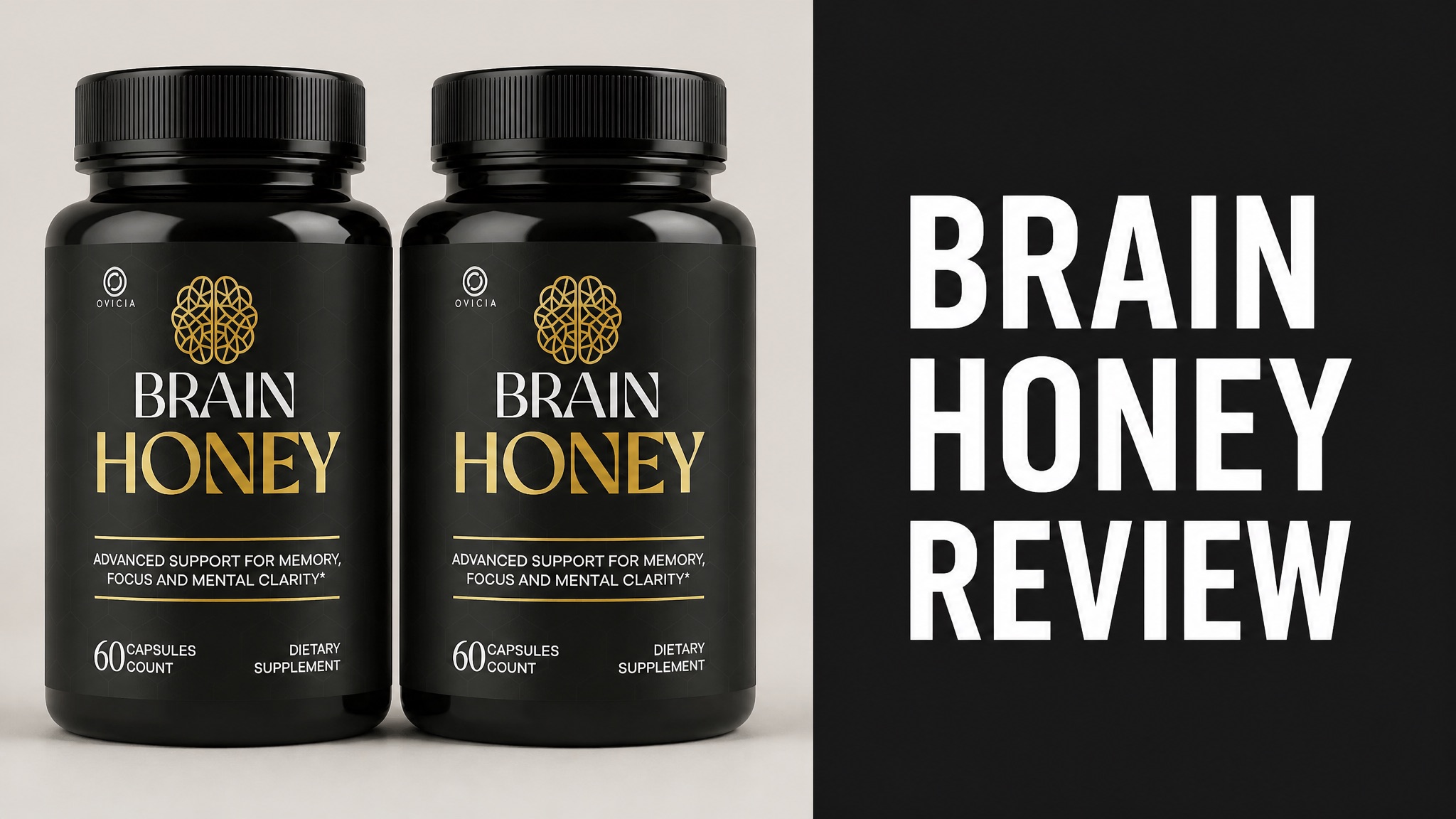
Brain honey is a name used by online sellers and viral ads for honey-based memory products. Marketers claim it sharpens focus and even reverses dementia. Consumer watchdogs and journalists dispute those claims. Sorting fact from marketing takes a close, careful look at the evidence.
Forbes reported in April 2026 that no such thing as brain honey exists as a proven treatment. Deepfake tools exposed fake celebrity endorsements in the ads. The FDA also warns that products promising Alzheimer’s cures lack approval. Honey itself shows early research promise, but only in lab and animal studies, not in people. Honey keeps antioxidants.
The sections below cover what brain honey is, what it contains and what reviews report. Safety limits, prices, legitimacy checks and safer alternatives follow. By the end, readers can decide whether any brain honey product deserves their money, their time or their trust. Each answer is sourced.
What Is Brain Honey?
Brain honey is a marketing label, not a medically recognized product or treatment. Sellers attach it to capsules, honey blends and recipe guides. In fact, the claims range from better focus to reversing Alzheimer’s disease. No regulator has approved any of them, so buyers should treat every listing with caution. Buyers must verify every claim first.
Different sellers use the name for different things. Some sell capsules, others sell honey jars or digital recipe books. To be clear, the label guarantees nothing about what sits inside the product.
Products sold as brain honey:
- Brain honey capsules on Amazon and eBay
- Multi-pack honey and vitamin blends
- Honey trick memory recipe guides
- Similar names such as MemoHoney and Brain Tune Honey
Where Did Brain Honey Come From?
The name spread through viral social media ads and videos about a so-called honey trick for memory. Forbes traced ads that used fake news logos and false quotes. University at Buffalo researcher Siwei Lyu’s DeepFake-O-Meter helped expose the doctored endorsement videos. The ads often show a fake news anchor, a made-up doctor and a countdown clock too.
The trend borrowed from real honey research. Think of it this way: marketers stretched modest lab findings into cure claims. Why does that work on shoppers? Fear of memory loss makes big promises sound believable.
What Is in Brain Honey?
Ingredients vary by seller, and many listings show incomplete or unverified labels. Capsule versions usually pair honey extract with vitamins and herbs. Recipe versions combine raw honey with foods like blueberries, cinnamon or coffee. Always read the full Supplement Facts panel before paying anything. Missing doses make any claim impossible to check.
Look-alike products use other formulas. The MemoHoney supplement lists L-arginine, L-citrulline, niacin and beta-alanine, per its reviewers. Those are amino acids and a vitamin, not honey. Here’s the thing: the name says little about content.
Ingredient comparison:
| Version | Typical contents | Form |
|---|---|---|
| Brain honey capsules | Honey extract, vitamins, herbs | Capsule |
| Honey trick recipe | Raw honey, berries, cinnamon | Homemade |
| MemoHoney | Arginine, citrulline, niacin, beta-alanine | Capsule |
| Honey jars | Honey with added extracts | Spoonable |
Does the Honey Trick for Memory Work?
No. The honey trick has no clinical proof of improving memory or reversing dementia. A PMC review of 34 original articles found four possible benefits: memory boosting, neuroprotection, anti-stress effects and pain relief. Most studies used cells or animals, not people. Honey also adds sugar and calories, which matters for people watching their blood sugar.
Honey does hold polyphenols and flavonoids, which act as antioxidants. The chemistry is real. But lab results do not equal human outcomes. Does a spoonful of honey protect the brain? Nobody has shown it.
How Does Brain Honey Work?
Brain honey claims to protect neurons through antioxidants that reduce inflammation and oxidative stress. Sellers say polyphenols shield brain cells from damage. Capsule makers add vitamins they say boost blood flow. The brands offer no human trial showing these effects occur in their own products. Marketing copy fills the gap with confident language.
Research reviews describe the mechanisms as proposed, not proven. Antioxidants help cells in a dish, but that doesn’t mean they help people. Do they reach the brain at useful doses? Nobody knows. In plain English: the science is early.
Does Brain Honey Actually Work?
No. Brain honey has no proven ability to cure, reverse or prevent Alzheimer’s disease or dementia. The FDA states that no cure or treatment has been shown to stop or reverse the disease. Approved drugs only slow some symptoms for a time. They do not stop the disease itself. Marketers still pitch it as a cure, which regulators call false and risky today.
Fact-checkers and consumer groups flag the campaigns as misleading. The bottom line: a honey product cannot replace medical care. Delaying real treatment for a honey capsule can cause harm.
What Do Brain Honey Reviews Say?
Brain honey reviews split sharply between enthusiastic marketing pages and warnings from watchdogs. Affiliate-style sites give scores above four out of five. Independent sources like Forbes, the BBB and AARP call the claims false. Retail listings show few verified buyer comments, which makes judging real results difficult. Check who wrote each review.
Treat glowing reviews with suspicion. Why? Many come from pages that earn commissions. Independent reporters found fake endorsements instead of real customers.
Review snapshot:
- Praise: easy to take, pleasant taste, feel more alert
- Complaints: no results, recurring charges, ignored refunds
- Warning: fake celebrity and news endorsements
What Are the Common Brain Honey Complaints?
The top complaint is unexpected billing, with recurring charges that buyers struggle to cancel. The Better Business Bureau reports that buyers of similar honey memory supplements saw unauthorized subscription charges. Some say refund requests went ignored. Others report no change in memory after weeks of use. Complaints cluster around billing and refunds.
Shipping problems appear as well. Reviewers cite late delivery and mismatched products. Always screenshot the offer and the terms before checkout. Those records help in any dispute.
Is Brain Honey Legit?
No. Brain honey is not a legitimate treatment, and many campaigns behind it use deceptive tactics. Fake celebrity quotes, invented doctors and false news logos appear throughout the ads. A few real supplements share the name, but their claims still lack proof. Sellers often hide the manufacturer. Check every claim twice, since the name hides differences.
The AARP describes such offers as dementia pseudomedicine. Legit products name the maker, show doses and avoid cure claims. Do brain honey ads do any of that? Rarely.
Legitimacy checklist:
- Named manufacturer with contact details
- Full Supplement Facts panel with doses
- No claim to cure or reverse any disease
- Clear refund terms with no hidden subscription
Are the Brain Honey Celebrity Endorsements Real?
No. The endorsements are fabricated, using deepfake video and invented quotes from public figures. Forbes tested ads that showed Bill Gates and Dr. Sanjay Gupta. The DeepFake-O-Meter flagged the footage as artificially generated. Gates has funded dementia research, but he endorses no honey. Treat each clip with real doubt, whatever logo appears on screen.
Here’s why: real doctors don’t promote cure supplements in social ads. Check the original source before believing any clip. Search the person’s name plus the product name for a fact-check.
What Are the Side Effects of Brain Honey?
Brain honey is generally low risk for healthy adults, though added ingredients can cause reactions. Raw honey adds sugar and calories. Capsule extras may trigger stomach upset, headaches or a niacin flush. Allergic reactions occur in people sensitive to bee products. Ingredient lists are often incomplete, so risks stay unclear. Doses are rarely listed.
The FDA warns that fake Alzheimer’s remedies may interact with essential medications. Hidden ingredients make that risk worse. Who checks the label? Few buyers do. A doctor review before starting is the safe path.
Possible side effects:
- Stomach upset or bloating
- Skin flushing from niacin
- Allergic reactions to honey or pollen
- Blood sugar spikes
Who Should Avoid Brain Honey?
People with diabetes, bee allergies or pollen sensitivity need medical advice before using any honey product. Pregnant and nursing women should also check with a doctor. Never give honey to infants under 12 months because of botulism risk. Patients on dementia medication need approval first. Honey is a risk for some groups, even without extras in the jar.
Anyone with memory loss should see a doctor, not a supplement shelf. Early diagnosis opens real treatment options. Delay costs time that cannot be recovered.
How Much Does Brain Honey Cost?
Brain honey pricing ranges from about $20 for a single listing to $294 for bulk bundles. Marketplace capsules sell for modest prices. Look-alike MemoHoney charges $79 (USD) per bottle for two, $69 for three and $49 for six. Shipping and bonus guides change the total. Total cost often exceeds the first price shown on the page. Always read the final cart.
Prices change during promotions, so verify at checkout. Watch for pre-checked upsells and trial offers that convert to monthly plans. Is the low price real? Often it isn’t, because a low entry price can hide recurring fees.
Price comparison (MemoHoney):
| Package | Per bottle | Total |
|---|---|---|
| 2 bottles | $79 | $158 |
| 3 bottles | $69 | $207 |
| 6 bottles | $49 | $294 |
Is Brain Honey Worth the Price?
No. Brain honey costs money for benefits that no human study supports. A $294 (USD) bundle carries steep financial risk. Even the cheapest listings gamble on unproven claims. Plain honey from a grocery store costs a fraction and delivers the same antioxidants. Real memory care starts with a doctor, not a jar. Budget for that visit instead of a bundle.
Money spent here may also delay real care. The better use of funds is a doctor visit. Why pay premium prices for ordinary ingredients? Common compounds cost little in bulk.
Where to Buy Brain Honey?
Brain honey sells through Amazon, eBay, official brand sites and ad-driven landing pages. Marketplace listings carry the most buyer reviews. Official sites offer guarantees but push bundles. Landing pages from social ads carry the highest scam risk, so avoid buying there entirely. Prices and terms differ on each site, so compare carefully before paying.
Marketplace sellers vary widely in quality. Verify authenticity before ordering. In short, choose sellers with clear return terms and a named business address.
Safe buying steps:
- Identify the exact product and read its label.
- Confirm the seller name and business address.
- Read the refund and subscription terms in full.
- Pay by credit card for chargeback protection.
What Are the Alternatives to Brain Honey?
Alternatives include plain honey, a balanced diet, exercise, sleep and doctor-guided care. The PMC review notes honey’s polyphenols come from ordinary honey too. Exercise and social activity support brain health with stronger evidence than any capsule. Skip any cure promise. A doctor can tailor advice to age, health history and current medications.
Where should a worried reader start? Doctors can discuss approved treatments. Clinical trials offer legal access to new drugs, per the FDA. The trial route beats guessing with an unverified supplement.
Should You Try Brain Honey?
No. Brain honey is not worth trying as a treatment, given the false claims and billing complaints. Healthy adults face little physical risk from plain honey. The financial and medical risks come from the products sold around it. The honest verdict is clear: skip the bundles. Save the money for a doctor checkup, a good diet or a daily walking routine.
The good news? Plain honey is cheap and it’s tasty. Enjoy it as food if desired. Seek a doctor for memory worries. Look, a pantry jar does the same job at a tiny price.
Quick verdict:
- Best case: harmless sweet food with antioxidants
- Worst case: lost money and delayed medical care
- Smart move: skip the supplement and see a doctor
How Can You Spot Brain Honey Scams?
Scams rely on celebrity endorsements, countdown timers, secret cure stories and hidden subscriptions. The FDA lists red flags: reverse dementia in a week, scientific breakthrough claims and cures for many unrelated diseases. Any ad using these phrases deserves distrust. Slow down before paying for any miracle offer, and ask a relative to look it over.
Short answer: report suspicious ads to the FDA and the BBB. Cancel charges through the card issuer if a seller refuses. Share the warning with older relatives, since scammers target them most.