
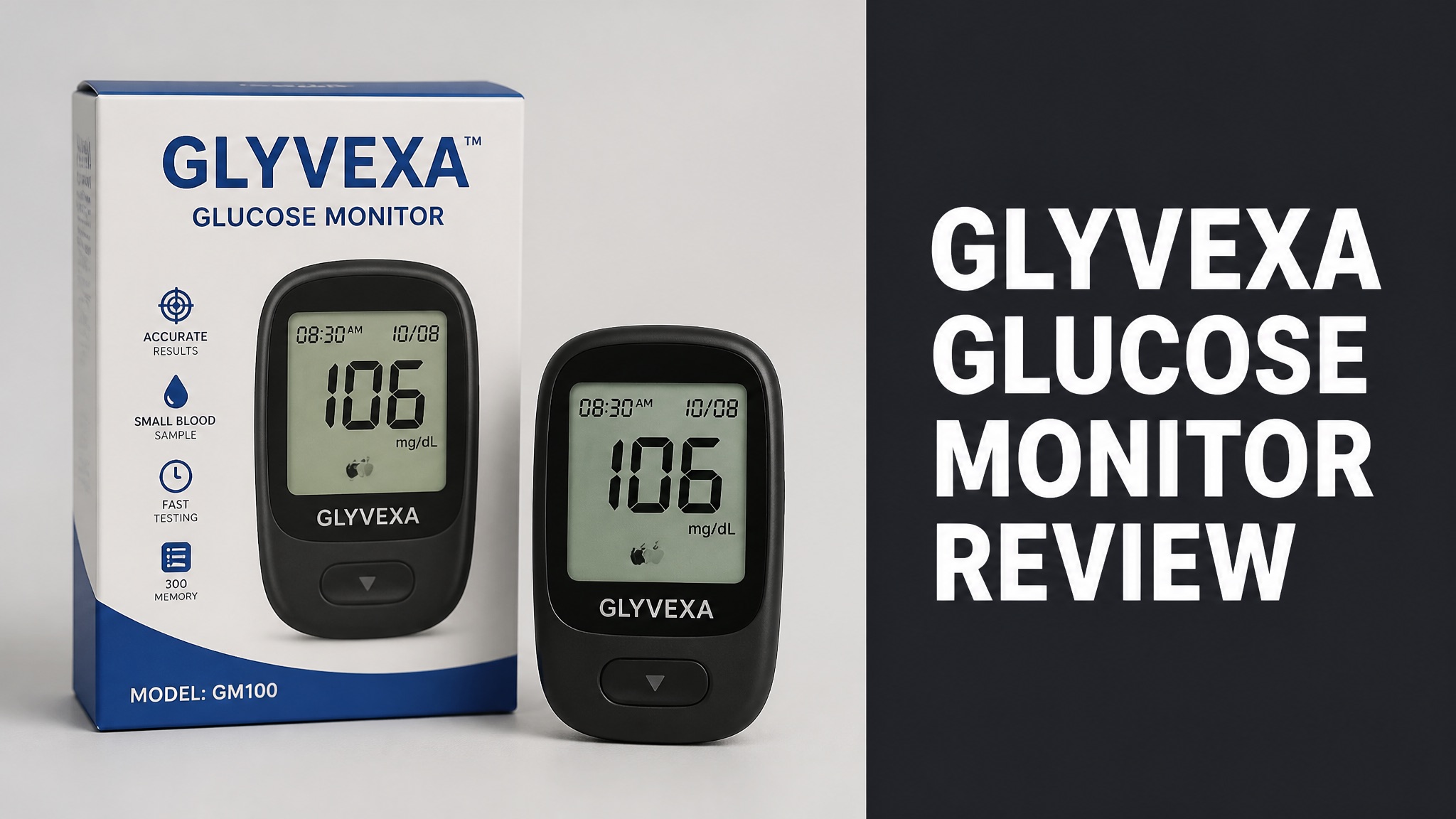
The Glyvexa glucose monitor is a needle-free gadget sold online as a painless way to track blood sugar. Ads push it as the Glyvexa T8 and link it to Glycenx. Health agencies and buyers question those claims, so this review checks the evidence closely.
The ads promise zero finger pricks and medical-grade accuracy. Health agencies say no non-invasive meter is validated. Trustpilot shows a Bad rating near 1.5 out of 5 stars. Buyers report readings that miss standard meters. Regulators warn about wrong insulin doses. Dexcom and FreeStyle Libre remain the proven options for people with diabetes.
Each section answers one buyer question, from how the device works to who should avoid it. The verdict is clear: skip the gadget and pick a regulated monitor. Read on for the evidence, the risks, and the safer alternatives that real glucose tracking needs.
What Is the Glyvexa Glucose Monitor?
The Glyvexa glucose monitor is a non-invasive blood sugar gadget marketed online as a needle-free alternative to finger pricks. Ads also list it as the Glyvexa T8 and tie it to the Glycenx precision monitor brand. In fact, the research found no independent clinical study behind these claims.
Quick Facts:
| Detail | Finding |
|---|---|
| Product name | Glyvexa glucose monitor (Glyvexa T8) |
| Also sold as | Glycenx precision monitor |
| Claimed method | Non-invasive, no finger pricks |
| Approval status | No FDA or CE approval found |
Who Sells the Glyvexa Glucose Monitor?
Online advertisers sell the Glyvexa glucose monitor through social media ads and short-lived storefronts. Buyer reports describe missing company contact details and no clear return policy. A legitimate medical device maker publishes both.
The Belgian agency FAMHP notes that such products often come from outside the EU. They skip the clinical testing and approval that regulated meters complete. Why does that matter? Untested devices carry unknown error rates, and nobody answers for them.
How Does the Glyvexa Glucose Monitor Work?
The Glyvexa glucose monitor claims to read blood sugar through the skin with sensor technology instead of a blood sample. The ads never publish the sensor type, the method, or peer reviewed data. Real glucose meters document every one of these details openly.
Here is the thing: the working principle is what separates a medical device from a toy. Approved monitors use a clear, tested method. Glyvexa offers no documented mechanism at all.
Methods Used by Real Monitors:
- Fingerstick meters that measure a drop of blood
- Arm sensors that read glucose in tissue fluid, like FreeStyle Libre and Dexcom G6
- Implanted fluorescent sensors, like Eversense
Can a Device Measure Glucose Without a Needle?
No. Researchers have not yet built a non-invasive glucose meter that is reliable enough for patient use. The FAMHP states that no such product is safe and reliable on the European market as of October 2025. Work continues, but the technology is unproven.
Some firms keep trying. GlucoRx reports a 10.4% mean absolute relative difference for its BioXensor prototype, and approval is still pending. Pending approval is not proof. A prototype in testing is not a product on a shelf.
What Does the Glyvexa Glucose Monitor Claim to Offer?
Advertisements for the Glyvexa glucose monitor promise zero finger pricks, medical-grade accuracy, and instant readings. Some ads cite endorsements from organizations like the Mayo Clinic. To be clear, buyer scam alerts describe those endorsements as false.
Main Advertised Claims:
- Zero finger pricks
- Medical-grade accuracy
- Painless, instant readings
- Mayo Clinic endorsement (reported as false)
Does the Glyvexa Glucose Monitor Deliver Accurate Readings?
No. Buyer reports say the readings do not match standard glucometers or true blood glucose levels. The FAMHP confirms that online reviews of similar devices show the same mismatch with invasive meters.
Accuracy is the whole point of a glucose monitor. Does a close guess count? Not when insulin doses and meals depend on the number. A wrong reading drives a wrong decision.
What Do Glyvexa Glucose Monitor Reviews Say?
Glyvexa glucose monitor reviews are overwhelmingly negative on independent platforms. Trustpilot lists the related Glycenx brand at a Bad rating of around 1.5 out of 5 stars. Complaints cluster around accuracy, missing items, and refunds. Praise appears mostly in the ads.
Review Sources:
| Source | Finding |
|---|---|
| Trustpilot (Glycenx) | Bad rating, about 1.5 out of 5 |
| Scam alert posts | Warn of misleading ads |
| FAMHP review summary | Readings differ from invasive meters |
What Complaints Do Buyers Report?
Buyers report three repeated problems with the Glyvexa and Glycenx devices. Readings differ from standard meters. Parcels contain generic pulse oximeters or cheap heart rate tools. Customer service ignores refund requests.
The bad news? Missing contact details make recovering money hard. A payment dispute through the card issuer is the usual route. File it fast.
Are There Positive Experiences?
No. Independent sources show no verified positive reviews of the Glyvexa glucose monitor. The only praise sits in the advertisements. Ad copy is not a review.
Short answer: treat glowing testimonials on seller pages as marketing. Verified purchase reviews on neutral platforms carry real weight. Those are the ones to trust.
Is the Glyvexa Glucose Monitor Legit?
No. The Glyvexa glucose monitor fails every legitimacy check that regulators recommend. It shows no valid CE mark, no FDA clearance, no named manufacturer, and no clinical data. Scam alerts describe it as misleading and unreliable, and buyers agree.
Legitimacy Checks:
| Check | Result |
|---|---|
| Four-digit CE mark | Not found |
| FDA clearance | Not found |
| Published accuracy data | None |
| Company contact details | Missing, per buyers |
Is the Glyvexa Glucose Monitor FDA Approved?
No. Health authorities state that non-invasive glucose meters are not FDA approved or clinically validated. The Glyvexa glucose monitor has no clearance listing that backs its claims.
In plain English: no needle-free watch, ring, or finger meter has earned trust for diabetes dosing. Agencies say so directly. A seller who claims otherwise should show the paperwork.
What Are the Risks of the Glyvexa Glucose Monitor?
The biggest risk of the Glyvexa glucose monitor is a wrong reading that triggers a wrong insulin or diet decision. The FAMHP warns that inaccurate values cause both low and high blood sugar events. Both outcomes harm patients with diabetes.
Reading Errors and Results:
| Reading Error | Result |
|---|---|
| Value too high | Too much insulin, low blood sugar (hypoglycaemia) |
| Value too low | Too little insulin, high blood sugar (hyperglycaemia) |
| Long-term high glucose | Damage to eyes, kidneys, and heart |
Who Should Avoid the Glyvexa Glucose Monitor?
Anyone who doses insulin must avoid relying on the Glyvexa glucose monitor. Patients and caregivers who set diet or insulin plans from glucose values face the same danger.
So what does that mean for you? Never replace a validated meter with this gadget. Keep your approved device and ask a healthcare provider if you doubt a reading.
How Does the Glyvexa Glucose Monitor Compare to Proven Monitors?
Proven continuous glucose monitors name their technology, their maker, and their wear time. Dexcom G6, FreeStyle Libre 14-day, and Eversense all publish those details. The Glyvexa glucose monitor publishes none of them.
Monitor Comparison:
| Device | Method | Wear Time |
|---|---|---|
| Dexcom G6 | Sensor, real-time to smart device | 10 days |
| FreeStyle Libre 14-day | Arm sensor, scan to read | 14 days |
| Eversense | Implanted sensor with transmitter | 6 months |
| Glyvexa | Undisclosed non-invasive claim | Not stated |
How Do Dexcom and FreeStyle Libre Differ?
Dexcom G6 sends real-time readings automatically to a compatible smart device with no scanning. FreeStyle Libre needs a scan of the sensor to show a reading. Both skip routine finger pricks.
The Libre sensor lasts 14 days and stores 90 days of data. The Dexcom G6 sensor lasts 10 days. Which suits you better? That depends on whether automatic alerts or longer wear matters more.
Where Can You Buy a Reliable Glucose Monitor?
Reliable glucose monitors come from established medical brands and are checkable against official registries. The FAMHP advises a four-digit CE mark and an Eudamed registration in Europe. Verify first, then buy.
How to Verify a Meter:
- Check that the device carries a four-digit CE mark.
- Search Eudamed with the EMDN code W0201060102.
- Compare the model against the NIHDI list of reimbursed meters.
- Ask a healthcare provider if any doubt remains.
Is the Glyvexa Glucose Monitor Worth the Price?
No. Even a low price buys a device with no proven accuracy. The research found no verified price for the Glyvexa glucose monitor. A bargain that gives wrong readings costs far more than it saves.
The FAMHP notes that adverts play on frustration with finger pricks and tout cheap, painless alternatives. And here is the part most people miss: cheap and painless is the hook, not the proof.
Should You Try the Glyvexa Glucose Monitor?
No. The Glyvexa glucose monitor carries unproven accuracy, missing approval, and a pattern of buyer complaints. Bottom line: the risk outweighs any convenience. A wrong glucose value can lead to real harm, and the evidence shows no benefit.
What Should You Buy Instead?
A regulated continuous or fingerstick monitor is the safe choice for any glucose tracking. Dexcom G6, FreeStyle Libre, Eversense, and Guardian Connect are real options from established makers.
Talk to a healthcare provider first. Report any suspect device to your national regulator, like the FAMHP in Belgium. The good news? Proven tools already exist, and they work.