
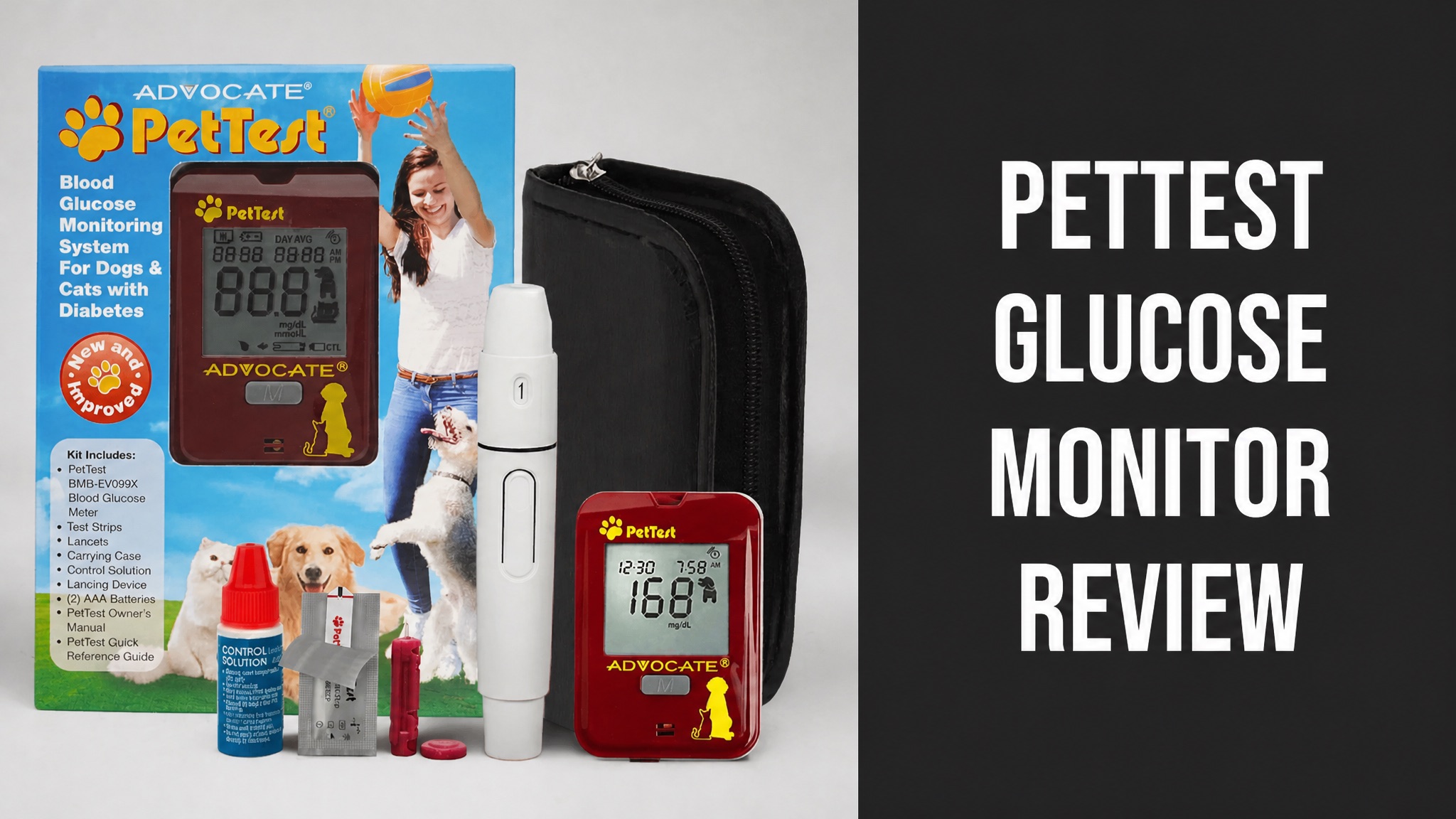
The PetTest glucose monitor is a handheld blood glucose meter for diabetic dogs and cats. Advocate sells it in kits that need no coding. It suits home use and vet visits. It reads a 0.3 microliter drop in five seconds. This review checks accuracy, cost, complaints, and where owners can buy it.
PetTest calibrates readings for dog and cat blood. A one-button switch changes species modes. Owners praise the tiny sample and simple screen. Complaints focus on lancets and strip costs. AlphaTrak costs more, while human meters cost less but read differently. Kits start near $40 (USD) and reach about $130 for painless bundles. Strips remain the main ongoing cost.
Vets still guide every dosing decision, because the meter only measures. Readers will learn how the device works, what reviewers say, and how prices compare. The verdict covers who benefits most and who needs a cheaper human meter instead. Each section answers one buyer question directly.
What Is the PetTest Glucose Monitor?
The PetTest glucose monitor is a handheld blood glucose meter built for dogs and cats with diabetes. Advocate sells it as a portable system calibrated and validated for pet blood. In fact, owners can use it at home, in a vet office, or in a lab. No coding is needed before each test. Vets and home caregivers can use the same device for routine checks.
PetTest results appear in five seconds from a 0.3 microliter drop. Why does that matter? Owners can sample from an ear or paw without a large bleed. Here’s the thing: small samples make daily testing far less stressful for the pet.
The system only measures blood glucose. To be clear, PetTest makes no treatment recommendations. The brand tells owners to consult a veterinarian before starting any new treatment or changing a care plan.
Who Makes PetTest?
PetTest is a pet glucose testing brand sold under the Advocate name. Product pages list Advocate as the maker, and the brand runs the shoppettest.com store. Its blog is written by Michelle Miller-Matlock, an AAHA Certified Diabetes Educator. She also runs the Diabetic Dog Owners Facebook group. Her posts explain how pet meters work in very plain terms.
That author tested at least ten meters over 4.5 years. She ran ten-day comparisons on each one. Short answer: PetTest and the One Touch Ultra Mini stayed in her rotation. Keep in mind that PetTest sponsors her diabetes education community.
How Does the PetTest Glucose Monitor Work?
The PetTest meter reads glucose from a tiny blood drop on an electrochemical test strip. Enzymes on the strip react with glucose and create an electric signal. The meter converts that signal into a number. A result shows in about five seconds, next to a dog or cat icon. The whole process takes less than a minute once the owner has the supplies ready.
Testing follows a simple routine. Owners wash their hands, insert a strip, prick the ear or paw, and touch the drop to the strip. Think of it this way: the strip does the chemistry and the meter just reports the answer.
Testing Steps:
- Wash and dry the hands before handling the strip.
- Insert a strip and confirm the dog or cat mode on screen.
- Prick the ear, lip, or paw with the lancing device.
- Touch the blood drop to the edge of the strip.
- Read the result and log it for the vet.
Errors usually come from handling, not hardware. In fact, human error causes about 90% of error readings, according to the PetTest blog. Too much blood floods the chamber. Too little blood can produce a false low reading.
Why Does Species Calibration Matter?
Species calibration matters because glucose sits in different parts of the blood in different species. Only 12.5% of glucose travels inside dog red blood cells. Human red blood cells carry 42%. A meter needs the right algorithm to correct for that gap in every reading. That calibration step is the main reason pet meters exist beside the cheaper human models.
PetTest uses a one-button switch between dog and cat modes. The display shows a dog or cat picture to confirm the setting. Here’s why that counts: a wrong mode shifts the reading. The blog author saw that shift on another meter after entering the wrong species code.
Human meters carry a fixed human algorithm. Does that matter? Yes. Readings can drift from true pet values. Owners don’t add or subtract numbers to adjust them. The displayed value stands as the true reading.
What Features Does the PetTest Glucose Monitor Include?
The PetTest meter packs a full feature set into a simple design that needs no coding. It reads a 0.3 microliter sample and shows results in five seconds. It stores 400 results with date and time. Averages cover 7, 14, and 28 days, and each species keeps its own memory. The feature list targets daily home testing rather than lab work, so design stays lean.
The test range runs from 20 to 600 mg/dL (1.1 to 33.3 mmol/L). The original model also lists four daily alarms. Memory keeps dog and cat results separate. Why does that help? Mixed households get clean averages for each pet.
Key Specs:
| Feature | Spec |
|---|---|
| Sample size | 0.3 microliters |
| Result time | 5 seconds |
| Memory | 400 results |
| Averages | 7, 14, and 28 days |
| Range | 20 to 600 mg/dL (1.1 to 33.3 mmol/L) |
| Coding | None required |
PetLink+ adds wireless syncing to the free Digital Companion app. What’s more, the app now exports line graphs and pie charts for vet visits. It runs on Android and iOS. And it gets better: owners can change PetLink+ settings from the app.
What Comes in the PetTest Kit?
The PetTest kit bundles the meter, strips, lancets, and a carrying case in one box. The Classic kit lists 25 test strips, a lancing device, 25 twist top lancets, control solution, and 2 AAA batteries. Lancets are not included in orders shipped to California. Painless bundles raise the strip count to 50. Check the exact listing contents before buying.
Classic Kit Contents:
- 1 PetTest blood glucose meter
- 1 carrying case
- 25 PetTest test strips
- 1 lancing device
- 25 twist top lancets
- 1 control solution
- 2 AAA batteries
The painless bundle swaps in the Genteel lancing device. It adds 10 Genteel butterfly lancets and six contact tip sizes. The UK listing also carries a 120 day money back guarantee and a one year warranty.
Does the PetTest Glucose Monitor Actually Work?
Yes. The PetTest meter delivers fast, usable readings that owners and vets report as close to other pet meters. A diabetic dog educator compared it across a ten-day curve against her other meters. Her vet then checked it against the clinic meter, and the numbers landed in range. That check is the kind of proof most owners want before trusting a new meter.
Owners echo that experience in store reviews. One reviewer called it the easiest and most accurate of several kits tried. Another said the tiny sample made testing far easier. Does a happy review prove accuracy? No, but the pattern is consistent.
A 2016 forum member cited a diabetic dog blog that tested PetTest against the AlphaTrak 2. The reported results were very close. That reviewer had not tested cats. Cat accuracy therefore rests on the brand’s own validation claims.
Is PetTest Accurate?
Yes. PetTest is calibrated and validated for dog and cat blood, which supports reliable readings when used correctly. The brand states that the system gives accurate results on every species. The sources reviewed show no independent lab data. Owners confirm readings against a vet meter before relying on them. Vet confirmation costs little and adds trust.
Technique drives accuracy as much as the meter does. Too little blood can cause a false low. Retesting an odd reading rules out error. Here’s the thing: one strange number never justifies a dose change without vet guidance.
What Do PetTest Glucose Monitor Reviews Say?
PetTest reviews lean strongly positive, with ease of use and small blood samples leading the praise. The Classic kit page shows 127 reviews. Chewy and Amazon also list reviews for the meter, strips, and control solution. Short answer: most owners call it simple, but a few flag the lancing device. Strip and lancet reviews raise very similar points overall.
A fair read needs context. Brand-run review pages tend to skew happy. By comparison, a 2016 forum thread leaned cautious about strip costs. In plain English: praise centers on usability, and criticism centers on price and lancets.
What Do Owners Praise?
Owners praise the tiny sample size, quick results, and simple screen most often. One reviewer said it takes the tiniest amount of blood compared with other meters. Another called the meter a blessing. A third found fast results and a friendly display. Reviewers repeat the same themes across brand pages and retail pages, which shows the praise is consistent.
Top Praise:
- Tiny blood sample
- Fast five second results
- Simple, friendly screen
- No coding step
- Easy tracking with the data system
Data tracking also earns credit. The free downloadable data system lets owners share real numbers with a vet. And here’s the best part: the PetLink+ app syncs readings wirelessly. Fewer paper logs means fewer lost entries.
What Do Owners Complain About?
Complaints center on the lancing device, lancet size, and ongoing strip costs. One reviewer said the lancing device lacked power to penetrate a dog’s skin, so manual pricking replaced it. A forum member called the 21 gauge lancets harpoons. Another needed a bandaid after testing a finger. Each complaint has a workaround, as the next paragraphs show.
Cost worries came up too. At about $1 a strip, forum members said owners test less. Four tests a day add up to roughly $120 a month. The bad news? Strip supply matters at night, and human-meter strips sit in local stores.
Fixes exist. Finer 28 or 29 gauge lancets cost less online. A softer lancing setting also helped one owner. In fact, the second lowest setting broke the skin with little pain. The Genteel painless kit targets the same issue.
How Does PetTest Compare to AlphaTrak and Human Meters?
PetTest costs less to run than AlphaTrak but more than most human glucose meters. A 2016 forum post put PetTest strips near $45 for 50, against about $59 for AlphaTrak 2. Walmart’s Relion human meters cost even less per strip. Today the AlphaTrak 3 starter kit lists at $77.23. Prices shift by retailer and date, so owners verify current figures before buying.
Meter Comparison:
| Meter | Type | Price (USD) | Note |
|---|---|---|---|
| PetTest Classic | Pet meter | $59.95 | 0.3 microliter sample |
| PetTest PetLink+ | Pet meter | $54.95 to $69.95 | Wireless app sync |
| AlphaTrak 3 | Pet meter | $77.23 | Starter kit price |
| Relion and similar | Human meter | Varies | Cheaper strips, human algorithm |
Pet meters win on calibration. Human meters win on cost and access. Why does access matter? A low reading at midnight needs strips fast, and Walmart stocks human strips. Think of it this way: many owners keep a human meter as backup.
Vets often favor species-specific meters. One forum owner’s vet recommended AlphaTrak for that reason. By comparison, the blog author used PetTest for curves and off readings. The reason is simple: accuracy counts most when numbers decide a dose.
Is a Human Meter Good Enough?
Yes. A human meter works for routine testing, but pet meters stay the better choice for curves and off readings. The PetTest educator says any meter beats no meter. She used a One Touch Ultra Mini for fasting checks. She reserved the animal meter for glucose curves and any reading that looked wrong. Her rule keeps costs down and protects real accuracy.
Human meters also need larger samples. Her first human meter required more blood than the pet model. Some tested meters varied widely from PetTest. To be clear, readings from a human meter stay as displayed, with no mental adjustments.
Is the PetTest Glucose Monitor Legit and Safe?
Yes. PetTest is a real product sold by established retailers, with warranty and money back terms. Chewy, Amazon, Heartland Vet Supply, and Countryside Pet all list it. Heartland sells it through a licensed U.S. pharmacy. The Classic kit carries a one year warranty, and the UK listing adds a 120 day guarantee. Retail presence lowers scam risk for buyers.
Trust Signals:
- Listed on Chewy and Amazon
- Sold through a licensed U.S. pharmacy
- One year warranty
- 120 day money back guarantee on the UK listing
- Individually foil wrapped test strips
Safety hinges on use, not the device. The meter only measures glucose. Hypoglycemia can occur without visible symptoms, per the PetTest educator. Here’s why testing matters: insulin is a strong hormone, and readings guide safe dosing with vet input.
No FDA claim appears in the sources reviewed. The brand frames PetTest as a measurement tool, not a treatment. Pay attention to this: the meter supports vet decisions and never replaces them.
Who Needs Vet Guidance Before Using PetTest?
Every owner needs a vet-approved testing plan before making any insulin decision. The brand tells owners to consult a veterinarian before any new treatment. Vets explain what readings mean, how often to test, and what to do about a result. The meter never decides that. Insulin decisions depend on those numbers, so the vet stays in the loop from day one.
Cat owners have an extra reason. The PetTest blog notes that type 2 diabetic cats can reach remission, which needs close monitoring. Owners of pets on continuous monitors still need a pet meter. Why? Blood readings are real time and serve as the check.
How Much Does the PetTest Glucose Monitor Cost?
The PetTest glucose monitor costs about $40 to $70 for a basic kit. The price varies by retailer and model. Countryside Pet lists the Classic starter kit at $39.95. Heartland Vet Supply prices the PetLink+ kit at $54.95. The brand store lists the Classic kit at $59.95 and PetLink+ at $69.95. Prices change often, so owners check each store before buying.
Kit Prices:
| Kit | Price (USD) | Retailer |
|---|---|---|
| Classic starter kit | $39.95 | Countryside Pet |
| PetLink+ meter kit | $54.95 | Heartland Vet Supply |
| Classic kit, 25 strips | $59.95 | shoppettest.com |
| PetLink+ kit, 25 strips | $69.95 | shoppettest.com |
| Painless system, 50 strips | $119.95 | shoppettest.com |
| PetLink+ painless system, 50 strips | $129.95 | shoppettest.com |
Strips drive the long-term cost. A 2016 forum post listed 50 strips near $45. Is that cheap? Not at four tests a day. Autoship at Heartland takes 10% off future orders. Here’s the thing: the meter is cheap, and the strips are the real bill.
Is PetTest Worth the Price?
Yes. PetTest offers strong value for owners who test often and want a species-specific meter. The kit costs less than the AlphaTrak 3 starter kit at $77.23. The small blood sample and five second results save time and stress. Owners on tight budgets can pair it with a cheaper human meter. Savings add up over months of daily strip purchases and refills.
Value drops at high testing volume. At four tests daily, strip spending climbs fast. Bottom line: owners watching every dollar may prefer human-meter strips and keep PetTest for curves and off readings.
Where Can You Buy the PetTest Glucose Monitor?
PetTest is sold online through the brand store, Chewy, Amazon, and veterinary supply shops. The shoppettest.com store carries every kit, strip box, and control solution. Chewy and Amazon list the meter, strips, and Genteel bundle. Heartland Vet Supply and Countryside Pet also stock kits. Stock and prices vary, so owners compare listings before ordering.
Where to Buy:
- shoppettest.com
- Chewy
- Amazon
- Heartland Vet Supply
- Countryside Pet
Strip freshness matters at checkout. Each PetTest strip comes individually foil wrapped, which protects the enzymes. Why does that count? Strips degrade with humidity, and bottled strips degrade every time the bottle opens.
Is PetTest Sold Outside the USA?
Yes. PetTest reaches several countries through local distributors and a Canadian site. The brand lists pettest.ca for Canada and Home Health UK for the United Kingdom. Wantsa Medical offers it in Australia. VetPost carries it in New Zealand. Owners check local pricing before ordering. Local sellers handle support and returns, which keeps shipping simple.
UK pricing runs higher. The painless system with 50 strips lists at £143.95 (GBP) on a UK store. By comparison, the same system lists at $119.95 (USD) in the USA. Why the gap? Shipping and VAT affect the final bill.
Should You Buy the PetTest Glucose Monitor?
Yes. The PetTest glucose monitor suits most diabetic dog and cat owners who want an affordable, species-specific home meter. It delivers results in five seconds from a 0.3 microliter drop. Owners praise the ease of use, and the data app adds value. The trade-offs are lancet quality and ongoing strip costs. Vet input remains essential for every dosing choice.
Final verdict: buy PetTest if the budget sits between human meters and AlphaTrak. Bottom line: pair it with vet advice and a backup meter. In fact, that combination covers curves, off readings, and late-night strip shortages.
Who Is PetTest Best For?
PetTest fits owners who test at home and want one meter for both dogs and cats. Multi-pet households benefit from the one-button species switch. Owners who track curves benefit from the 400 result memory and the 7, 14, and 28 day averages. Vets also receive cleaner data. Households with both a dog and a cat gain the most from one device and one strip type.
PetTest fits poorly for owners who test many times daily on a tight budget. Human meters cost less per strip. What’s more, owners who want a continuous monitor need a different device. A pet meter still serves as the check for those systems.