
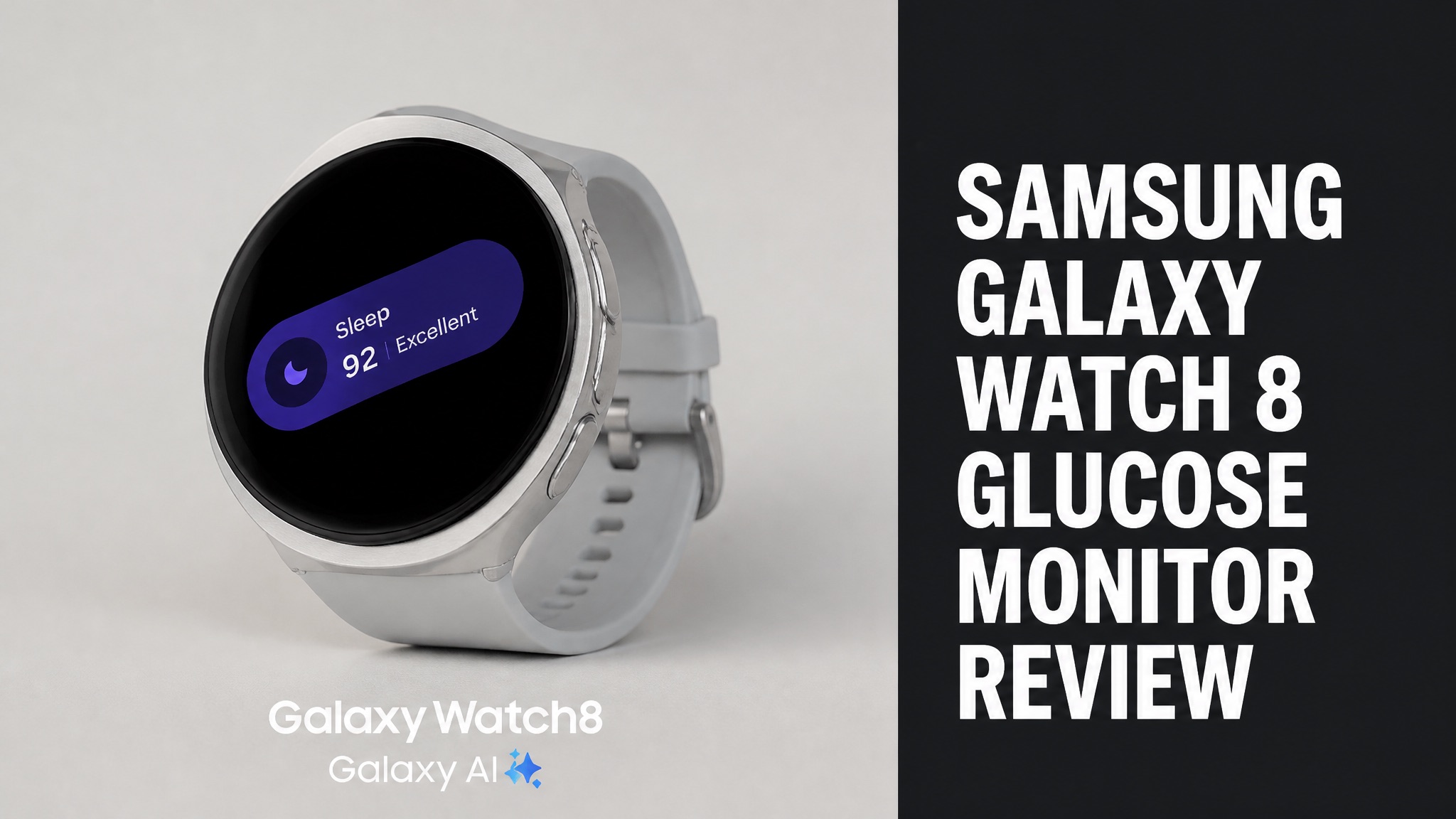
The Samsung Galaxy Watch 8 is a Wear OS smartwatch launched in 2025 with a BioActive sensor, Gemini AI and a 3,000-nit display. Buyers searching for a glucose monitor want one answer first: can it read blood sugar? Here’s the short version.
The watch does not measure blood glucose on its own. It shows readings from a connected CGM, and the FDA has authorized no smartwatch to estimate glucose. Its AGEs Index tracks metabolic ageing from diet. Reviewers praise the display, sleep data and Gemini. Complaints cover price and battery life.
Samsung is working on optical glucose sensing, but no launch date exists. Below, you’ll see what the watch really does for glucose, what the new indexes mean, what it costs and who should skip it.
Does the Samsung Galaxy Watch 8 Measure Blood Glucose?
No. The Samsung Galaxy Watch 8 does not measure blood glucose with its own sensors. It works as a companion screen for compatible continuous glucose monitors (CGMs). The glucose reading still comes from the connected sensor, while the watch makes updates easier to notice and act on during the day.
Healthline’s guide agrees. Some smartwatches connect to CGM systems and show readings, but none take blood glucose readings directly. So, a watch alone can’t replace a meter or a sensor for diabetes care.
What the watch does for glucose:
| Function | Supported | Source of data |
|---|---|---|
| Direct blood glucose reading | No | None |
| CGM readings and alerts | Yes, via app | Connected CGM |
| Metabolic ageing (AGEs Index) | Yes | Watch sensor |
Can the Galaxy Watch 8 Show CGM Readings?
Yes. The watch can display compatible CGM readings, trend arrows and alerts when the connected system supports it. eWeek notes that Galaxy Watch4 or newer is usually the starting point. The CGM app still decides which features show up on the wrist.
Samsung Health adds a longer view. Glucose data can sit beside sleep, activity and stress data. Does that matter? Yes, because a new workout routine or meal schedule may line up with changes in your numbers.
Which CGMs Work With the Galaxy Watch 8?
Dexcom supports Android and Wear OS, so users see the reading, trend arrow and trend graph on a Dexcom watch display. Data syncs from the Android phone, and alarms appear on the wrist too.
FreeStyle Libre users go through third-party Wear OS tools. WatchGlucose supports Libre 2 and Libre 3 sensors, and its tile shows up to 12 hours of glucose history. To be clear, you need a prescription for any CGM.
Common CGM options:
- Dexcom G7 with Wear OS support
- FreeStyle Libre 2 through WatchGlucose
- FreeStyle Libre 3 through WatchGlucose
What Is the AGEs Index on the Galaxy Watch 8?
The AGEs Index tracks Advanced Glycation End products, which are linked to metabolic ageing caused by processed or sugary foods. Samsung Health shows the result on the Watch 8 series. Samsung describes it as a signal about how the body responds to diet over time.
Here’s the thing: eWeek states plainly that AGEs Index is not blood sugar monitoring. It’s a trend signal. So, don’t treat it as a glucose number or use it to adjust medication.
How to read it:
- It reflects long-term diet patterns, not a single meal
- It does not replace a glucose meter or CGM
- It shows up inside Samsung Health summaries
What Does the Antioxidant Index Measure?
The Antioxidant Index measures carotenoid levels in the skin using the thumb sensor in about five seconds. CNET explains that you remove the watch and press your thumb on the optical sensor, because fingertips hold more carotenoids than the wrist.
The score runs from 0 to 100 and lands in very low, low or adequate. CNET’s tester scored 67 out of 100, rated low. And Tom’s Guide says the tracker needs calibrating. Again, CNET adds that none of these features are medical grade.
Will Samsung Add Non-Invasive Glucose Monitoring?
Samsung is researching a non-invasive, optically based continuous glucose monitor but has given no launch date. Dr. Hon Pak, head of Samsung’s Digital Health Team, called blood glucose an area where the company is ‘deeply invested’ and the technology a potential game-changer.
PhoneArena reports that Pak hoped for roughly five years, which the outlet calls realistic if a bit optimistic. Will it arrive on the Watch 8? Almost certainly not, since the hardware shipped without that capability.
Samsung’s glucose roadmap:
| Stage | Status | Detail |
|---|---|---|
| CGM display on watch | Available now | Needs compatible CGM |
| CGM-linked nutrition coaching | In development | Cited by Samsung |
| Optical glucose sensing | Research stage | No launch date |
Is the Galaxy Watch 8 FDA Approved for Glucose?
No. The FDA has not authorized any smartwatch or smart ring to measure or estimate blood glucose on its own. The agency treats apps that display data from authorized CGMs as different from watches claiming independent glucose measurement.
The Watch 8 does carry other health features. Samsung lists ECG for irregular rhythm detection and sleep apnea signs approved through Samsung Health Monitor. That’s a different category from glucose, so don’t mix them up.
What Do Galaxy Watch 8 Reviews Say?
Reviews rate the Galaxy Watch 8 as one of the best Android smartwatches, with caveats on price and battery. CNET scored it 8.2 and gave it an Editors’ Choice Award for 2025. Tom’s Guide calls the Classic model the one most worth buying.
In fact, the reviews barely mention glucose. Testers focus on design, Gemini, sleep tracking and the new indexes, because the watch has no glucose sensor to test.
Review scores at a glance:
| Outlet | Verdict | Key point |
|---|---|---|
| CNET | 8.2, Editors’ Choice | Gemini fast and helpful |
| Tom’s Guide | Buy the Classic | Classic lasts 40 hours |
| Lifestack | Best for Android | Daily charging needed |
What Do Reviewers Like About the Galaxy Watch 8?
Reviewers praise the slim design, bright display, Gemini assistant and accurate fitness and heart rate tracking. The display peaks at 3,000 nits, which is 1,000 nits above the Galaxy Watch 7. Sunlight readability is no longer a problem.
What’s more, Tom’s Guide highlights the sleep insights and Run Coach. The watch is rated 5ATM and IP68 for water resistance, so swimming and sweaty workouts are fine.
What Are the Common Complaints About the Galaxy Watch 8?
The most common complaints are the $50 price increase, proprietary straps and weak battery life in real use. Samsung rates the 44mm model at 40 hours, but Lifestack measured 20 to 26 hours with the always-on display enabled.
CNET also flags that health features require manual setup and that Running Coach accuracy is questionable. Tom’s Guide adds that the cushion case feels like wasted space on standard models.
How Much Does the Galaxy Watch 8 Cost?
The Galaxy Watch 8 starts at $350 (USD) for the 40mm model and $380 (USD) for the 44mm model. CNET lists LTE as a $50 add-on for either size. That puts it $50 above the Galaxy Watch 7.
The Galaxy Watch Ultra sits higher, starting at $649.99, and the Galaxy Ring offers up to seven days of battery. A CGM is a separate cost on top, and it requires a prescription.
Price breakdown:
| Model | Starting price | Note |
|---|---|---|
| Watch 8 40mm | $350 | Bluetooth |
| Watch 8 44mm | $380 | Bluetooth |
| Either size with LTE | +$50 | Cellular add-on |
| Watch Ultra | $649.99 | Titanium, rugged |
Is the Galaxy Watch 8 Worth the Price for Glucose Tracking?
Yes, but only as a CGM display and general wellness watch. It delivers strong value for Android users who want Gemini, sleep coaching and a bright screen. Buying it only for glucose features is a mistake.
The bottom line: if you already wear a Dexcom or Libre, the watch adds convenience. If you don’t use a CGM, there is no glucose function to pay for.
Who Should Not Rely on the Galaxy Watch 8 for Diabetes Care?
Anyone managing diabetes needs an authorized glucose meter or CGM and medical guidance, not a smartwatch alone. eWeek says users should rely on an authorized glucose-monitoring device. Healthline notes normal fasting blood sugar is 99 mg/dL or below.
And iPhone owners face limits too. Lifestack finds the experience notably more capable on Android, so Apple Watch fits iPhone users better.
Who should skip it:
- People who want a replacement for a glucose meter
- iPhone users who want deep integration
- Buyers who expect a week of battery life
What Are the Alternatives to the Galaxy Watch 8?
The real glucose alternatives are dedicated devices such as the Dexcom G7, FreeStyle Libre 3 and Eversense. Healthline names these CGMs for accuracy and sensor wear duration. Meters like the Contour Next One suit users who avoid sensors.
Among watches, the Galaxy Watch Ultra offers the longest battery life in the lineup, and the Galaxy Ring suits discreet tracking. Apple Watch suits iPhone users.
Should You Buy the Galaxy Watch 8 for Glucose Tracking?
Buy the Galaxy Watch 8 if you want a polished Android smartwatch that also mirrors CGM data, not a standalone glucose monitor. The hardware is strong, but the glucose story depends entirely on a separate sensor.
Short answer: wait for the Watch 9 or a sale if you own a Watch 7. Samsung’s optical glucose work is promising, though years away. Pair the watch with a prescribed CGM today and treat the AGEs Index as a lifestyle signal only.
Where Can You Buy the Galaxy Watch 8?
Samsung sells the Galaxy Watch 8 through its US online store, and CNET shows retail listings for the 44mm model. Best Buy carries it as well. Compare prices across these retailers before ordering.
Check the LTE option and strap type at checkout. The proprietary strap system limits third-party bands, so confirm the size you need first.