
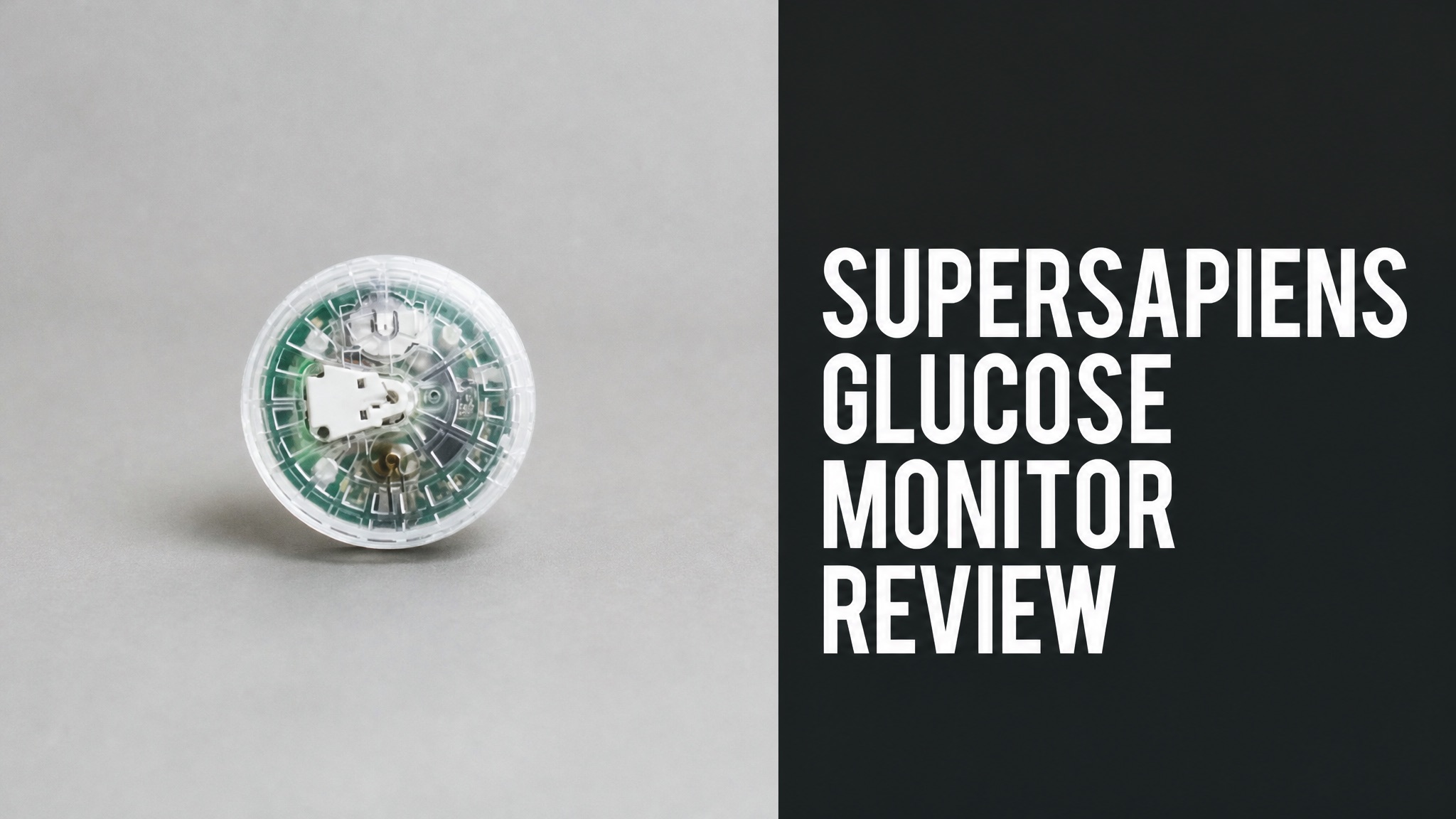
The Supersapiens glucose monitor is a sport sensor system built on Abbott’s Libre Sense biosensor. Supersapiens, an Atlanta company, launched it in Europe in September 2020. A small arm patch streams glucose to an app every minute. Athletes use it to time carbohydrate intake before, during and after training.
The sensor reads interstitial fluid for up to 14 days. The app grades workouts against Performance Zones. Garmin, Apple Watch and the Energy Band show readings live. Reviewers praise the analytics and the Bluetooth link. They criticize cost, patch adhesion and limited device support. Triathlete’s side-by-side test favored it over Levels for athletes.
Plans run about $150 to $200 per month. The system fits long-duration endurance athletes best. Strength athletes and casual exercisers gain little from it. Abbott does not intend the sensor for medical or diagnostic use. The sections below cover accuracy, cost, comparisons and a final verdict.
What Is the Supersapiens Glucose Monitor?
Supersapiens is a glucose monitoring system built for athletes around Abbott’s Libre Sense biosensor. A small arm patch streams glucose data to a phone app every minute. Athletes use the readings to time fuel during training and racing. Each sensor lasts 14 days (two weeks) before replacement. Short answer: it works like a fuel gauge for endurance sport.
The system launched in Europe in September 2020. Abbott called the Libre Sense the world’s first glucose sport biosensor. Who is it for? Athletes aged 16 and older who cycle, run or swim.
Supersapiens works as an ecosystem, not a single gadget. Think of it this way: the patch, the app and an optional wrist display each handle one job. Together, they turn raw glucose readings into fueling guidance.
Who Makes the Supersapiens Sensor?
Abbott manufactures the Libre Sense sensor, while Supersapiens supplies the app and the analytics. Supersapiens is an Atlanta-based sports technology company led by founder Phil Southerland, a former professional cyclist. The two firms work together on a non-exclusive basis. Abbott’s FreeStyle Libre technology originally served people with diabetes.
Supersapiens was Abbott’s first non-exclusive partner for the sensor. In fact, top Tour de France teams wore the biosensor in training during an observational trial. Their glucose data shaped fueling plans before the race.
How Does the Supersapiens Glucose Monitor Work?
The sensor sits on the back of the upper arm and reads glucose through a thin filament under the skin. A hollow needle (5 mm, 0.2 inches) places the filament during application. The round patch then streams readings by Bluetooth to the Supersapiens app on the athlete’s phone. Readings arrive every minute with no finger pricks involved. Setup takes minutes.
The app adds context to every number. Here’s the thing: a raw reading means little on its own. Supersapiens plots glucose against a Performance Zone for hard efforts and a lower range for easy sessions.
Does data start instantly? No. One tester waited 60 minutes after application before data appeared. After that, the app shows glucose live, day and night.
How the System Works:
- Download the Supersapiens app and complete the profile.
- Apply the sensor to the back of the upper arm.
- Wait 60 minutes for the sensor to warm up.
- Watch live glucose on the Measure screen.
- Review the Events screen after each workout.
What Does the Sensor Measure?
The sensor measures glucose in interstitial fluid, the fluid between cells, rather than in blood. Its range runs from 55 to 200 mg/dL (3.1 to 11.1 mmol/L). Each disposable sensor lasts up to 14 days (two weeks) before it needs replacing. The patch is a single-use item, so every two weeks brings a fresh application. Tissue fluid tracks blood with a delay.
Interstitial readings trail blood values by a short delay. The reason is simple: sugar intake, muscle metabolism and glucose uptake each change the size of that gap. To be clear, the sensor never samples blood directly.
The patch is about 35 mm (1.4 inches) wide and 5 mm (0.2 inches) thick. Another reviewer compared its size to a quarter. Does swimming work? Yes, the adhesive is waterproof. Snagging it on a doorframe is the real risk.
What Features Does Supersapiens Include?
Supersapiens bundles live glucose, workout analysis and learning content inside a single app. The Measure screen shows readings as they happen. The Events screen scores each training session or race. The Learn tab teaches sensor setup. The Profile tab stores personal data and integrations. Athletes switch between views with one tap, all inside one app.
The app also tracks an Off-Hours range for daily life. For example, a piece of cake pushes glucose above the upper limit about 30 minutes later. Workouts then get graded against the Performance Zones.
Supersapiens App Screens:
| Screen | What It Shows |
|---|---|
| Measure | Live glucose with Perform, Recover and Events views |
| Events | Glucose score for each workout or race |
| Learn | How-to guides and videos |
| Profile | Personal data, sports and integrations |
What Is the Supersapiens Energy Band?
The Energy Band is a wrist or handlebar display that connects directly to the Abbott biosensor without a phone. The display shows current glucose with a trend arrow. A tap on the side reveals daily exposure and progress against goals. The band is water-resistant to 50 meters (164 feet), so rain, sweat and swims are covered. Riders mount it on handlebars.
The band sells for €159 on the Supersapiens site. The battery recharges in about three hours through a lithium-ion battery. The display stays always on, which helps in bright sunlight and at night.
Does Supersapiens Work With Garmin and Apple Watch?
Yes. Supersapiens connects with Garmin, Wahoo, TrainingPeaks, Apple Health and the Apple Watch. Glucose appears next to heart rate, power and pace on one dashboard. Garmin devices need a phone as the data bridge. The Energy Band skips that step. Setup takes a few taps in the app. Support keeps growing. The Apple Watch joined the list in October 2023.
The Apple Watch app arrived in October 2023 with version 3.1.1. The watch app shows live glucose, trend arrows and sensor state. Historical charts still live in the phone app. The watch prompts a reconnect after five minutes without a reading.
What Are the Benefits of Supersapiens?
Supersapiens gives athletes real-time glucose visibility that time-based fueling plans can’t match. Standard advice prescribes fixed grams of carbohydrate per hour. Absorption varies from athlete to athlete. Live data shows what the body is actually doing during the session. Live visibility is the core promise of the product and drives every feature.
The athlete-focused design avoids medical alarms. Diabetes sensors flag highs and lows. Supersapiens frames glucose as fueling zones and performance windows instead. In plain English: the number now means fuel status, not disease risk.
Main Benefits:
- Real-time glucose every minute
- Performance Zone feedback during exercise
- Workout scoring on the Events screen
- Sync with Garmin, Wahoo, TrainingPeaks and Apple Health
- Learning content built into the app
How Does Supersapiens Help Prevent Bonking?
Live readings let an athlete fuel before glucose falls too far, instead of waiting for bonk symptoms. Bonking happens when glycogen stores run out during long exercise. Fatigue, dizziness and confusion signal that glucose has already dropped. A falling line on screen gives an earlier warning. The athlete eats first and feels the crash less. Fuel comes early.
Does the approach really work? One marathon runner stayed in the Performance Zone for the entire 2 hour 39 minute race and never felt depleted. The runner couldn’t say whether frequent drinks or the data deserved the credit.
Research supports the underlying idea. A 2023 Sports Medicine review by Podlogar and Wallis tied glucose availability beyond 2.5 hours to output and cognition. Glucose responses also differed among athletes on identical fueling plans.
What Do Supersapiens Reviews Say?
Supersapiens reviews skew positive on usability and analytics, while cost and integrations draw most complaints. Triathlete named Supersapiens the winner against Levels. A cyclist who bought the system and tested it for a month praised the clean app. Reviewers still flag price and device compatibility. Praise and criticism both come from hands-on use.
No review here is a clinical trial. Most come from athletes testing on their own bodies. The findings are practical impressions, not lab proof.
What Do Users Like?
Users praise the easy app, the rock-solid Bluetooth link and the quality of the trend analytics. Triathlete’s testers called the connection one of the most solid they had seen on any device. Guy Stapleford found the layout clear, simple and uncluttered. Every screen carries a tip, so the data rarely feels confusing. Easy setup helps beginners too.
What Users Like:
- Live glucose at a glance
- Stable Bluetooth connection
- Clear, uncluttered app design
- Strong trend and variability insights
- Tips attached to every screen
In fact, one marathon runner predicted that ambitious everyday athletes will soon use this data. The runner compared it to a car’s fuel gauge.
What Do Users Complain About?
Complaints center on cost, limited device integrations and weak patch adhesion. The sensor lasts only 14 days, so a full season adds up. One tester found the data field incompatible with a Garmin 645 and a Wahoo Roam. Adhesion of the cover patch was hit and miss. Body hair can explain some peeling, but the issue came up more than once. Cost leads the list.
The patch holds seven to eight hours of data without a phone sync. What happens after that window? The data is lost, so long events still need a phone in a pocket.
Common Complaints:
- Monthly cost adds up over a season
- Cover patch adhesion varies
- Phone needed on long events
- Basic learning library
- Missing Garmin and Wahoo data fields on some devices
The learning library draws criticism too. Triathlete found it basic next to Levels. The graphs are better, so less background knowledge is needed. Even so, trial and error remains.
Supersapiens vs Levels: Which Is Better?
Supersapiens wins for athletes because it streams glucose in real time, while Levels only stores readings for later. Both use Abbott sensors, yet the platforms differ sharply. Triathlete’s side-by-side test picked Supersapiens for athletes willing to spend time and money. The gap shows most during live training and racing. Live data decides the contest.
Levels counters with strong food logging and a huge learning library. What’s more, users photograph meals for analysis. A daily email summarizes metabolic score, average glucose and time in range.
Supersapiens vs Levels:
| Feature | Supersapiens | Levels |
|---|---|---|
| Glucose data | Real-time by Bluetooth | Stored, scanned by phone |
| Cost | $150-$200 per month | $400 first month, then $200 |
| Main strength | Live trends and analytics | Food logging and learning |
| Cover patch | Not offered at test time | Included |
Does Levels Show Real-Time Glucose?
No. Levels uses a FreeStyle Libre sensor that stores readings and needs a phone scan to download them. The sensor holds up to eight hours of data. Athletes tap a phone against the arm after meals or events. Live viewing during training isn’t possible. Readings only appear after the athlete scans the arm. Users review numbers after the workout ends.
Triathlete called this a post-mortem setup. Why does that matter? Athletes can’t adjust fueling mid-race. The advantage of Levels is stronger food logging, not live feedback.
How Accurate Is the Supersapiens Glucose Monitor?
The Libre Sense sensor reports glucose between 55 and 200 mg/dL (3.1 to 11.1 mmol/L) for up to 14 days. Abbott built it for a tighter range than the standard Libre. The company recommends the sensor for athletes only. Medical decisions fall outside its purpose. The sensor stays a sport tool, not a clinical device. Readings come from interstitial fluid.
Interstitial glucose lags blood glucose by 5 to 15 minutes. Does the lag matter? During hard efforts, yes, because values change fast. Athletes follow the direction and speed of change instead of single numbers.
Is there independent proof of precision? Not in the sources reviewed here. Testers judged usefulness by trends and Performance Zone scores. The gap limits any claim about exact precision.
How Long Is the Sensor Lag?
The lag runs between 5 and 15 minutes behind blood glucose. Sugar intake, muscle metabolism and glucose uptake all change the gap. Rapid swings during intense exercise make the delay more noticeable. Slow, steady periods hide it. Athletes learn quickly how the delay feels during their own sessions. Practical use means watching the direction of change.
So what’s the practical move? Athletes read the trend arrow rather than the exact value. A downward arrow signals the need to eat. Fueling early lets the line settle.
Who Should Avoid Supersapiens?
Supersapiens suits long-duration endurance athletes and fits poorly for strength athletes, short-event athletes and casual exercisers. Glucose matters most beyond two hours of effort. Athletes whose performance doesn’t depend on glucose dynamics gain little for the price. Short sessions rarely depend on glucose, so the cost rarely pays back. Fit matters.
Athletes under 16 fall outside the intended age range. Here’s why: Abbott positions the product for ages 16 and older. The biosensor is not intended for monitoring a disease.
Poor Fits:
- Strength athletes
- Short-duration sport athletes
- Casual exercisers
- Athletes under 16
- People seeking diabetes monitoring
- Athletes without time to analyze data
Data-averse athletes also struggle. Reviewers admit trial and error is part of the process. The reward goes to those who invest the time.
Is Supersapiens Approved for Medical Use?
No. Abbott designed the Libre Sense sensor for athletes, and it isn’t intended to diagnose, treat or monitor any disease. The sensor carries a CE mark in Europe as a consumer over-the-counter product. Triathlete reported it was not FDA approved for U.S. use in 2021. Regulation therefore limits where athletes can buy it. The app gives no medical alerts.
Medical alerts are absent by design. The design avoids medical advice on purpose. Athletes interpret the data for performance only.
How Much Does Supersapiens Cost?
Supersapiens costs roughly €130 ($140 to $150 USD) for a 28-day plan that includes two sensors. Monthly spend typically lands between $150 and $200 (market and frequency decide). The Energy Band adds a one-time cost of €159 for athletes who want a wrist display instead of a phone. Each sensor lasts 14 days (two weeks), so the plan covers a month.
Supersapiens Costs:
| Item | Price | Notes |
|---|---|---|
| 28-day plan, two sensors | €130 ($140-$150) | Each sensor lasts 14 days |
| Typical monthly spend | $150-$200 | Varies by market and frequency |
| Energy Band | €159 | One-time purchase |
These figures come from 2021 and later reviews. Current rates can differ. The official Supersapiens site lists live pricing.
Is Supersapiens Worth the Price?
Yes. Supersapiens pays off for endurance athletes who train long hours and want data-driven fueling. Triathlete named it the winner for athletes willing to invest time and money. Guy Stapleford called it costly but beneficial and plans to use it again. The verdict leans positive for the right athlete. Casual users see little return on the same spend.
Is a year-round subscription necessary? Not at all. One tester suggested using sensors only for key events, intense blocks or training camps. The approach trims spend while keeping the insight.
Who gets the value? Athletes training five to ten or more hours weekly find the cost per insight reasonable. Casual exercisers don’t. The math depends on training volume.
Where Can You Buy Supersapiens?
Supersapiens sells directly through its own website in eight European countries. Those are Austria, France, Germany, Ireland, Italy, Luxembourg, Switzerland and the United Kingdom. Abbott’s launch statement named the Supersapiens site as the purchase route. Orders ship from the company, not from third-party retailers. Sales began in late 2020.
US availability stays unannounced in the sources reviewed. Triathlete’s testers used a version not yet FDA approved. North American athletes face the biggest access gap. Availability can change, so the Supersapiens site is the final check.
Is Supersapiens Worth It?
Yes. Supersapiens is worth it for serious endurance athletes who need personalized fueling data. Live glucose, athlete-specific zones and clean analytics set it apart. Price, integrations and the learning curve are the main drawbacks. The final call depends on training volume and budget. Serious athletes find the trade fair. Budget decides the rest.
Bottom line: casual exercisers can skip it. Marathoners, triathletes, cyclists and swimmers get the most value. Anyone chasing diabetes monitoring needs a different tool.
Who Should Try Supersapiens?
Endurance athletes gain the most when they bonk, struggle with fueling or train beyond two hours. The core audience includes marathon, century ride, Ironman and stage-event athletes. Sessions beyond 2.5 hours show the clearest benefit. The standard target is 60 to 90 grams (2.1 to 3.2 ounces) of carbohydrate per hour. Individual needs still vary.
Ambitious recreational runners qualify too. One 46-year-old marathoner did not consider themselves a performance athlete yet called the data valuable. The good news? Everyday athletes can learn from it.
Strength and short-event athletes can pass. So can anyone unwilling to analyze data. Everyone else gets a clear window into fueling.