
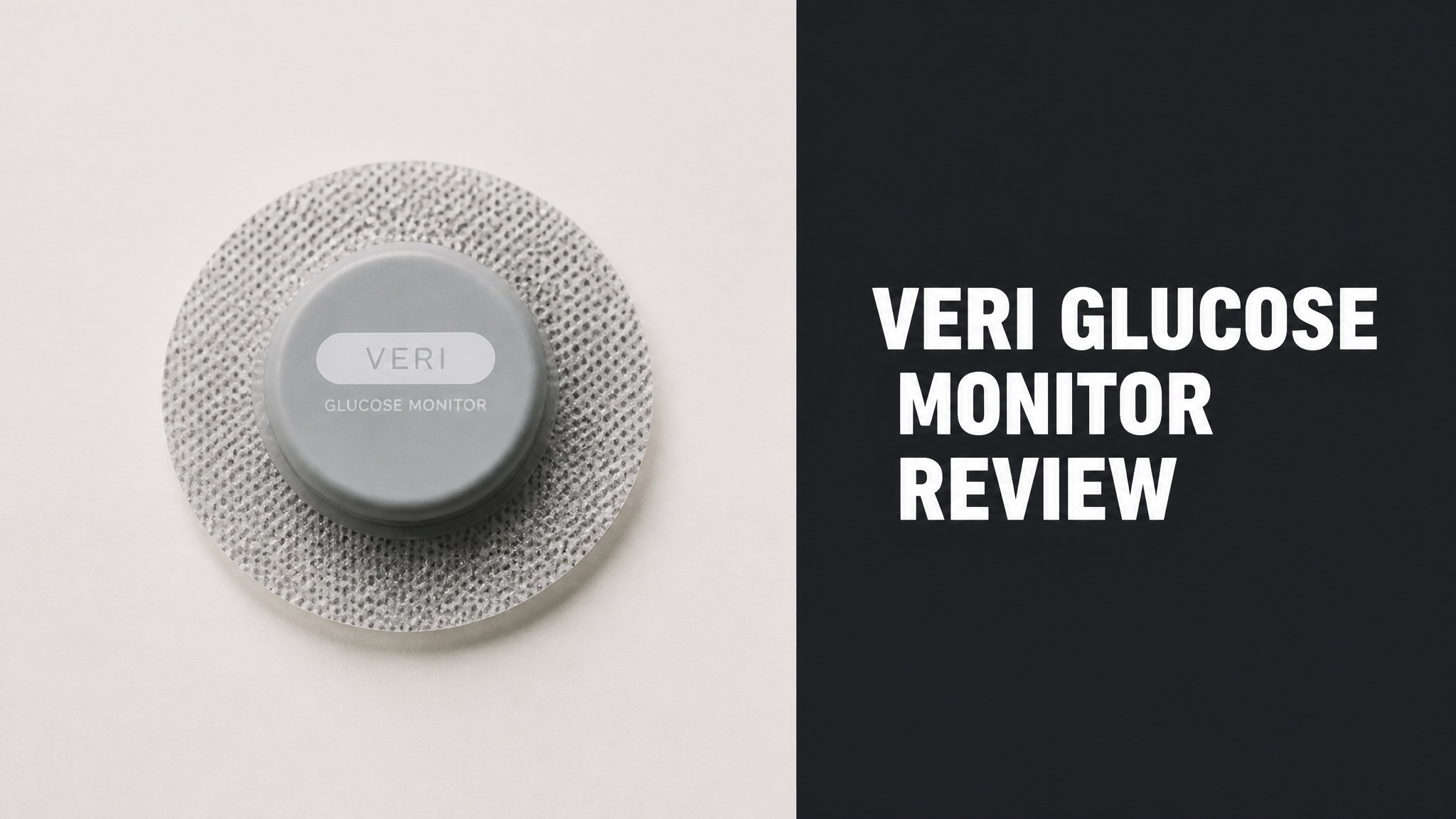
The Veri glucose monitor is a metabolic health program that pairs a wearable Freestyle Libre sensor with a smartphone app. Veri launched in Finland in 2020. Oura acquired the company in September 2024. The service tracks glucose, meals, sleep, and activity for people without diabetes.
Veri reads glucose from a sensor under the skin and scores each meal. The app logs food from a photo and guides users through four stages. Reviewers praise the interface and community. Complaints focus on cost, logging accuracy, and the two-app setup. Competitors like Levels and Nutrisense price similarly.
Safety, pricing, and availability matter more now that Oura owns the platform. The sections below weigh the evidence and compare Veri with its closest rivals. Read on to learn who benefits most, what the program costs, and whether a short trial is the smartest move.
What Is Veri Glucose Monitor?
Veri is a metabolic health program built around a wearable glucose sensor and a smartphone app. Founded in Finland in 2020, the service pairs an Abbott Freestyle Libre sensor with food, sleep, and activity logging. The goal is simple: show how your body reacts to what you eat. Members wear the sensor for weeks and learn from their own daily patterns.
Here’s the thing: Veri isn’t a sensor maker. Abbott builds the hardware. Veri supplies the app, the scoring, and the guidance. So what are you really buying? A translation layer that turns raw glucose readings into daily food advice.
Quick Facts:
- Founded in 2020 in Finland
- Founders Anttoni Aniebonam, Frans Lehmusvaara, and Verneri Jaamuru
- Uses Abbott Freestyle Libre sensors
- Targets weight loss, diet, and metabolic health
Who Owns Veri Now?
Oura acquired Veri in September 2024 and planned to retire the Veri brand by the end of 2024. CEO Tom Hale said the platform would be absorbed into Oura’s services. Financial terms were never disclosed, and the exact integration plan stayed unclear at announcement. Existing members faced an uncertain transition. Members watched the rebrand closely.
Why does this matter? Oura’s own survey found 97% of its users want to know how food affects their health. Another 13% already wear continuous glucose monitors. In fact, that demand explains the deal.
How Does Veri Work?
Veri reads glucose from a sensor worn on the upper arm and turns that data into meal scores. The sensor sits just under the skin and measures glucose in interstitial fluid. The sensor then sends readings to your phone, where the app draws a live graph. Readings refresh around the clock, day and night. Setup takes minutes, and the sensor stays on for days.
To be clear, the app does more than display numbers. Veri connects glucose data with food, sleep, and activity logs. You see which habits help your levels and which ones hurt. The feedback loop is the whole product.
Steps:
- Get a compatible Freestyle Libre sensor through Veri or your doctor.
- Apply the sensor to the back of your upper arm.
- Scan or sync the sensor with the Veri app.
- Log each meal and review its glucose score.
Which Sensors Does Veri Support?
Veri supports the Libre 14-day system, Libre 2, and Libre 3 sensors. The app delivers real-time readings without finger pricks. Reviewers also note that Veri works with Libre sensors you source yourself. Insurance-covered sensors work too. Support covers both older and newer Libre generations. Pick whichever generation your supply or insurance covers.
The Libre 3 is the smallest option. Think of it this way: the sensor is about the size of two stacked US pennies. The Libre 3 sends data by Bluetooth every minute. One caveat: you also need Abbott’s LibreLink app installed alongside Veri.
What Features Does the Veri App Include?
The Veri app combines glucose graphs, AI meal logging, meal scoring, and a four-stage coaching program in one interface. Members also get educational content, challenges, recipes, and a private community. Each feature targets one goal: help you find the foods that suit your body. Together they replace guesswork with data. Everything lives in one place.
The four stages follow a clear path. Stage one finds your baseline. Stage two ranks your usual foods. Stage three builds a balanced diet. Stage four adds sleep, activity, and stress strategies. And the structure keeps you from guessing what to do next.
Key Features:
- Live glucose graph and reports
- Photo-based AI meal logging
- Automatic meal scores
- Four-stage guidance program
- Members-only community and recipes
Does Veri Offer AI Meal Logging?
Yes. Veri logs meals from a single photo. The AI studies the image and recognizes the ingredients within seconds. Nutritionist Danielle Hamilton calls this the fix for the biggest CGM headache: typing every meal by hand. Fewer people quit logging when the process takes seconds, which keeps the data complete. The result is faster, easier tracking.
The feature has limits, though. Is it perfect? Not quite. Some Vively commentary flags food logging accuracy as a user complaint. Worth knowing: a quick manual check of each logged meal keeps your scores honest.
What Are the Benefits of Veri?
Veri gives non-diabetic users personal glucose feedback that generic diet advice cannot match. Blood sugar response is individual. The same avocado toast spikes one person and leaves another flat. A sensor reveals your own pattern instead of an average one. Time of day, sleep, and stress all change the result. Better awareness leads to smarter choices.
Bottom line: the benefit is awareness. You learn how meals, sleep, stress, and exercise move your numbers. Reviewers highlight the engaging interface, the simple scan button, and a dedicated development team. And the community adds motivation.
Main Benefits:
- Personal food-response data
- Sleep and activity overlays
- Simple photo-based meal logging
- Guided plan with community support
Does Veri Help Stabilize Blood Sugar?
Yes. Veri shows which foods and habits push glucose up so you can change them. Metabolic Healthspan, Veri’s scoring metric, tracks average glucose, morning fasting glucose, variability, oscillation, and BMI. Lower swings point toward steadier levels. Veri built the metric with advisors from Stanford, Harvard, the ADA, and the CDC. Fewer surprises follow.
Evidence outside Veri supports the method. A 2023 Cureus study found CGM use cut mean HbA1c from 11.21% to 7.04% in uncontrolled diabetes. Does that prove Veri works for non-diabetics? No. The study shows that feedback changes behavior.
Does Veri Help You Lose Weight?
Yes. Veri supports weight loss indirectly by ranking foods and flagging large glucose spikes. Its in-app recommendations focus on general guidance for people chasing weight loss goals. Nutrisense’s comparison page describes the advice as broad rather than deeply personal. Guidance stays general for most members. Results depend on your own choices.
The research reviewed here includes no published weight loss trial for Veri. So set expectations carefully. The program builds awareness. Your meal choices still drive the scale, and results vary by person.
What Do Veri Reviews Say?
Veri reviews lean positive on usability and mixed on price and accuracy. Bloggers and dietitians praise the interface, the AI meal logging, and the community. Critics point to cost, the two-app setup, and food logging errors. Review volume is small, so treat ratings cautiously. Most sources are blogs rather than large review platforms. Context matters.
Let me break that down: the 5.0 rating on New Zapiens rests on a single review. Independent bloggers give more balanced views. Here is the part most people miss: many reviewers were sponsored or used affiliate codes, which shapes tone.
Review Summary:
| Source | Verdict | Main Point |
|---|---|---|
| Alex Fergus | Good, Levels slightly ahead | Engaging app, fixed glucose ranges |
| MaddHealthy | Top two pick with Nutrisense | Easy to use, affordable, dietitian access |
| Vively | Mixed | Good app, pricey, food logging complaints |
| New Zapiens | 5.0 from one review | Camera logging works well |
What Do Users Praise?
Users praise the interface, the photo-based food logging, and the real-time glucose tracking. Alex Fergus liked the tactile scan button and the built-in sleep tracking through Apple Health. One New Zapiens reviewer said capturing food with the camera worked surprisingly well. Real-time tracking also earned praise. The scoring also teaches.
Dietitians add their own praise. And the community earns credit too. Members get challenges, recipes, and the option to connect with a dietitian. MaddHealthy rated the automatic meal scoring as a strong teaching tool for building a healthy plate.
What Are the Common Complaints?
Common complaints center on price, food logging accuracy, sensor accuracy, and the lack of personal contact. Vively noted confusion over the monthly payment option on quarterly plans. Alex Fergus was unable to customize glucose ranges and had to accept default values. Some users felt the service lacked personal contact. Support feels distant for some.
The setup adds friction. In plain English: you need both Veri and Abbott’s LibreLink app. MaddHealthy also notes a short consultation is required before purchase. The biggest worry from one forum reviewer was future Oura exclusivity.
How Does Veri Compare to Competitors?
Veri competes with Levels, Nutrisense, and Vively in the sensor-plus-app category. All four rely on Libre-style sensors and focus on non-diabetic users. The real differences are price, human support, and app polish. Each program fits a slightly different buyer. Sensors are similar, so the app and support decide the winner. Choose carefully.
Here’s why that matters: the hardware is nearly identical. You are choosing software and coaching. Short answer: pick the app you will actually open daily. Consistent logging beats any feature list.
Price Comparison:
| Program | Reported Cost | Includes |
|---|---|---|
| Veri | $179 to $279 per month | 1 or 2 sensors plus app |
| Levels | $199 per month plus $199 annual fee | Sensors plus app |
| Nutrisense | $225 to $299 per month | Sensors, app, dietitian access |
| Vively | $249 for 3 months | Libre 2 plus app (Australia) |
How Does Veri Compare to Levels?
Levels edged out Veri in Alex Fergus’s side-by-side test. He credited Levels with more refined features, searchable meal responses, and gamified challenges. Veri countered with a tactile scan button and built-in sleep tracking, but locked glucose ranges. Fergus reviewed both apps using the same Freestyle Libre sensor. Fergus tested both for weeks.
Price also differs. Levels cost $407 at signup, then $199 monthly, according to MaddHealthy. Veri’s intermittent plan started at $179 monthly. The good news? Both apps work with Libre sensors, so switching later is realistic.
How Does Veri Compare to Nutrisense?
Nutrisense offers stronger human support, while Veri leans on automation and community. Nutrisense members can book insurance-covered video calls with nutritionists and dietitians. Veri’s app gives broader dietary recommendations and a members-only community for motivation. Support style is the real split between them, so match it to your habits.
Both programs track glucose around the clock and offer three plans. Nutrisense states it sells in all 50 states. MaddHealthy picked Nutrisense or Veri as the most affordable and easiest to interpret. Pick Nutrisense if live coaching matters most. Choose Veri if you prefer self-guided learning.
Is Veri Safe?
Yes. Veri uses Abbott’s Freestyle Libre sensors, which are established continuous glucose monitoring devices. The sensor sits just under the skin and reads interstitial fluid. Reviewers describe no discomfort on the arm. The main risks are practical, such as skin irritation or misreading data. Always read trends, not single numbers. Wear is painless.
To put it simply: Veri is a tracking tool, not a treatment. Glucose numbers inform food choices. They do not replace medical care. Speak with a doctor before changing medication or acting on readings that look alarming.
Safety Notes:
- Veri is a tracking program, not medical treatment
- Sensor readings can differ from lab blood tests
- Alarming numbers call for a doctor visit
- Medication changes need clinician approval
Who Should Avoid Veri?
People who use insulin or manage diabetes with medication should avoid self-directed programs like Veri without a doctor’s approval. Vively’s comparison notes that programs of this type target the general population and exclude insulin users. Veri itself markets to people without a diabetes diagnosis. Anyone with a condition needs clinician guidance first.
Others may find it frustrating. Do you hate logging meals? Then skip it. Do you need custom glucose ranges? Veri uses fixed defaults. And if you want constant human coaching, a dietitian-led program fits better.
How Much Does Veri Cost?
Veri costs $179 to $279 per month with sensors, or $39 per month for the app alone. MaddHealthy reported these numbers in 2024. Vively cited a higher range of $268 to $419 on quarterly plans. Prices have likely changed since Oura took over. Expect current numbers to differ from these 2024 reports. Plans range widely, depending on how many sensors you wear.
What’s more, the app-only route cuts costs sharply. Veri works with Libre sensors you already own, including insurance-covered ones. So who pays full price? Mostly buyers who need Veri to arrange the sensor and prescription.
Reported Plans:
| Plan | Sensors | Cost |
|---|---|---|
| Intermittent Monitoring | 1 per month (14 days) | $179 (USD) per month |
| Continuous Monitoring | 2 per month (28 days) | $279 (USD) per month |
| App Only | Bring your own | $39 per month or $199 per year |
Is Veri Cheaper Than Other CGM Programs?
Yes. Veri’s entry plan undercuts Levels and Nutrisense on monthly price. At $179 (USD), the intermittent plan costs less than Levels at $199 and Nutrisense at $225 or more. Full continuous monitoring at $279 sits closer to Nutrisense’s top tier. Cost per sensor day is similar across programs. Totals shift with sensor count, so compare equal durations.
The app-only plan is the real bargain. At $199 per year, it beats Levels’ $199 annual app fee plus monthly sensor bill. Savings depend on getting sensors elsewhere. Now here is the thing: confirm current pricing, since 2024 figures are dated.
Where Can You Buy Veri?
Buyers historically signed up at veri.co, though the Veri brand is being folded into Oura’s services. Check Oura’s site first for current availability. Veri shipped to the US, the UK, and selected European countries. Australia was not covered. Brand pages may redirect to Oura soon. Check country availability first, since rules change by region. Confirm.
Access rules vary by country. In the US, a CGM needs a prescription, and Veri arranged the device after a short consultation. Canada sells CGMs at Costco and online. Europe sells them through pharmacies. Over-the-counter options now exist from Dexcom and Abbott.
Is Veri Worth It?
Yes. Veri is worth a short trial for non-diabetic users who want food feedback, with one caveat about Oura. The app is intuitive, the meal logging is fast, and the pricing is competitive. Uncertainty about the brand is the main drawback. Pricing and coaching depth are the other trade-offs. The app is easy. The trade-offs are cost and an uncertain roadmap.
Think of it this way: you are paying for insight, not a cure. The insight is real, and the lessons last. But a 14 to 30 day window captures most of the value. Long-term subscriptions rarely add much unless your routine changes.
Should You Wear a Veri CGM Today?
Yes. A short Veri trial of 14 to 30 days is the smartest way to start. One long-term user wore Veri for 100 days. He agreed two to four weeks is plenty without major diet changes. His levels crept toward prediabetes, and a blood test confirmed it. Start with one sensor, log every meal, and review patterns weekly. Stop when the lessons stop changing.
Before buying, confirm that Veri or its Oura replacement is still on sale in your country. Compare it against Levels and Nutrisense. And talk to a doctor if you have a health condition. The final answer? Try it briefly, learn fast, and stop.